Xbox CEO Asha Sharma Signals Radical 'Reset' Amid Declining Sales and Leadership Shift

- Newly appointed Xbox CEO Asha Sharma has announced an urgent 100-day business reset, admitting that the Microsoft gaming division is currently 'not in a healthy spot' following...
- The leadership shift comes after the sudden February departures of veteran executives Phil Spencer and Sarah Bond, signaling a stark transition from console-centric strategies to...
- Sharma, formerly Microsoft's CoreAI lead, raised questions about the timing of the $69 billion Activision Blizzard acquisition, noting it was planned in a pre-ChatGPT, Covid-era...
The gaming landscape is undergoing its most volatile transition in a generation, and Xbox, once the ultimate challenger for living room dominance, is at the absolute center of the storm. Following a series of dramatic corporate restructurings, the brand's newly minted CEO has laid bare the stark reality facing Microsoft's gaming division. In a candid assessment that marks a sharp departure from traditional corporate optimism, Asha Sharma has confirmed that the status quo is no longer viable, signaling a massive pivot for the legendary gaming brand.
Quick summary
- A 100-Day Business Reset: Newly appointed Xbox CEO Asha Sharma has admitted that the Microsoft gaming division is currently "not in a healthy spot," initiating a rapid restructuring phase to return to growth.
- Leadership Changing of the Guard: The strategic shift follows the sudden February departures of veteran executives Phil Spencer and Sarah Bond, marking the end of an era and the arrival of an AI-centric executive team.
- The $69 Billion Question: Sharma raised eyebrows by declining to unconditionally defend the massive Activision Blizzard acquisition, pointing out it was conceived in a vastly different pre-ChatGPT, pandemic-era gaming market.
Why it matters
For decades, the console industry was defined by walled gardens—exclusivity deals designed to lock players into proprietary hardware ecosystems. Xbox's impending "reset" suggests that Microsoft is preparing to dismantle these traditional boundaries entirely. This shift has massive implications for consumers, competitors, and the broader industry. If the platform owner that spent close to $70 billion acquiring top-tier publishers decides that physical hardware is no longer the primary measure of success, the entire definition of a "console war" changes. Gamers may soon see the absolute normalization of major Xbox intellectual properties appearing on rival platforms like PlayStation and Nintendo Switch, while the physical Xbox console transitions from a necessity to an optional gateway.
Background
The road to this crossroads has been paved with severe corporate friction. For months, Xbox hardware sales have experienced a steady, downward trajectory. To stabilize its balance sheets, Microsoft spent much of the past year executing deep cuts, laying off thousands of employees, canceling long-term projects, and shuttering reputable development studios. In a move unprecedented in Microsoft’s 51-year history, the tech giant even implemented a voluntary buyout program to encourage employees to leave.
This internal turmoil culminated in February with the sudden, simultaneous exit of longtime Xbox head Phil Spencer and president Sarah Bond. To steer the ship through these turbulent waters, Microsoft promoted Matt Booty and appointed Asha Sharma—the former lead of Microsoft's CoreAI division. This transition signaled a profound cultural and structural change, moving Xbox away from legacy console-builder mentalities and placing it in the hands of an executive seasoned in artificial intelligence and scalable software platforms.
The 100-Day Strategy: Moving Beyond the Box
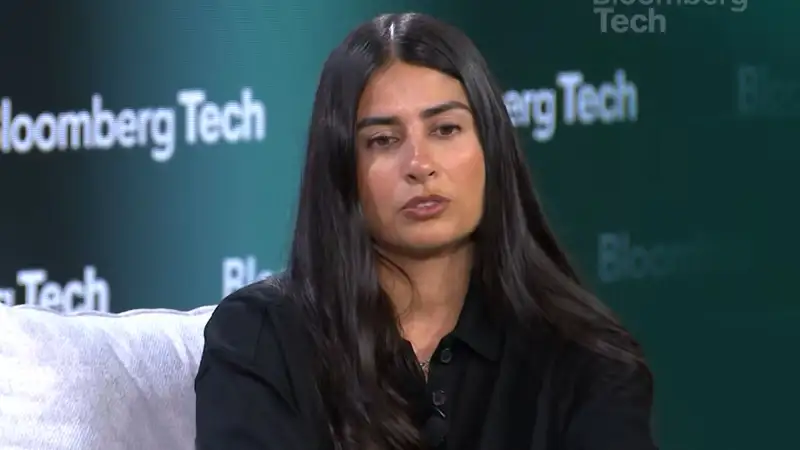
During a recent live broadcast with Bloomberg Tech, Sharma did not mince words about the challenges ahead. "We're long on gaming, we're long on Xbox, we'll keep investing, but we've got work to go," Sharma noted. "We're not in a healthy spot, so the next 100 days is going to be about resetting the business."
Redefining "Where the World Plays"
While Sharma kept specific operational changes close to her chest, she dropped significant hints regarding the focus of this 100-day restructuring. The goal, she stated, is to "change how we operate, in order to return to growth, in order to be where the world plays."
This phrasing aligns closely with Microsoft's ongoing "Play Anywhere" philosophy, which bridges the gap between console, PC, and cloud devices. However, under Sharma's leadership, this is expected to expand far beyond cross-saves between a PC and an Xbox Series X. Industry analysts expect Xbox to increasingly prioritize its mobile gaming presence, cloud streaming partnerships, and multi-platform game releases to offset the high costs of triple-A game development that stagnating console hardware sales can no longer support.
Re-evaluating the Activision Blizzard Mega-Merger
One of the most revealing moments of Sharma's recent public remarks involved the blockbuster $69 billion acquisition of Activision Blizzard. When asked directly if the massive purchase was still a sound decision in hindsight, Sharma declined to give a simple affirmative, choosing instead to contextualize the deal within a bygone era.
"It was bought at a time before ChatGPT," Sharma explained. "It was bought at a time when our strategy was predominantly on the core consoles. It was at a time when we were right in the middle of Covid."
This perspective is vital. The deal was designed when home entertainment spending was at an all-time high and Microsoft was heavily focused on securing dominant intellectual properties to feed its console ecosystem. In a post-pandemic economy—and in a tech industry now entirely obsessed with generative AI infrastructure—a $69 billion investment in traditional console gaming assets requires a complete reassessment to ensure it delivers a modern return on investment.
Qnews24h insight
Asha Sharma’s appointment as Xbox CEO, combined with her candid acknowledgment of Xbox's financial reality, marks a permanent pivot point. By framing the Activision purchase as a decision made in a "pre-ChatGPT" era, Sharma is subtly preparing the market and Xbox's loyal fanbase for a reality where those newly acquired IPs will not be locked to a single box. To recoup a $69 billion investment in a market where hardware sales are falling, Microsoft must treat Activision, Bethesda, and Xbox Game Studios as multi-platform publishing powerhouses.
Furthermore, Sharma's deep expertise in artificial intelligence suggests that the "reset" of how Xbox operates will heavily involve integrating AI tools into game development pipelines and backend cloud delivery. This strategy will likely focus on reducing the astronomical ballooning costs and decade-long timelines of modern game production. The traditional console war is over; Microsoft is officially transitioning Xbox from a hardware-first platform into an omnipresent service layer that aims to exist on every screen imaginable.
Sources
- Interview content and executive quotes sourced from Asha Sharma’s live appearance on Bloomberg Tech, as reported by GamesRadar+.
Why it matters
For years, the console war was defined by exclusive hardware ecosystems. Xbox's pivot under Asha Sharma suggests that the traditional console model is no longer the primary driver of growth for Microsoft. This shift will fundamentally alter what it means to be an Xbox gamer, as the brand moves toward a multi-platform, cloud-enabled ecosystem where physical consoles are secondary to software reach and subscription services.
Background
The announcement follows a turbulent period for Xbox, marked by declining hardware revenues, thousands of layoffs, canceled projects, and studio closures. In an unprecedented move for Microsoft's 51-year history, the company even launched a voluntary buyout program for employees. The departure of longtime figureheads Phil Spencer and Sarah Bond in early 2025 cleared the way for a new leadership team led by Sharma and Matt Booty, tasked with navigating a highly saturated post-pandemic market.
Asha Sharma's background in AI and product development points to an Xbox that will likely prioritize automated development pipelines, cloud infrastructure, and software distribution over traditional console cycles. By calling the $69 billion Activision buyout a product of a pre-ChatGPT era, Sharma is subtly preparing stakeholders for a reality where those massive IP portfolios are leveraged across all screens—including competing platforms—rather than being kept exclusive to boost hardware sales that are already on a downward trajectory.
References
Editorial information
The editorial team reviews sources, adds context, and structures stories so readers can understand the news more clearly.
Article from QNEWS24H
Comments
(0)No comments yet. Be the first to share your thoughts.