Why Running a Dehumidifier All Day Fails to Keep Rooms Dry: Key Placement and Efficiency Rules
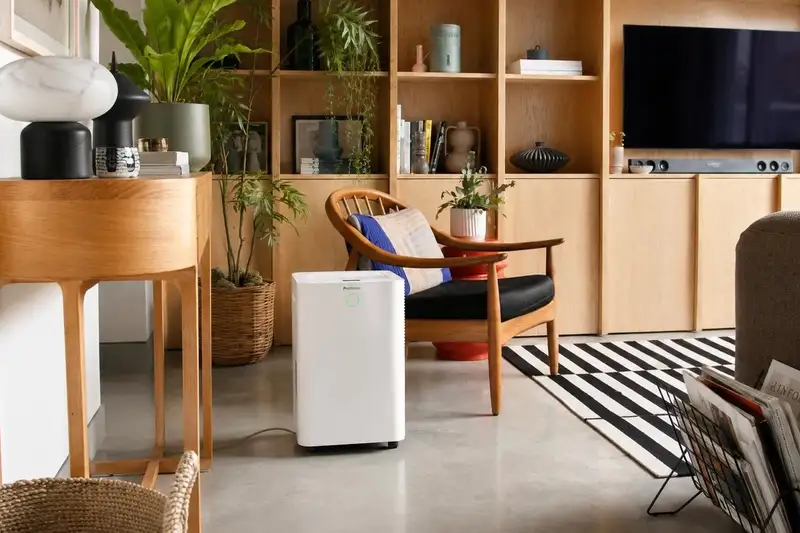
- Running a dehumidifier continuously fails if windows or doors remain open, allowing external moisture to constantly replace dried air.
- Recommended humidity targets are 55–60% for bedrooms to preserve respiratory comfort and 45–50% for living spaces housing electronics and woodwork.
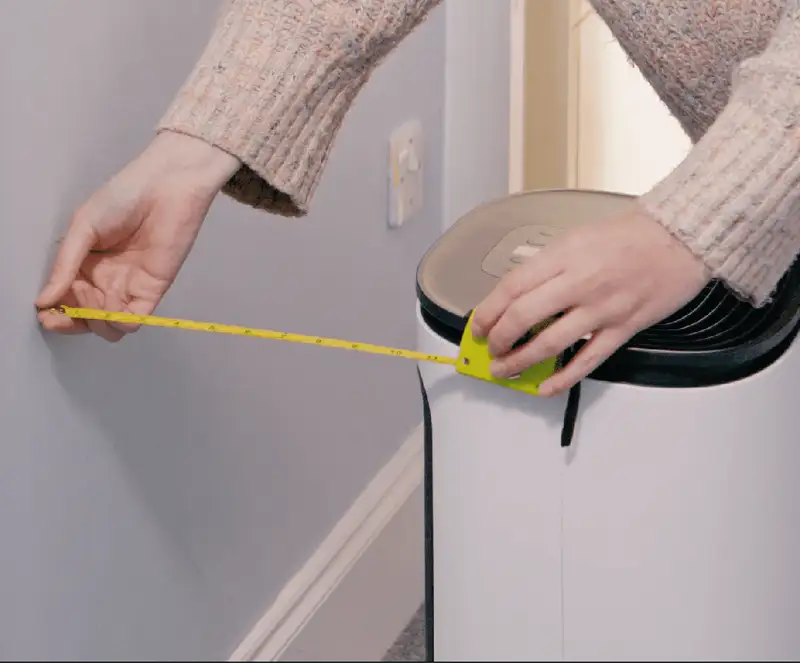
- Proper physical placement demands 10–15 cm of wall clearance and roughly 1 meter of elevation to optimize airflow and minimize electrical risks.
- Leveraging automated humidistat cut-offs prevents compressor exhaustion and avoids excessive electrical power consumption.
During prolonged spells of high indoor humidity, homeowners frequently resort to running dehumidifiers uninterrupted for days at a time, only to discover damp floors, persistent condensation, and soaring electric bills. While these appliances are engineered to extract excess airborne moisture, mitigate mold growth, and safeguard household electronics, operating them continuously does not automatically deliver a dry indoor environment if core operating conditions are overlooked.
Quick summary
- Continuous operation fails when rooms are unsealed, appliance capacity is mismatched, or physical obstacles block air circulation.
- National energy conservation standards recommend setting bedroom humidity between 55% and 60%, while rooms housing sensitive electronics or wooden furnishings require 45% to 50%.
- Units should stand 10 to 15 centimeters away from walls and be positioned roughly 1 meter above the floor to ensure optimal airflow and reduce electrical hazard risks.
- Enabling automated sensor-driven shut-off cycles allows internal compressors to rest, reducing electricity waste and extending equipment lifespan compared to 24/7 manual running.
Why it matters
Uncontrolled indoor moisture accelerates structural degradation, damages sensitive circuitry, and creates breeding grounds for fungal spores and dust mites. However, running a compressor-driven appliance inefficiently leads to steep electricity spikes without solving the root moisture issue. For modern households seeking a balance between climate comfort, asset preservation, and energy conservation, understanding the mechanics of dehumidification is essential for both health and utility management.
Background
The operational recommendations for domestic dehumidifiers stem from standard energy-saving protocols compiled under national conservation programs. A household efficiency handbook spearheaded by the Department of Innovation, Green Transition and Industrial Promotion under Vietnam's Ministry of Industry and Trade (MoIT), developed alongside Vietnam Electricity (EVN), Hanoi University of Science and Technology, and the National University of Civil Engineering, details precise operational guidelines for domestic climate control appliances under the National Program on Energy Efficiency and Conservation (2019–2030).
The Open Room Dilemma: Why Continuous Inflow Cancels Out Extraction
The most frequent reason a dehumidifier fails to lower room humidity is air exchange with untreated external environments. Dehumidifiers function within closed thermodynamic systems: they pull in humid air, condense the water vapor over cooling coils, collect the runoff, and exhaust drier, slightly warmer air back into the room.
When interior doors or windows remain open, humid ambient air continuously replaces the conditioned air. The appliance is forced into an endless cycle of pulling moisture from an infinite atmospheric reservoir rather than a finite enclosed volume. Energy specialists advise firmly shutting exterior openings during operation.
Similarly, running ceiling or standing fans alongside an open doorway while the dehumidifier is active disperses localized humidity throughout the dwelling, preventing the machine's internal hygrometer from stabilizing and causing the compressor to labor under maximum load indefinitely.
Calibrating Humidity Thresholds Across Different Living Zones
Many consumers mistakenly set dehumidifiers to the lowest possible relative humidity setting, assuming lower figures always mean better performance. Over-drying indoor air causes respiratory discomfort, dry skin, and unnecessary power consumption.
Technical recommendations differentiate optimal moisture levels based on room function:
- Bedrooms: Relative humidity should be calibrated between 55% and 60%. This range effectively suppresses mold and mite proliferation while preventing the mucous membranes and respiratory tract from drying out during sleep.
- Living Rooms and Home Offices: In spaces containing high-density electronics, acoustic instruments, paper archives, or solid wood furniture, target humidity should be maintained at 45% to 50% to prevent component corrosion, warping, and adhesive breakdown.
Aligning the target setting with the specific room profile prevents the unit from chasing unattainable dryness levels in everyday living spaces.
Strategic Positioning: Clearance, Elevation, and Air Circulation
A dehumidifier's performance depends heavily on the volume of air passing through its intake and exhaust grilles each hour. Placing a unit directly against a wall, in a cramped corner, or behind heavy drapes severely chokes intake volume.
To maintain aerodynamic efficiency, units require a minimum clearance of 10 to 15 centimeters from any surrounding vertical surfaces. This gap ensures uninhibited airflow across the internal evaporator and condenser coils.
Furthermore, positioning the appliance approximately 1 meter off the ground—where practical on stable platforms or elevated mounts—aids uniform air circulation and mitigates the risk of moisture-induced electrical short circuits near floor level. Both the intake filter and output vents must remain unobstructed by laundry, furniture, or ornamental coverings at all times.
Automated Cycling Versus Continuous Operation
Leaving a dehumidifier hard-wired to run 24 hours a day without automated regulation causes premature component wear and inflated utility costs. Modern residential dehumidifiers feature integrated humidistats and thermal cut-offs designed specifically to automate operational cycles.
Energy authorities recommend utilizing these automated thresholds so the compressor disengages once the target humidity is reached, leaving only the low-wattage fan or entering standby mode entirely. Periodic cycling affords the motor necessary thermal recovery periods, prolongs cooling circuit integrity, and substantially reduces monthly kilowatt-hour consumption.
Before assuming a dehumidifier is defective due to slow moisture extraction, users should evaluate whether the machine's rated daily capacity matches the square footage and cubic volume of the room in question.
Qnews24h insight
Dehumidification is fundamentally a matter of airflow containment and volumetric capacity rather than raw operational runtime. Treating a dehumidifier as a plug-and-forget appliance overlooks the physics of air exchange. When users seal room perimeters, maintain necessary wall clearances, and utilize built-in humidistat thresholds rather than continuous manual modes, they achieve superior moisture control with significantly lower wear on home electrical systems.
Sources
- Ministry of Industry and Trade (MoIT) & EVN Energy Conservation Guidelines: Cẩm nang tiết kiệm điện trong gia đình (NXB Công Thương)
- Znews.vn: Vì sao bật máy hút ẩm cả ngày nhưng phòng vẫn ướt?



Why it matters
Proper dehumidifier operation preserves indoor air quality, protects structural materials and sensitive household electronics from mold and moisture corrosion, and prevents unnecessary household electricity waste caused by continuous compressor operation.
Background
The operational guidelines reflect energy conservation standards compiled by Vietnam's Ministry of Industry and Trade (MoIT), Vietnam Electricity (EVN), and leading engineering universities under the National Program on Energy Efficiency and Conservation (2019–2030).
A dehumidifier's success is governed by air containment and aerodynamic clearance rather than sheer hours of operation. Maximizing appliance value requires treating indoor spaces as sealed zones and allowing onboard automated sensors to manage duty cycles instead of running machines continuously.
References
Editorial information
The editorial team reviews sources, adds context, and structures stories so readers can understand the news more clearly.
Article from QNEWS24H
Comments
(0)No comments yet. Be the first to share your thoughts.