Who is Matthew Ball? Meet the Metaverse Theorist Leading Xbox's Strategic Shift

- Metaverse pioneer joins Xbox: Author and investment fund co-founder Matthew Ball has been appointed as Xbox's Chief Strategy Officer by CEO Asha Sharma.
- Radical restructuring underway: The hiring preceded a dramatic 'Xbox reset' resulting in 3,200 layoffs, studio divestments, and Minecraft developer Mojang reporting directly to...
- A shift toward UGC and platforms: Ball's historical advocacy for Roblox, Fortnite, and open-creator networks suggests Xbox will prioritize user-generated content and platform...
Microsoft's gaming division is undergoing a seismic structural shift, marked by painful layoffs and studio closures, but it is the quiet appointment of a new chief strategist that signals where the long-term future of Xbox truly lies. Matthew Ball, a prominent media theorist, venture capitalist, and author of The Metaverse: Building The Spatial Internet, has joined Xbox under CEO Asha Sharma. As the brand looks beyond traditional console sales to satisfy parent company Microsoft's astronomical growth targets, Ball’s hiring points to an impending pivot toward user-generated content, open platforms, and the eventual realization of an interconnected virtual ecosystem.

Quick summary
- Metaverse pioneer joins Xbox: Author and investment fund co-founder Matthew Ball has been appointed as Xbox's Chief Strategy Officer by CEO Asha Sharma.
- Radical restructuring underway: The hiring preceded a dramatic "Xbox reset" resulting in 3,200 layoffs, studio divestments, and Minecraft developer Mojang reporting directly to leadership.
- A shift toward UGC and platforms: Ball's historical advocacy for Roblox, Fortnite, and open-creator networks suggests Xbox will prioritize user-generated content and platform interoperability over traditional exclusive game releases.
Why it matters
The traditional gaming business model is reaching its financial limits. Developing high-fidelity AAA blockbusters now costs hundreds of millions of dollars and takes upwards of six years, making exclusive console releases a high-risk gamble. For Xbox to reach CEO Asha Sharma’s ambitious target of entertaining "more than a billion people each day," Microsoft cannot rely solely on selling $70 hardware-locked games to a static console user base.
By bringing Matthew Ball into the strategic fold, Xbox is preparing for a post-console paradigm. This shift focuses on building ecosystems rather than isolated products. If Ball's theories are put into practice, we may see Xbox transition into an open platform that empowers independent developers and integrates digital economies across different virtual spaces. This represents a fundamental change in how gamers interact with Microsoft intellectual properties, turning passive players into active creators and shifting monetization from upfront purchases to persistent, creator-driven digital economies.
Background
To understand why Matthew Ball was brought to Xbox, one must look at the immense pressure facing Microsoft's gaming division. Despite the historic $69 billion acquisition of Activision Blizzard, Xbox has struggled to close the hardware sales gap with Sony's PlayStation 5. This stagnation prompted Asha Sharma’s recent "Xbox reset," a severe cost-cutting measure that resulted in 3,200 layoffs and the closure of multiple development studios to focus on core, high-performing franchises.
Who is Matthew Ball?
Matthew Ball has long been the intellectual vanguard of the "metaverse" concept. His book, revised most recently in 2024, describes the metaverse not as a gimmick or a VR headset exclusive, but as a persistent, real-time-rendered network of 3D virtual worlds. Beyond theoretical writing, Ball has practical skin in the game: he co-founded the Roundhill Ball Metaverse ETF—an investment fund with stakes in Microsoft, Nvidia, Roblox, and Epic Games—and is a passive partner in Prosimetrum, a studio that builds virtual worlds inside Fortnite and Roblox.
The platform blueprint
Historically, the "metaverse" concept suffered severe reputational damage during the early 2020s, driven by Mark Zuckerberg's poorly received VR initiatives, speculative NFT bubbles, and mass tech layoffs. However, true believers like Epic Games CEO Tim Sweeney and Ball argue that the concept is an inevitable evolution of real-time 3D gaming. Epic’s recent push for Unreal Engine 6—which aims to link independent game economies so players can carry purchases between titles—serves as a primary blueprint for what Ball envisions.
The platform play: Mojang, Epic, and UGC
The first structural hint of Ball's influence is the reorganization of Minecraft developer Mojang, which now reports directly to Asha Sharma. Minecraft is Microsoft's most successful user-generated content (UGC) platform, operating similarly to Roblox. By elevating Mojang, Xbox is signaling that platforms where users build their own experiences are just as vital to its future as traditional single-player narratives.

In her public remarks, Sharma noted that instead of trying to own every promising indie studio, Xbox intends to "help independent creators succeed by providing open development tools and audiences." This strategy directly mirrors the platform approach of Epic Games. Rather than spending billions acquiring developers, Microsoft wants to provide the digital infrastructure, game engines, and virtual storefronts where those developers build and sell their work.
Qnews24h insight
Xbox is attempting a incredibly delicate balancing act. On one hand, Matthew Ball's appointment is a long-term wager on virtual platforms, creator economies, and cross-game interoperability. These are concepts that core, traditional gamers often meet with deep cynicism, viewing them as corporate buzzwords designed to sneak monetization and artificial asset scarcity into their favorite pastimes.
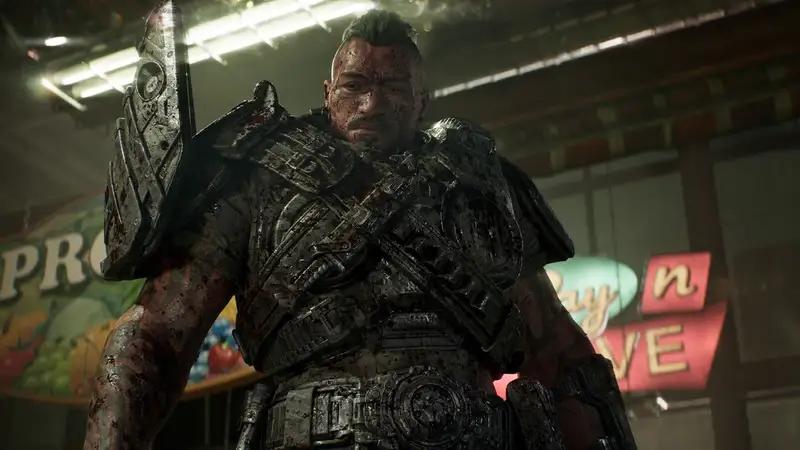
On the other hand, Ball is realistic enough to recognize that traditional hardware is still highly valuable. He has publicly praised upcoming titles like Gears of War: E-Day, acknowledging that high-end narrative games remain the emotional anchor of the Xbox brand.
The real strategy is likely not a sudden, jarring shift to virtual reality goggles, but rather a gradual restructuring of how Microsoft licenses and builds game engines. By focusing on open development tools and empowering independent creators, Xbox can mitigate the massive financial risks of AAA game development. However, the success of this strategy hinges on whether Microsoft can convince its traditional player base that these interconnected ecosystems offer genuine gaming value, rather than just another vehicle for corporate monetization.
Sources
This report is based on coverage and industry executive interviews originally published by PC Gamer.
Why it matters
The traditional gaming business model is reaching its financial limits. Developing high-fidelity AAA blockbusters now costs hundreds of millions of dollars and takes upwards of six years, making exclusive console releases a high-risk gamble. For Xbox to reach CEO Asha Sharma’s ambitious target of entertaining 'more than a billion people each day,' Microsoft cannot rely solely on selling $70 hardware-locked games to a static console user base.
Background
To understand why Matthew Ball was brought to Xbox, one must look at the immense pressure facing Microsoft's gaming division. Despite the historic $69 billion acquisition of Activision Blizzard, Xbox has struggled to close the hardware sales gap with Sony's PlayStation 5. This stagnation prompted Asha Sharma’s recent 'Xbox reset,' a severe cost-cutting measure that resulted in 3,200 layoffs and the closure of multiple development studios to focus on core, high-performing franchises.
Xbox is attempting a highly complex balancing act. Traditional console gamers are intensely hostile toward metaverse-associated buzzwords, but Xbox's financial reality demands a pivot away from pure hardware dependency. Under Ball, expect Xbox to subtly turn its intellectual properties into broader interactive platforms—such as expanding Minecraft's creator ecosystem—while still using traditional big-budget blockbusters like Gears of War to maintain credibility with its core enthusiast audience.
References
Editorial information
The editorial team reviews sources, adds context, and structures stories so readers can understand the news more clearly.
Article from QNEWS24H
Comments
(0)No comments yet. Be the first to share your thoughts.