Warhammer 40,000: Mechanicus 2 Review: A Stiff Sequel That Trades Its Unique Soul for Cover
- The sequel introduces a dual campaign, allowing players to experience the story from both the Adeptus Mechanicus and Necron perspectives.
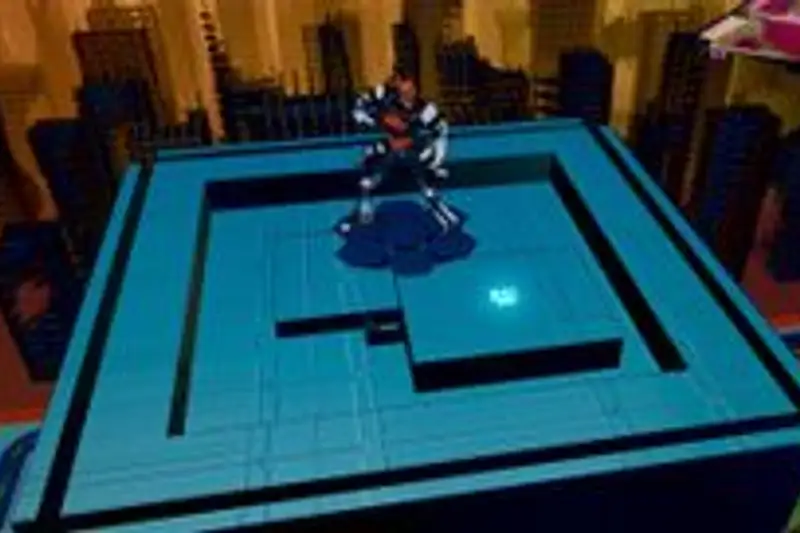
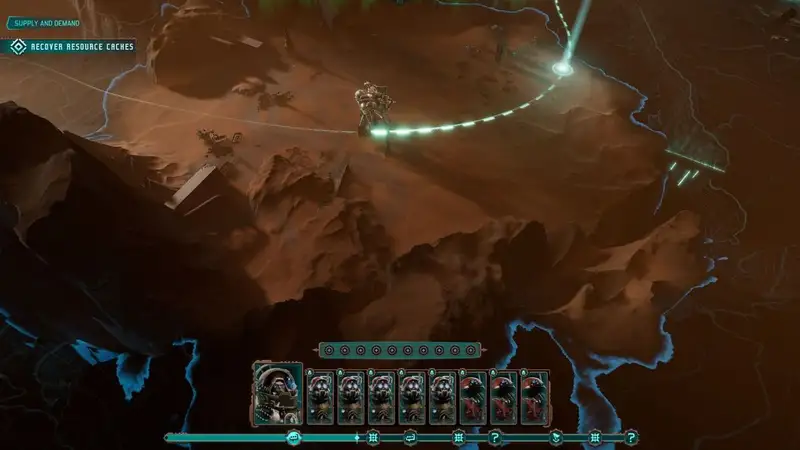
- Tactical gameplay has been altered with the addition of a traditional cover system and more linear map exploration.
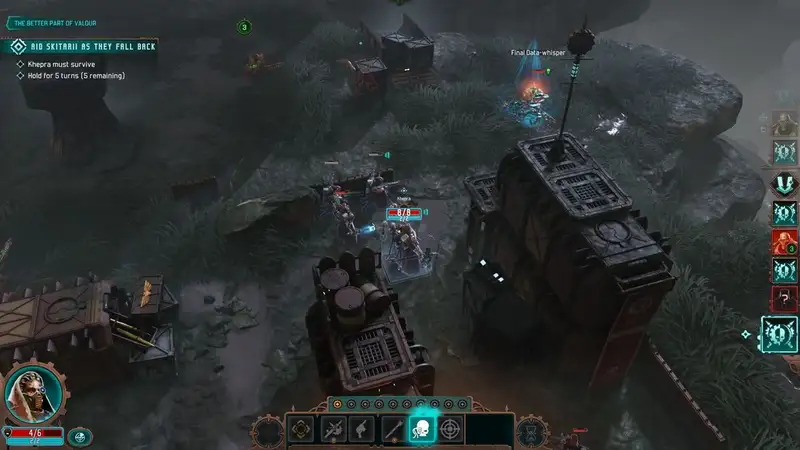
- Players are limited to protecting one fragile, pre-set leader per mission, which can lead to frustrating instant-fail scenarios when enemies bypass frontlines.
When Bulwark Studios released the original Warhammer 40,000: Mechanicus in 2018, it quickly earned a reputation as one of the finest digital adaptations of Games Workshop's grimdark universe. It achieved this not by copying established genre giants, but by discarding tactical conventions. By ditching traditional cover systems and letting players break the game with customizable, god-like Tech-Priests, it offered a distinct mechanical identity wrapped in an unmatched, pipe-organ-drenched atmosphere. Following up such a highly regarded cult hit is a monumental task, and the sequel, Mechanicus 2, attempts to raise the stakes by doubling down on scale. Yet, in expanding its scope to feature two playable factions, it has paradoxically sacrificed much of the specific mechanical weirdness that made its predecessor so memorable.
Quick summary
- Dual-Campaign Structure: Mechanicus 2 introduces playable Necrons alongside the Adeptus Mechanicus, offering a fresh, narrative-rich perspective on these dynastic, bickering robotic immortals.
- Conventional Tactical Shifts: The game introduces standard cover mechanics and replaces freeform, choose-your-own-adventure tomb exploration with linear pathways and simple strategic choices.
- Vulnerable, Rigid Leaders: Squad customization is restricted to five pre-set named leaders per faction who cannot be multi-classed, and their death results in an immediate mission failure.
Why it matters
For fans of the turn-based tactics genre, Mechanicus 2 represents an important case study in sequel design. It highlights the delicate balance between streamlining gameplay for broader appeal and preserving the complex, eccentric systems that define a niche hit. By introducing a cover system, the sequel aligns itself more closely with standard tactics titles like XCOM, potentially alienating veterans who loved the aggressive, cover-free momentum of the first game. Furthermore, giving the Necrons a starring role is a rare treat for Warhammer 40,000 lore enthusiasts, as the ancient faction is seldom granted this level of narrative depth in mainstream video games.
Background
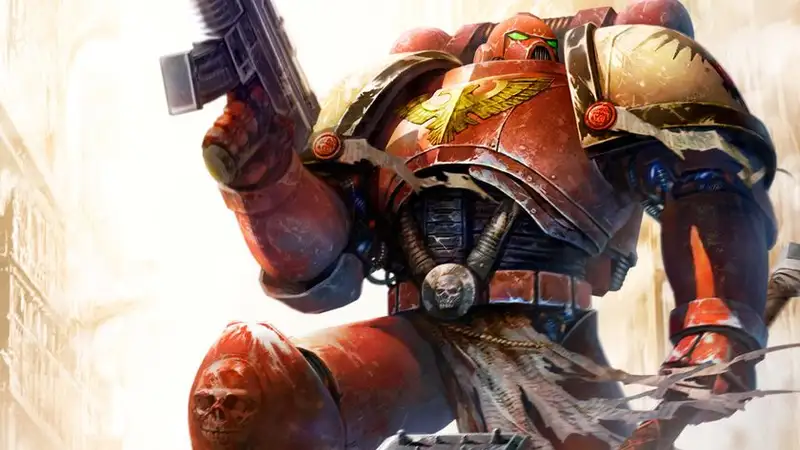
The first Mechanicus game stood out because of its unique economy and disregard for typical tactical safety. Instead of hiding behind walls, players pushed cybernetic Tech-Priests forward, using disposable Servitors to absorb incoming fire. Players gathered "Cognition Points" by analyzing the environment or taking damage, spending them to unleash overpowered weapon combinations. It was a game about escalating power and momentum, underpinned by Guillaume David's legendary soundtrack, which blended liturgical chanting, industrial synth, and cathedral pipe organs.
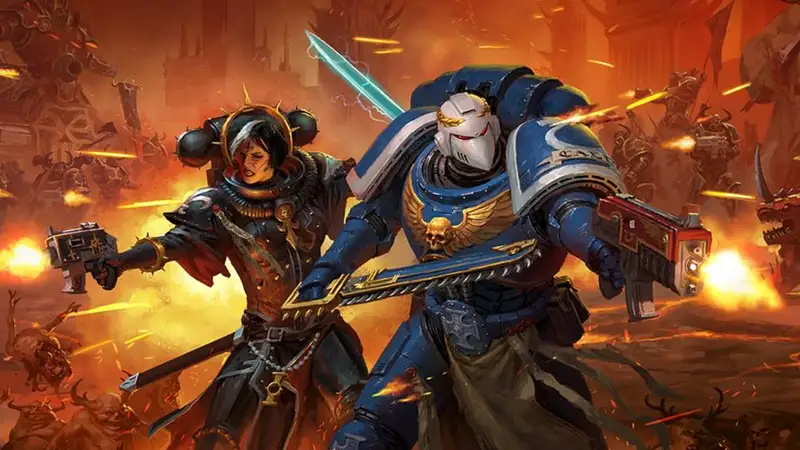
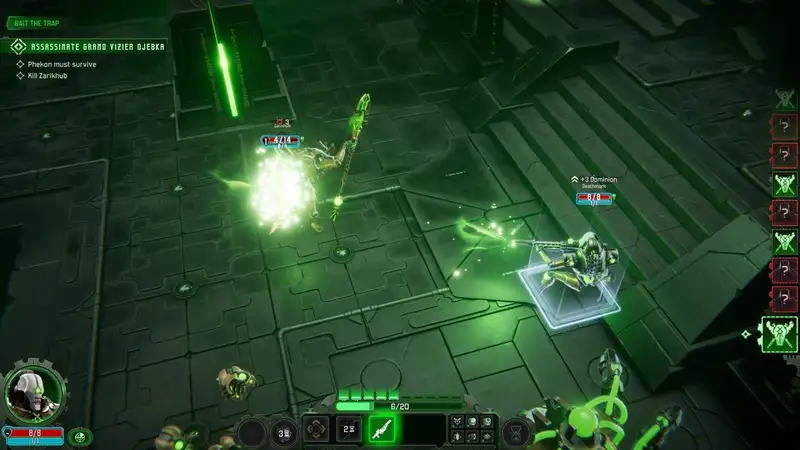
Mechanicus 2, priced at $36/£31.50, seeks to expand this framework. Developed by Bulwark Studios and published by Kasedo Games, the sequel introduces a dual campaign. While the first game kept players strictly in the cybernetic shoes of the Adeptus Mechanicus, the sequel splits its attention, allowing players to control the awakening Necron dynasties as they defend their ancient tomb worlds from human intruders.
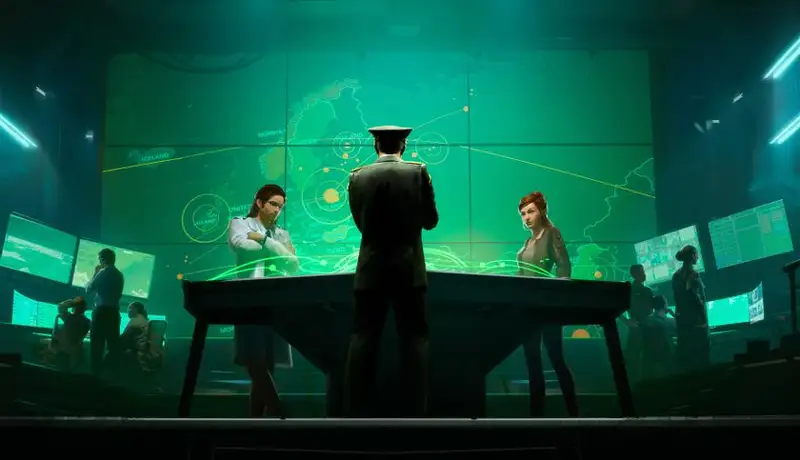
The Double-Edged Sword of Dual Campaigns
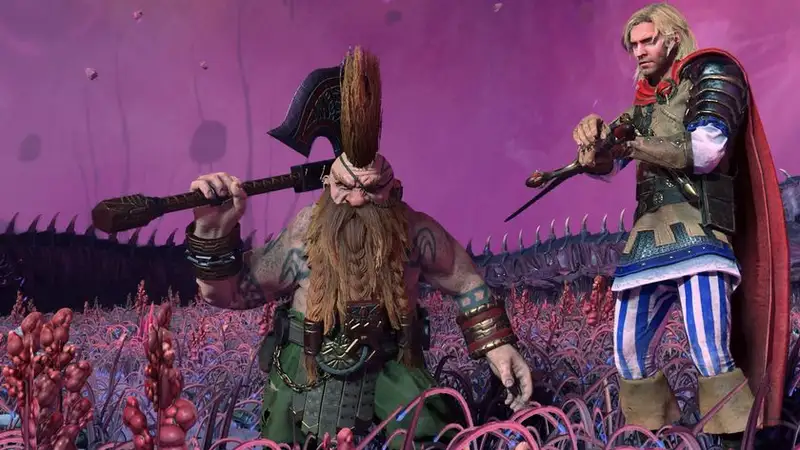
The addition of the Necron faction is undoubtedly the sequel's strongest selling point. Rather than portraying them as mindless metallic killers, the writing highlights the complex, petty, and deeply political nature of the Necron nobility. Watching these immortal lords squabble over ancient status and dynastic grudges adds an entertaining layer of dark comedy and high drama to the campaign.
Unfortunately, this narrative variety does not entirely translate to diverse gameplay. While the two factions collect resource points differently—the Tech-Priests utilize strategic troop maneuvers to earn Cognition, while the Necrons increase their Dominion level by dealing raw damage—both campaigns play out in remarkably similar ways. The distinct tactical identities of the two factions are ironed out by shared structural changes.
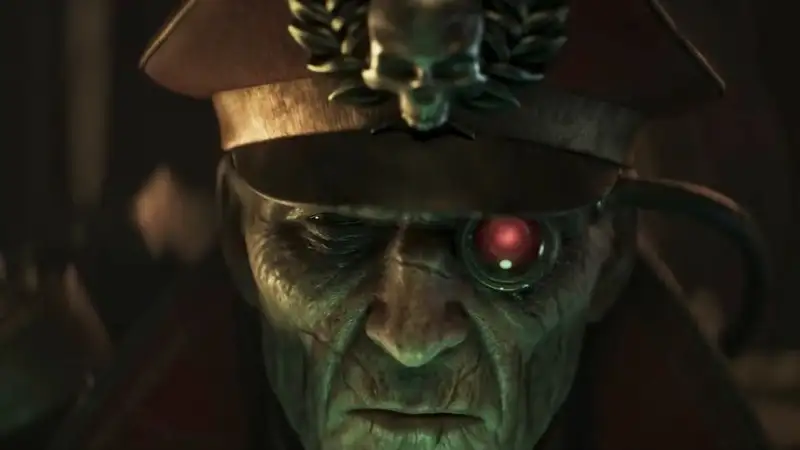
Vulnerable Generals and the Babysitting Problem
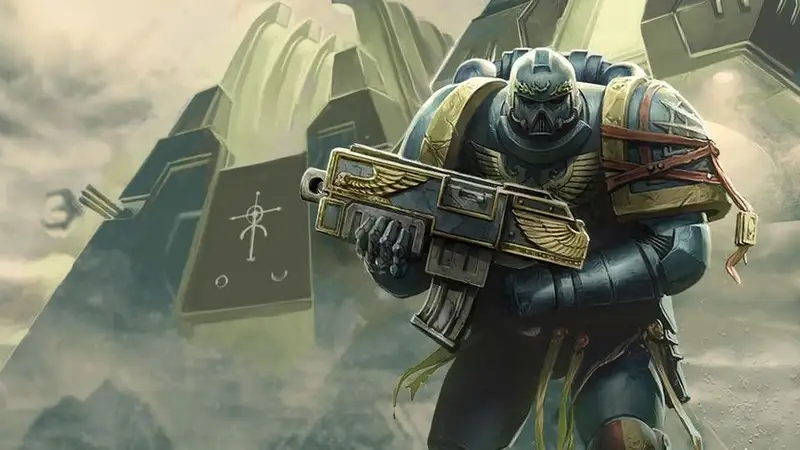
Perhaps the most controversial change in Mechanicus 2 is how it handles character progression and battlefield deployment. In the first game, players could customize a cabal of generic Tech-Priests, mixing and matching classes to build specialized or beautifully broken units. In the sequel, players are instead assigned five named leaders per faction, each confined to a rigid, highly specific upgrade tree.
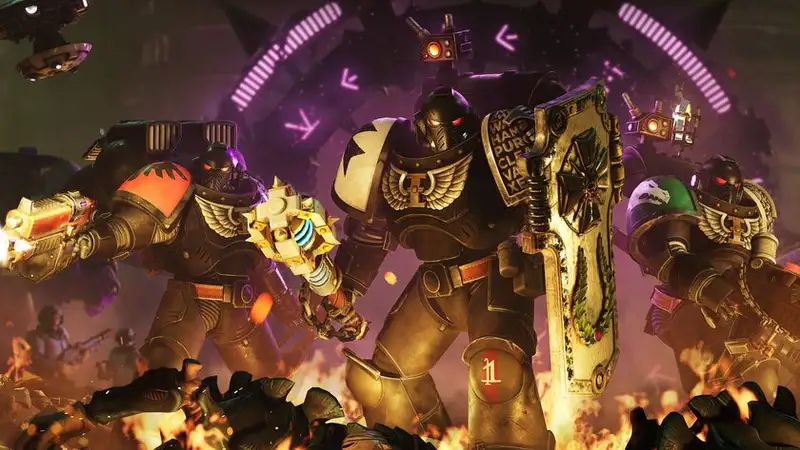
Worse, players can only bring one of these leaders into a skirmish, and they are treated as critical mission assets. If your leader dies, the mission instantly ends in failure, forcing a restart or a save-game load. This design choice mirrors the controversial system found in Heroes of Might & Magic 4, where generals participated directly in combat but became primary targets.
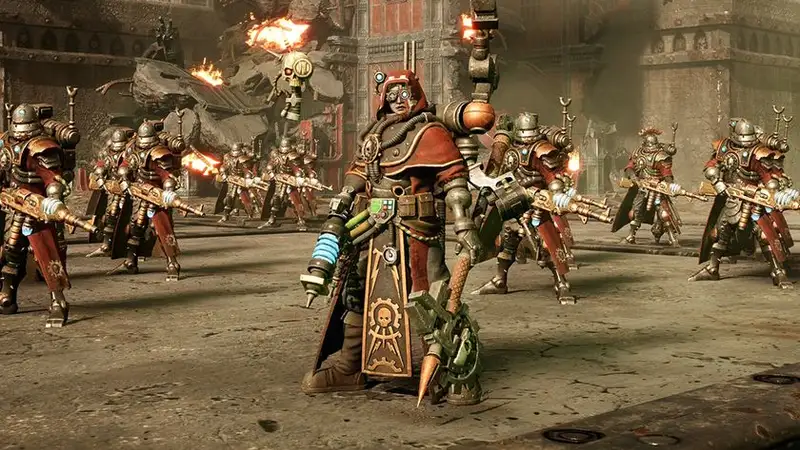
Because enemy forces frequently deploy highly mobile units—such as troops equipped with teleportation devices or jetpacks—they can easily bypass your frontlines to ambush your leader. As a result, matches often devolve into defensive babysitting exercises, forcing players to cluster their troops closely together to protect their single, fragile commander rather than exploring aggressive, dynamic strategies.
A Muted Atmosphere and Technical Performance
The atmospheric design of Mechanicus 2 also feels like a step back from the original's masterclass in tone. While the developers have included an option to toggle the Tech-Priests' voice-acting back to the robotic "Modem Simlish" chatter of the first game, the overall presentation lacks the same gothic punch. The music is far more subdued, functioning as quiet, ambient background noise rather than the booming, memorable industrial-monk soundtracks of the past.
On the technical front, the game demands some optimization. Testing on a system equipped with an Intel Core i9, 32GB of RAM, and an Nvidia RTX 4060 revealed noticeable performance drops, with framerates frequently hovering just above 30 frames per second unless demanding settings like volumetric fog are scaled back. Additionally, players may encounter minor launch bugs, such as Necron dialogue scenes accidentally displaying Adeptus Mechanicus subtitles. The game is also currently unsupported on the Steam Deck, limiting its appeal for handheld gaming enthusiasts.
Qnews24h insight
Mechanicus 2 illustrates a common trap in modern strategy game development: the tendency to homogenize gameplay in pursuit of polish and accessibility. The original Mechanicus was a classic precisely because its systems were wild, experimental, and occasionally unbalanced. By introducing standard cover mechanics and replacing deep character customization with rigid, fragile hero units, the sequel loses the mechanical friction that made its predecessor so thrilling. While it remains a competent and handsome turn-based strategy game—and an absolute must-play for Necron fans seeking narrative representation—it struggles to step out of the giant, gothic shadow cast by its older brother.
Sources
Why it matters
The shift in Mechanicus 2's design illustrates the risks of streamlining cult classic games. By adopting standard tactical conventions like cover systems and rigid hero roles, the game risks losing the unique, aggressive playstyle that set the original apart in a crowded strategy market.
Background
The 2018 original Warhammer 40,000: Mechanicus was highly praised for its aggressive combat design, lack of cover mechanics, and exceptional industrial-pipe-organ soundtrack. The sequel, developed by Bulwark Studios, tries to build on this legacy by offering a broader scope, playable Necron factions, and structured hero units, but alters many of the foundational systems that made the first game unique.
In trying to satisfy both fans of the original and a broader tactical audience, Mechanicus 2 compromises on its core identity. The inclusion of standard cover and highly vulnerable VIP characters shifts the focus from aggressive, satisfying power-trips to cautious defensive play, proving that more content and polished conventions do not always equate to a superior tactical experience.
References
Editorial information
The editorial team reviews sources, adds context, and structures stories so readers can understand the news more clearly.
Article from QNEWS24H
Comments
(0)No comments yet. Be the first to share your thoughts.