Police Warn of payment Speaker Scams: Critical Security Steps for Vietnamese Merchants
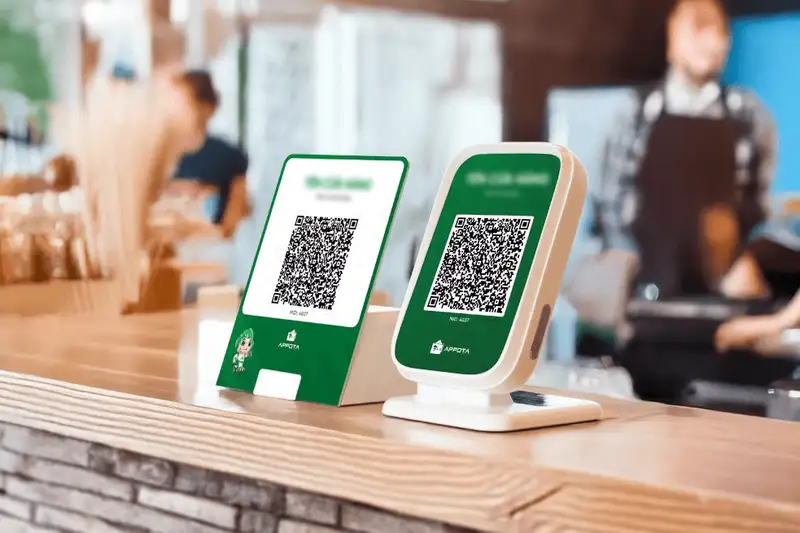
- Scammers are exploiting unsecured payment notification speakers to trigger fake voice payment confirmations.
- Unsecured Smart POS terminals and shared shop Wi-Fi networks are leaving businesses vulnerable to data sniffing and phishing traps.
- Police recommend separating guest and corporate Wi-Fi, updating default device passwords, and physically auditing QR codes regularly.
In bustling retail hubs and local markets across Vietnam, the robotic chime of a payment notification speaker has become the ultimate sound of reassurance. For busy shopkeepers, this audio signal confirms that a customer's bank transfer went through, allowing transactions to flow without manual verification. However, public security authorities have issued an urgent warning: tech-savvy fraudsters are now exploiting unsecured payment speakers, Wi-Fi networks, and POS terminals to simulate fake successful payments, leaving businesses vulnerable to significant financial losses.
Quick summary
- Exploitation of Smart Devices: Scammers are targeting unsecured Bluetooth- and Wi-Fi-enabled payment notification speakers and Smart POS machines to trigger fake payment sounds or manipulate transaction logs.
- Network Vulnerabilities: Shared Wi-Fi networks between guests and payment terminals allow criminals to intercept data, leading to sophisticated phishing attempts masquerading as banking technical support.
- Countermeasures for Merchants: Police recommend strict network isolation (separating guest and business Wi-Fi), disabling default device passwords, checking physical QR codes daily, and training employees to verify bank balance changes directly before releasing merchandise.
Why it matters
For years, the push toward a cashless society has been hailed as a massive productivity boost for micro-merchants and small-to-medium enterprises (SMEs). By turning transaction confirmation into an auditory cue, notification speakers drastically reduced wait times at checkout. But when convenience supersedes basic cybersecurity, trust in digital infrastructure crumbles. For small businesses operating on thin margins, even a few fraudulent high-value transactions can wipe out daily profits. This warning highlights a broader shift: cybercriminals are moving away from complex banking Trojan networks to focus on low-tech, high-impact physical endpoint vulnerabilities in retail environments.
Background
Over the past three years, QR-code-based bank transfers (via VietQR and Napas247) have eclipsed cash and card payments in Vietnam's retail ecosystem. To help cashiers manage rushes without constantly checking mobile phones, banks and fintech companies rolled out small, internet-connected speakers that announce incoming transfers in real-time. Initially, these devices were seen as foolproof. However, the rush to deploy millions of these endpoints meant security basics—such as changing default administrator passwords or isolating business-critical devices from public customer Wi-Fi networks—were largely ignored by busy shop owners. This has opened a direct pathway for modern social engineering and network spoofing attacks.
The Mechanics of the Audio Spoofing Hack
The primary threat involves fraudsters targeting the very speakers meant to safeguard transactions. Many of these payment notification speakers connect to the internet via local Wi-Fi or pair with a terminal using Bluetooth. Police report that many shop owners leave these connections entirely unsecured, often keeping the factory-default administrator password or leaving the network open to anyone.
By connecting to the same local network or pairing directly via Bluetooth, an attacker can hijack the speaker. When pretending to purchase goods, the suspect triggers a pre-recorded audio file on their own device or sends a malicious signal to the speaker, causing it to announce, 'Successfully received 500,000 VND,' or any other custom amount. If the cashier relies solely on the auditory confirmation without opening their banking terminal to verify the incoming balance, the fraudster walks away with high-value goods entirely free of charge.
Smart POS Tampering and Phishing Traps
Beyond speakers, Smart POS terminals have emerged as high-value targets for sophisticated retail fraud rings. In these scenarios, bad actors pose as legitimate bank technicians or payment service representatives arriving for a scheduled maintenance or system upgrade.
Once granted physical access to the device, the impostors install unauthorized software, attach covert hardware sniffers, or modify system settings. These modifications can trigger fake 'transaction failed' notifications on the screen, tricking the cashier or the customer into swiping or scanning multiple times. This results in duplicate payments or routes the transaction to an external, unauthorized account controlled by the hackers.
Exploiting the Shared Wi-Fi Loophole

A critical operational error made by many small shops is hosting their guest Wi-Fi and their point-of-sale payment system on the exact same local network. This setup grants malicious actors on the guest network access to scan the internal traffic of the store.
Once inside the shared network, attackers can monitor metadata from payment transactions. Armed with specific details such as the shop's name, approximate transaction times, and payment structures, they make highly convincing phone calls to the store owners. Posing as bank helpdesks resolving a 'stuck transaction' or 'system error,' they trick managers into revealing sensitive one-time passwords (OTPs), merchant credentials, or bank passwords.
Psychological Pressure and Fake Transaction Screens
For less technically advanced criminals, mobile-based simulation apps remain a popular tool. These applications generate pixel-perfect replicas of popular banking apps showing a successful 'transfer complete' screen.
To execute the scam, the buyer shows the fake screen to the cashier, immediately applying intense psychological pressure. They might complain loudly about a weak mobile signal, claim that bank networks are experiencing delays, or rush the cashier by pointing to a growing line of impatient customers. Pressured to maintain transaction speed, cashiers often yield and hand over the merchandise, realizing hours later that the funds never arrived.
Best Practices to Secure Your Retail Register
To mitigate these rising threats, Vietnamese public security departments have laid out a strict, actionable defense checklist for all merchants, retail outlets, and business households:
- Separate Networks: Immediately implement a separate, dedicated Wi-Fi network exclusively for payment devices (speakers, POS terminals, and business phones). Customers should never have access to this network.
- Hardwire and Secure: Change all default passwords on network routers, payment speakers, and POS machines immediately upon installation. Where possible, prioritize devices with independent cellular connectivity (SIM-card-enabled) over shared Wi-Fi.
- Zero-Trust Physical Access: Never allow unauthorized personnel, technicians, or couriers to handle, repair, or update POS terminals or speakers without verifiable documentation and direct phone confirmation with the providing bank.
- Regular Physical Audits: Conduct daily physical checks of static QR codes printed at the register to ensure they have not been covered by a fraudulent sticker. Inspect POS hardware for unusual USB attachments or modified cables.
- Stricter Verification Protocols: Train staff to never rely solely on speaker announcements or customer-presented screens. A transaction should only be marked complete when the merchant’s own device registers the updated balance or an official banking app notification lands.
Qnews24h insight
The rise of payment speaker hacks represents a classic cybersecurity challenge: the convenience-security trade-off. In the hyper-competitive retail landscape, saving two seconds per transaction is highly prioritized. However, treating payment notifications as a purely 'set-and-forget' physical asset leaves a wide, easily exploitable gap.
This wave of fraud proves that security in the modern cashless era cannot rely on trust in end-user devices alone. Financial institutions and fintech developers must take proactive steps, such as enforcing end-to-end encryption on the local connection between POS hosts and audio speakers, and implementing cryptographic handshakes to prevent arbitrary audio playback. For merchants, the takeaway is clear: in a digital-first economy, every local shop is an IT network that requires active defense.
Sources
Based on official cybersecurity advisories published via Soha.vn.
Why it matters
As Vietnam shifts towards a fully cashless ecosystem, security oversights in small-business payment endpoints are leaving local vendors highly vulnerable. This security gap endangers the operational stability of small merchants and challenges consumer confidence in instant transaction verifications.
Background
The rapid adoption of QR code payments led to the creation of real-time audio notification speakers to help cashiers work quickly. However, fast-paced deployment resulted in many merchants keeping factory-default settings and sharing local Wi-Fi networks with customers, allowing hackers easy access to manipulate these systems.
The rise of audio-spoofing and local Wi-Fi exploits highlights that retail transactions are no longer just physical trades, but digital security events. Financial providers must implement end-to-end encryption and cryptographically signed audio notifications to ensure that hardware endpoints can no longer be hijacked by third-party signals.
References
Editorial information
The editorial team reviews sources, adds context, and structures stories so readers can understand the news more clearly.
Article from QNEWS24H
Comments
(0)No comments yet. Be the first to share your thoughts.