Vietnam's Industrial Laundry Market: Untapped Potential & Tech-Driven Transformation

- Vietnam's industrial laundry sector comprised over 15,000 businesses in 2022, with more than 96% being small-scale or household operations.
- The market holds substantial untapped growth potential compared to more mature regional neighbors like Thailand and Malaysia.
- Demand is shifting from basic services to integrated, smart solutions that streamline operations, reduce costs, and enhance customer experience.
- Industry players like Samsung are introducing advanced industrial laundry equipment featuring technologies such as Direct Drive motors and Bubble Technology to meet these evolving...
In the bustling urban centers and rapidly developing regions of Vietnam, an often-overlooked yet critical service industry is on the cusp of a quiet revolution. The nation's industrial laundry market, characterized by its fragmented nature and significant untapped potential, is witnessing a profound shift from traditional operations to sophisticated, technology-driven solutions. This evolution signals not just a change in how clothes are cleaned, but a broader modernization trend impacting small businesses, consumers, and the overall service economy.
Quick summary
- In 2022, Vietnam's industrial laundry sector encompassed over 15,300 businesses, with more than 96% operating at a small scale or as household ventures.
- The market exhibits substantial growth potential, notably trailing behind more mature industrial laundry sectors in neighboring countries such as Thailand, the Philippines, Malaysia, and Indonesia.
- Demand is evolving from basic washing and drying services to comprehensive, smart solutions that facilitate easier business startups, efficient expansion, cost optimization, and improved customer convenience.
- Industry leaders, including Samsung, are introducing advanced industrial laundry equipment equipped with innovations like Direct Drive motors, VRT+ vibration reduction, and Bubble Technology to cater to these modern operational requirements.
Why it matters
The modernization of Vietnam's industrial laundry market holds far-reaching implications across various sectors. For small business owners and aspiring entrepreneurs, it translates into accessible pathways for establishing and scaling operations with enhanced efficiency and reduced overheads. The integration of smart technologies offers a competitive edge, allowing businesses to provide quicker, higher-quality services while optimizing energy and water consumption.
For consumers and businesses requiring laundry services – from hotels and hospitals to restaurants and general households – this transformation means access to more reliable, convenient, and technologically advanced options. The shift towards smarter solutions promises faster turnaround times, superior cleaning quality, and potentially more flexible service models, ultimately elevating the overall customer experience. Economically, this sector's growth fosters investment, creates specialized jobs, and contributes to the nation's service industry development, aligning Vietnam with regional trends in industrial modernization.
Background
For years, Vietnam's industrial laundry landscape has been predominantly shaped by a vast network of independent, small-scale enterprises and family-run businesses. This highly fragmented structure, as evidenced by over 15,300 establishments in 2022 with 96% being small operations, meant that the market primarily catered to local, immediate needs with varying standards of service quality and efficiency. In contrast, neighboring Southeast Asian economies like Thailand, Malaysia, and the Philippines have seen their industrial laundry sectors mature, often characterized by larger chains, advanced equipment, and standardized operational procedures.
The impetus for change in Vietnam stems from several converging factors. Rapid urbanization has increased population density and changed living patterns, reducing the feasibility of home laundry for many. Concurrently, the booming tourism and hospitality sectors, alongside growing manufacturing and healthcare industries, demand high-volume, professional, and hygienic laundry services. This escalating demand, coupled with a growing awareness of technological advancements and the need for operational efficiencies, has begun to push the market beyond its traditional boundaries, paving the way for a new era of industrial laundry services focused on smart, integrated solutions rather than just basic machinery.
Vietnam's Laundry Landscape: A Market Ripe for Modernization
The sheer number of laundry businesses in Vietnam, exceeding 15,000 in 2022, speaks to an essential and ubiquitous service. However, the statistic that over 96% are small-scale or household ventures highlights a unique market dynamic. This dominance by micro-enterprises often implies a lack of economies of scale, inconsistent service quality, limited access to capital for advanced equipment, and a greater reliance on manual processes. While these businesses form the backbone of local communities, they also represent a significant opportunity for growth and modernization.
Compared to the more developed industrial laundry markets in Thailand, Malaysia, Indonesia, and the Philippines, Vietnam's sector is considered to be in its nascent stages of technological adoption and consolidation. These more mature markets have often seen the emergence of larger players, sophisticated franchise models, and a greater integration of automation and smart management systems. The current landscape in Vietnam suggests a fertile ground for both domestic and international enterprises to introduce innovations that can elevate the entire industry standard.
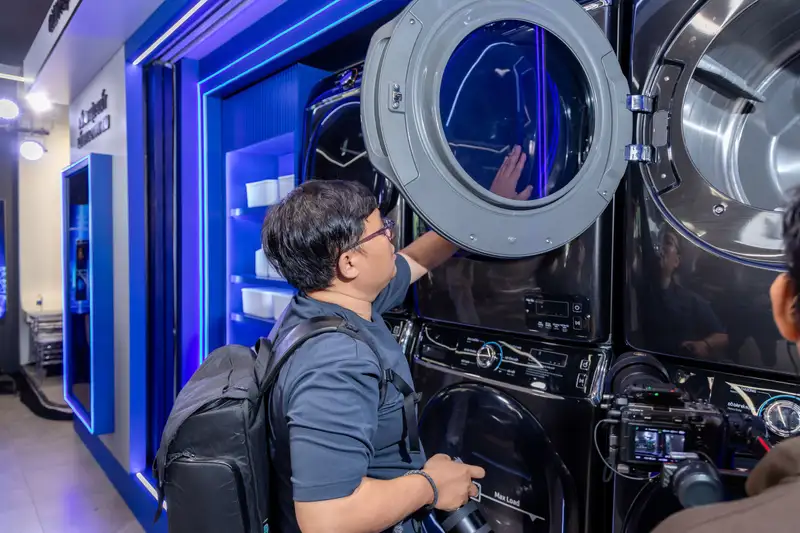
The Shift Towards Smart Solutions
The market's evolution is not merely about replacing old machines with new ones; it's about a fundamental re-evaluation of the entire laundry service ecosystem. Businesses and consumers alike are increasingly seeking comprehensive solutions that address pain points beyond basic cleaning. Entrepreneurs entering or expanding in this space are looking for systems that simplify startup processes, streamline daily operations, and reduce long-term costs. This includes features like integrated payment systems, remote monitoring, and efficient resource management.
Moreover, customer convenience has become a paramount consideration. Modern lifestyles demand faster service, greater reliability, and often, a more personalized experience. This shift necessitates machines that are not only powerful and durable but also intelligent enough to offer customized wash cycles, quick drying times, and user-friendly interfaces. The drive for optimization extends to energy and water consumption, pushing for eco-friendly solutions that are both sustainable and cost-effective in the long run.
Technological Advancements Driving Efficiency
To meet these burgeoning demands, technology developers and manufacturers are stepping up with advanced industrial laundry solutions. Samsung Vietnam, for instance, has introduced a new line of industrial washing and drying machines designed to tackle the inefficiencies prevalent in the traditional market. These machines are engineered with several key technologies aimed at optimizing operational costs and ensuring stable, high-performance service.
Among the notable features are the Direct Drive motor, which eliminates belts for reduced noise, vibration, and wear, leading to greater durability and energy efficiency. This is often paired with VRT+ (Vibration Reduction Technology Plus) to minimize operational disturbances, allowing for installation in diverse environments. Furthermore, Bubble Technology is integrated to generate rich suds that penetrate fabrics more effectively, ensuring a thorough clean even in cooler water temperatures, which can reduce energy consumption without compromising on hygiene. These innovations collectively contribute to shortening processing times, increasing the daily service capacity, and enhancing the overall customer experience, making them crucial for businesses looking to modernize and scale.
Opportunities and Challenges for Growth
The significant growth potential in Vietnam's industrial laundry market presents a compelling opportunity for investors and technology providers. As the economy continues to develop and urbanization accelerates, the demand for professional laundry services from diverse sectors will only intensify. This environment fosters innovation, competition, and the introduction of advanced business models, potentially leading to market consolidation and the rise of larger, more sophisticated service providers.
However, this transition is not without its challenges. The existing landscape of small-scale businesses may face hurdles in adopting new technologies due to initial investment costs and the need for new operational skills. Government support for small and medium-sized enterprises (SMEs) in terms of training, financing, and regulatory frameworks will be crucial to ensure a smooth transition. Furthermore, infrastructure development, particularly stable power and water supply, will be essential to support the widespread deployment of high-capacity industrial machines. Successfully navigating these challenges will be key to unlocking the full potential of Vietnam's industrial laundry sector.
Qnews24h insight
Vietnam's industrial laundry sector is more than just a mundane service industry; it represents a microcosm of the nation's broader economic transformation. The shift from a highly fragmented, informal market to one driven by smart, integrated solutions signals a crucial phase where technological adoption can leapfrog traditional development stages. This evolution is not merely about introducing new machines but about fundamentally reshaping business models, enhancing operational efficiencies, and meeting the elevated expectations of a growing middle class and sophisticated commercial sectors. The challenge for local enterprises will be to leverage these advancements strategically, perhaps through franchising or cooperative models, to maintain their market relevance against larger, technologically adept competitors. Ultimately, the success of this modernization will hinge on how effectively technology can be democratized and integrated to uplift the entire service value chain, rather than just benefiting a select few.
Sources
Frequently Asked Questions
What is the current state of Vietnam's industrial laundry market?
As of 2022, Vietnam's industrial laundry market is highly fragmented, with approximately 15,316 businesses. Over 96% of these are small-scale or household operations, indicating a significant potential for modernization and consolidation compared to more developed regional markets.
What is driving the growth and transformation of this market?
Several factors are driving the transformation, including rapid urbanization, increasing demand from hospitality, healthcare, and manufacturing sectors, and a growing consumer need for convenient, efficient, and high-quality laundry services. This is coupled with the availability of advanced technological solutions that promise cost optimization and operational efficiency.
What kind of technological advancements are being introduced?
New industrial laundry machines are featuring technologies such as Direct Drive motors for enhanced durability and energy efficiency, VRT+ (Vibration Reduction Technology Plus) to minimize operational noise and vibration, and Bubble Technology for more effective cleaning with reduced energy consumption. These innovations aim to shorten processing times and improve service quality.
How does Vietnam's market compare to its regional neighbors?
Vietnam's industrial laundry market is considered less developed than those in neighboring countries like Thailand, the Philippines, Malaysia, and Indonesia. These regional markets have generally seen earlier adoption of advanced technologies, larger-scale operations, and more integrated service models, indicating a significant catch-up potential for Vietnam.
Why it matters
The modernization of Vietnam's industrial laundry market holds far-reaching implications across various sectors. For small business owners and aspiring entrepreneurs, it translates into accessible pathways for establishing and scaling operations with enhanced efficiency and reduced overheads. The integration of smart technologies offers a competitive edge, allowing businesses to provide quicker, higher-quality services while optimizing energy and water consumption. For consumers and businesses requiring laundry services – from hotels and hospitals to restaurants and general households – this transformation means access to more reliable, convenient, and technologically advanced options. The...
Background
For years, Vietnam's industrial laundry landscape has been predominantly shaped by a vast network of independent, small-scale enterprises and family-run businesses. This highly fragmented structure, as evidenced by over 15,300 establishments in 2022 with 96% being small operations, meant that the market primarily catered to local, immediate needs with varying standards of service quality and efficiency. In contrast, neighboring Southeast Asian economies like Thailand, Malaysia, and the Philippines have seen their industrial laundry sectors mature, often characterized by larger chains, advanced equipment, and standardized operational procedures. The impetus for change in Vietnam stems from...
Vietnam's industrial laundry sector is more than just a mundane service industry; it represents a microcosm of the nation's broader economic transformation. The shift from a highly fragmented, informal market to one driven by smart, integrated solutions signals a crucial phase where technological adoption can leapfrog traditional development stages. This evolution is not merely about introducing new machines but about fundamentally reshaping business models, enhancing operational efficiencies, and meeting the elevated expectations of a growing middle class and sophisticated commercial sectors. The challenge for local enterprises will be to leverage these advancements strategically, perhaps...
References
Editorial information
The editorial team reviews sources, adds context, and structures stories so readers can understand the news more clearly.
Article from QNEWS24H
Comments
(0)No comments yet. Be the first to share your thoughts.