Vans Old Skool Meets Harris Tweed: A Fusion of Scottish Heritage and California Skate Culture
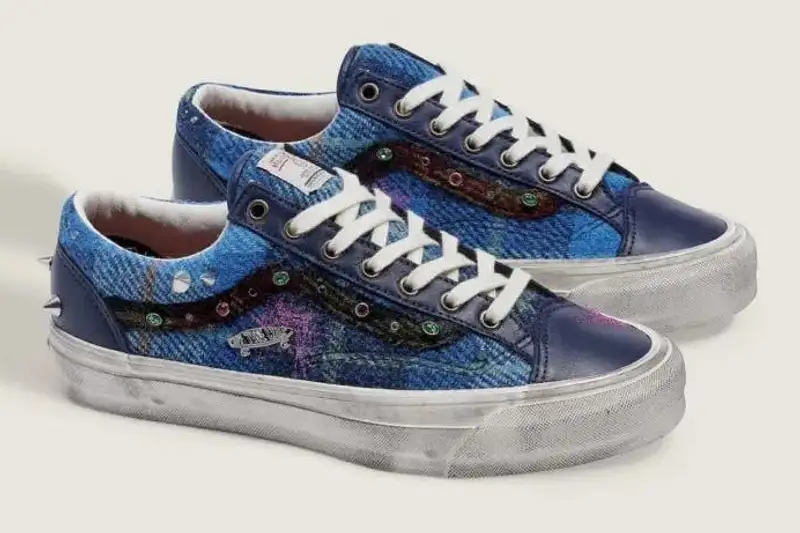
- Vans unveils an Old Skool sneaker featuring authentic Harris Tweed, blending Scottish craft with skate culture.
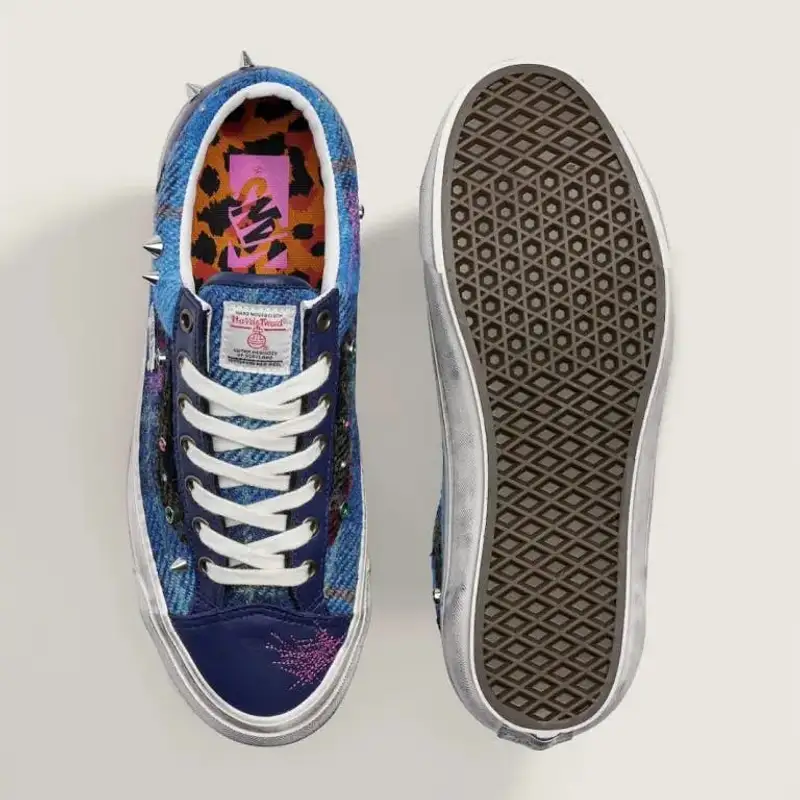
- The design incorporates multi-toned blue Harris Tweed, premium navy leather overlays, and unique studded embellishments.
- This collaboration highlights Vans' strategic shift towards material-driven, textured footwear designs beyond basic color updates.
- The release targets a luxury streetwear market, emphasizing craftsmanship, heritage, and unique material stories.
The worlds of rugged Southern California skate parks and the serene, wind-swept Outer Hebrides of Scotland have converged in an intriguing new footwear collaboration. Vans, a brand synonymous with counter-culture and skate heritage, has unveiled a distinctive iteration of its classic Old Skool sneaker, integrating the time-honored, hand-woven fabric of Harris Tweed. This unlikely partnership challenges conventional notions of luxury and durability, creating a hybrid silhouette that marries artisanal craft with an enduring street staple.
At its core, this release exemplifies a growing trend of brands exploring rich textural narratives and unexpected material pairings. By infusing the Harris Tweed into a design traditionally associated with performance and resilience on a skateboard, Vans signals a strategic pivot, aiming to capture the attention of a more fashion-forward audience without abandoning its roots.
Quick summary
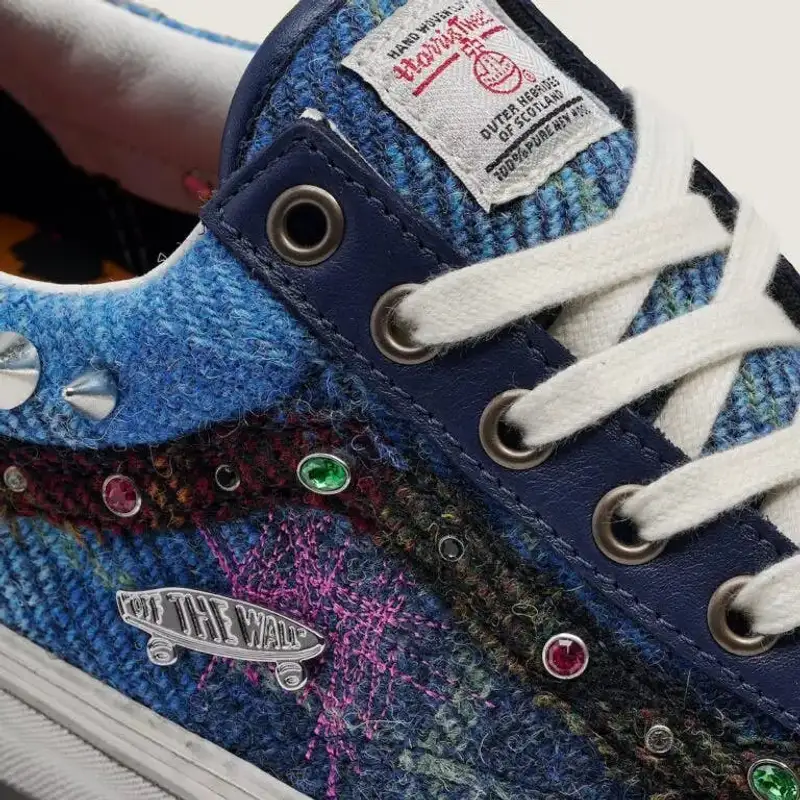
- Vans has launched a collaborative edition of its iconic Old Skool sneaker featuring authentic Harris Tweed fabric.
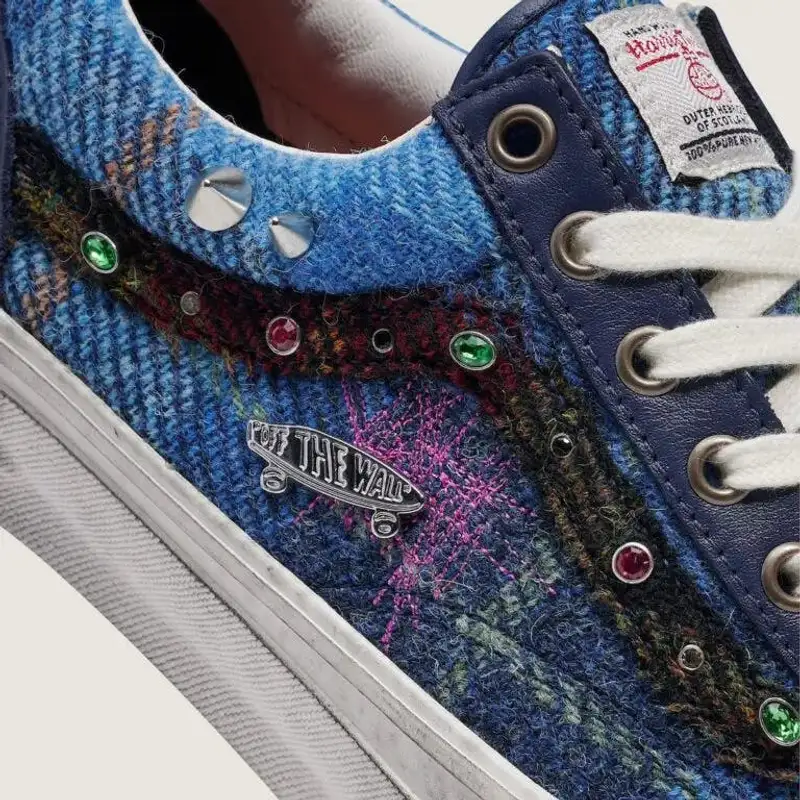
- The design blends multi-toned blue Harris Tweed with rich navy leather overlays and unique studded details on the Sidestripe and heel.
- This partnership signifies Vans' ongoing evolution towards more material-driven and textured footwear designs beyond simple color variations.
- The collaboration unites traditional Scottish textile heritage with contemporary Californian skate culture, appealing to a luxury streetwear market.
Why it matters
This collaboration holds significance for several reasons, impacting both the footwear industry and the broader fashion landscape. For Vans, it represents a bold statement in brand evolution. Moving beyond its established skate identity, the brand is actively diversifying its appeal, tapping into the burgeoning luxury streetwear market and emphasizing artisanal quality. This strategic direction allows Vans to command higher price points and attract a demographic that values craftsmanship and unique material stories.
For Harris Tweed, the partnership offers invaluable exposure to a younger, global audience, reinforcing its relevance in contemporary fashion. While Harris Tweed holds a prestigious position in traditional apparel, collaborations like this inject a fresh, modern energy, demonstrating the versatility and enduring appeal of a textile woven by hand for centuries. It underscores a broader industry trend where heritage brands seek innovative ways to connect with new consumer bases, ensuring their legacy continues to thrive in a rapidly changing market.
Furthermore, this release contributes to the ongoing dialogue about sustainable and authentic fashion. In an era dominated by mass production, the use of genuine Harris Tweed—a product with protected geographical indication, known for its ethical production and enduring quality—resonates with consumers increasingly prioritizing conscious consumption and unique, well-made items. It signals a shift from transient trends to investments in pieces with genuine provenance and lasting value.
Background
Vans emerged from Southern California in 1966, quickly becoming the footwear of choice for skateboarders due to its durable construction and sticky waffle soles. Over decades, silhouettes like the Old Skool, Sk8-Hi, and Authentic cemented their status as cultural icons, transcending their utilitarian origins to become symbols of youth culture, music, and street style. While known for its classic canvas and suede constructions, Vans has a long history of collaborations, often injecting fresh perspectives through partnerships with artists, designers, and other brands.
Harris Tweed, on the other hand, boasts an even longer and more storied history. Originating in the Outer Hebrides of Scotland, specifically the islands of Lewis, Harris, Uist, and Barra, this unique wool fabric has been handwoven by islanders in their homes for centuries. Its production is protected by the Harris Tweed Act of 1993, ensuring that only tweed woven in the Outer Hebrides from 100% pure virgin wool, dyed, spun, and finished there, can bear the iconic Orb Mark certification. Traditionally used for durable outerwear and sophisticated tailoring, Harris Tweed embodies a legacy of quality, resilience, and a deep connection to its geographical origin.
The convergence of these two distinct legacies reflects a broader movement in fashion where boundaries between high and low, traditional and modern, are increasingly blurred. In recent years, luxury brands have embraced streetwear aesthetics, while heritage craft has found new life in unexpected contexts. This particular collaboration is not just about aesthetics; it's about a conversation between authentic craft and street credibility, building upon Vans' recent emphasis on diversified textures and premium materials, as noted in the original source, moving beyond mere color palette shifts.
Vans' Strategic Evolution and the Materiality Trend
The source material explicitly points to Vans' current strategy focusing on 'ultra-textured, material-driven footwear.' This marks a significant development for a brand long associated with consistent, albeit iconic, material choices like canvas and suede. This pivot can be interpreted as a response to a saturated sneaker market where differentiation through material innovation and tactile experiences has become paramount.
By engaging with premium fabrics like Harris Tweed, Vans is signaling a move upmarket, positioning itself closer to 'luxury casual' or 'heritage streetwear' segments. This strategy allows the brand to introduce more intricate designs and storytelling into its product lines, attracting a consumer base that prioritizes unique tactile qualities and artisanal provenance over mass-market trends. The integration of studded embellishments further amplifies this, adding a punk-rock edge that hints at bespoke customization while retaining Vans' rebellious spirit.
This approach isn't isolated. Many footwear brands are exploring innovative materials, sustainable textiles, and unexpected collaborations to maintain relevance and capture consumer interest in a crowded marketplace. Vans' decision to lean into 'materiality' is a calculated risk, potentially alienating some purists but opening doors to significant growth opportunities in premium segments. It aligns with a broader industry narrative where the 'sneaker' is no longer just athletic equipment but a canvas for artistic expression and a statement of personal style.

Design Details: A Study in Contrast
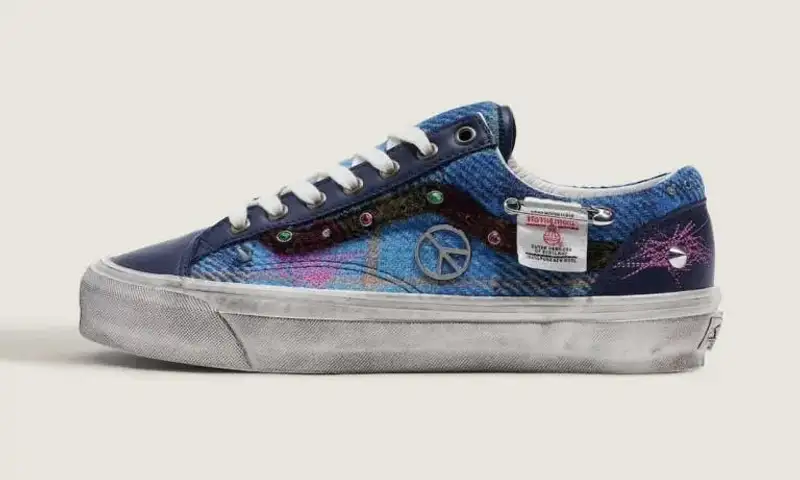
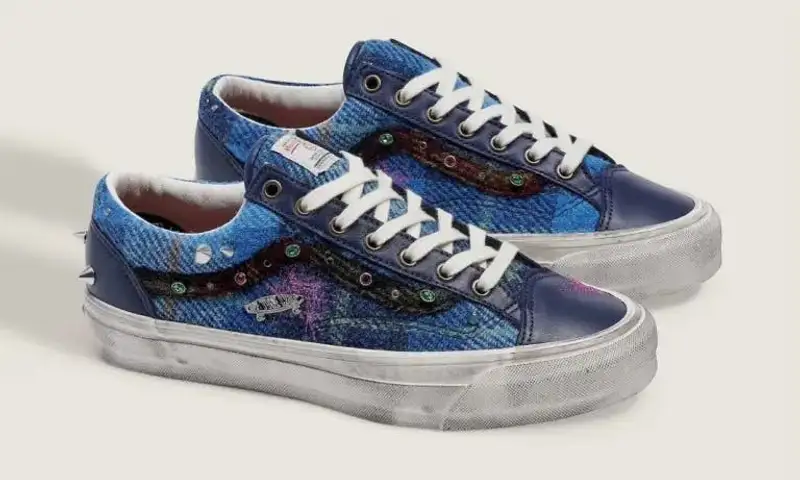
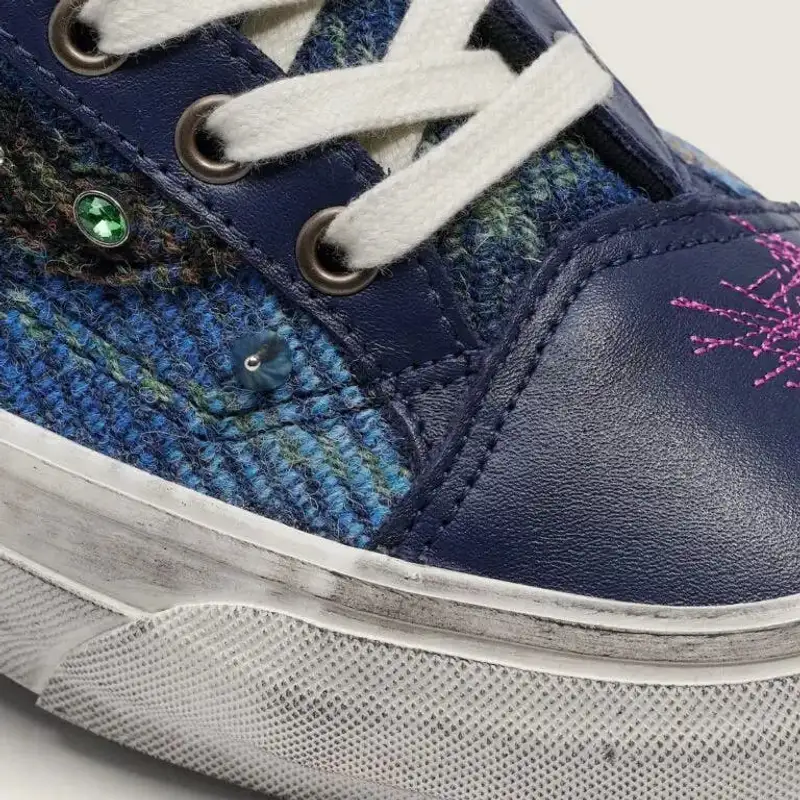
The Harris Tweed x Vans Old Skool is more than just a fabric swap; it's a meticulously crafted design. The upper features a multi-toned blue Harris Tweed base, subtly interwoven with hints of green and brown. This intricate weave provides visual depth and a sophisticated texture that contrasts sharply with the shoe's traditional utilitarian silhouette.
Reinforcing the structure and adding a touch of rugged elegance are the deep navy leather overlays. These robust panels wrap the toe box, eyestays, and heel, offering durability and a polished finish that frames the soft wool. The juxtaposition of the raw, tactile tweed with the smooth, refined leather creates an engaging visual and textural dialogue across the shoe's surface.

Perhaps the most striking elements are the embellishments. The iconic Vans Sidestripe, typically a simple leather or canvas stripe, is transformed with multi-colored gems, adding a playful yet luxurious sparkle. Complementing this, chrome spike studs adorn the heel, injecting a dose of edgy rebellion. These details highlight the collaborative spirit, merging the elegance of traditional textiles with the audacious flair of contemporary fashion. The presence of the official Harris Tweed certification badge on the tongue proudly declares the textile's authentic heritage and superior quality, a subtle but significant nod to its storied past.
Qnews24h insight
The Harris Tweed x Vans Old Skool collaboration is more than a seasonal release; it's a telling indicator of strategic shifts within both the heritage textile industry and the global footwear market. While seemingly disparate, this union underscores a persistent truth: authenticity and unique storytelling remain powerful differentiators in a crowded consumer landscape. For Vans, this isn't merely a design choice; it's a calculated move to elevate its product line, pushing the Old Skool from a foundational skate shoe into a premium lifestyle offering. The brand risks potentially alienating its core purist audience but stands to gain significant traction with fashion-conscious consumers who prioritize craftsmanship and unique narrative over strict adherence to traditional skate aesthetics. For Harris Tweed, the partnership ingeniously bridges centuries of tradition with contemporary street culture, proving that even the most venerable crafts can find new relevance and reach new demographics by embracing unexpected alliances. This collection suggests a future where the lines between heritage, luxury, and street culture will continue to blur, driven by consumer demand for products that offer both exceptional quality and a compelling story.

Sources

FAQ
What is Harris Tweed?

Harris Tweed is a unique, high-quality wool fabric that is handwoven by islanders in their homes in the Outer Hebrides of Scotland. It is protected by an Act of Parliament, ensuring its authenticity and traditional production methods, and is famous for its durability, warmth, and distinctive patterns.
When and where will the Harris Tweed x Vans Old Skool be available?
The source article indicates that the collaboration has landed, but specific release dates or retail partners are not detailed. Typically, such premium collaborations are available through select Vans retailers, high-end sneaker boutiques, and possibly online via the official Vans website or partner platforms.
How does this collaboration reflect Vans' current strategy?
This partnership aligns with Vans' evolving strategy to create more 'ultra-textured, material-driven footwear.' It demonstrates a move beyond simple colorways to focus on unique materials, craftsmanship, and elevated design details, aiming to broaden its appeal to a fashion-forward audience and position the brand within the luxury streetwear market.
Are the materials used in this shoe sustainable?
Harris Tweed is inherently sustainable due to its natural wool fibers, traditional hand-weaving process, and strict geographical and production controls. The use of pure virgin wool and its long-lasting quality contribute to a lower environmental impact compared to synthetic alternatives. The overall sustainability of the entire shoe would depend on all components and Vans' broader manufacturing practices.
Why it matters
This collaboration signifies a strategic evolution for both Vans and Harris Tweed, and for the broader fashion industry. For Vans, it's a bold step into the luxury streetwear segment, expanding its market appeal beyond traditional skate culture by leveraging artisanal quality. For Harris Tweed, it offers crucial exposure to a younger, global audience, reaffirming its contemporary relevance and versatility. The partnership also underscores a growing consumer demand for authentic, high-quality, and ethically produced items, promoting a dialogue about heritage craft in modern contexts and encouraging innovative material storytelling in footwear design.
Background
Vans, founded in 1966, established itself as a cornerstone of Californian skate culture with iconic silhouettes like the Old Skool, known for its durability and distinctive side stripe. Meanwhile, Harris Tweed boasts centuries of heritage, with its hand-woven wool fabric produced exclusively in Scotland's Outer Hebrides under stringent legal protection. Historically, Vans has explored various collaborations, but this venture into a centuries-old, highly regulated textile like Harris Tweed marks a distinct pivot. This move is part of a broader industry trend where boundaries between traditional luxury, heritage brands, and contemporary streetwear are increasingly blurred, with brands seeking...
The Harris Tweed x Vans Old Skool is a powerful testament to the ongoing convergence of diverse fashion ecosystems. It's a strategic maneuver by Vans to redefine its market position, moving beyond a purely skate-centric identity towards a more 'luxury casual' or 'heritage streetwear' segment. This collaboration isn't merely about aesthetics; it’s a calculated effort to imbue a mass-produced icon with the exclusivity and narrative depth of artisanal craft, appealing to a consumer base that increasingly values origin stories and tangible quality. While some traditionalists might view this as a departure from core Vans identity, it fundamentally showcases the brand's agility in adapting to...
References
Editorial information
The editorial team reviews sources, adds context, and structures stories so readers can understand the news more clearly.
Article from QNEWS24H
Comments
(0)No comments yet. Be the first to share your thoughts.