US Startups Race to Scale Sodium-Ion Batteries to Challenge China and Tesla Grid Monopolies
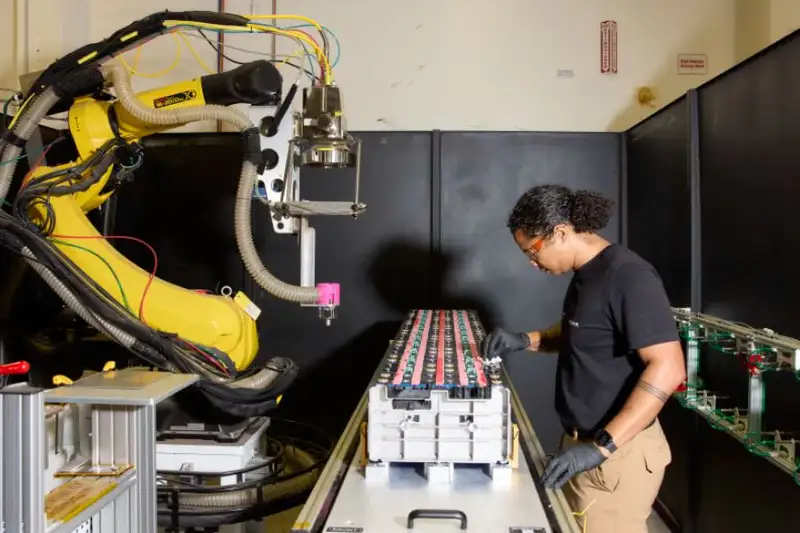
- Former Tesla engineers and US startups are scaling sodium-ion battery production to reduce reliance on lithium and Chinese mineral supply chains.
- Peak Energy is constructing a 4 GWh gigafactory in Sacramento by 2027, backed by GM and over $1.1 billion in utility customer commitments.
- Sodium-ion chemistry relies on abundant materials like table salt and iron, allowing passive air cooling and eliminating volatile fire risks inherent in lithium grid storage.
A quiet transformation is underway across the energy storage landscape as American technology startups move to break the global reliance on critical mineral supply chains. After decades of laboratory refinement, sodium-ion battery technology—built primarily around the chemical constituents of common table salt—is advancing into commercial-scale manufacturing. Designed to power electrical grids and sprawling artificial intelligence data centers, these systems offer a lower-cost, safer, and geopolitically secure alternative to standard lithium-ion infrastructure, setting the stage for a major shift in how the world stores stationary power.
Quick summary
- Ex-Tesla executives and US energy startups are scaling domestic sodium-ion battery manufacturing, targeting electrical grids and data centers to break lithium reliance.
- Peak Energy is establishing a 183,000-square-foot gigafactory in Sacramento slated for 2027 production with a 4 GWh annual capacity, backed by General Motors and over $1.1 billion in commercial deals.
- Sodium-ion chemistries utilize abundant elements like common salt and iron, offering passive air-cooling advantages that eliminate volatile thermal runaway hazards present in lithium systems.
Why it matters
The global transition toward renewable energy and the exponential energy consumption of cloud computing hubs require vast reserves of stationary storage. Today, lithium-ion supply chains are overwhelmingly concentrated in China, exposing Western nations to supply disruptions, volatile mineral pricing, and geopolitical friction. By substituting scarce lithium, nickel, and cobalt with earth-abundant sodium and iron compounds, power utilities can build resilient grid backbones at lower capital risk. Furthermore, eliminating the severe fire hazards inherent in lithium-ion chemistry removes millions of dollars in thermal management overhead, making grid decarbonization significantly more economically viable.
Background
Lithium-ion chemistry has dominated energy storage for over three decades, driven by its high energy density in portable electronics and electric vehicles. However, stationary power applications—such as solar and wind power storage systems—do not prioritize weight or compact dimensions in the same way vehicles do. Instead, stationary facilities require maximum cycle durability, low capital costs, and absolute thermal safety. For years, sodium-ion technology remained sidelined due to lower energy density and unscaled manufacturing infrastructure. Currently, sodium-ion accounts for less than 1% of total global battery deliveries, with Chinese manufacturers leading early industrial production. However, financial institutions like Morgan Stanley now project that sodium-based chemistries could capture more than 30% of global battery manufacturing within the next decade as grid demands accelerate.
The Next Frontier in Grid Storage and Strategic Energy Independence
In the United States, utility-scale grid storage is currently dominated by Tesla Energy, whose lithium-ion Megapack systems serve as the primary solution for smoothing power fluctuations. However, former Tesla engineering leaders are now spearheading rival ventures focused on sodium-ion alternatives. Landon Mossburg, former Tesla manufacturing leader and current CEO of Peak Energy, has raised tens of millions of dollars to build utility-scale sodium storage systems. Simultaneously, Kurt Kelty, Vice President of Battery Cell and Pack Engineering at General Motors and also a Tesla alumnus, is directing GM’s strategic investment into Peak Energy to co-design customized sodium-ion battery architectures.
This strategic push aims directly at grid reliability. Power networks must balance supply and demand continuously. Storing surplus power when electricity prices are low or renewable output is high—and releasing it during demand peaks—replaces fossil-fueled natural gas peaker plants and diesel backup generators. By delivering a battery relying on universally available raw materials, American developers aim to eliminate reliance on foreign mineral refining while reinforcing the domestic power network.
Sacramento Gigafactory: Scaling Production to Challenge Tesla Energy
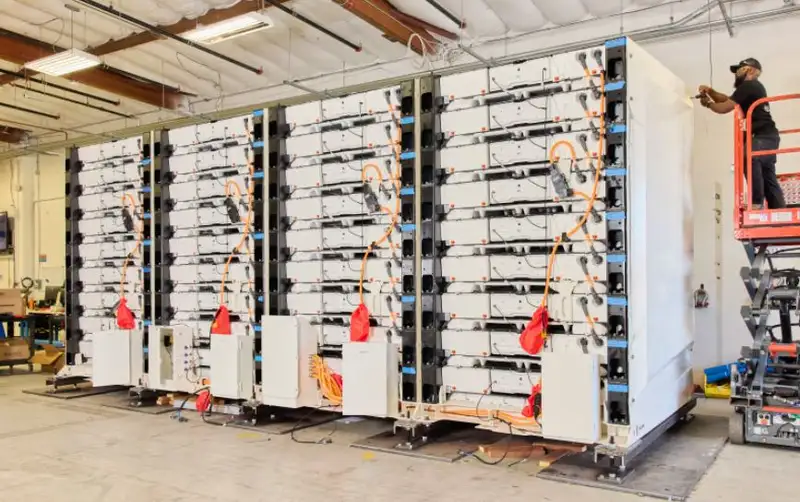
To move beyond pilot-scale output, Peak Energy announced plans for a 183,000-square-foot gigafactory in Sacramento, California. Scheduled to commence operations in early 2027, the facility is designed to produce 4 gigawatt-hours (GWh) of battery capacity annually. This marks a 40-fold expansion over the company’s current 100 megawatt-hour (MWh) pilot operation in Burlingame, California.
Commercial demand for these systems is already solidifying. Peak Energy has secured customer agreements totaling over $1.1 billion with major energy entities, including grid storage operators Jupiter Power and Energy Vault, as well as RWE Americas, a subsidiary of the German multinational energy corporate RWE. These multi-billion-dollar commitments demonstrate growing confidence among institutional utility buyers seeking alternatives to lithium-based systems.
Engineering Advantages: Passive Air Cooling and Fire Safety
A fundamental technical shortcoming of conventional lithium-ion energy storage is the risk of thermal runaway—an uncontrollable internal heating failure that can cause catastrophic battery fires. While relatively rare, thermal runaway incidents in grid-scale installations pose severe safety hazards and demand extensive active liquid cooling systems.
According to Peak Energy leadership, active thermal management and maintenance systems account for approximately 90% of the ongoing operational expenditures for traditional lithium grid batteries. Liquid cooling loops require active pumping, ongoing fluid maintenance, complex electrical sub-components, and physical separation distances to contain potential fire spread. In contrast, Peak Energy’s sodium-ion battery architectures can operate using passive air cooling, as ambient airflow surrounding the enclosures is sufficient to dissipate operating heat. While sodium cells can theoretically combust under extreme conditions, their inherent thermal stability dramatically reduces system failure probability and operational overhead.
Alternative Chemistries: Table Salt and Industrial Iron Powder
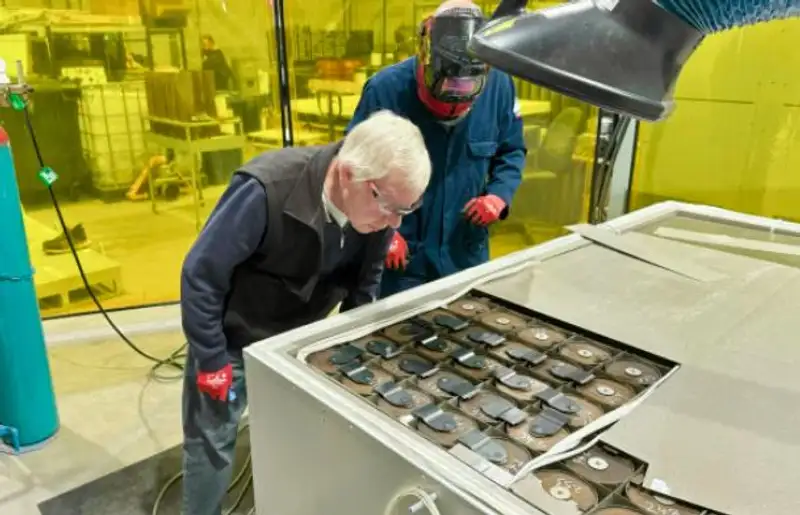
Innovation in sodium technology is not limited to a single chemistry. Located across San Francisco Bay in San Leandro, startup Inlyte Energy is advancing a distinct sodium-based system utilizing four abundant industrial inputs: food-grade table salt, iron powder, steel, and aluminum oxide. By housing these raw components in standard cylindrical canisters, Inlyte seeks to construct ultra-low-cost stationary cells completely immune to supply chain bottlenecks associated with rare metals.
Because table salt and iron are produced globally in massive commodity volumes, input costs for these chemistries remain stable compared to volatile lithium carbonate spot prices. This price predictability offers power developers significant long-term capital planning advantages.
The Energy Density Limitation: Grid Application vs. Electric Vehicles
Despite its clear safety and supply chain advantages, sodium-ion technology faces inherent physical limitations regarding volumetric energy density. Sodium atoms are significantly heavier and larger than lithium ions, meaning a sodium battery stores less electrical energy per unit of weight and volume.
For passenger electric vehicles (EVs), where maximum driving range and compact vehicle weight are paramount, lithium-ion chemistries will continue to be the dominant choice. While General Motors is exploring sodium chemistry for potential niche automotive platforms or hybrid systems, mainstream EVs will remain tied to lithium-ion for the immediate future. Consequently, sodium-ion’s primary domain lies in stationary energy storage, where physical footprint and weight are secondary to unit economics, thermal safety, and calendar life.
Qnews24h insight
The push by US startups into sodium-ion manufacturing represents a pragmatically targeted commercial strategy rather than a blanket replacement for lithium-ion technology. By segmenting the battery market and focusing sodium cells exclusively on stationary grid storage and data center power backup, American firms are attacking lithium’s weakest point: high system-level cooling costs and supply chain vulnerability. However, investors and utility operators must remain cautious. Until domestic sodium factories reach multi-gigawatt gigafactory scale, Chinese-manufactured lithium-ion cells will maintain an initial upfront cost advantage due to deep industrial subsidies and massive production volume. The ultimate success of Western sodium startups will depend on whether lower operational cooling costs and supply chain stability can outweigh higher initial unit pricing during the critical scaling window between now and 2027.
Sources
- Wall Street Journal (WSJ)
- The New York Times
- Soha.vn
Why it matters
Replacing lithium with abundant sodium components lowers electricity costs, minimizes fire risks in stationary storage facilities, and safeguards Western energy infrastructure against strategic supply chain disruptions.
Background
Lithium-ion batteries have long dominated both electric vehicles and energy storage grids, but critical mineral concentrated refining in China creates supply chain vulnerabilities. Sodium-ion research has matured to a commercial tipping point, with analysts predicting sodium chemistries will capture over 30% of global production within ten years.
Sodium-ion technology will not displace lithium in high-range electric vehicles due to lower energy density, but it presents a direct threat to lithium in stationary storage. The key hurdle for US startups will be achieving manufacturing scale before 2027 to compete against entrenched Chinese lithium pricing.
References
Editorial information
The editorial team reviews sources, adds context, and structures stories so readers can understand the news more clearly.
Article from QNEWS24H
Comments
(0)No comments yet. Be the first to share your thoughts.