Enhancing Your TV's Audio: Decoding When External Speakers Are Essential

- Modern televisions, especially thin designs, inherently limit integrated speaker performance, particularly for bass.
- Built-in TV audio has improved, with high-end models offering advanced features, but often isn't enough for true immersion or large rooms.
- External audio solutions like soundbars and home theater systems provide superior bass, dialogue clarity, and advanced customization beyond integrated speakers.
- The decision to upgrade depends on desired audio immersion, room size and acoustics, budget, and specific content consumption habits.
In an era where televisions deliver breathtaking visual fidelity, from vibrant 4K HDR displays to ultra-thin bezels, a common paradox often emerges: the sound quality struggles to match the visual grandeur. As manufacturers prioritize sleek aesthetics and ever-larger screens, the internal acoustic capabilities of modern TVs frequently take a backseat, leaving many viewers wondering if an additional investment in external audio is truly necessary to complete their home entertainment setup.
Quick summary
- Modern televisions, particularly those designed for wall-mounting, often face inherent space limitations that restrict the performance of integrated speakers, especially concerning bass reproduction.
- While built-in TV audio has significantly improved, with some high-end models featuring advanced technologies, it often remains insufficient for truly immersive, cinematic experiences or larger viewing environments.
- External audio solutions like soundbars or dedicated home theater systems provide superior bass, clearer dialogue, and advanced sound customization capabilities (e.g., EQ, room correction) that integrated speakers cannot match.
- The decision to invest in external speakers hinges on factors such as desired audio immersion, room size and acoustics, budget flexibility, and specific use cases like movie watching versus casual news consumption.


Why it matters

For consumers, understanding the nuances of TV audio is critical to making informed purchasing decisions and maximizing their home entertainment investment. The disparity between stunning visual technology and often mediocre sound can significantly diminish the overall viewing experience, particularly for movies, sports, or music. This insight empowers buyers to assess their specific needs against product capabilities, avoiding unnecessary expenses or, conversely, ensuring they don't compromise on a crucial aspect of immersion. For the industry, it highlights the ongoing challenge of balancing design aesthetics with performance, pushing innovation in both integrated audio solutions and accessible external upgrades.
Background
The journey of television design over the past two decades has been a relentless pursuit of thinness and visual dominance. Early CRT televisions, with their bulky enclosures, inadvertently offered ample space for larger, more resonant speakers. However, the advent of flat-panel displays — first LCDs, then plasmas, and now OLEDs and QLEDs — ushered in a paradigm shift. Consumers demanded slimmer profiles, lighter weights for wall mounting, and edge-to-edge screens. This aesthetic drive, while revolutionizing visual experiences, simultaneously constrained the physical space available for integrated speakers. Manufacturers were forced to embed smaller, downward-firing, or rear-firing drivers, inherently limiting their ability to produce deep bass or expansive soundstages.

While the overall audio quality of integrated TV speakers has undeniably improved over the years, leveraging digital signal processing (DSP) and sophisticated algorithms, these enhancements largely address clarity and dialogue reproduction rather than raw power or bass response. High-end brands like Sony, with its Acoustic Surface Audio technology in some Bravia models, have attempted innovative solutions by using the screen itself as a speaker, aiming to synchronize sound directly with the on-screen action. Yet, even these advancements operate within the fundamental physical limitations imposed by ultra-thin chassis, leaving a significant gap for dedicated external audio systems to fill, particularly for audiophiles and cinephiles.
Qnews24h insight
The persistent gap between a television's visual prowess and its sonic delivery suggests an ongoing, inherent trade-off in consumer electronics design: the prioritization of form over a fully realized function. While integrated TV audio continues to evolve, pushing the boundaries of what's possible within minimalist designs, the laws of physics dictate that larger drivers and dedicated enclosures will almost always yield superior acoustic performance. Manufacturers face a constant balancing act between meeting the aesthetic demand for sleek, unobtrusive displays and providing a genuinely immersive auditory experience. This dynamic ensures that while casual viewers may find modern TV speakers 'good enough,' serious enthusiasts will likely always seek external audio solutions, perpetuating a robust market for soundbars, home theater systems, and other audio peripherals that elevate the home entertainment landscape.

The Evolving Landscape of TV Audio
Modern televisions are engineering marvels, but their pursuit of slender profiles and minimalist bezels comes at a cost, particularly for integrated audio. The internal components, including speakers, must occupy increasingly smaller volumes. This often translates into compact drivers that struggle to move enough air to produce robust low-frequency sounds, which are crucial for the impactful rumble of explosions in a movie or the depth of a bassline in music. These design constraints mean that even sophisticated processing can only go so far in compensating for physical limitations.
Integrated Audio: Good Enough for Some?

It's important to acknowledge that not every viewer requires a full home theater setup. For many, a TV's integrated speakers, especially those with an output of 20 to 40 watts, are perfectly adequate for general entertainment like watching daily news broadcasts, casual TV shows, or even background music. Manufacturers have indeed invested in improving dialogue clarity and overall soundstaging within these limitations. As mentioned, certain premium TV lines, such as Sony's Bravia series with its Acoustic Surface Audio, represent significant strides in integrated sound, aiming for a more direct, screen-aligned audio experience. However, these solutions, while innovative, often come with a premium price tag and still have inherent limits when compared to dedicated speaker systems.
When External Sound Becomes Essential
Achieving Home Cinema Immersion

For those aspiring to replicate a cinematic experience at home, external speakers are not merely an enhancement; they are a necessity. Integrated TV speakers simply cannot deliver the powerful, room-filling bass or the nuanced surround sound needed to truly 'feel' a movie. The impact of a chase scene, the subtle atmospheric effects, or the rich texture of a musical score are often lost without a dedicated subwoofer and a multi-channel setup. An external system allows for the detailed reproduction of these critical audio elements, transforming a casual viewing into an engaging, visceral event.
Navigating Room Acoustics and Size
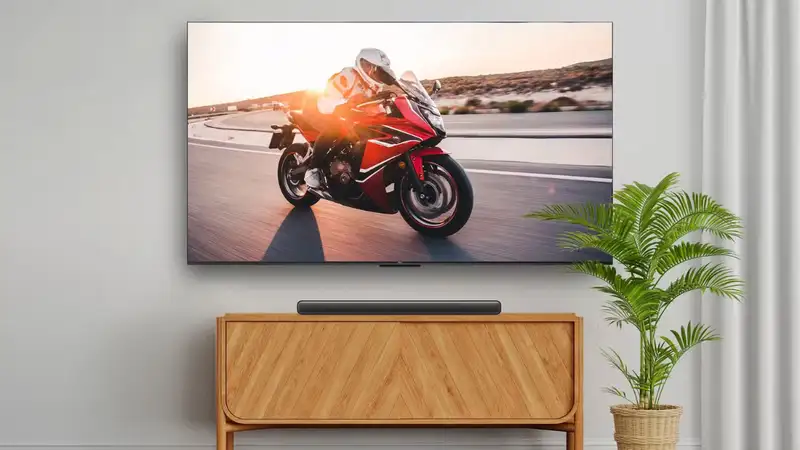
The physical environment plays a significant role in how sound is perceived. In smaller rooms, the reflections from walls and furniture can sometimes enhance the perceived volume and fullness of integrated TV audio. However, in larger living spaces, the limited power and dispersion of built-in speakers often result in sound that struggles to fill the room, leading to a thin, distant listening experience. External speakers, with higher power outputs and often larger drivers, can project sound more effectively across expansive areas. Furthermore, room characteristics like wooden floors creating echoes or heavy curtains absorbing sound can be better compensated for with a customizable external system.
Advanced Customization and Control
One of the distinct advantages of external speaker systems, particularly soundbars and AV receivers, is their advanced audio processing capabilities. While many modern TVs offer basic sound modes like 'dialogue boost,' external systems typically feature more sophisticated equalizers (EQ), allowing users to fine-tune frequency responses. More premium systems also incorporate automatic room calibration technology, which analyzes the room's acoustics and adjusts the sound output to optimize performance for the specific environment, a level of sophistication rarely found in integrated TV audio.
Choosing the Right External Audio Solution
The market offers a diverse range of external audio solutions, each catering to different budgets and performance expectations. A simple 2.0 channel soundbar from a reputable brand can provide a substantial upgrade over basic TV speakers, delivering clearer dialogue and a wider soundstage. For those seeking more punch, a soundbar with a dedicated subwoofer (2.1 channel or higher) is a popular choice. True audiophiles or cinephiles might opt for a full home theater system, comprising an AV receiver and multiple discrete speakers (e.g., 5.1, 7.1, or even Dolby Atmos setups), offering unparalleled immersion and spatial audio. In situations where disturbing neighbors is a concern, high-quality, low-latency wireless headphones can also serve as an excellent personal audio solution, providing an immersive experience without affecting others.
The Future of TV Sound
As display technology continues its rapid advancement, the challenge for TV manufacturers remains: how to deliver compelling audio without compromising the sleek, minimalist designs that consumers demand. While it's unlikely integrated speakers will ever fully replace dedicated external audio systems for peak performance, continued innovation in materials science, acoustic engineering, and digital signal processing may lead to even more impressive sound from thinner TV panels. High-end TVs already feature increased power outputs, sometimes reaching 60W or even 100W, reflecting a growing recognition that sound quality cannot be entirely overlooked. The industry aims to strike a better balance, striving for a future where the visual and auditory experiences are more harmoniously integrated, even as external solutions remain the gold standard for ultimate fidelity.
Sources
Frequently Asked Questions (FAQ)
-
Are modern TV speakers truly bad?
While not universally 'bad,' modern TV speakers are often constrained by the thin design of televisions, limiting their ability to produce deep bass and a wide, immersive soundstage. They are generally sufficient for casual viewing and news but fall short for cinematic experiences.
-
What kind of external speaker should I buy for my TV?
The best choice depends on your budget, space, and desired audio quality. A soundbar (2.0 or 2.1 with a subwoofer) is a great upgrade for most. For true home cinema immersion, a dedicated home theater system with an AV receiver and multiple speakers is recommended.
-
How does room size affect my TV's audio experience?
In large rooms, integrated TV speakers often struggle to fill the space, resulting in thin, distant sound. External speakers with higher power and better dispersion are crucial for maintaining sound quality in bigger environments. Room acoustics (e.g., hard vs. soft surfaces) also play a significant role.
-
Can I improve my TV's built-in sound without buying new hardware?
You can try adjusting your TV's audio settings (EQ, sound modes) and optimizing room acoustics by adding rugs, curtains, or furniture to absorb sound. However, these improvements are limited by the physical capabilities of the integrated speakers and won't match a dedicated external system.
Why it matters
For consumers, understanding the nuances of TV audio is critical to making informed purchasing decisions and maximizing their home entertainment investment. The disparity between stunning visual technology and often mediocre sound can significantly diminish the overall viewing experience, particularly for movies, sports, or music. This insight empowers buyers to assess their specific needs against product capabilities, avoiding unnecessary expenses or, conversely, ensuring they don't compromise on a crucial aspect of immersion. For the industry, it highlights the ongoing challenge of balancing design aesthetics with performance, pushing innovation in both integrated audio solutions and...
Background
The journey of television design over the past two decades has been a relentless pursuit of thinness and visual dominance. Early CRT televisions, with their bulky enclosures, inadvertently offered ample space for larger, more resonant speakers. However, the advent of flat-panel displays — first LCDs, then plasmas, and now OLEDs and QLEDs — ushered in a paradigm shift. Consumers demanded slimmer profiles, lighter weights for wall mounting, and edge-to-edge screens. This aesthetic drive, while revolutionizing visual experiences, simultaneously constrained the physical space available for integrated speakers. Manufacturers were forced to embed smaller, downward-firing, or rear-firing drivers,...
The persistent gap between a television's visual prowess and its sonic delivery suggests an ongoing, inherent trade-off in consumer electronics design: the prioritization of form over a fully realized function. While integrated TV audio continues to evolve, pushing the boundaries of what's possible within minimalist designs, the laws of physics dictate that larger drivers and dedicated enclosures will almost always yield superior acoustic performance. Manufacturers face a constant balancing act between meeting the aesthetic demand for sleek, unobtrusive displays and providing a genuinely immersive auditory experience. This dynamic ensures that while casual viewers may find modern TV...
References
Editorial information
The editorial team reviews sources, adds context, and structures stories so readers can understand the news more clearly.
Article from QNEWS24H
Comments
(0)No comments yet. Be the first to share your thoughts.