The Best TVs to Buy in 2025: Flagship OLEDs, High-Nit Mini-LEDs, and Top Value Picks
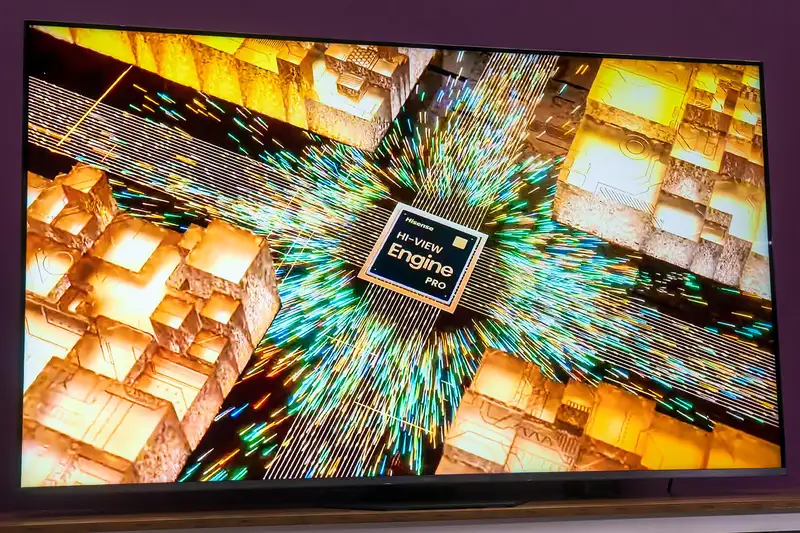
- Samsung QN90F secures the top overall spot in 2025 recommendations with its anti-glare QLED panel, 165Hz gaming refresh rate, and Object Tracking Sound+.
- Hisense U8QG and TCL QM6K Mini-LED displays deliver up to 5,000 nits of peak brightness and large format sizes up to 100 inches at aggressive price points.
- Reference-grade OLED panels including the LG C6 and Sony Bravia 8 II lead in lab-certified color accuracy and contrast control for cinema purists.
- 8K televisions remain largely impractical for standard consumers due to prohibitive costs and an absence of native streaming or broadcast media.
The premium display market in 2025 has reached an inflection point where unprecedented luminance levels, refined sub-pixel contrast handling, and dedicated gaming refresh rates of up to 165Hz are redefining home entertainment across multiple price tiers.
Quick summary
- Samsung’s QN90F claims the top overall spot, combining anti-glare matte filtering, 165Hz refresh capability, and integrated Object Tracking Sound+ audio processing.
- High-performance Mini-LED sets like the Hisense U8QG are pushing peak brightness thresholds up to 5,000 nits, challenging self-emissive OLED panels in sunlit rooms.
- OLED flagships such as the LG C6 and Sony Bravia 8 II maintain class-leading black levels and color accuracy, earning top marks in independent Calman colorimeter lab benchmarks.
- 8K resolution panels remain niche and commercially unjustified for most consumers due to an ongoing lack of native broadcast, streaming, and gaming content.
Why it matters
For years, consumers shopping for a home theater upgrade faced a stark compromise: settle for standard LED backlighting with noticeable light blooming, or pay exorbitant premiums for fragile OLED panels that struggled in sunlit living rooms. The 2025 lineup fundamentally shifts that dynamic.
Advancements in quantum-dot Mini-LED backlighting allow high-end sets to overcome harsh daytime glare with extreme nit outputs while maintaining tight local dimming control. Simultaneously, OLED manufacturing has lowered blooming artifacts and improved heat dissipation, enabling longer lifespans and superior color volume. For gamers, cinephiles, and sports enthusiasts, modern sets now double as high-refresh gaming monitors equipped with low-latency modes and variable refresh rates (VRR) out of the box.
Background
The progression of modern television displays over the past decade moved from traditional CCFL and edge-lit LED configurations to full-array local dimming (FALD), before branching into two dominant high-performance architectures: self-lit Organic Light-Emitting Diode (OLED) screens and Quantum-Dot Light-Emitting Diode (QLED/Mini-LED) arrays.
While earlier display generations prioritized marketing milestones like 8K resolution, consumer adoption stalled due to steep pricing and severe data bandwidth constraints required for ultra-high-definition streaming. In response, display manufacturers have redirected their engineering resources toward optimizing 4K panel performance, focusing on color gamut coverage, HDR tone mapping (such as Dolby Vision IQ and HDR10+), acoustic processing, and anti-reflective optical coatings.
Flagship Contenders: Samsung QN90F and LG C6
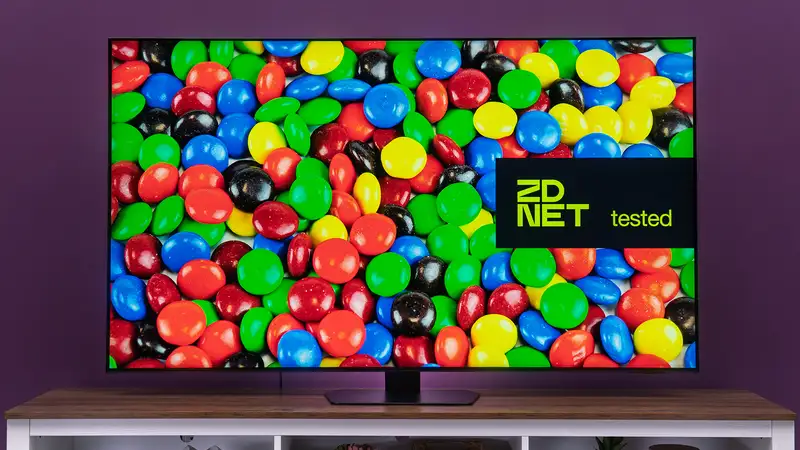
Leading the overall category, the Samsung QN90F (starting at $1,600, spanning 43 to 98 inches) balances gaming versatility and bright-room performance. Its QLED matrix incorporates an advanced matte surface coating engineered to diffuse direct reflections without compromising saturation. Backed by HDR10+ decoding and a native 165Hz panel, the QN90F supports cloud gaming hubs, automated low-latency switching, and Samsung’s Object Tracking Sound+ system, which steers directional audio cues across the chassis.
In the self-emissive category, the LG C6 (starting at $1,400, spanning 42 to 83 inches) represents the benchmark for pure contrast. Independent testing utilizing Calman calibration software demonstrated that the LG C6 delivers exceptional color accuracy alongside virtually non-existent backlight bleed. Equipped with four HDMI 2.1 inputs, Nvidia G-Sync support, Dolby Vision, and dedicated Game Optimizer software, it remains a favorite for dark-room cinema and console gaming, though its peak brightness remains below that of top-tier Mini-LED competitors.
The Brightness Revolution: Hisense U8QG and TCL QM6K
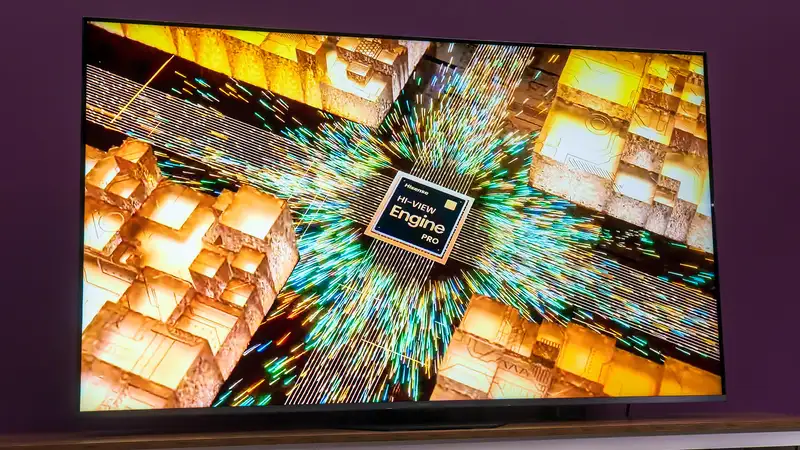
For expansive living spaces plagued by uncontrolled ambient lighting, the Hisense U8QG (starting at $1,000, spanning 55 to 100 inches) introduces a massive 5,000-nit peak brightness capability. Certified by Pantone for color accuracy, the U8QG pairs a 165Hz refresh rate with Dolby Vision IQ and IMAX Enhanced processing, creating a high-impact HDR image that easily cuts through daytime glare.
Meanwhile, the TCL QM6K (starting at $650, spanning 55 to 98 inches) targets the large-format market. With sizes reaching up to 98 inches, this Mini-LED set incorporates 144Hz variable refresh rates, Dolby Atmos decoding, and DTS Virtual:X audio, offering home-cinema screen real estate at aggressive price points that undercut traditional high-end projection systems.
Premium Cinema & Budget Alternatives
Audiophiles and home theater purists with flexible budgets frequently look toward the Sony Bravia 8 II OLED (retailing at approximately $2,700 to $3,300 for 55- and 65-inch models). Utilizing Acoustic Surface Audio+ technology—which vibrates the actual glass panel to produce sound directly from the on-screen action—the Bravia 8 II excels in dialog clarity and cinematic picture accuracy, driven by Sony’s cognitive image processing engine.
At the opposite end of the spectrum, the Roku Smart TV series (starting at $270 for sizes between 50 and 65 inches) strips away luxury processing in favor of straightforward user navigation. While limited to a 60Hz refresh rate and standard HDR10 decoding, it provides essential 4K streaming functionality, integrated voice search, and seamless input switching without exceeding sub-$1,000 budgets.
Panel Architecture Comparison: OLED vs. QLED / Mini-LED
Understanding panel mechanics helps buyers avoid costly mismatches with their viewing environments:
- OLED (Organic Light Emitting Diode): Every pixel illuminates independently, providing infinite contrast ratios and zero halo effects in dark scenes. Best suited for dedicated home theaters and controlled light settings.
- QLED & Mini-LED: Utilizes thousands of microscopic LED diodes behind a quantum-dot enhancement film to produce extreme brightness and vibrant color gamuts. Ideal for bright living rooms, sports bars, and multipurpose open-concept spaces.
Room Geometry and Sizing Guidelines
Selecting the correct screen size requires evaluating viewing distance rather than simply purchasing the largest available panel. A practical rule of thumb is to measure the distance from the seating area to the TV placement in inches and divide by two. For instance, a 10-foot viewing distance (120 inches) is best paired with a 60- to 65-inch display to ensure comfortable field-of-view angles without causing visual fatigue.
Qnews24h insight
The 2025 television ecosystem demonstrates that raw specifications like 8K resolution are no longer effective sales drivers. Instead, display manufacturers are competing on real-world usability: acoustic spatial tracking, anti-reflective matte finishes, and aggressive brightness tuning to accommodate sunlit modern architecture. While OLED remains the undisputed champion for deep-black precision in controlled lighting, high-zone Mini-LED systems have narrowed the performance gap significantly, offering compelling brightness-to-cost value that appeals to mainstream buyers.
Frequently Asked Questions
Is buying an 8K TV worth the investment in 2025?
For the vast majority of consumers, no. There is virtually no native 8K streaming, broadcast television, or gaming content widely available. High-end 4K displays with advanced upscaling and wide color gamuts offer substantially better everyday value.
How do I calculate the ideal TV size for my room?
Measure the distance between your couch and the TV in inches, then divide that figure by two. If your seating area is 120 inches (10 feet) away, a 60- to 65-inch panel provides an immersive, comfortable viewing experience.
What is the difference between QLED and OLED?
OLED panels feature self-lit pixels that turn off completely for perfect black levels, while QLED and Mini-LED panels use LED backlights filtered through quantum dots to produce significantly higher peak brightness levels.
Sources
- ZDNET: Display laboratory testing benchmarks, Calman colorimeter evaluations, and 2025 consumer TV analysis (https://www.zdnet.com/article/best-tv/)
Why it matters
The 2025 TV market marks a decisive shift away from resolution gimmicks toward practical display improvements: anti-reflective glass coatings, room-filling spatial sound, and high-nit Mini-LED backlighting capable of defeating severe living room glare.
Background
Over recent product cycles, consumer display development transitioned from basic edge-lit LED backlights to high-density Mini-LED arrays and second-generation OLED panels, standardizing high refresh rates (120Hz-165Hz) and low-latency gaming modes across mid-to-high tier products.
Hardware makers are no longer able to rely on resolution upgrades alone to justify premium pricing. The current battleground centers on ambient light handling and algorithmic tone mapping, where high-output Mini-LEDs increasingly pressure traditional OLED flagships.
References
Editorial information
The editorial team reviews sources, adds context, and structures stories so readers can understand the news more clearly.
Article from QNEWS24H
Comments
(0)No comments yet. Be the first to share your thoughts.