Stranded on Mars: 'Sol One' Embraces Martian Survival as New Indie Game Lands on Steam

- 'Sol One' is a new survival-crafting game launching this week on Steam, heavily inspired by the premise of 'The Martian' movie and novel.
- Players are stranded on Mars after a mission failure and must cultivate resources, including potatoes, and scavenge for parts to build a rocket and escape independently.
- The game emphasizes grounded, science-driven survival mechanics, incorporating realistic Martian environmental effects like dust storms and celestial phenomena.
- Developed by yeetgench, 'Sol One' aims to appeal to players who prioritize problem-solving and resource management in a challenging, immersive setting.
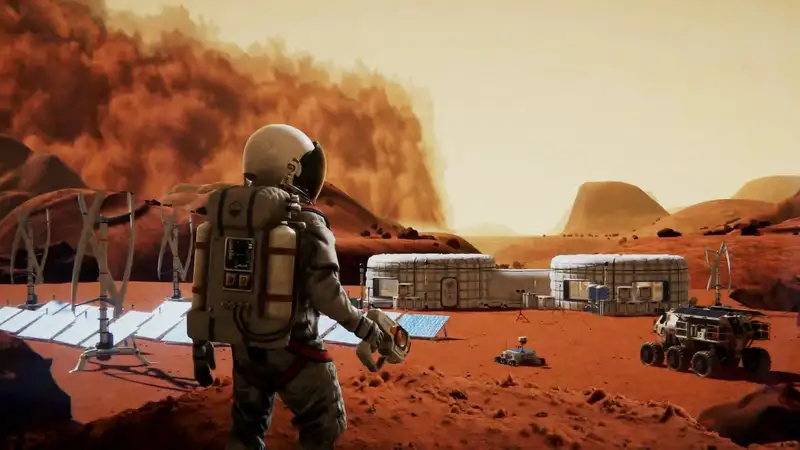
A familiar yet daunting challenge awaits gamers this week as 'Sol One', a new survival title, touches down on Steam. Drawing clear inspiration from the critically acclaimed film and novel 'The Martian', this indie release thrusts players onto the desolate red planet, forcing them to confront the stark realities of isolation, resource scarcity, and the arduous task of self-preservation. It's a narrative that resonates deeply with humanity's enduring fascination with space exploration and the will to survive against impossible odds, now translated into an interactive experience.
Quick summary

- 'Sol One' is a new survival-crafting game launching this week on Steam, heavily inspired by the premise of 'The Martian' movie and novel.
- Players are stranded on Mars after a mission failure and must cultivate resources, including potatoes, and scavenge for parts to build a rocket and escape independently.
- The game emphasizes grounded, science-driven survival mechanics, incorporating realistic Martian environmental effects like dust storms and celestial phenomena.
- Developed by yeetgench, 'Sol One' aims to appeal to players who prioritize problem-solving and resource management in a challenging, immersive setting.




Why it matters

For the thriving community of survival game enthusiasts and science fiction aficionados, 'Sol One' represents more than just another title; it embodies a niche yet compelling blend of scientific accuracy and extreme isolation. The game's focus on resource management, particularly the iconic potato farming, taps into a popular cultural touchstone while offering genuine strategic depth. It pushes players beyond combat or traditional exploration, demanding ingenuity and long-term planning to overcome environmental hazards and logistical challenges. This approach could set a new benchmark for narrative-driven survival games, highlighting problem-solving as the core gameplay loop rather than just a means to an end. Moreover, its early access launch allows the development community to shape its evolution, fostering a direct connection between creators and their dedicated audience.

Background

The concept of Martian survival gained widespread mainstream recognition with Andy Weir's 2011 novel, 'The Martian', and its subsequent 2015 film adaptation starring Matt Damon. Both depicted an astronaut, Mark Watney, accidentally left behind on Mars, who then uses his botanical and engineering skills to survive until a rescue mission could be mounted. This narrative captured imaginations globally, highlighting humanity's resilience and scientific prowess in extreme conditions. Prior to this, space survival games often focused on combat with alien threats or complex base-building in more forgiving environments. 'The Martian' shifted the popular perception towards a more grounded, realistic, and solitary struggle against the planet itself.

The indie game development scene has continually experimented with the survival genre, moving beyond traditional horror or zombie-apocalypse themes. Titles like 'Subnautica' proved the appeal of survival in alien biomes without necessarily relying on hostile sentient life, while 'Kerbal Space Program' popularized the intricacies of rocketry and space engineering. 'Sol One' emerges from this fertile ground, building upon the established cultural blueprint of 'The Martian' but aiming to deepen the player's agency. Instead of waiting for rescue, the protagonist must actively engineer their own escape, shifting the narrative from passive endurance to active construction and self-liberation. This progression marks a notable evolution in how survival mechanics are integrated with a compelling narrative arc.

Qnews24h insight

The release of 'Sol One' into early access signifies a growing maturation within the survival game genre, moving beyond pure crafting loops to embrace more narrative-driven, problem-centric experiences. While its direct homage to 'The Martian' is undeniable and serves as a powerful marketing hook, the game's core innovation lies in its commitment to a science-driven, self-rescue objective. Many survival games excel at depicting the struggle to stay alive but often lack a clear, player-driven victory condition beyond continuous expansion. 'Sol One' provides this definitive goal—building a functional rocket for escape—which fundamentally alters the player's motivation and the strategic depth required. This shift from 'survive indefinitely' to 'survive to escape' could prove to be a compelling differentiator, drawing in players who appreciate a more structured challenge rooted in realistic scientific principles. The emphasis on automation and scouting via rovers further adds layers of strategic complexity, reflecting a trend towards sophisticated systems management in modern simulation titles rather than merely repetitive resource gathering. It will be crucial to see how 'yeetgench' balances accessibility with this ambition for scientific realism during the early access phase.

The Martian Blueprint: A Solitary Struggle
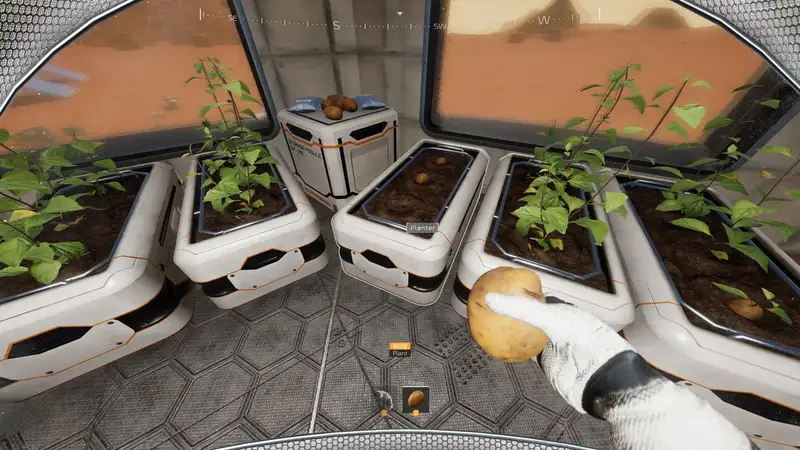
At its core, 'Sol One' presents players with a scenario chillingly reminiscent of the solitary ordeal faced by Mark Watney. An astronaut, left for dead after a catastrophic Martian storm, awakens amidst wreckage, their spacesuit blaring urgent warnings. The immediate objective is survival, a battle against the elements and the crushing isolation of an alien world. Much like the cinematic inspiration, the early game likely involves scavenging precious gear from previous missions and, crucially, cultivating food. The source material explicitly highlights the importance of growing 'a shitload (literally) of potatoes', a direct nod to Watney's ingenious agricultural solutions using Martian soil and human waste as fertilizer.

This emphasis on botany and resource repurposing immediately distinguishes 'Sol One' from many other survival titles that might prioritize combat or exploration. Here, the enemy isn't an alien creature, but the planet itself: its thin atmosphere, harsh radiation, and barren landscape. Players must master the art of turning scarcity into sustenance, leveraging limited tools and scientific understanding to create a habitable environment within their improvised shelter.

Beyond Rescue: Engineering an Escape

While the initial setup mirrors its inspiration, 'Sol One' diverges significantly in its ultimate objective. Unlike Watney, who waited for a daring rescue operation, the protagonist of 'Sol One' must forge their own path home. "There's a rocket between you and home. You just have to build it first," states the developer. This pivotal difference elevates the gameplay from mere endurance to a grand engineering project. Players are tasked with mining essential raw materials such as iron, copper, silica, ice, and uranium from the Martian surface. These raw materials then need to be processed through smelters and fabricators to manufacture the intricate components required for constructing a functional spacecraft.

This multi-stage objective introduces a deep progression system, where each successful cultivation of food, each mined ore, and each fabricated part contributes directly to the grander goal of escape. The game transforms from a struggle for basic survival into a complex resource management and construction simulation, rewarding meticulous planning and efficient operation.

Grounded Science and Environmental Realism

A cornerstone of 'Sol One's appeal is its commitment to 'grounded, science-driven survival where the problem-solving is the point.' This philosophy translates into a highly realistic and immersive Martian environment. The developers have meticulously designed the celestial mechanics, promising a sky that behaves 'like the real thing, from rusty daylight to a cold blue sunset to the gorgeous Milky Way after dark.' This attention to detail extends to dynamic weather phenomena, with 'dust storms brewing on the horizon and roll[ing] in over the ridge.' These storms aren't just visual spectacle; they have tangible gameplay impacts, causing solar panels to drop off and significantly reducing visibility, forcing players to adapt their strategies and hunker down.

This environmental realism adds a layer of unpredictable challenge, requiring players to not only manage their internal resources but also constantly monitor and react to external conditions. It creates a sense of fragility and vulnerability, enhancing the immersive feeling of being truly stranded on an unforgiving planet.

Automation and Strategic Exploration

Adding another dimension to its gameplay, 'Sol One' incorporates elements of automation and strategic exploration. Beyond simply venturing out themselves, players can deploy 'autonomous rover[s] ahead to scout and haul while you handle things back in your base.' This feature introduces an intriguing layer of strategic management, allowing players to optimize their resource gathering and exploration efforts while simultaneously tending to their base's needs. The ability to automate certain tasks can be crucial for efficiency, especially when dealing with the vast distances and hazardous conditions of the Martian landscape.

The rovers become an extension of the player's will, enabling more complex logistical chains and expanding the effective range of operations from the main base. This blend of direct player action and automated assistance contributes to a sophisticated simulation experience, catering to those who enjoy intricate system management alongside their survival challenges.
Sources
FAQ
What kind of game is 'Sol One'?
'Sol One' is a science-driven survival-crafting game where players are stranded on Mars and must manage resources, grow food (like potatoes), and build a rocket to escape the planet and return home.
When is 'Sol One' available?
'Sol One' is available in early access on Steam starting July 30th.
How does 'Sol One' differ from 'The Martian' movie/book?
While heavily inspired by 'The Martian' in its initial premise of being stranded and growing potatoes, 'Sol One' distinguishes itself by requiring players to build their own escape rocket rather than waiting for a rescue mission. It also includes features like autonomous rovers for exploration and hauling, offering more player agency in their survival and escape strategy.
Why it matters
For the thriving community of survival game enthusiasts and science fiction aficionados, 'Sol One' represents more than just another title; it embodies a niche yet compelling blend of scientific accuracy and extreme isolation. The game's focus on resource management, particularly the iconic potato farming, taps into a popular cultural touchstone while offering genuine strategic depth. It pushes players beyond combat or traditional exploration, demanding ingenuity and long-term planning to overcome environmental hazards and logistical challenges. This approach could set a new benchmark for narrative-driven survival games, highlighting problem-solving as the core gameplay loop rather than...
Background
The concept of Martian survival gained widespread mainstream recognition with Andy Weir's 2011 novel, 'The Martian', and its subsequent 2015 film adaptation starring Matt Damon. Both depicted an astronaut, Mark Watney, accidentally left behind on Mars, who then uses his botanical and engineering skills to survive until a rescue mission could be mounted. This narrative captured imaginations globally, highlighting humanity's resilience and scientific prowess in extreme conditions. Prior to this, space survival games often focused on combat with alien threats or complex base-building in more forgiving environments. 'The Martian' shifted the popular perception towards a more grounded,...
The release of 'Sol One' into early access signifies a growing maturation within the survival game genre, moving beyond pure crafting loops to embrace more narrative-driven, problem-centric experiences. While its direct homage to 'The Martian' is undeniable and serves as a powerful marketing hook, the game's core innovation lies in its commitment to a science-driven, self-rescue objective. Many survival games excel at depicting the struggle to stay alive but often lack a clear, player-driven victory condition beyond continuous expansion. 'Sol One' provides this definitive goal—building a functional rocket for escape—which fundamentally alters the player's motivation and the strategic depth...
References
Editorial information
The editorial team reviews sources, adds context, and structures stories so readers can understand the news more clearly.
Article from QNEWS24H
Comments
(0)No comments yet. Be the first to share your thoughts.