Sony Bravia Theater Trio Review: The $2,200 Sonos Challenger Redefining Spatial Audio

- Sony has launched the Bravia Theater Trio, a premium $2,200 modular home theater system consisting of three front-facing speakers designed to replace traditional multi-satellite...
- The system utilizes Sony's proprietary 360 Sound Mapping and Bravia Sound Field calibration to create virtual "phantom speakers," delivering convincing Dolby Atmos spatial audio...
- While highly effective in large or open-concept living spaces, the premium price tag and reliance on advanced digital calibration make it a luxury option that can be further...
Premium home audio has long forced consumers into an uncomfortable compromise: sacrifice valuable living space to a clutter of black boxes and cables, or settle for the flat, uninspiring soundstage of a basic standalone soundbar. For years, brands like Sonos dominated this middle ground with sleek, multi-speaker ecosystems. However, Sony's latest entry into the high-end audio market, the Bravia Theater Trio, signals a major shift. By packing a highly sophisticated 3.0.2-channel system into three front-facing, minimalist enclosures, Sony is attempting to defy the physical constraints of traditional home theater design, challenging the status quo with software-driven spatial virtualization.
Quick summary
- Sony has launched the Bravia Theater Trio, a premium $2,200 modular home theater system consisting of three front-facing speakers designed to replace traditional multi-satellite surround systems.
- The system utilizes Sony's proprietary 360 Sound Mapping and Bravia Sound Field calibration to create virtual "phantom speakers," delivering convincing Dolby Atmos spatial audio without requiring physical rear surrounds.
- While highly effective in large or open-concept living spaces, the premium price tag and reliance on advanced digital calibration make it a luxury option that can be further expanded with optional subwoofers and rear speakers.
Why it matters
Modern home design trends are increasingly clashing with the bulky demands of high-fidelity home audio. As consumers demand "invisible" technology that blends seamlessly into living spaces, audio manufacturers must pivot from raw physical driver count to advanced, software-driven acoustic engineering. Sony's Bravia Theater Trio represents a direct assault on Sonos's premium market share at a time when the market leader has faced criticism over software overhauls. If Sony can prove that three front-facing modules can realistically replicate a multi-point surround sound system, it could redefine the premium home theater category, shifting consumer expectations away from physical speaker placement toward digital room mapping.
Background

For decades, achieving true surround sound required an audio-video receiver (AVR) and five to seven wired speakers positioned meticulously around a room. The rise of the soundbar simplified this setup, but premium configurations still required physical rear satellites and a dedicated subwoofer—a configuration popularized by Sonos with its Arc, Era 300, and Sub combos. Sony has slowly built a counter-narrative with its modular Bravia Theater lineup, which includes the Bar 9, Theater Quad, and now the Trio. Unlike standard soundbars, the Trio splits the front soundstage into three distinct, larger physical enclosures (left, center, right), providing wider physical separation while retaining an aesthetic that blends seamlessly into modern, high-end living spaces.
Qnews24h insight
While the technological wizardry behind Sony's 360 Sound Mapping is undeniable, the Bravia Theater Trio's $2,200 price point puts it in a precarious market position. At this tier, buyers are choosing between a dedicated, professionally installed wired system and a wireless lifestyle package. Sony's reliance on "phantom speakers" means that environmental acoustics are more critical than ever; vaulted ceilings or highly dampening furniture can easily disrupt the delicate sound reflections required for virtual Atmos. Furthermore, while the system shines on its own, unlocking its absolute potential requires adding a Sub 9 or physical Rear 8/9 speakers, pushing the total cost close to $3,500. For mainstream consumers, this modular luxury is out of reach, but for well-heeled urbanites looking to preserve their living room's clean lines, it represents a compelling look at the future of lifestyle audio.
Exploring the Tech: Hardware Meets Virtualization
Instead of cramming multiple drivers into a single, long soundbar chassis, the Bravia Theater Trio separates the front stage into three dedicated units. This physical separation is crucial: it immediately establishes a wider, more natural stereo image before any digital processing even begins.
Under the Hood of the Trio
Each of the left and right speakers contains an upfiring driver designed to bounce sound off the ceiling for vertical Dolby Atmos effects, alongside a two-way woofer and tweeter configuration. The center channel utilizes rectangular speaker units designed to maximize diaphragm area. According to Sony, this custom geometry maintains high sound pressure while minimizing distortion, ensuring that movie dialogue remains razor-sharp even amidst chaotic soundscapes.
Symmetrical and Asymmetrical Calibration
One of the most practical innovations of the Trio is its placement flexibility. In real-world living rooms, entertainment consoles are rarely perfectly centered, and furniture layouts often block ideal speaker positioning. Sony's Sound Field calibration measures the acoustic response of the room and compensates for asymmetrical placement. If your left speaker must sit closer to the TV than the right, the onboard processor adjusts latency and output levels to restore a balanced phantom center.
A Real-World Test: Pushing the Boundaries of Atmos
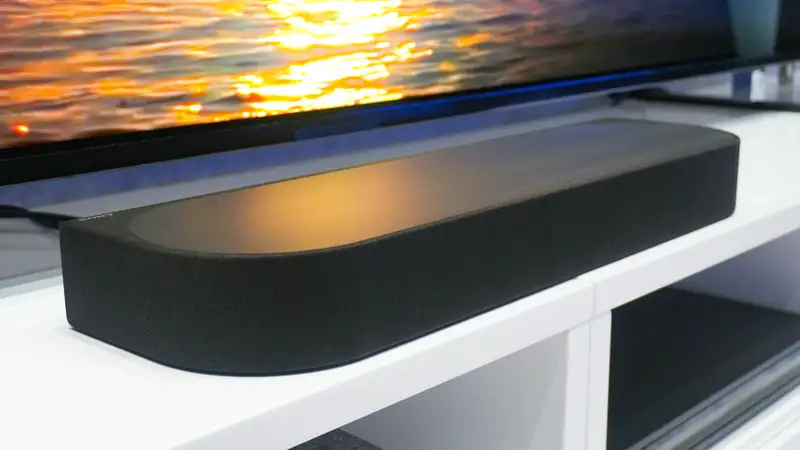
To truly evaluate the system's spatial capabilities, the Trio was subjected to highly demanding Dolby Atmos content. In testing scenes from Disney's "Avatar: Fire and Ash," the audio separation proved remarkably precise. The upfiring drivers in the left and right units demonstrated a vertical presence that rivaled dedicated upward-firing satellite speakers like the Sonos Era 300.
The Illusion of Physical Depth
During playback, the center channel focused heavily on clean vocal reproduction and central musical elements, while the larger left and right enclosures managed panning sound effects. This division of labor creates an incredibly wide and dynamic front soundstage. However, while the 360 Sound Mapping technology successfully conjures the illusion of side-surround speakers, it still operates within the laws of physics: virtual speakers cannot fully replicate the physical punch of a sound source originating from directly behind the listener in exceptionally large or oddly shaped rooms.
The Expansion Path: Going Beyond the Trio
While the Trio functions remarkably well as a standalone 3.0.2 system, Sony designed the Bravia ecosystem to be modular. For those with larger spaces, adding physical rear surrounds—such as the Bravia Rear 8 speakers—and a dedicated subwoofer like the Sub 7 or Sub 9 drastically alters the performance profile.
Alleviating the Low-End Burden
On its own, the Trio manages low-frequency bass surprisingly well, but adding an external subwoofer like the Sub 7 or the beefier Sub 9 changes the game. By offloading the deep, visceral bass frequencies to a dedicated sub, the Trio's internal woofers are freed up to focus entirely on mid-range and upper-mid-range clarity. The result is a much more cohesive, effortless cinematic presentation. Furthermore, adding physical rear speakers relieves the 360 Sound Mapping system from having to "project" virtual rear effects, resulting in a more stable and localized surround experience.
The Verdict: Is Innovation Worth the Premium?
The Sony Bravia Theater Trio is an exceptional piece of audio engineering that successfully bridges the gap between high-fidelity home theater and interior design. By offering a clean, three-box front aesthetic, it eliminates the visual clutter of traditional surround sound systems without delivering the compromised, narrow audio of a standard soundbar. For users invested in the Sony Bravia ecosystem, or those seeking premium, hassle-free audio with a minimal physical footprint, the Trio is a triumph of modern audio design.
Sources
This article is based on product testing and reporting from ZDNET (https://www.zdnet.com/article/sony-bravia-trio-review/).
Why it matters
Modern home design trends are increasingly clashing with the bulky demands of high-fidelity home audio. As consumers demand "invisible" technology that blends seamlessly into living spaces, audio manufacturers must pivot from raw physical driver count to advanced, software-driven acoustic engineering. Sony's Bravia Theater Trio represents a direct assault on Sonos's premium market share.
Background
For decades, achieving true surround sound required an audio-video receiver (AVR) and five to seven wired speakers positioned meticulously around a room. The rise of the soundbar simplified this setup, but premium configurations still required physical rear satellites and a dedicated subwoofer. Sony has slowly built a counter-narrative with its modular Bravia Theater lineup, which includes the Bar 9, Theater Quad, and now the Trio.
While the technological wizardry behind Sony's 360 Sound Mapping is undeniable, the Bravia Theater Trio's $2,200 price point puts it in a precarious market position. At this tier, buyers are choosing between a dedicated, professionally installed wired system and a wireless lifestyle package. Sony's reliance on 'phantom speakers' means that environmental acoustics are more critical than ever.
References
Editorial information
The editorial team reviews sources, adds context, and structures stories so readers can understand the news more clearly.
Article from QNEWS24H
Comments
(0)No comments yet. Be the first to share your thoughts.