Mogadishu Erupts: Violent Clashes Ignite as Somali President's Term Extension Sparks Armed Backlash

- Fierce clashes erupted in Mogadishu between federal government forces and opposition-aligned militias, with mortars landing in heavily populated residential areas and the historic...
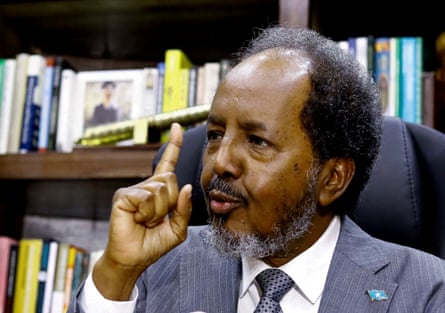
- The political crisis was triggered by President Hassan Sheikh Mohamud's decision to extend his term by one year after his official mandate expired on May 15.
- Opposition figures, including former Prime Minister Hassan Ali Khaire, accused the government of launching indiscriminate military assaults using heavy armor, anti-tank weapons,...
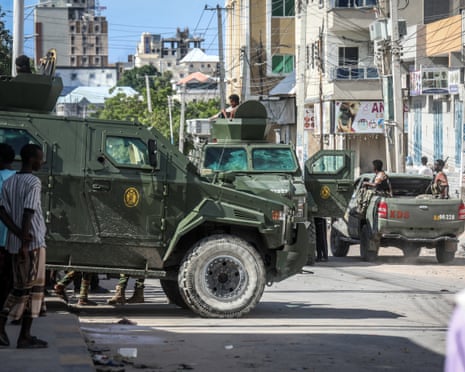
The fragile peace of Mogadishu was shattered as heavy gunfire and artillery shells rocked the Somali capital, driving terrified residents to flee their homes. The sudden escalation of violence pits elite government troops against clan-based militias aligned with the political opposition, transforming busy commercial corridors like the Maka al-Mukarama road into active combat zones. At the heart of this explosive crisis is President Hassan Sheikh Mohamud’s controversial decision to unilaterally extend his presidential mandate by an additional year—a move that has reignited dark memories of past civil conflicts and threatened to derail Somalia's delicate democratic progress.
Quick summary
- Violent Street Battles: Fierce clashes erupted in Mogadishu between federal government forces and opposition-aligned militias, with mortars landing in heavily populated residential areas and the historic Bakara market.
- Constitutional Standoff: The political crisis was triggered by President Hassan Sheikh Mohamud's decision to extend his term by one year after his official mandate expired on May 15.
- Heavy Weaponry Deployed: Opposition figures, including former Prime Minister Hassan Ali Khaire, accused the government of launching indiscriminate military assaults using heavy armor, anti-tank weapons, and drones in civilian districts.
Why it matters
This outbreak of violence is not merely a localized political dispute; it threatens to destabilize the entire Horn of Africa. For years, international donors and regional allies have invested billions of dollars in professionalizing the Somali National Army (SNA) and building governance institutions. A civil war in Mogadishu risks fracturing the military along deep-seated clan lines, effectively undoing a decade of security gains. Furthermore, internal warfare in the capital diverts critical military resources and elite commandos away from the frontlines of the ongoing offensive against the al-Qaida-linked militant group al-Shabaab, leaving vulnerable rural communities exposed to extremist insurgencies.
Background
Somalia has operated under an intricate and fragile political settlement since the collapse of the military dictatorship of Mohamed Siad Barre in 1991. Decades of clan conflicts and institutional collapse have made presidential transitions highly volatile affairs. Historically, presidents have struggled to organize timely elections, leading to recurring constitutional deadlocks.
This is not the first time Mogadishu has found itself on the brink over a term extension. In April 2021, the previous president, Mohamed Abdullahi Mohamed (commonly known as Farmaajo), signed a law extending his mandate by two years after the electoral process stalled. The decision triggered massive street battles in Mogadishu as rival army factions aligned with different clans took over various neighborhoods. Ironically, the current president, Hassan Sheikh Mohamud, was then an opposition figure who strongly condemned the extension, arguing that unilateral mandate extensions were illegal and a direct threat to peace. Mohamud's return to office in 2022 was seen as a victory for constitutional order, making his recent decision to extend his own term by a year deeply polarizing.
Qnews24h insight
The tragic irony of Somali politics has resurfaced: leaders who rise to power by championing constitutional limits frequently attempt to bypass those very rules once in office. President Hassan Sheikh Mohamud's decision to seek a one-year extension highlights the deep-seated systemic instability within Somalia's political transition model. In the absence of a fully functioning direct universal suffrage system, elections rely on complex, indirect clan-based consensus. When that consensus breaks down, political power struggles quickly devolve into armed clan standoffs.
What makes this escalation particularly hazardous is its timing. The African Union Transition Mission in Somalia (ATMIS) is currently in the middle of a phased drawdown, handing over security responsibilities to the local Somali security forces. If the Somali National Army disintegrates into regional and clan factions over this political dispute, the state may lose its capacity to hold territory, offering Al-Shabaab an unprecedented opportunity to regain control over major urban centers.
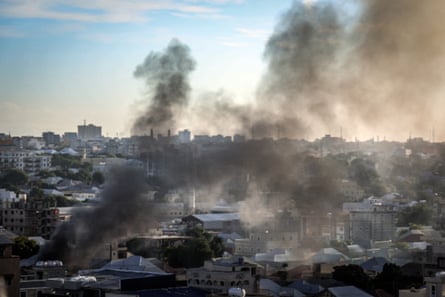
The Shattered Streets of Mogadishu
The fighting began on Wednesday afternoon and rapidly spread throughout key strategic districts of the capital. According to local witnesses, opposition leaders, deeply integrated with powerful local clan militias, established defensive positions within their respective strongholds. By nightfall, heavy artillery and mortar rounds began raining down on residential areas and the Bakara market, the economic heartbeat of Somalia.
Residents recounted scenes of terror that recalled the worst days of the country's civil wars. "I haven’t seen this kind of fighting in five years," said Kowsar Abdi Ibrahim, a resident of the Howl Wadaag district, who was forced to flee her home during a brief lull in the fighting. "In 2021 there was fighting as well, but this is more intense than anyone expected. Even if the gunshots stop momentarily, it doesn't mean the fighting has ended; troop movements are still happening all around us."
Another displaced resident, Bashir Mohamed, emphasized the chaotic nature of the street battles. "You don’t know who is who," he said. "Both sides are wearing similar military uniforms, and the violence can flare up again at any moment."
Allegations of Heavy Weaponry and Government Excesses
The political opposition has accused the government of using disproportionate force against its own citizens and political adversaries. In a public statement on social media, former Prime Minister Hassan Ali Khaire claimed that federal forces had deployed heavy anti-tank weaponry and combat drones in densely populated urban neighborhoods. Khaire alleged that these actions constituted a deliberate, targeted assault intended to eliminate key opposition leaders who have rejected the term extension.
Conversely, the federal police forces maintained that they were executing a legitimate security operation aimed at restoring order. Authorities stated they were targeting "heavily armed militias" who had initiated mortar attacks against civilian neighborhoods and government installations.
Diplomatic Alarm: The International Community Demands Restraint
The rapid descent into violence has alarmed Somalia’s international partners, who fear the collapse of the fragile state apparatus. United Nations Secretary-General António Guterres issued a strong condemnation of the violence, highlighting that the clashes had already resulted in civilian casualties and extensive damage to public infrastructure. "The secretary-general strongly condemns all acts of violence and incitement to violence undertaken for political advantage," his spokesperson said in an official statement, urging all political actors to resolve their differences through peaceful dialogue.
The diplomatic missions of the United States and the United Kingdom in Mogadishu released coordinated statements calling for an immediate cessation of hostilities. The US Embassy described the outbreak of fighting as "reckless," warning that such actions directly undermine Somalia's unity, economic recovery, and future security, while the UK embassy urged all parties to engage in inclusive and constructive dialogue to de-escalate tensions.
Sources
This report compiles information and ground accounts originally reported by the following publications:
- The Guardian
- Reuters News Agency
Frequently Asked Questions (FAQ)
Why are government forces and militias fighting in Mogadishu?
The fighting erupted due to a severe political dispute surrounding President Hassan Sheikh Mohamud's decision to extend his term in office by one year. The opposition and several regional leaders have rejected this extension as unconstitutional, leading to armed confrontations between federal troops and opposition-backed clan militias.
What makes the Maka al-Mukarama road and Bakara market significant?
The Maka al-Mukarama road is the primary thoroughfare in Mogadishu, connecting major government buildings, residential areas, and commercial hubs. The Bakara market is Somalia's largest and most vital business center. Clashes in these areas severely disrupt daily life, destroy vital economic infrastructure, and endanger thousands of civilians.
How does this political crisis affect the fight against Al-Shabaab?
The internal conflict severely weakens the country's defense capabilities. When elite government units and regional forces are diverted to Mogadishu to engage in political infighting, it leaves security vacuums in rural areas. This allows Al-Shabaab to regroup, launch counter-offensives, and reoccupy strategic territories.
Why it matters
A civil war in Mogadishu risks fracturing the military along deep-seated clan lines, effectively undoing a decade of security gains. Furthermore, internal warfare in the capital diverts critical military resources and elite commandos away from the frontlines of the ongoing offensive against the al-Qaida-linked militant group al-Shabaab.
Background
Somalia has operated under an intricate and fragile political settlement since the collapse of the military dictatorship of Mohamed Siad Barre in 1991. Historically, presidents have struggled to organize timely elections, leading to recurring constitutional deadlocks. In 2021, a similar attempt at a term extension by then-President Farmaajo sparked extensive gun battles in the capital, highlighting the volatile nature of political transitions in the country.
The tragic irony of Somali politics has resurfaced: leaders who rise to power by championing constitutional limits frequently attempt to bypass those very rules once in office. This escalation is particularly hazardous because it occurs amidst the ongoing drawdown of African Union peacekeeping forces, potentially leaving a security vacuum that Al-Shabaab can easily exploit.
References
Editorial information
The editorial team reviews sources, adds context, and structures stories so readers can understand the news more clearly.
Article from QNEWS24H
Comments
(0)No comments yet. Be the first to share your thoughts.