SK Hynix Surpasses Samsung in Market Cap, Signalling AI's Reshaping of Tech Hierarchy
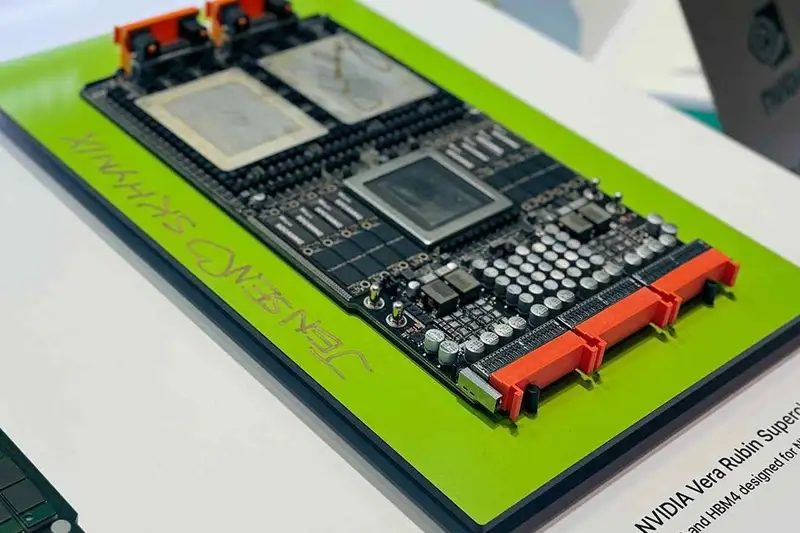
- SK Hynix has overtaken Samsung as South Korea's most valuable listed company for the first time since 2000, reaching a market capitalization of approximately $1.35 trillion.
- The dramatic shift is primarily attributed to SK Hynix's early and strategic focus on High Bandwidth Memory (HBM), essential for powering advanced AI processors.
- Once near bankruptcy in the early 2000s, SK Hynix now commands a dominant share of the global HBM market, supplying key players like Nvidia and Google.
- SK Hynix is reportedly exploring a Nasdaq listing in the United States, a move that could significantly broaden its international investor base and global standing.
After more than two decades, Samsung has been dethroned as South Korea's most valuable listed company, a landmark shift driven by the surging demand for artificial intelligence infrastructure. SK Hynix, a memory chip specialist, has surpassed the tech conglomerate in market capitalization, highlighting the profound impact of the AI revolution on the global semiconductor industry and altering the landscape of corporate power in one of Asia's economic powerhouses.
Quick summary
- SK Hynix has overtaken Samsung as South Korea's most valuable listed company for the first time since 2000, reaching a market capitalization of approximately $1.35 trillion.
- The dramatic shift is primarily attributed to SK Hynix's early and strategic focus on High Bandwidth Memory (HBM), essential for powering advanced AI processors.
- Once near bankruptcy in the early 2000s, SK Hynix now commands a dominant share of the global HBM market, supplying key players like Nvidia and Google.
- SK Hynix is reportedly exploring a Nasdaq listing in the United States, a move that could significantly broaden its international investor base and global standing.
Why it matters
This leadership change in South Korea's corporate landscape is far more than a simple financial metric; it signals a fundamental paradigm shift within the global technology sector. For investors, it underscores the immense value being created by specialized innovation in the AI era, rewarding companies that make bold, early bets on crucial emerging technologies. For consumers, it subtly influences the capabilities and availability of the AI tools and services they increasingly rely on, from advanced chatbots to sophisticated data analytics, as HBM forms the bedrock of powerful AI hardware.
Economically, this shift highlights how rapidly new technologies can reconfigure market dominance, even challenging established giants with diversified portfolios. It also reflects a significant evolution in the semiconductor market itself, moving beyond commodity memory chips to highly specialized, high-margin components. For South Korea, it represents a new national tech icon, embodying the country's prowess in advanced manufacturing and its adaptability to global technological trends, potentially influencing future investment and industrial policy directions.
Background
Samsung has maintained its position as South Korea's most valuable listed enterprise since the year 2000, a testament to its sprawling empire encompassing everything from consumer electronics and displays to foundry services and traditional memory chips. Its sheer scale and diversification have long made it an unassailable titan in the domestic market and a global technology leader.
In stark contrast, SK Hynix, originally founded as a unit of Hyundai in 1983, endured a tumultuous history. By 2002, the company teetered on the brink of collapse, drowning in debt from rapid expansion and facing potential acquisition by rivals like Micron. For nearly a decade, it operated under creditor control, its stock relegated to 'penny stock' status on the Korean exchange. The turning point arrived with its acquisition by SK Group, one of South Korea's influential family-controlled conglomerates (chaebol), which strategically redirected the company's focus.
Under SK Group's stewardship, SK Hynix made a pivotal, yet at the time understated, bet on High Bandwidth Memory (HBM). While traditional DRAM was largely a commodity with thin margins, HBM was a niche product with significant technical hurdles. The global tech landscape began to shift dramatically with the advent of sophisticated AI models, particularly large language models like ChatGPT. This explosion in AI development created an insatiable demand for the specialized, high-performance memory crucial for powering AI accelerators, transforming HBM from an obscure component into a critical bottleneck in the AI supply chain.
The AI Bet: HBM as a Game Changer
The essence of HBM lies in its unique architecture: multiple DRAM dies are vertically stacked and interconnected with through-silicon vias (TSVs), allowing for much wider data pathways and significantly higher bandwidth compared to conventional memory. This design also leads to lower power consumption, a critical advantage for energy-intensive AI processing units. Integrated directly with AI Graphics Processing Units (GPUs), HBM provides the rapid data access required for complex AI computations.
Unlike commodity DRAM, HBM involves intricate manufacturing processes and requires deep integration expertise with GPU designers. This creates substantial technical barriers to entry, granting leading suppliers considerable pricing power. SK Hynix's early and sustained investment in this technology positioned it perfectly to capitalize on the AI boom. By 2025, SK Hynix is projected to command approximately 61% of the global HBM market, a significant lead over competitors like Micron (21%) and Samsung (17%).
Industry analysts, such as Kim Sun-woo from Meritz Securities, emphasize that the emergence of customized AI memory has fundamentally restructured the economic dynamics of the semiconductor industry. This strategic foresight has enabled SK Hynix to rise as a market leader, transforming a once struggling company into an indispensable component of the global AI ecosystem, supplying major tech players like Nvidia and Google.
Shifting Sands: Samsung's Broad Portfolio vs. Hynix's Focus
The divergent fortunes of SK Hynix and Samsung illustrate the trade-offs between specialization and diversification in a rapidly evolving technological landscape. Samsung's vast portfolio, spanning consumer electronics, display panels, smartphones, and a broad range of semiconductors including logic chips and traditional DRAM, historically provided resilience and multiple revenue streams. However, its immense scale and diversified focus meant it couldn't pivot as quickly or concentrate resources as intensely on niche, high-growth areas like HBM.
SK Hynix, on the other hand, is almost entirely dedicated to memory chips. This specialization proved a double-edged sword. In 2023, during a downturn in the general chip market, SK Hynix reported significant operating losses of 7.73 trillion won. Yet, with the explosive demand for AI-specific memory, this focused expertise became its greatest asset. Just one year later, the company reported a record operating profit of 23.5 trillion won, propelled by soaring HBM sales. This dramatic turnaround has seen SK Hynix's stock price surge by over 340% in the current year, making it the most valuable memory chip company globally.
Analysts now suggest that SK Hynix is not only dominating HBM but also narrowing the production gap with Samsung in the broader DRAM market, an area Samsung traditionally led. If current expansion trends persist, the production capacity difference between the two companies could shrink to under 10% by 2028, fundamentally altering the competitive dynamics that once heavily favored Samsung's massive scale.
Qnews24h insight
The ascendancy of SK Hynix over Samsung in market capitalization serves as a potent reminder of how disruptive technological waves can redraw established industry hierarchies. It's a clear demonstration that in the era of artificial intelligence, strategic specialization and early investment in critical, high-barrier-to-entry components can yield disproportionate returns, even allowing once-struggling entities to outpace diversified conglomerates. This shift suggests a premium placed on agility and focused innovation, particularly when addressing the fundamental infrastructure needs of transformative technologies like AI. The move reflects not just a change in corporate valuation, but a re-prioritization of value within the entire semiconductor ecosystem, where performance and integration capabilities for AI workloads now command a significant premium over sheer volume or breadth of product.
Future Outlook and Global Ambitions
With its newfound momentum and leadership in the critical HBM sector, SK Hynix is not resting on its laurels. The company is reportedly exploring a listing on the Nasdaq stock exchange in the United States. This strategic move would open up new avenues for international investment, broaden its global investor base, and further solidify its position as a leading player in the global semiconductor market beyond its domestic achievements. A Nasdaq listing would also potentially provide greater liquidity and visibility, reinforcing its status as a pivotal supplier in the burgeoning AI economy.
Sources
FAQ
What is High Bandwidth Memory (HBM) and why is it important for AI?
HBM is a type of high-performance RAM (Random Access Memory) that stacks multiple memory chips vertically to create a wider, faster interface. It's crucial for AI because it provides significantly higher data transfer rates and lower power consumption compared to traditional DRAM, enabling AI processors (GPUs) to access large datasets more quickly and efficiently for complex machine learning tasks and model training.
How did SK Hynix manage to surpass Samsung in market value?
SK Hynix's market value surge is primarily due to its strategic foresight and early investment in HBM technology. While Samsung has a diversified portfolio, SK Hynix focused almost exclusively on memory, becoming a dominant supplier of HBM for key AI industry players like Nvidia and Google. The exponential demand for AI chips has driven the value of HBM, and consequently, SK Hynix's valuation.
What does this shift mean for the global semiconductor industry?
This leadership change signifies a fundamental reorientation within the global semiconductor industry, emphasizing the growing importance of specialized components for AI. It suggests that companies focusing on niche, high-performance memory solutions for AI can gain significant market leverage and outpace even larger, more diversified conglomerates. It highlights the rapid pace of innovation and market adaptation required to remain competitive in the AI era.
What are SK Hynix's future plans following this milestone?
Beyond solidifying its leadership in the HBM market and narrowing the production gap in traditional DRAM, SK Hynix is reportedly considering a listing on the Nasdaq stock exchange in the United States. This move aims to expand its global investor base and further elevate its international market presence and standing.


Why it matters
This leadership change in South Korea's corporate landscape is far more than a simple financial metric; it signals a fundamental paradigm shift within the global technology sector. For investors, it underscores the immense value being created by specialized innovation in the AI era, rewarding companies that make bold, early bets on crucial emerging technologies. For consumers, it subtly influences the capabilities and availability of the AI tools and services they increasingly rely on, from advanced chatbots to sophisticated data analytics, as HBM forms the bedrock of powerful AI hardware. Economically, this shift highlights how rapidly new technologies can reconfigure market dominance,...
Background
Samsung has maintained its position as South Korea's most valuable listed enterprise since the year 2000, a testament to its sprawling empire encompassing everything from consumer electronics and displays to foundry services and traditional memory chips. Its sheer scale and diversification have long made it an unassailable titan in the domestic market and a global technology leader. In stark contrast, SK Hynix, originally founded as a unit of Hyundai in 1983, endured a tumultuous history. By 2002, the company teetered on the brink of collapse, drowning in debt from rapid expansion and facing potential acquisition by rivals like Micron. For nearly a decade, it operated under creditor...
The ascendancy of SK Hynix over Samsung in market capitalization serves as a potent reminder of how disruptive technological waves can redraw established industry hierarchies. It's a clear demonstration that in the era of artificial intelligence, strategic specialization and early investment in critical, high-barrier-to-entry components can yield disproportionate returns, even allowing once-struggling entities to outpace diversified conglomerates. This shift suggests a premium placed on agility and focused innovation, particularly when addressing the fundamental infrastructure needs of transformative technologies like AI. The move reflects not just a change in corporate valuation, but a...
References
Editorial information
The editorial team reviews sources, adds context, and structures stories so readers can understand the news more clearly.
Article from QNEWS24H
Comments
(0)No comments yet. Be the first to share your thoughts.