Samsung Launches Urgent Investigation Over Galaxy S26 Ultra Screen Burn-In and Discoloration Reports

- Samsung has officially launched an internal investigation into reports of screen discoloration and burn-in on its flagship Galaxy S26 Ultra.
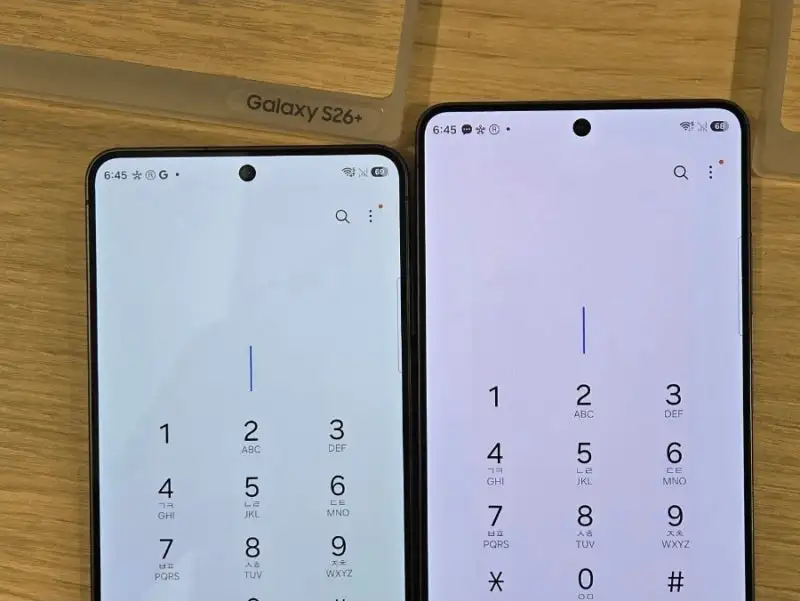
- The issue manifests as a reddish tint and ghosting, observed by everyday users and on retail store demo units running at high brightness.
- Industry experts point to the new hardware-based 'Privacy Display' tech as the likely culprit, suggesting it may have altered the screen's internal light-emitting structure.
The launch of a new Samsung Ultra flagship is typically a triumphant showcase of mobile display technology, with the screen serving as the undisputed centerpiece of the device. However, the premium Galaxy S26 Ultra has run into unexpected turbulence just months after its global debut. Reports emerging from South Korea indicate that both everyday users and retail display units are experiencing unusual screen discoloration and potential image retention, commonly known as burn-in. As complaints begin to circulate online and in retail environments, Samsung has officially launched an internal investigation to determine whether this issue stems from a widespread hardware flaw or a complex calibration conflict, threatening to overshadow the device's cutting-edge display innovations.
Quick summary
- Internal Investigation Launched: Samsung has officially confirmed it is investigating reports of screen discoloration and potential burn-in specifically affecting the premium Galaxy S26 Ultra model.
- The Retail and User Reports: Multiple users have observed a reddish tint and persistent image ghosting after a few months of usage, a phenomenon that has also been widely documented on retail demo units operating under continuous high brightness.
- Privacy Display Under Scrutiny: Industry experts suspect that the newly introduced "Privacy Display" technology, which limits viewing angles for added security, may have altered the panel's internal light-emitting structure and caused the optical instability.
Why it matters
For a device positioned at the pinnacle of the ultra-premium smartphone segment, any sign of display degradation is a critical concern. Consumers who invest in an "Ultra" series device expect flawless long-term performance, making reports of display anomalies a direct threat to Samsung's brand equity and customer loyalty. Beyond customer satisfaction, this issue has broader implications for Samsung Display, the corporate division responsible for pioneering mobile panel technologies. If the premium Privacy Display tech is fundamentally flawed, it could delay the rollout of similar security-oriented screen technologies to other devices in the industry and heavily impact the secondary market resale value of the Galaxy S26 Ultra.
Background
To understand the root of the current controversy, it is necessary to examine the evolution of mobile OLED (Organic Light Emitting Diode) technology. While OLED panels offer unmatched contrast ratios and vibrant colors, they are inherently susceptible to burn-in—a permanent degradation of the organic compounds that emit light, usually caused by displaying static images at high brightness for extended periods. Historically, manufacturers have mitigated this through software-level pixel-shifting techniques and advanced thermal management.
With the release of the Galaxy S26 Ultra, Samsung sought to push hardware boundaries by integrating an advanced, physical "Privacy Display" layer directly into the screen. This technology is engineered to restrict the viewing angles of the display, preventing bystanders from viewing private on-screen content from the side. Notably, the standard Galaxy S26 and Galaxy S26+ do not feature this specialized Privacy Display layer, and neither model has shown the reddish discoloration or premature burn-in reported on the Ultra variant, narrowing the focus of the investigation directly to the Ultra's unique display architecture.
The Technology Behind the Glitch: Privacy Display vs. OLED Longevity
Tech analysts and hardware engineers are currently dissecting how the Privacy Display mechanism interacts with the underlying LTPO OLED substrate. Restricting viewing angles physically typically requires micro-louvers or specialized polarization layers that filter out light emitted at oblique angles. However, these optical filters can alter the path of light and trap heat inside the display stack.
Because organic light-emitting diodes are highly sensitive to thermal stress, any localized heat buildup caused by the privacy layer could accelerate the degradation of specific subpixels. In typical OLED displays, the blue and green subpixels degrade at different rates compared to red subpixels. If the Privacy Display layer causes uneven thermal dissipation or forces certain subpixels to draw more current to maintain perceived brightness levels, it can result in a visible shift in the overall white balance—manifesting as the reddish tint reported by users and retail workers.
Analyzing the Symptoms: Red Discoloration and Burn-In
While some reports categorize the issue strictly as "burn-in," others suggest it might be a uniform calibration drift or color non-uniformity. Professional reviewers who received pristine test units generally reported no immediate display anomalies, which indicates that the issue may require specific conditions to manifest, such as extended usage hours, elevated internal temperatures, or prolonged exposure to maximum brightness.
Retail store display units, which run continuously at 100% brightness for 12 to 14 hours a day, serve as an extreme stress test. The fact that the reddish tint has been observed on these demo units suggests that the display stack may struggle under high-demand scenarios. Samsung's internal team is currently analyzing these units alongside consumer devices to map out the exact environmental factors that trigger the degradation.
Qnews24h insight
Samsung's current dilemma highlights a recurring challenge in the modern smartphone industry: the fine line between meaningful innovation and long-term hardware reliability. To justify the premium pricing of flagship devices, manufacturers must continuously introduce exclusive hardware features. However, adding complex physical optical layers like the Privacy Display to an already sensitive, multi-layered OLED panel introduces new variables that can compromise structural and thermal integrity.
If Samsung's investigation reveals that the Privacy Display layer physically alters the degradation rate of the OLED subpixels, a quick software patch will not suffice as a permanent fix. Instead, Samsung may be forced to issue software updates that artificially limit peak brightness or modify the display's color profiles to mask the uneven wear. Such a move would be a compromise, sacrificing a portion of the screen's visual performance to guarantee its survival over a standard two-year carrier contract. This situation serves as a cautious reminder that pioneering experimental hardware features always carries the risk of unforeseen long-term durability issues.
Sources
- Originally reported and documented by South Korean media outlet Newsway.
- Additional reporting and technical context provided by thanhnien.vn.
Why it matters
A display defect on a premium flagship costing over $1,300 threatens consumer trust and brand loyalty. Furthermore, because Samsung Display is a primary supplier for major competitors like Apple, any fundamental design flaw in their high-end panels has far-reaching consequences for mobile display supply chains and future hardware rollouts.
Background
Historically, OLED screens are prone to burn-in over long periods, but manufacturers use software tricks to prevent it. On the Galaxy S26 Ultra, Samsung introduced a physical 'Privacy Display' layer to limit side-angle viewing. Because this layer is exclusive to the Ultra model—and the standard S26 and S26+ have not shown these discoloration symptoms—investigators are focusing on how this optical layer affects subpixel degradation and heat dissipation.
This incident underscores the risks of prioritizing experimental physical features over proven display durability. If the Privacy Display layer causes uneven subpixel degradation, Samsung may have to implement restrictive software limits on brightness or color profiles, revealing a stark trade-off between premium marketing features and daily usability.
References
Editorial information
The editorial team reviews sources, adds context, and structures stories so readers can understand the news more clearly.
Article from QNEWS24H
Comments
(0)No comments yet. Be the first to share your thoughts.