Samsung Galaxy Watch 9 Review: Health Metric Overload Meets Future Ecosystem Ambitions
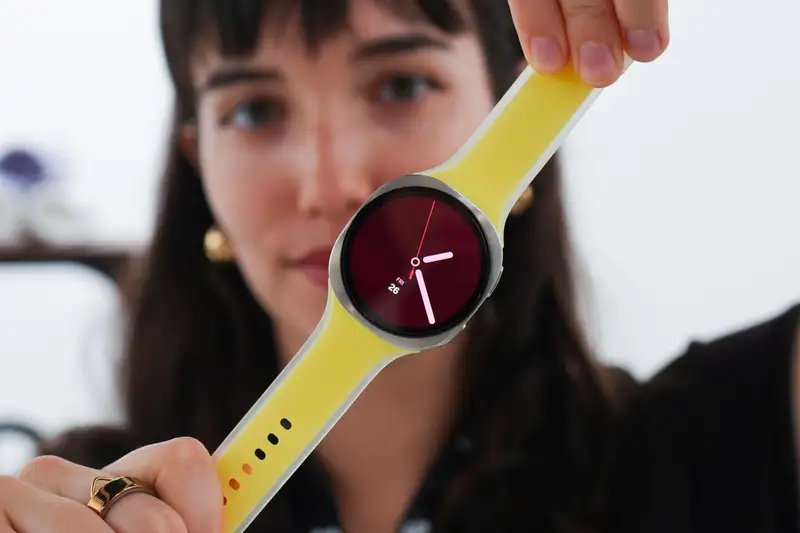
- Powered by the Snapdragon Wear Elite chip, the Galaxy Watch 9 acts as an anchor for gesture controls in future smart glasses ecosystems.
- Empirical heart-rate testing shows top-tier accuracy, matching within 1 to 3 beats per minute of the Polar H10 chest strap.
- Real-world battery life reaches over 36 hours with Always-On Display active, though full charging takes roughly 80 minutes.
- Comprehensive biometric tracking provides deep health scores, highlighting a growing need for contextual AI health coaching.
Consumer tech upgrades have entered an era of refined iteration rather than sudden radical transformations, leaving hardware makers to prove that subtle yearly refinements truly add up to something transformative. Samsung's Galaxy Watch 9 embodies this shift, balancing incremental hardware updates with strategic groundwork for a wearable ecosystem that extends far beyond the wrist.
Quick summary
- Powered by the Snapdragon Wear Elite processor, the Galaxy Watch 9 acts as a core hardware anchor for gesture control in Samsung's upcoming smart glasses ecosystem.
- Empirical heart-rate testing shows near-perfect tracking accuracy, aligning within 1 to 3 beats per minute of the gold-standard Polar H10 chest strap.
- Battery endurance exceeds manufacturer claims by lasting over 36 hours with the Always-On Display turned on, though charging takes 80 minutes from empty.
- Sensors record a vast range of biometrics—from sleep apnea to metabolic health—creating a high volume of data that currently lacks deep contextual coaching.
Why it matters
The Galaxy Watch 9 marks a deliberate strategy shift in how wearables fit into personal technology ecosystems. Rather than acting solely as a secondary display for a smartphone, the device uses Qualcomm's Snapdragon Wear Elite processor to lay the structural plumbing for decentralized computing. Through gesture recognition and voice activation, the watch is engineered to serve as an input interface for future augmented reality hardware, including intelligent eyewear.
For health and fitness enthusiasts, the device highlights both the impressive reach and current limits of consumer health monitoring. With clinical-grade tracking algorithms delivering precise real-time heart metrics during high-intensity workouts, smartwatches are increasingly capable of replacing specialized medical or athletic equipment. However, the sheer density of generated data poses new challenges for user experience and actionable health insights.
Hardware and Real-World Performance
At the center of the daily user experience is a vivid 3,000-nit Super AMOLED display, engineered to remain completely legible under direct, bright sunlight. Whether checking step counts during a midday run or reviewing exercise form between weight-training sets, the screen delivers exceptional clarity and visual punch.
Performance under the hood is handled by the Snapdragon Wear Elite chip, running Google's Wear OS 7 paired with Samsung's One UI 9 Watch interface. System navigation across apps, widgets, and health panels remains fluid and responsive, eliminating the subtle stutters that occasionally affected earlier hardware generations.
To test heart-rate accuracy under rigorous conditions, the watch was benchmarked during an intense Stairmaster workout against a Polar H10 chest strap, widely recognized as a gold standard in cardiovascular monitoring. The results revealed remarkable precision: the Galaxy Watch 9 measured an average heart rate within 3 beats per minute of the chest strap and caught peak maximum heart rate within a single beat per minute. Energy expenditure tracking proved similarly consistent, recording 7.9 calories burned per minute compared to the chest strap's 8.3.
Battery Endurance and Daily Ergonomics
Battery longevity on the standard 390 mAh unit easily surpasses official estimates. In real-world testing with the Always-On Display enabled, the watch operated for roughly 36 hours and 30 minutes on a single charge—draining from 98% on morning day one down to 2% late evening on day two. This extended runtime comfortably supports overnight sleep tracking without requiring an emergency top-up before bed.
However, recharge speeds remain an area in need of improvement. Filling the battery from zero to full requires approximately 1 hour and 20 minutes, lagging noticeably behind rivals like the Google Pixel Watch 4, which reaches full capacity in about 45 minutes.
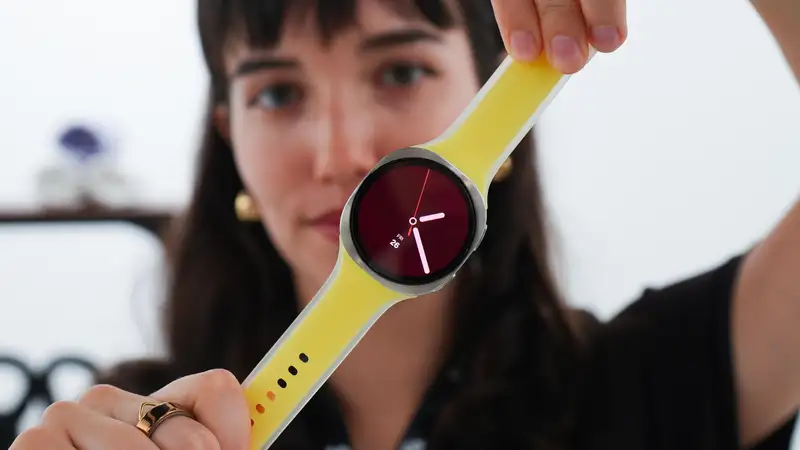
Ergonomics present a mixed picture depending on wrist size and personal comfort preferences. While the watch body itself remains light, the bundled stock silicone strap feels somewhat stiff and non-breathable during extended wear or sleep. Smaller wrists may experience fitting difficulties due to fixed strap loops sliding out of place, making an aftermarket breathable band a recommended addition for 24/7 biometric tracking.
Health Metrics and Data Management
Samsung has loaded the One UI 9 Watch software with an expansive suite of quantitative health tools. A key addition is the expanded Vitals monitor, which aggregates resting heart rate, heart rate variability (HRV), respiration rate, and blood oxygen levels to detect baseline deviations that might indicate fatigue or onset illness.
Users can access specialized scores covering sleep quality, sleep apnea risk, daily cardio load, overall fitness index, metabolic health, and even estimated antioxidant levels. During active outdoor cardio sessions, smart hydration alerts buzz the wrist based on dynamic physical exertion calculations to encourage fluid intake.
The Challenge of Data Overload
While the volume of measurable biomarkers is impressive, it creates a distinct user challenge: metric saturation. Receiving dozens of numerical grades each morning without direct, actionable behavioral guidance can leave users unsure how to adjust their daily routines.
Samsung is currently testing AI-assisted health coaching in beta to solve this gap. Until contextual AI agents are fully deployed across the software stack, users must actively analyze their own biometric trends to turn raw numbers into meaningful lifestyle changes.
Background
The wearable industry has gradually pivoted away from drastic aesthetic redesigns in favor of deeper sensor integration and long-term platform convergence. Prior generations like the Galaxy Watch 7 and Galaxy Watch 8 focused on establishing core health tracking frameworks and steady performance gains.
With the release of the Galaxy Watch 9, Samsung's internal engineering focus has transitioned toward ambient computing and advanced sensor fusion. This update reinforces the watch's role not just as a standalone fitness tool, but as an active component within an interconnected network of mobile devices, audio hardware, and emerging smart eyewear form factors.
Qnews24h insight
The Galaxy Watch 9 showcases a subtle but profound pivot in consumer tech strategy. On a pure hardware level, it delivers market-leading sensor accuracy and reliable day-and-a-half battery life. Yet its true strategic value lies in how it prepares consumers for the next phase of human-computer interaction.
By embedding gesture capture capability tied to Qualcomm's wearable platform, Samsung is quietly turning the wristband into a wireless control hub for future smart glasses. The primary trade-off today is software maturity: collecting dozens of health metrics without an active AI layer to translate them into daily advice creates cognitive clutter. For existing Galaxy Watch 7 or 8 owners, an immediate upgrade may not be essential unless battery longevity is critical, but for new buyers—especially within the Samsung ecosystem—the Watch 9 represents a highly capable, future-proof entry point.
Sources
- ZDNET: Samsung Galaxy Watch 9 review testing and hands-on breakdown (https://www.zdnet.com/article/samsung-galaxy-watch-9-review/)
Why it matters
The Galaxy Watch 9 signals a shift toward ambient personal computing, converting the smartwatch from a simple phone accessory into a central control interface for future AR smart glasses while setting new accuracy benchmarks for wearable health sensors.
Background
Iterative hardware updates across the smartwatch market have shifted attention from radical physical redesigns to backend silicon power, advanced sensor algorithms, and multi-device platform synergy across Wear OS and custom user interfaces.
While hardware accuracy and battery performance are stellar, Samsung's biggest challenge is software synthesis. Gathering dozens of health scores without proactive AI coaching creates data fatigue, making context and guidance the crucial next step for wearable software.
References
Editorial information
The editorial team reviews sources, adds context, and structures stories so readers can understand the news more clearly.
Article from QNEWS24H
Comments
(0)No comments yet. Be the first to share your thoughts.