Samsung Galaxy S26 Ultra Alternatives: Finding Flagship Value in Older Models
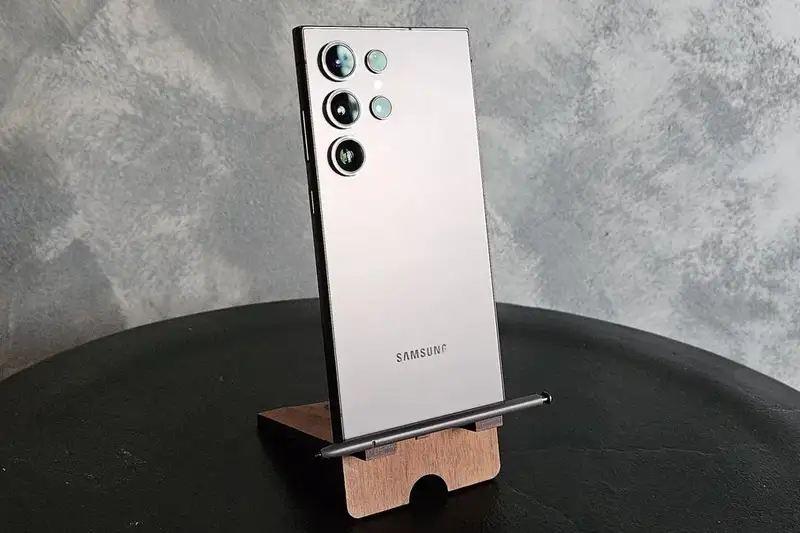
- Older Samsung Galaxy Ultra models (S25, S24, S23, S22) provide competitive features and performance at much lower costs than the S26 Ultra.
- The Galaxy S24 and S25 Ultra benefit from Samsung's 7-year software update policy, ensuring extended security and feature support.
- Consumers can achieve substantial savings by choosing a slightly older flagship, trading the absolute latest processor for significant financial advantages and often unique design...
- Models like the S22 Ultra offer extreme budget value but require users to consider the impending end of software and security updates.
The arrival of a new top-tier smartphone like the Samsung Galaxy S26 Ultra invariably sparks excitement, promising cutting-edge innovation and peak performance. Yet, for many prospective buyers, the allure quickly meets the reality of its premium price tag, often prompting a search for more accessible alternatives. While the latest model undoubtedly boasts advanced features, a closer look reveals that its predecessors, some only a generation or two old, still offer remarkably competitive specifications and user experiences at a fraction of the cost, making them increasingly attractive options in today's dynamic smartphone market.
Quick summary
- Several older Samsung Galaxy Ultra models, including the S25, S24, S23, and S22 Ultra, offer compelling performance and features that rival the latest S26 Ultra at significantly lower price points.
- The Galaxy S24 and S25 Ultra stand out with Samsung's extended 7-year software update policy, ensuring long-term usability and security support for years to come.
- Choosing an older flagship often involves a trade-off between the very latest processor and features versus substantial cost savings and, in some cases, unique design elements no longer found in newer generations.
- While models like the S22 Ultra offer extreme value, users must consider the implications of nearing the end of their software and security update cycles.

Why it matters
In an era where flagship smartphone prices continue to climb, understanding the value proposition of previous-generation devices has become more critical than ever for consumers. This analysis offers a practical guide for those navigating the often-complex decision of upgrading their phone, balancing desires for cutting-edge technology with budgetary realities. For the industry, it highlights a growing trend: the extended longevity and continued relevance of older premium devices, driven by improved hardware durability and increasingly generous software support policies. This shift impacts sales cycles, promotes more sustainable consumer habits by extending device lifespans, and challenges manufacturers to justify the price hike of each new iteration beyond incremental performance gains. For average users, it means more choice, greater financial flexibility, and the ability to access high-end experiences without breaking the bank, fostering a more informed and empowered consumer base.
Background
Samsung's 'Ultra' designation, first introduced with the Galaxy S20 Ultra, marked a commitment to pushing the boundaries of smartphone technology, integrating top-tier cameras, large displays, and robust performance into a single, premium package. Over the years, this series has consistently introduced groundbreaking features, from advanced periscope zoom lenses and high-resolution main sensors to integrated S Pen functionality, effectively merging the capabilities of the Galaxy Note series into the S-lineup.
Each subsequent generation brought refinements in processing power, camera capabilities, and display technology. However, a significant development occurred with the Galaxy S24 series, where Samsung announced an unprecedented 7-year software update commitment, dramatically extending the lifespan and value proposition of their flagship devices. This policy marked a departure from the previous standard of 4 years, directly influencing the long-term attractiveness of models like the S24 Ultra and S25 Ultra. Concurrently, design philosophies have evolved, with some models retaining curved displays and specific optical zoom capabilities that later generations have either iterated upon or removed, creating distinct appeal points for different models in the Ultra lineage.
Qnews24h insight
The current market for premium Android smartphones reveals a fascinating dynamic: the latest and greatest often delivers diminishing returns in raw performance and features compared to its immediate predecessors, especially when juxtaposed against their plummeting street prices. Samsung's strategic extension of software support, particularly for the S24 and S25 Ultra, is not merely a goodwill gesture; it's a shrewd move that fundamentally alters the value equation for consumers. It democratizes access to top-tier experiences, allowing users to enjoy flagship-level hardware, security, and new features for half a decade or more, even if they choose a model that isn't the absolute newest.
This trend suggests a maturing smartphone market where significant generational leaps are becoming less frequent. For Samsung, it means potentially cannibalizing some new sales with strong offerings in its back catalog, but it also fosters greater brand loyalty by providing excellent long-term value. Consumers are no longer pressured to upgrade annually, shifting focus from raw spec sheets to a more holistic view of design, sustained performance, and, crucially, prolonged software longevity. This evolution benefits everyone, promoting sustainability and smart purchasing decisions in an increasingly saturated and expensive landscape.

The Galaxy S25 Ultra: A Near Identical Experience for Less
For those seeking an experience almost indistinguishable from the Galaxy S26 Ultra without the hefty price tag, its direct predecessor, the Galaxy S25 Ultra, presents a compelling argument. The two models share significant commonalities, particularly in their core design language, though the S25 Ultra is noted to be slightly thicker and heavier, with the primary aesthetic distinction often lying in camera module accents.
Crucially, the S25 Ultra largely mirrors the S26 Ultra in fundamental specifications, including its camera system, display quality, battery capacity, and fast-charging technology. The primary difference often boils down to the latest generation's processor and a handful of exclusive software features, such as 'Privacy Display' or 'Horizon Lock'. However, the S25 Ultra benefits from the same extended 7-year software update policy as its successor, ensuring security patches and major Android upgrades until 2032. This makes it an exceptionally future-proof device, offering premium longevity at a considerably reduced cost, especially during sales events.
The Galaxy S24 Ultra: The Longevity Champion
Stepping back just one more generation, the Galaxy S24 Ultra emerges as a strong contender, particularly for those prioritizing long-term support and a distinct aesthetic. This model retains a squared-off, angular design language, which, while similar to the latest flagships, features a titanium frame—a premium touch that distinguishes it. While some core specifications might align with the S23 Ultra, the S24 Ultra boasts practical enhancements, notably superior battery life and refined camera performance.
Its current market price places it in a highly competitive bracket, offering a substantial saving over the S26 Ultra while delivering a flagship experience. The most significant advantage of the S24 Ultra, however, is its industry-leading 7-year software update commitment from Samsung. This unprecedented policy guarantees continued software enhancements and crucial security updates until 2031, making it the oldest model on this list to offer such an extensive lifeline. For users seeking a device that will remain current and secure for years to come, the S24 Ultra represents an unmatched blend of value, performance, and future-proofing.
The Galaxy S23 Ultra: A Premium Experience for Less
The Galaxy S23 Ultra occupies a sweet spot, balancing a more accessible price point with a still-impressive array of features and a comfortable remaining software update window. It holds the distinction of being the last Ultra model to feature certain design elements and hardware choices, such as a truly curved display and a 10x optical periscope lens, which have since been iterated upon or removed in newer generations. This makes it particularly appealing to users who appreciate these specific premium characteristics.

It was also the pioneering Galaxy Ultra to incorporate a high-resolution 200MP main camera and maintained Bluetooth integration for its S Pen. Powered by the Snapdragon 8 Gen 2 processor, its performance remains robust, easily handling demanding applications and multitasking, even if it doesn't match the absolute raw power of the latest chips. While it lacks the 7-year update promise of its successors, the S23 Ultra is still slated to receive significant software upgrades and security patches for a few more years, making it an excellent value proposition, especially for those who can find new or lightly used units.
The Galaxy S22 Ultra: Budget-Friendly Powerhouse with Caveats
For the most budget-conscious consumers willing to navigate some trade-offs, the Galaxy S22 Ultra offers an exceptionally low entry price for a once-premium device. Even in 2026, its hardware specifications remain surprisingly capable, featuring a versatile quad-camera system, a premium build, integrated S Pen functionality, and the Snapdragon 8 Gen 1 chipset. This processor, while older, still delivers competitive performance in the mid-range segment today, making it suitable for many demanding tasks and gaming.
However, the significant caveat for the S22 Ultra lies in its software support. It is expected to cease receiving major Android updates after One UI 8, and crucial security patches will also become irregular or stop altogether. This limitation means it's not ideal as a primary daily driver for users who prioritize the latest features or robust security. Despite this, its incredibly low used price, often around 10 million Vietnamese Dong (approximately $400 USD), makes it an outstanding value as a secondary device for dedicated photography, intense gaming, or as a powerful, feature-rich backup phone.
Considerations for Legacy Models: S21 and S20 Ultra
While even older models like the Galaxy S21 Ultra and S20 Ultra exist, they generally fall outside the scope of recommended alternatives for most users. The primary reason for this exclusion is the complete cessation of software and security updates, leaving devices vulnerable and lacking support for newer features. Furthermore, the availability of official replacement parts becomes increasingly scarce, and the performance, while once cutting-edge, has noticeably aged compared to more recent flagships. For these reasons, investing in an S21 Ultra or S20 Ultra is typically advised against for primary use, although they might serve as basic secondary devices for very specific, non-critical tasks.
Sources

FAQ
Why should I consider an older Samsung Galaxy Ultra instead of the latest S26 Ultra?
Older Galaxy Ultra models, especially those from the last 2-3 generations, offer significantly reduced prices while still delivering premium performance, camera capabilities, and display quality comparable to the newest flagships. The trade-off for a slightly older processor or a few exclusive software features often pales in comparison to the substantial cost savings.
Which older Galaxy Ultra model offers the best software support longevity?
The Samsung Galaxy S24 Ultra and S25 Ultra are the top choices for software longevity, as they benefit from Samsung's extended 7-year software update policy. This ensures they will receive major Android updates and security patches until 2031 and 2032, respectively, providing unparalleled long-term value.
Are there any risks associated with buying an older flagship phone?
The main risk with older flagships, particularly models like the S22 Ultra and older, is the eventual cessation of software and security updates. This can leave the device vulnerable to security threats and unable to run the latest apps or features. Additionally, battery degradation can be a concern for used devices, and finding official replacement parts might become more challenging over time for very old models.
What are the key differences between the S25 Ultra and the S26 Ultra?
The S25 Ultra is very similar to the S26 Ultra in most aspects, including camera system, display, and battery. The primary differences typically involve the latest generation's processor, which offers marginal performance gains, and a few exclusive software features introduced with the newest model. Both, however, share the crucial 7-year software update commitment.
Why it matters
In an era where flagship smartphone prices continue to climb, understanding the value proposition of previous-generation devices has become more critical than ever for consumers. This analysis offers a practical guide for those navigating the often-complex decision of upgrading their phone, balancing desires for cutting-edge technology with budgetary realities. For the industry, it highlights a growing trend: the extended longevity and continued relevance of older premium devices, driven by improved hardware durability and increasingly generous software support policies. This shift impacts sales cycles, promotes more sustainable consumer habits by extending device lifespans, and challenges...
Background
Samsung's 'Ultra' designation, first introduced with the Galaxy S20 Ultra, marked a commitment to pushing the boundaries of smartphone technology, integrating top-tier cameras, large displays, and robust performance into a single, premium package. Over the years, this series has consistently introduced groundbreaking features, from advanced periscope zoom lenses and high-resolution main sensors to integrated S Pen functionality, effectively merging the capabilities of the Galaxy Note series into the S-lineup. Each subsequent generation brought refinements in processing power, camera capabilities, and display technology. However, a significant development occurred with the Galaxy S24 series,...
The current market for premium Android smartphones reveals a fascinating dynamic: the latest and greatest often delivers diminishing returns in raw performance and features compared to its immediate predecessors, especially when juxtaposed against their plummeting street prices. Samsung's strategic extension of software support, particularly for the S24 and S25 Ultra, is not merely a goodwill gesture; it's a shrewd move that fundamentally alters the value equation for consumers. It democratizes access to top-tier experiences, allowing users to enjoy flagship-level hardware, security, and new features for half a decade or more, even if they choose a model that isn't the absolute newest. This...
References
Editorial information
The editorial team reviews sources, adds context, and structures stories so readers can understand the news more clearly.
Article from QNEWS24H
Comments
(0)No comments yet. Be the first to share your thoughts.