Russia Tests Autonomous Heavy Locomotives at Major Rail Hub
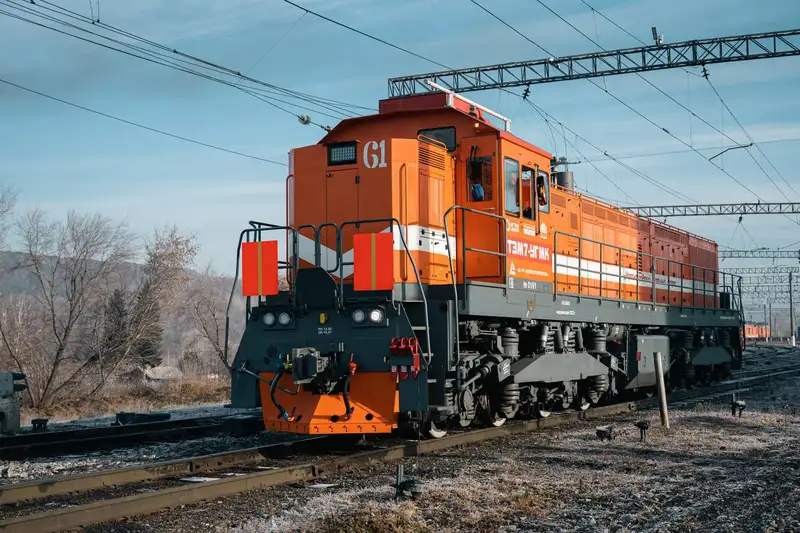
- Russian Railways (RZhD) has initiated advanced field testing of the 'Avtomashinist' autonomous locomotive control platform on TEM7A heavy diesel shunting engines at...
- The platform integrates a centralized shunting automation center with machine vision sensors, allowing the engine to automatically recognize red traffic lights, detect obstacles,...
- Human drivers currently remain inside the cabin as safety supervisors, but RZhD plans to transition toward remote operators managing multiple locomotives concurrently from a...
At Chelyabinsk-Glavny, one of Russia’s most critical freight distribution hubs, a heavy TEM7A diesel locomotive maneuvering through intricate switch tracks looks conventional from a distance, yet inside its driver cab lies technology transforming industrial logistics. Russian Railways (RZhD) has officially launched a new trial phase of its "Avtomashinist" self-driving ecosystem, enabling massive switch engines to identify stop signals, navigate changing track points, detect unexpected hazards, and recalculate movement schedules without direct human steering inputs.
Quick summary
- Russian Railways (RZhD) has initiated advanced field testing of the "Avtomashinist" autonomous locomotive control platform on TEM7A heavy diesel shunting engines at Chelyabinsk-Glavny station.
- The platform integrates a centralized shunting automation center with machine vision sensors, allowing the engine to automatically recognize red traffic lights, detect obstacles, trigger emergency braking, and recalculate routes in real time.
- Human drivers currently remain inside the cabin as safety supervisors, but RZhD plans to transition toward remote operators managing multiple locomotives concurrently from a centralized command office.
How Machine Vision and Central Command Power the Autonomous TEM7A
Operating an autonomous locomotive weighing hundreds of tons inside a bustling freight yard presents vastly different challenges than navigating light-rail passenger systems or highway motor vehicles. Artificial intelligence onboard the locomotive cannot operate in isolation. Instead, the operational foundation at Chelyabinsk-Glavny relies on the Center for Automation of Shunting Operations, a centralized digital hub that serves as the overarching intelligence network for the entire yard.
This central facility continuously gathers, processes, and analyzes real-time telemetry transmitted from ground-level station infrastructure. Track sensors, optical signal heads, and automated switch points continuously feed data to the command center. Using this incoming stream, the system generates optimized movement tasks, sets path itineraries, and transmits precise operational instructions directly to the TEM7A locomotive onboard computers.
To navigate dynamic yard conditions safely, the TEM7A is equipped with an advanced machine vision array. This technical vision suite combines multi-angle camera feeds with high-speed image processing algorithms designed to scan the tracks ahead constantly. The system actively evaluates environmental variables, identifies foreign objects or personnel on the rail line, and instantly registers signal changes, such as unexpected red lights.
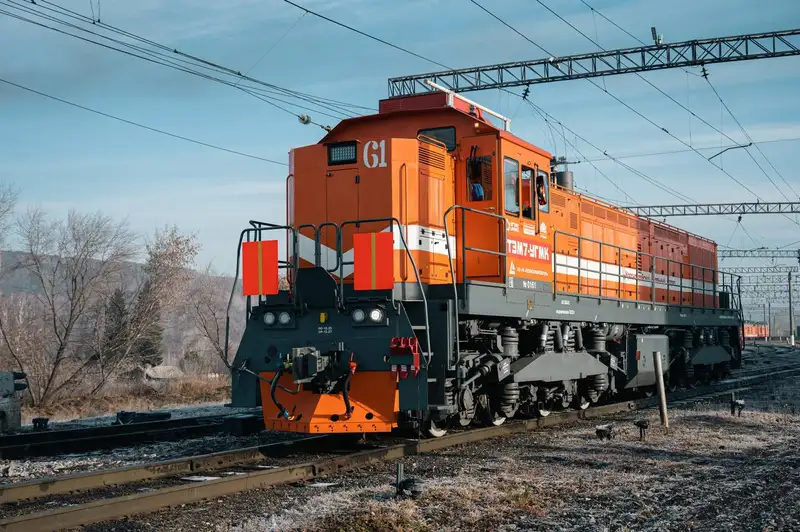
When the machine vision system detects a potential safety risk or obstruction, the train computer bypasses normal throttle controls to engage emergency braking mechanisms automatically. Furthermore, if freight movements or switch configurations change dynamically within the yard, the platform instantly recomputes a safe alternate route and establishes an updated assignment without requiring manual operator intervention.
Why it matters
Railway classification yards represent high-risk, high-density bottlenecks within global supply chains. In traditional shunting operations, moving cargo cars between tracks requires continuous coordination among dispatchers, track switchers, and locomotive engineers. This labor-intensive process is susceptible to human oversight, communication delays, and weather-related operational hazards.
By automating the TEM7A switcher, Russian Railways aims to dramatically accelerate wagon sorting speeds while eliminating common causes of yard derailments and low-speed collisions. Automating routine sorting maneuvers enables rail operators to maintain higher station throughput around the clock, regardless of visibility, fog, or severe weather conditions typical of the South Ural region.
From an economic and labor perspective, shunting automation offers a direct pathway to address structural workforce shortages in the heavy transportation sector. Shifting human operators out of harsh operational environments and into centralized, climate-controlled dispatch centers elevates safety standards while enabling a single specialist to oversee multiple automated engines simultaneously.
Background
The field trial at Chelyabinsk-Glavny represents a significant milestone in Russian Railways' multi-year strategy to digitize freight and passenger corridors across its vast network. Rather than attempting to deploy fully autonomous systems overnight, RZhD has adopted a phased engineering roadmap that balances technological testing with operational risk management.
In previous developmental stages, RZhD focused on passenger rail automation, most notably with the Level 4 autonomous "Lastochka" electric train project in Moscow. During those trials, engineers successfully demonstrated that commuter trains could operate autonomously under central supervisory control, allowing onboard personnel to relocate gradually into remote command rooms.
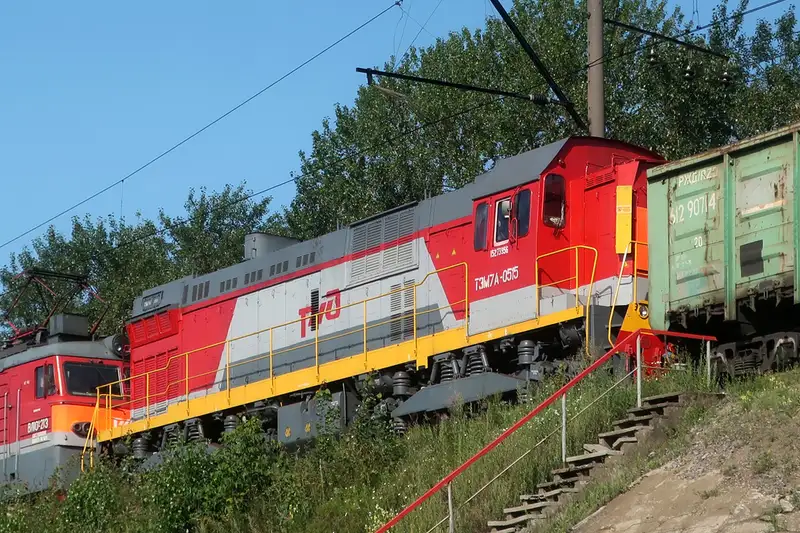
Transitioning this technology to heavy freight switchers like the TEM7A required substantial enhancements to machine vision and sensor fusion algorithms. Unlike passenger trains operating on fixed mainline schedules, shunting engines frequently stop, couple, uncouple, and reverse directions across complex webbed tracks. The deployment of the "Avtomashinist" platform on diesel switchers reflects lessons learned from earlier passenger train projects applied directly to heavy industrial logistics.
Transitioning from In-Cab Supervision to Centralized Remote Control
In the present trial phase, human drivers remain seated in the TEM7A cabin during all active operational shifts. These engineers do not manipulate primary throttle controls under normal conditions; instead, they serve as safety supervisors tasked with monitoring the autonomous platform, verifying system decisions, and taking manual control if an unscripted contingency arises.
The next operational phase planned by RZhD will remove the driver from the locomotive cab altogether. Operators will transition to remote work desks equipped with high-definition multi-monitor displays, live video feeds streamed from camera suites mounted on the locomotive, and real-time diagnostic telemetry.
Under this remote-control architecture, one operator will monitor several switch engines operating concurrently across different zones of the sorting yard. If an automated locomotive encounters an unresolvable routing ambiguity or unusual obstacle, the system alerts the remote operator, who can assess the live visual feed and issue immediate remote instructions.
Qnews24h insight
The trials at Chelyabinsk-Glavny highlight how closed industrial environments—such as freight yards, maritime ports, and mining facilities—are serving as the primary proving grounds for commercial autonomous vehicle technology. Unlike public road transportation, freight rail stations operate under controlled access parameters, standardized rules, and dedicated infrastructure, making them ideal settings for machine vision deployments.
However, scaling autonomous rail systems across broader freight networks carries undeniable technical trade-offs. Heavy freight locomotives possess enormous momentum, meaning emergency stopping distances can extend considerably depending on rail surface conditions and trailing tonnage. Consequently, machine vision sensors must maintain exceptional reliability across extreme temperature ranges, ice buildup, and lens contamination.
Furthermore, complete yard automation requires substantial capital expenditure to upgrade ground infrastructure, including digital track switches, localized wireless data networks, and cyber-resilient command centers. While the long-term operational efficiency gains are clear, global rail operators must carefully balance these heavy upfront investments against incremental safety and productivity metrics during initial rollout phases.
Frequently Asked Questions
What is the TEM7A locomotive used for in these trials?
The TEM7A is a heavy eight-axle diesel shunting locomotive designed for moving, sorting, and coupling heavy freight cars inside rail classification yards and industrial facilities.
Is there a human driver inside the autonomous TEM7A train?
During the current testing phase, a human driver remains inside the cabin to monitor operations and serve as a safety backup. In future phases, drivers will move to remote command centers to manage multiple trains simultaneously.
How does the train recognize stop signals and obstacles?
The TEM7A uses an onboard machine vision system equipped with cameras and real-time image processing software, combined with data feeds from a centralized station automation system that tracks switches and signal lights.
What happens if the system detects an obstacle on the tracks?
If the machine vision array detects an obstacle or safety hazard, the control computer automatically triggers emergency braking and alerts the central dispatch system to calculate a new route if necessary.
Sources
Data provided by Soha News and Russian Railways (RZhD) operational announcements.
Why it matters
Automating heavy shunting operations drastically cuts turnaround times at freight classification yards, reduces collision risks driven by human fatigue, and addresses structural labor shortages in industrial logistics.
Background
Prior to this deployment, Russian Railways experimented with automated train control systems, culminating in the Level 4 autonomous 'Lastochka' passenger train trials in Moscow. The TEM7A project adapts these machine-learning and remote-monitoring frameworks specifically for heavy industrial freight sorting.
While machine vision and remote station command offer compelling efficiency gains for controlled yard environments, scaling fully unstaffed freight operations will require bulletproof cybersecurity, fail-safe mechanical redundances, and substantial initial capital investments across aging rail infrastructure.
References
Editorial information
The editorial team reviews sources, adds context, and structures stories so readers can understand the news more clearly.
Article from QNEWS24H
Comments
(0)No comments yet. Be the first to share your thoughts.