Russia's Shvabe Unveils Nano-Precision Optics & Geodetic Tools, Challenging Western Standards
- Shvabe introduced a profile measurement device capable of detecting nano-level defects (as small as one-tenth a human hair's thickness) on large astronomical and space optical...
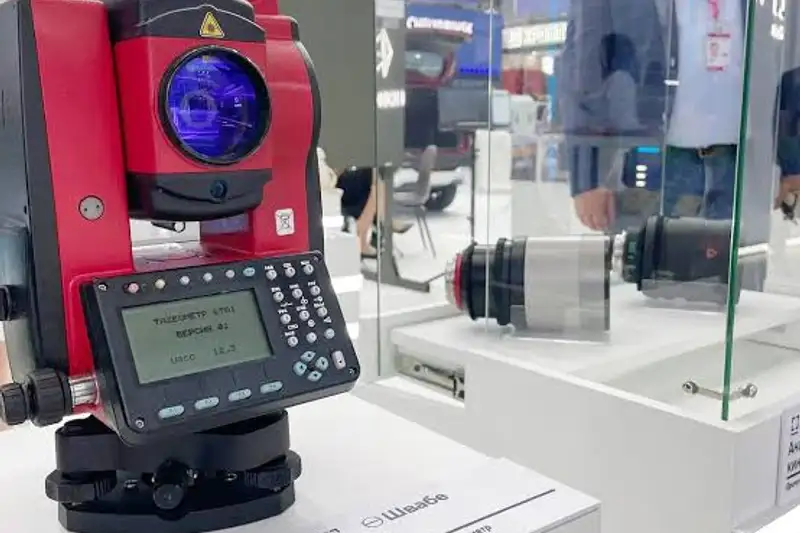
- The company showcased the 6Ta1 total station, Russia's first fully domestically produced geodetic instrument offering an angular measurement error of just one second, vital for...
- Improved stereo microscopes were also presented, featuring advanced optics for high-contrast, color-accurate 3D imaging, now in commercial mass production.
- These innovations collectively underscore Russia's commitment to overcoming import dependencies and establishing leadership in critical high-tech domains, from space observation...
EKATERINBURG, RUSSIA – A new era of precision engineering and technological autonomy is dawning in Russia, as the Shvabe Group, part of the state-owned Rostec corporation, unveiled a series of groundbreaking optical and geodetic solutions at the recent INNOPROM International Industrial Exhibition. These advancements, ranging from instruments capable of detecting microscopic flaws on space-grade optics to high-accuracy surveying equipment built for extreme climates, signal a strategic pivot towards self-sufficiency and a direct challenge to established global technical standards.
Quick summary
- Shvabe introduced a profile measurement device capable of detecting nano-level defects (as small as one-tenth a human hair's thickness) on large astronomical and space optical components.
- The company showcased the 6Ta1 total station, Russia's first fully domestically produced geodetic instrument offering an angular measurement error of just one second, vital for large-scale infrastructure projects.
- Improved stereo microscopes were also presented, featuring advanced optics for high-contrast, color-accurate 3D imaging, now in commercial mass production.
- These innovations collectively underscore Russia's commitment to overcoming import dependencies and establishing leadership in critical high-tech domains, from space observation to ground-based surveying.
Why it matters
These technological breakthroughs carry significant implications across multiple sectors, both domestically and internationally. For space exploration and Earth observation, the nano-precision profile measurement device promises a new generation of ultra-high-resolution satellite imagery and deeper insights into the cosmos. By ensuring the flawless quality of large-diameter space telescope mirrors, Russia aims to enhance its capabilities in intelligence gathering, climate monitoring, and fundamental astronomy, reducing reliance on foreign optical component quality assurance.
On the ground, the 6Ta1 total station is poised to revolutionize large-scale construction, geological surveys, and national digital mapping initiatives. Its unparalleled accuracy in challenging Russian climates directly addresses infrastructure development needs, minimizes errors in vast projects like pipelines and railways, and ensures the integrity of critical geographic data. This not only boosts national security through independent mapping but also fosters economic growth by enabling more efficient and reliable construction projects.
Furthermore, the mass production of advanced stereo microscopes supports diverse industries, from high-stakes biological research and delicate antique restoration to precision jewelry manufacturing. Providing high-quality, domestically produced scientific instruments bolsters Russia's scientific and industrial base, reducing vulnerability to supply chain disruptions and fostering internal innovation. Collectively, these developments represent a tangible step towards technological sovereignty, offering strategic advantages in an increasingly competitive global landscape.
Background
For years, Russia has navigated a complex geopolitical environment marked by international sanctions, which have often curtailed access to advanced Western technologies and components. This pressure has served as a powerful catalyst for accelerating domestic innovation and import substitution efforts, particularly in strategic sectors like defense, space, and high-precision manufacturing.

Prior to these announcements, Russia, despite its long history in space and optical sciences, frequently relied on a mix of domestic capabilities and foreign imports for specialized equipment, particularly for ultra-precise measurement tools required for cutting-edge applications. The challenge has been to not only replicate existing foreign technologies but to surpass them, especially given the unique environmental and operational demands within Russia.
The collaboration between institutions like the Lytkarino Optical Glass Factory (LZOS), the Ural Optical-Mechanical Plant (UOMZ), and the Bauman Moscow State Technical University highlights a concerted national effort. This synergy of research and industrial production aims to bridge technological gaps and foster a robust, self-reliant ecosystem, directly addressing the strategic imperative to develop a 'full-cycle' industrial base independent of external supply chains. The INNOPROM exhibition has historically served as a critical platform for Russia to showcase these national achievements and future technological ambitions.
Qnews24h insight
Shvabe's latest offerings at INNOPROM are more than just product launches; they represent a strategic declaration of Russia's intent to not merely compensate for sanctions-induced gaps, but to establish technological superiority in key high-tech domains. The emphasis on ultra-precision in optical measurement, achieving superior accuracy in geodetic equipment for challenging climates, and the mass production of advanced microscopes, collectively signals a determined push for an indigenous, vertically integrated technological ecosystem.
This approach moves beyond simple import substitution, aiming instead for competitive advantages through tailored innovations and robust domestic manufacturing capabilities. The ability to autonomously produce tools crucial for both deep space exploration and critical national infrastructure projects empowers Russia with greater control over its strategic assets and reduces vulnerabilities to external political or economic pressures. It's a calculated long-term investment in national scientific and industrial independence, positioning Russia as a formidable player in specialized high-precision technology on the global stage, particularly where environmental resilience and bespoke engineering are paramount.
Mastering the Microscopic: Precision for Space and Science
Central to Shvabe's showcase was a new-generation profile measurement device, the culmination of a collaborative effort between the Lytkarino Optical Glass Factory (LZOS) and Bauman Moscow State Technical University. This highly specialized instrument is engineered to ensure the pristine quality of large-diameter astronomical and cosmic optical components, particularly critical for space-based telescopes.
In the unforgiving vacuum of space, even a minuscule imperfection—as small as one-tenth the thickness of a human hair—on a telescope mirror can severely distort image data transmitted back to Earth. Shvabe's device boasts the capacity to scan and identify these nano-scale defects, guaranteeing the ideal flatness and perfection of these vital lenses. This capability positions Russia among a select few nations globally that possess the technology to manufacture specialized metrology tools for optical components exceeding 0.25 meters in diameter.
The impact of this technology is profound. Future Earth observation satellite systems will be equipped to transmit ultra-high-resolution imagery, significantly enhancing capabilities in monitoring, surveillance, and environmental analysis. Simultaneously, it will provide robust support for deep space astronomical research programs, allowing for clearer, more accurate data collection from the far reaches of the universe.
Groundbreaking Accuracy: Reinventing Geodesy for Harsh Environments
Beyond the cosmic frontier, Shvabe also reinforced its commitment to domestic technological leadership with the introduction of the 6Ta1 series of electronic total stations. Developed by the Ural Optical-Mechanical Plant (UOMZ), this marks the first entirely Russian-manufactured geodetic instrument to achieve an angular measurement error confined to a mere one second of arc.
This level of precision is not merely an incremental improvement; it is a 'golden key' for industries such as underground construction, geological surveying, and the creation of national digital maps. In these applications, even minor angular inaccuracies can lead to significant cumulative errors across vast areas, with potentially costly and hazardous consequences. Shvabe representatives emphasized the 6Ta series' proven stability and durability, particularly its robust performance under the challenging and varied climatic conditions characteristic of Russia.
To date, 345 units of the 6Ta series have been deployed and are actively operating across central Russia, the Ural region, and the Far East. The success of the 6Ta1 not only addresses the critical shortage of high-grade surveying equipment resulting from supply chain disruptions and sanctions but, critically, its technical specifications demonstrate optimal performance superior to many foreign counterparts when operating in Russia's specific environmental conditions.
Microscopes for Meticulous Detail: From Labs to Luxury Craftsmanship

Completing Shvabe's trio of core solutions unveiled at INNOPROM were enhanced stereo microscopes, also upgraded by LZOS. These devices incorporate a unique optical lens system designed to render high-contrast, three-dimensional images with exceptional clarity. A key feature is the complete absence of chromatic aberration (color fringing) or geometric distortion at the edges of the field of view, ensuring true-to-life representation.
These advanced microscopes are tailored for sectors demanding absolute meticulousness, including biological research laboratories, artifact restoration workshops, and high-end jewelry manufacturing. Unlike typical prototypes, Shvabe has transitioned this microscope series into full-scale commercial production, with plans to release dozens of units by the end of the year to meet burgeoning domestic demand.
The comprehensive range of new products showcased by Shvabe at INNOPROM conveys a clear and decisive message regarding Russia's technological strategy. It extends beyond merely filling market voids created by import restrictions; it aims to surpass them through dominant technical specifications. Achieving mastery over core technologies, from advanced laboratory microscopes to precision ground-based positioning equipment and cutting-edge space optics, forms the bedrock upon which Russia's industry seeks to build a completely self-sufficient digital and high-tech ecosystem.
Sources
FAQ
What is the primary function of Shvabe's new profile measurement device?
The device is designed to measure and detect nano-level defects, as small as one-tenth the thickness of a human hair, on the surface of large astronomical and space optical components. This ensures the high precision required for telescopes and satellites.
How does the 6Ta1 total station contribute to Russia's infrastructure development?
The 6Ta1 total station is the first fully Russian-made geodetic instrument to achieve an angular measurement error of just one second. This high accuracy is crucial for preventing cumulative errors in large-scale projects like underground construction, geological surveys, and national digital mapping, especially when operating in Russia's challenging climates.
What are the key features of the new stereo microscopes from Shvabe?
The improved stereo microscopes feature a special optical lens system that produces high-contrast, three-dimensional images without color distortion or geometric aberrations at the edges. They are being mass-produced for applications in biology labs, antique restoration, and high-end jewelry manufacturing.
Why it matters
These technological breakthroughs carry significant implications across multiple sectors, both domestically and internationally. For space exploration and Earth observation, the nano-precision profile measurement device promises a new generation of ultra-high-resolution satellite imagery and deeper insights into the cosmos. By ensuring the flawless quality of large-diameter space telescope mirrors, Russia aims to enhance its capabilities in intelligence gathering, climate monitoring, and fundamental astronomy, reducing reliance on foreign optical component quality assurance. On the ground, the 6Ta1 total station is poised to revolutionize large-scale construction, geological surveys, and...
Background
For years, Russia has navigated a complex geopolitical environment marked by international sanctions, which have often curtailed access to advanced Western technologies and components. This pressure has served as a powerful catalyst for accelerating domestic innovation and import substitution efforts, particularly in strategic sectors like defense, space, and high-precision manufacturing. Prior to these announcements, Russia, despite its long history in space and optical sciences, frequently relied on a mix of domestic capabilities and foreign imports for specialized equipment, particularly for ultra-precise measurement tools required for cutting-edge applications. The challenge has been to...
Shvabe's latest offerings at INNOPROM are more than just product launches; they represent a strategic declaration of Russia's intent to not merely compensate for sanctions-induced gaps, but to establish technological superiority in key high-tech domains. The emphasis on ultra-precision in optical measurement, achieving superior accuracy in geodetic equipment for challenging climates, and the mass production of advanced microscopes, collectively signals a determined push for an indigenous, vertically integrated technological ecosystem. This approach moves beyond simple import substitution, aiming instead for competitive advantages through tailored innovations and robust domestic...
References
- 1.soha.vn
Editorial information
The editorial team reviews sources, adds context, and structures stories so readers can understand the news more clearly.
Article from QNEWS24H
Comments
(0)No comments yet. Be the first to share your thoughts.