Russia's Rare Earth Paradox: Vast Reserves, Critical Imports, and a Push for Autonomy
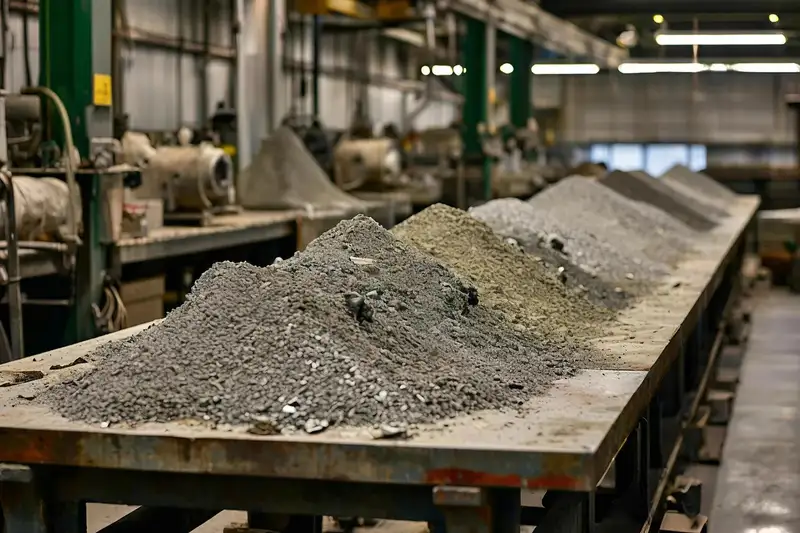
- Russia possesses the world's second-largest rare earth reserves but imports up to 90% of its refined rare metals due to a lack of advanced processing technology.
- The core challenge lies in mastering complex chemical separation techniques required to achieve the high purity levels demanded by modern industries.
- The Mendeleev Valley Fund is spearheading a national effort to establish 12 closed-loop technology chains, aiming for complete self-sufficiency from mining to refined product.
- This strategic shift focuses on securing domestic production of lithium for energy, ultra-pure silicon for semiconductors, and high-grade rare earth oxides for artificial...
Despite sitting atop the world's second-largest reserves of rare earth elements, Russia's high-tech industries face a critical paradox: an overwhelming dependence on imported refined rare metals. In some key sectors, this reliance can reach as high as 90%, exposing a significant strategic vulnerability that Moscow is now urgently striving to address.
Quick summary
- Russia possesses the world's second-largest rare earth reserves but imports up to 90% of its refined rare metals due to a lack of advanced processing technology.
- The core challenge lies in mastering complex chemical separation techniques required to achieve the high purity levels demanded by modern industries.
- The Mendeleev Valley Fund is spearheading a national effort to establish 12 closed-loop technology chains, aiming for complete self-sufficiency from mining to refined product.
- This strategic shift focuses on securing domestic production of lithium for energy, ultra-pure silicon for semiconductors, and high-grade rare earth oxides for artificial intelligence hardware.
Why it matters
This technological deficit carries profound implications for Russia's industrial sovereignty and national security. Rare earth elements, often dubbed 'black gold,' are indispensable components in a vast array of cutting-edge technologies, from semiconductor chips and advanced lasers to energy storage batteries and artificial intelligence systems. For Russia, the inability to process its own abundant resources translates into a 'resource bleeding' phenomenon: exporting raw, low-value ore only to re-import high-value, refined products from competitors at exorbitant prices. This not only drains economic resources but also makes strategic industries vulnerable to geopolitical shifts, supply chain disruptions, and potential sanctions, directly impacting its aspirations for technological autonomy and its capacity to develop next-generation defense and civilian applications.
Background
The concept of 'rare earth' is often misunderstood; these elements are not truly rare in the Earth's crust by volume, but they are exceptionally challenging to find in economically viable, high-concentration deposits and, more critically, to separate into individual, highly pure elements. This difficulty stems from their nearly identical chemical structures and ionic radii, which cause them to bond tightly within ore bodies. The standard industrial process, continuous solvent extraction, is extraordinarily complex, demanding hundreds or even thousands of iterative separation stages. Each stage requires precise control over pH levels, temperature, and chemical concentrations. A minor misstep can render an entire batch commercially unviable, necessitating sophisticated chemical engineering expertise that few nations have fully mastered.
Historically, Russia, like many resource-rich nations, focused primarily on raw material extraction rather than deep processing. This approach, while generating export revenue, overlooked the critical value addition that occurs in refining. As global technological demands escalated and the strategic importance of rare earths became undeniable, particularly with China establishing a near-monopoly on refined output, Russia's reliance on external processors grew. This situation created a precarious dependency, where its own high-tech sectors, from precision electronics to catalysts, were at the mercy of foreign suppliers for foundational materials. The current drive for self-sufficiency is a direct response to this inherited vulnerability and the evolving geopolitical landscape, where control over critical minerals equates to geopolitical leverage.
Qnews24h insight
Russia's ambitious push to master rare earth processing represents a crucial, albeit challenging, strategic pivot. The initiative, championed by figures like Ksenia Shoigu of the Mendeleev Valley Fund, is less about discovering new reserves and more about closing a critical technological gap that has long plagued its industrial base. The establishment of 12 'closed-loop' technology chains, from mining to final commercial product, indicates a comprehensive and systemic approach, moving beyond fragmented efforts to create a fully integrated domestic value chain. This strategy is not merely an economic endeavor; it is a calculated move to enhance national security and insulate key technological sectors from external pressures, particularly in an era of heightened global competition and targeted sanctions. While the scale of investment and the complexity of the chemical processes involved present significant hurdles, success could fundamentally alter Russia's position in the global high-tech landscape, transforming it from a raw material exporter into a formidable player in advanced material processing. The focused investment in lithium, ultra-pure silicon, and AI-grade rare earths highlights a clear understanding of future industrial imperatives, signaling Moscow's intent to build genuine technological autonomy rather than merely mitigating current dependencies.
The Technical Labyrinth of Rare Earth Processing
The true 'rarity' of rare earth elements, as previously noted, is not in their absolute abundance but in the painstaking scientific and engineering efforts required to isolate them. Within a single ore body, rare earth elements co-exist, bound tightly by similar chemical properties. Extracting individual elements, such as neodymium for magnets or europium for displays, demands incredibly precise and energy-intensive chemical processes. The most common technique, solvent extraction, involves dissolving the crushed ore in acid, then repeatedly washing the solution with various organic solvents. This process exploits minute differences in the solubility of each rare earth compound. To achieve the ultra-high purity levels – often 99.99% to 99.9999% – required for high-tech applications, the solution must undergo hundreds, sometimes thousands, of these separation stages in a continuous counter-current flow system. Any deviation in pH, temperature, or chemical concentration at any point can compromise the purity of the entire batch, rendering it useless for sensitive applications like semiconductors or advanced optics. This level of technical sophistication and control demands significant investment in infrastructure, highly specialized human capital, and decades of accumulated expertise.
Breaking the Cycle of Dependency: Russia's Strategic Response
The economic and strategic costs of this technological gap have become untenable for Russia. The 'resource bleeding' cycle, where raw materials are exported at low value only to be repurchased as high-value refined products, represents a significant drain on national wealth and innovation potential. To break this cycle, the Mendeleev Valley Fund's initiative seeks to build a robust domestic capability from the ground up. By establishing 12 distinct closed-loop technology chains, the goal is to cover the entire spectrum of rare earth processing, from initial ore extraction and beneficiation to the final production of high-purity oxides and metals ready for industrial use. This comprehensive approach is designed to ensure that every stage of the value chain remains within national control, mitigating risks associated with international supply volatility and geopolitical tensions. The signing of nine strategic agreements with 13 domestic technology partners underscores a collaborative effort, pooling national expertise and resources to overcome the complex engineering and chemical challenges involved in rare earth processing.
Pillars of Autonomy: Focusing on Future Technologies
Russia's strategy for rare earth self-sufficiency is not a blanket approach but a targeted investment in materials critical for future technologies, particularly in light of global competition and the assertive stances of the US and China in controlling rare earth supply chains. The initiative prioritizes three key segments:
Lithium for Energy Infrastructure
Recognizing the global shift towards electrification and renewable energy, Russia is heavily investing in the extraction and refining of lithium. This element is the cornerstone of advanced energy storage devices, essential for electric vehicles (EVs) and grid-scale battery systems. Developing an independent lithium supply chain is crucial for Russia to support its own transition to greener technologies and to compete in the burgeoning global EV market, reducing its reliance on foreign battery manufacturers.
Ultra-Pure Silicon for Microelectronics
The foundation of all modern electronics, from solar panels to advanced microchips, is ultra-pure silicon. Russia's focus on mastering the processing of electronic-grade silicon is a direct response to its ambition to build indigenous semiconductor manufacturing capabilities. Without a reliable and independent supply of this fundamental material, any efforts to create domestic microchip foundries would remain deeply vulnerable to external suppliers, hindering its digital transformation and technological independence.
Rare Earth Oxides for Artificial Intelligence
As artificial intelligence (AI) continues to evolve, the demand for specialized hardware capable of running complex algorithms and high-performance computing architectures is surging. Russia aims to provide high-quality rare earth oxides to its burgeoning AI research laboratories and technology firms. These oxides are vital for developing advanced magnetic materials, specialized optics, and other components essential for next-generation AI processors and data centers, positioning Russia to compete in this strategic technological frontier.
The successful implementation and synchronized operation of these 12 closed-loop supply chains are envisioned to fundamentally transform Russia's economic and strategic standing. It promises to end the 'resource bleeding' by retaining value addition domestically, bolster technological security against an unpredictable geopolitical climate, and elevate Russia's status from a mere raw material exporter to a nation capable of deep processing and technological mastery.
Sources
FAQ
- Why is Russia, with vast rare earth reserves, dependent on imports?
Despite possessing the world's second-largest rare earth reserves, Russia lacks the advanced technological infrastructure and expertise required for complex chemical separation processes. These processes are essential to refine raw rare earth ores into the high-purity metals needed for modern high-tech industries. - What are the strategic implications of Russia's rare earth import dependency?
The dependency makes Russia's strategic industries, such as electronics, defense, and AI, vulnerable to global supply chain disruptions and geopolitical pressures, including sanctions. It also results in significant economic losses as Russia exports raw materials cheaply and buys back refined products at high prices. - What is the Mendeleev Valley Fund's role in addressing this paradox?
The Mendeleev Valley Fund is spearheading Russia's national strategy to achieve self-sufficiency in rare earth processing. It is establishing 12 'closed-loop' technology chains, covering the entire process from mining to final product, and has forged strategic partnerships with domestic technology companies to develop the necessary expertise and infrastructure.

Why it matters
This technological deficit carries profound implications for Russia's industrial sovereignty and national security. Rare earth elements, often dubbed 'black gold,' are indispensable components in a vast array of cutting-edge technologies, from semiconductor chips and advanced lasers to energy storage batteries and artificial intelligence systems. For Russia, the inability to process its own abundant resources translates into a 'resource bleeding' phenomenon: exporting raw, low-value ore only to re-import high-value, refined products from competitors at exorbitant prices. This not only drains economic resources but also makes strategic industries vulnerable to geopolitical shifts, supply...
Background
The concept of 'rare earth' is often misunderstood; these elements are not truly rare in the Earth's crust by volume, but they are exceptionally challenging to find in economically viable, high-concentration deposits and, more critically, to separate into individual, highly pure elements. This difficulty stems from their nearly identical chemical structures and ionic radii, which cause them to bond tightly within ore bodies. The standard industrial process, continuous solvent extraction, is extraordinarily complex, demanding hundreds or even thousands of iterative separation stages. Each stage requires precise control over pH levels, temperature, and chemical concentrations. A minor misstep...
Russia's ambitious push to master rare earth processing represents a crucial, albeit challenging, strategic pivot. The initiative, championed by figures like Ksenia Shoigu of the Mendeleev Valley Fund, is less about discovering new reserves and more about closing a critical technological gap that has long plagued its industrial base. The establishment of 12 'closed-loop' technology chains, from mining to final commercial product, indicates a comprehensive and systemic approach, moving beyond fragmented efforts to create a fully integrated domestic value chain. This strategy is not merely an economic endeavor; it is a calculated move to enhance national security and insulate key...
References
Editorial information
The editorial team reviews sources, adds context, and structures stories so readers can understand the news more clearly.
Article from QNEWS24H
Comments
(0)No comments yet. Be the first to share your thoughts.