Russia's MS-21-310 vs. China's C919: A Clash of Aviation Strategies
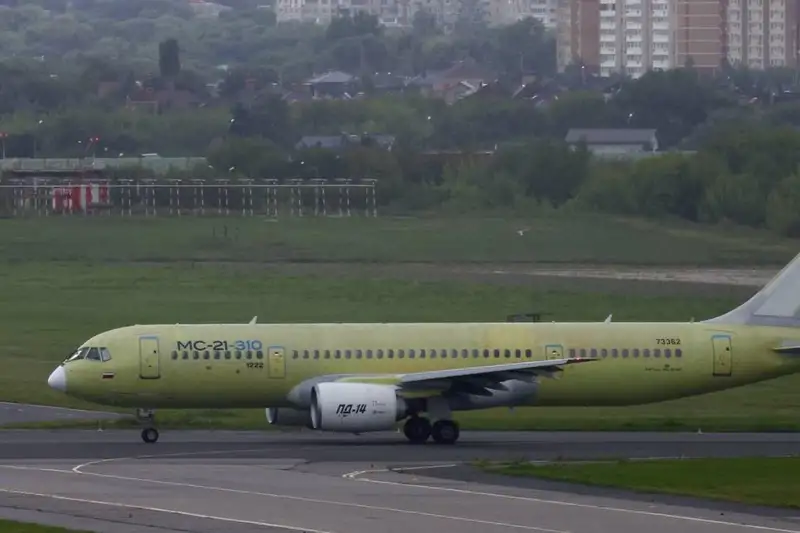
- Russia's MS-21-310 showcased its advanced design and near-total domestic component integration during a recent 4,000 km non-stop flight.
- China's COMAC C919 achieved its first international commercial flight from Beijing to Ulaanbaatar, marking significant progress in its market penetration.
- The MS-21-310 boasts superior design parameters like a wider fuselage and advanced composite wings, driven by a deep commitment to technological independence.
- The C919 leads in commercial deployment and production scale, leveraging China's robust industrial base, despite its current reliance on significant foreign-made components.
A new chapter in global aviation is unfolding as two formidable challengers from the East, Russia's MS-21-310 and China's COMAC C919, intensify their efforts to redefine the narrow-body aircraft market. Recent milestones – a substantial non-stop flight for the Russian jet and the inaugural international commercial journey for its Chinese counterpart – underscore their growing ambitions and highlight the differing strategic pathways nations are adopting to achieve aerospace independence.
Quick summary
- Russia's MS-21-310 has completed a crucial 4,000 km non-stop flight, showcasing its long-range capabilities and advanced domestic component integration.
- China's COMAC C919 has achieved its first international commercial flight, connecting Beijing with Ulaanbaatar, signaling its expanding operational footprint.
- The MS-21-310 demonstrates superior design specifications, including a wider fuselage and advanced composite wings, alongside near-total domestic content thanks to the PD-14 engine and homegrown avionics.
- The C919 currently leads in commercial deployment and production scale, leveraging China's robust industrial infrastructure, though it remains significantly reliant on foreign engines and systems.
Why it matters
The emergence of the MS-21-310 and C919 signifies a crucial pivot in the global aerospace industry, challenging the decades-long dominance of Boeing and Airbus. For airlines and passengers, this competition could lead to increased choices, potentially driving down costs and fostering innovation in aircraft design and passenger comfort. For the nations involved, success in this domain is not merely economic; it represents a profound achievement in national prestige, technological self-reliance, and strategic autonomy, especially for Russia facing Western sanctions.
Furthermore, these developments have significant geopolitical implications. A reduction in reliance on Western aerospace technology grants both Russia and China greater independence in their defense and commercial aviation sectors, insulating them from potential trade restrictions or supply chain disruptions. The differing approaches to self-sufficiency – Russia's deep localization versus China's market-driven scale-up – offer a real-world case study in industrial strategy, with long-term impacts on global supply chains and technological partnerships.
Background
For decades, the global market for commercial narrow-body aircraft has been effectively a duopoly, dominated by American giant Boeing with its 737 series and European consortium Airbus with its A320 family. This concentration has provided immense stability but also limited competition, making it challenging for new entrants to gain traction.
Both Russia and China have long harbored ambitions to break into this exclusive club. For Russia, the drive for domestic aircraft production intensified significantly following international sanctions imposed in the mid-2010s, which severely restricted access to Western aerospace components and technology. This spurred a concerted effort to indigenize critical systems, from engines to avionics and composite materials, ensuring the MS-21-310 could operate independently of external supply chains.
China, with its booming domestic air travel market, saw the COMAC C919 as a strategic imperative to cater to its own needs, reduce reliance on foreign manufacturers, and project technological prowess. Unlike Russia's forced localization, China's strategy initially involved leveraging global supply chains, integrating proven Western components while gradually working towards domestic alternatives. This approach allowed for faster development and certification, capitalizing on its vast manufacturing capabilities and immense financial resources to scale production quickly.
Qnews24h insight
The parallel journeys of the MS-21-310 and C919 offer a compelling study in divergent industrial strategies, each with inherent strengths and vulnerabilities. Russia's steadfast commitment to comprehensive domestic componentry, epitomized by the PD-14 engine and indigenously developed composite wings, ensures a level of strategic independence unparalleled by its Chinese counterpart. This 'sanctions-proof' approach, while slower and requiring significant domestic technological investment, builds profound resilience against external pressures. However, Russia's major hurdle lies in scaling mass production, hindered by a lack of modern industrial machinery and the intricate web of suppliers needed for high-volume manufacturing.
Conversely, China's C919 strategy prioritizes rapid commercialization and market penetration. By initially integrating reliable foreign-made components, COMAC has managed to bring the C919 into service and expand its operational reach relatively quickly, capitalizing on China's enormous domestic market and robust industrial infrastructure for assembly. This allows for faster accumulation of flight hours and operational experience. Yet, this path leaves the C919 vulnerable to supply chain disruptions and technological restrictions, particularly concerning critical systems like its Western-sourced engines. The long-term success for both nations hinges not just on initial design or market entry, but on Russia's ability to efficiently industrialize its advanced technology and China's capacity to truly indigenize its critical component supply chain without compromising performance or safety standards.
The Race for Domestic Skies: Design vs. Commercialization
The recent long-range flight of the Russian MS-21-310, covering over 4,000 km from Irkutsk to Zhukovsky in almost six hours, underscored its impressive performance metrics. This achievement follows a determined path toward full import substitution. Aviation analyst Oleg Panteleev highlighted that the MS-21-310's base model is exceptionally well-suited to market demands, potentially outperforming both the Boeing 737 MAX and Airbus A320neo in certain aspects.
A key differentiator for the Russian aircraft is its expansive fuselage, measuring 4.06 meters in diameter. This is notably wider than the C919's 3.96 meters and also exceeds traditional Western narrow-body standards. Such a generous cabin space not only enhances passenger comfort but also facilitates quicker boarding and disembarkation, a critical factor for airlines, especially low-cost carriers, looking to minimize turnaround times at airports and maximize aircraft utilization.
Russian MS-21-310: Engineering Prowess and Self-Sufficiency
Beyond its spacious cabin, the MS-21-310 incorporates state-of-the-art domestically produced composite wings. This advanced material technology contributes significantly to optimizing the aircraft's take-off weight and markedly improving its aerodynamic efficiency, particularly over long-haul segments. The reliance on locally manufactured composites is a testament to Russia's engineering capabilities and its strategic push for material independence.
The drive for self-reliance extends to the very heart of the MS-21-310. The aircraft is now almost entirely equipped with domestic systems, including its sophisticated avionics suite and the powerful PD-14 turbofan engine, developed and produced within Russia. This comprehensive localization effort is a direct response to, and a successful circumvention of, Western sanctions, enabling Russia's aerospace industry to operate with minimal external dependence.
Chinese C919: Market Penetration and Supply Chain Hurdles
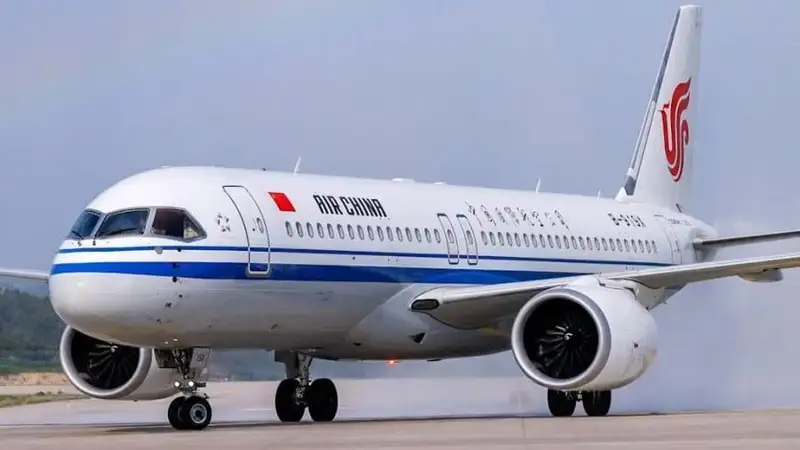
In contrast, China's COMAC C919 has been carving out its market presence through rapid commercialization. Having entered domestic commercial service in 2023, the C919 recently celebrated its first international flight from Beijing to Ulaanbaatar, Mongolia, operated by Air China. This marks a significant step in its operational expansion. China's enormous internal market and substantial financial backing provide an ideal environment for COMAC to refine its operational procedures and pursue necessary regulatory certifications.
However, the C919's success comes with a notable caveat: its continued reliance on imported components. Approximately 60% of the C919's parts are sourced from overseas, including its CFM LEAP-1C engines, a product of a French-American joint venture, and its American-made avionics systems. While China is actively developing its own CJ-1000A engine, experts note that its technical specifications and operational maturity currently lag behind Russia's PD-14.
Challenging the Duopoly: A New Global Aviation Landscape
The primary challenge for Russia's MS-21-310 is not its design or technological prowess but its ability to transition to large-scale mass production. The scarcity of modern industrial machinery and a fully developed ecosystem of ancillary suppliers poses a significant bottleneck. This contrasts sharply with China's superior industrial infrastructure, which facilitates a much swifter ramp-up in assembly volumes for the C919.
Both aircraft represent national aspirations to disrupt the Boeing-Airbus duopoly and claim a larger share of the global aviation market. The combined effect of Russia's technological breakthroughs and China's commercial scale is poised to reshape the international aerospace industry. The ultimate trajectory of this long-term contest will likely depend on how quickly Russia can overcome its production hurdles and how effectively China can achieve true self-sufficiency in critical components, particularly its engines, in an increasingly fragmented technological landscape.
Sources
FAQ
- What are the main differences between the MS-21-310 and the C919?
The MS-21-310 excels in design specifications, featuring a wider fuselage and advanced domestic composite wings, along with nearly full domestic component integration, including its PD-14 engine. The C919, while commercially more advanced with more aircraft in service and its first international flight, still relies heavily (around 60%) on imported components, such as its engines and avionics. - Why is aircraft self-sufficiency important for Russia and China?
For Russia, self-sufficiency, particularly with the MS-21-310, is a strategic imperative driven by international sanctions, allowing its aviation sector to operate independently of Western supply chains. For China, the C919 aims to reduce reliance on foreign manufacturers, cater to its vast domestic market, and enhance its national prestige and technological sovereignty, mitigating risks from potential trade tensions. - How might these aircraft impact the global aviation market?
Both the MS-21-310 and C919 are direct challengers to the long-standing Boeing-Airbus duopoly in the narrow-body segment. Their success could introduce greater competition, potentially leading to more innovative designs, improved passenger comfort, and more competitive pricing for airlines globally. It also signals a shift in the geopolitical balance of power within the aerospace industry.

Why it matters
The emergence of the MS-21-310 and C919 signals a crucial pivot in the global aerospace industry, directly challenging the decades-long dominance of Boeing and Airbus. For airlines, this competition could lead to increased choice and potentially lower costs. For Russia and China, successful domestic aircraft programs represent profound achievements in national prestige, economic independence, and strategic autonomy, especially relevant for Russia amidst Western sanctions. These developments also impact global supply chains, fostering new technological partnerships and altering the competitive landscape.
Background
The global commercial narrow-body aircraft market has historically been a duopoly between Boeing and Airbus. Russia's push for the MS-21-310 intensified significantly following international sanctions in the mid-2010s, forcing a strategy of complete indigenization for critical components. China, with its rapidly expanding domestic air travel market, developed the COMAC C919 to serve its own needs and reduce foreign reliance, initially leveraging global supply chains before moving towards domestic alternatives. These efforts represent long-standing national ambitions to achieve self-sufficiency and strategic independence in aerospace.
The parallel development trajectories of the MS-21-310 and C919 highlight a fundamental divergence in industrial strategy. Russia's approach prioritizes deep technological independence and strategic resilience, creating an aircraft nearly impervious to external supply chain disruptions. This path, while slower due to challenges in scaling modern mass production, yields significant long-term strategic benefits. China, conversely, has focused on rapid commercialization and market entry, leveraging its vast industrial capacity and a hybrid supply chain model. This allows for quicker market penetration but leaves the C919 vulnerable to technological restrictions, particularly regarding critical...
References
Editorial information
The editorial team reviews sources, adds context, and structures stories so readers can understand the news more clearly.
Article from QNEWS24H
Comments
(0)No comments yet. Be the first to share your thoughts.