Russia's Arctic Edge: Norilsk Nickel Deploys GPS-Free Navigation Amid Geopolitical Tensions
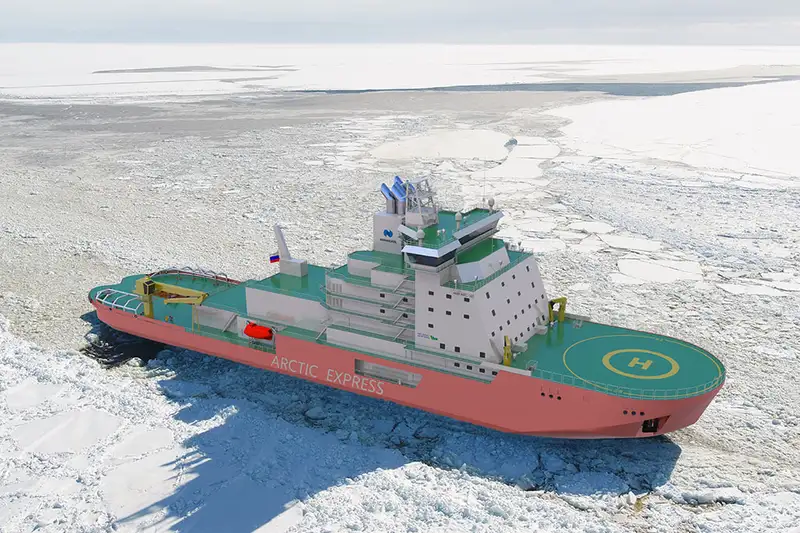
- Norilsk Nickel has fully integrated the Ice Vision RDR radar-based navigation system across its Arctic shipping fleet.
- The RDR module provides backup navigation, accurately determining a vessel's position, speed, and direction by comparing real-time radar images of terrain and ice with an onboard...
- This advanced technology enhances operational safety and efficiency for Norilsk Nickel's critical logistics on the Northern Sea Route, a vital artery for the company's exports and...
- The deployment marks a strategic move towards technological sovereignty for Russia, safeguarding essential supply chains against potential external interference and optimizing...
In the vast, unforgiving expanse of the Arctic, where extreme weather and shifting ice pose constant threats, reliable navigation is not merely an operational necessity but a strategic imperative. As global geopolitical currents increasingly affect technological access and data integrity, Russia's Norilsk Nickel, a dominant player in the global metals market, has unveiled a significant leap towards navigational self-reliance, equipping its entire ice-class fleet with a sophisticated radar-based system designed to operate independently of satellite signals.
Quick summary
- Norilsk Nickel has fully integrated the Ice Vision RDR radar-based navigation system across its Arctic shipping fleet.
- The RDR module provides backup navigation, accurately determining a vessel's position, speed, and direction by comparing real-time radar images of terrain and ice with an onboard database, even in GPS-denied conditions.
- This advanced technology enhances operational safety and efficiency for Norilsk Nickel's critical logistics on the Northern Sea Route, a vital artery for the company's exports and Russia's strategic Arctic development.
- The deployment marks a strategic move towards technological sovereignty for Russia, safeguarding essential supply chains against potential external interference and optimizing transit costs in the challenging High North.
Why it matters
The widespread adoption of the Ice Vision RDR system by Norilsk Nickel carries multi-faceted implications, resonating far beyond the immediate operational benefits for a single corporation. For Russia, it signifies a decisive step towards bolstering its technological sovereignty, particularly in the strategically vital Arctic region. In an era marked by heightened geopolitical tensions and the growing threat of electronic warfare, the ability to maintain independent navigation for critical supply chains is a national security asset.
Economically, Norilsk Nickel, as the world's largest producer of palladium and a key player in nickel, copper, and platinum group metals, relies heavily on the continuous and efficient operation of its Arctic logistics. Disruptions on the Northern Sea Route (NSR) could have significant global market repercussions. This technology not only ensures continuity but also optimizes operational costs by allowing vessels to navigate more efficiently through ice, conserving fuel and reducing transit times between Asian and European ports. For the global supply chain, it means greater predictability for critical raw materials originating from Russia's Far North.
Furthermore, this development underscores the increasing dual-use nature of civilian technologies in contested regions like the Arctic. While primarily an economic venture, ensuring robust, independent navigation for such a crucial fleet inherently contributes to Russia's broader strategic control and influence over the NSR and its surrounding territories. It sets a precedent for future technological deployments aimed at securing national interests in harsh, challenging environments where conventional systems may be compromised.
Background

Navigation in the Arctic has always presented formidable challenges. Ice-choked waters, prolonged periods of darkness, unpredictable weather patterns, and the scarcity of traditional navigational aids like buoys and lighthouses make it one of the most demanding maritime environments on Earth. For decades, ships relied on a combination of celestial navigation, dead reckoning, and, more recently, satellite-based systems like GPS, GLONASS, and Galileo.
However, the increasing sophistication of electronic warfare capabilities has introduced a new vulnerability: GPS jamming and spoofing. These techniques can disrupt or entirely falsify satellite signals, rendering standard navigation systems unreliable or even dangerous. This threat is particularly salient in strategically important areas like the Arctic, where national interests intersect and military activities are increasing.
Russia has long viewed the Arctic as a region of immense strategic and economic importance, investing heavily in icebreakers and developing the Northern Sea Route as a viable alternative shipping lane between East and West. Norilsk Nickel, with its vast mining operations in the Russian Arctic, is inextricably linked to this national vision. The company operates a specialized fleet, including advanced Arc7 ice-class container ships and oil tankers, designed to traverse thick ice without the constant need for icebreaker escort during much of the winter.
Prior to the full implementation of the Ice Vision RDR, these vessels, while highly capable, still depended on satellite navigation for precise positioning. The strategic shift towards a self-sufficient, radar-based system reflects an evolution in threat perception and a proactive move to mitigate risks associated with external dependencies, especially given the geopolitical climate that could see civilian navigation data restricted or manipulated.
Operationalizing Arctic Independence: The Ice Vision RDR System
At the heart of Norilsk Nickel's new navigational prowess lies the Ice Vision system, specifically its Radar Navigation Module (RDR). Developed by Marine Computer Systems, this innovative technology represents a significant departure from conventional satellite-dependent methods, offering a robust alternative for vessels operating in the High North.
The RDR module functions as a sophisticated backup navigation solution rooted in advanced image comparison algorithms. When a vessel enters an area where satellite signals are either lost due to extreme weather — such as solar storms or atmospheric interference — or intentionally suppressed through electronic jamming, the system seamlessly takes over. It utilizes the ship's existing marine radar to scan and capture real-time images of the surrounding topography and ice formations.
These live radar images are then instantaneously processed and compared against a pre-loaded, extensive database of long-range radar imagery stored within the Ice Vision system's memory. By cross-referencing geographical features and ice structures, the algorithm can precisely determine the ship's coordinates, velocity, and direction of movement with remarkable accuracy and minimal error. This intricate process unfolds smoothly, presenting a clear, intuitive visualization of ice distribution, open channels, and potential collision risks directly on the Ice Vision display in the ship's bridge.
Enhanced Safety and Efficiency in Icy Waters
The core mission of this technology is to provide high-quality visibility of ice conditions, navigational channels, and early warning of hazards. This capability is paramount when guiding colossal vessels through the constantly changing, dense ice fields of the Far North. Mastering this technology allows Norilsk Nickel's maritime officers to make informed decisions about route optimization, avoiding treacherous ice formations and potential collisions.
The benefits extend beyond safety. By accurately identifying thinner ice patches or natural cracks, the system enables ships to navigate more efficiently. This translates directly into significant fuel savings and reduced transit times across the vast distances of the Arctic. For Norilsk Nickel, which maintains year-round logistics across the NSR, these efficiencies are not just marginal gains but represent substantial economic advantages and contribute to the overall resilience of its supply chain.
Norilsk Nickel's Fleet: Pillars of Arctic Logistics
Currently, Norilsk Nickel's entire primary transport fleet, dedicated to its icy voyages, has been synchronized with this new technology. This includes six specialized Arc7 ice-class container ships, one Arc7 standard oil tanker, and the dedicated port icebreaker, 'Dudinka'. These Arc7 vessels are already renowned for their ability to self-navigate through thick ice for most of the winter season without requiring icebreaker assistance. The addition of the RDR system, essentially an 'electronic eye' that pierces through signal interference, further enhances their operational autonomy and capability.

With RDR onboard, these formidable vessels can maintain optimal speed and trajectory even under the most extreme scenarios where all conventional navigation systems are rendered inoperable. This ensures that the flow of vital raw materials from Russia's Arctic mines to global markets remains uninterrupted, underscoring the strategic economic importance of this technological upgrade.
Qnews24h insight
Norilsk Nickel's comprehensive integration of the Ice Vision RDR system is more than just an operational upgrade; it's a telling indicator of Russia's deepening strategic focus on the Arctic and its pursuit of technological autonomy amidst an increasingly fragmented global landscape. This move signals a calculated effort to insulate critical economic arteries from potential vulnerabilities, whether those stem from natural phenomena or deliberate external interference. It underscores a prevailing mindset within Russia that national security and economic stability are inextricably linked to the ability to control and maintain key infrastructure independently.
The investment in domestic navigation solutions for commercial fleets in a sensitive region like the Arctic reflects a proactive approach to long-term resilience, moving beyond reactive measures to establish robust, self-sufficient capabilities. It's a pragmatic recognition that in a world where access to global satellite systems can become a geopolitical lever, internal technological strength becomes a paramount national asset. This development will likely serve as a blueprint for other Russian industries operating in strategic domains, solidifying a trajectory towards greater self-reliance and asserting influence in critical international corridors like the Northern Sea Route.
Sources
FAQ
What is the Ice Vision RDR system?
The Ice Vision RDR (Radar Navigation Module) is an advanced navigation system developed by Marine Computer Systems for Arctic shipping. It provides a backup to satellite navigation by using a ship's marine radar to scan surrounding terrain and ice, comparing real-time images with an onboard database to accurately determine the vessel's position, speed, and direction, even when GPS signals are unavailable or jammed.
Why is radar-based navigation critical for Arctic shipping?
Radar-based navigation is critical for Arctic shipping because the region faces extreme weather, extensive ice coverage, and potential vulnerabilities to satellite navigation (GPS) jamming or spoofing. This technology ensures continuous, reliable navigation in these challenging conditions, enhancing safety, preventing collisions, optimizing routes, and maintaining essential supply chain operations independently of external satellite systems.
How does this technology benefit Norilsk Nickel and Russia?
For Norilsk Nickel, the Ice Vision RDR system ensures uninterrupted logistics for its critical metal exports via the Northern Sea Route, even in severe conditions or GPS-denied scenarios, leading to fuel savings and reduced transit times. For Russia, it bolsters technological sovereignty, secures a vital strategic and economic artery in the Arctic, and enhances national security by providing independent navigation capabilities for crucial commercial and potentially dual-use fleets, reducing reliance on potentially vulnerable foreign technologies.
Why it matters
The widespread adoption of the Ice Vision RDR system by Norilsk Nickel carries multi-faceted implications, resonating far beyond the immediate operational benefits for a single corporation. For Russia, it signifies a decisive step towards bolstering its technological sovereignty, particularly in the strategically vital Arctic region. In an era marked by heightened geopolitical tensions and the growing threat of electronic warfare, the ability to maintain independent navigation for critical supply chains is a national security asset. Economically, Norilsk Nickel, as the world's largest producer of palladium and a key player in nickel, copper, and platinum group metals, relies heavily on the...
Background
Navigation in the Arctic has always presented formidable challenges. Ice-choked waters, prolonged periods of darkness, unpredictable weather patterns, and the scarcity of traditional navigational aids like buoys and lighthouses make it one of the most demanding maritime environments on Earth. For decades, ships relied on a combination of celestial navigation, dead reckoning, and, more recently, satellite-based systems like GPS, GLONASS, and Galileo. However, the increasing sophistication of electronic warfare capabilities has introduced a new vulnerability: GPS jamming and spoofing. These techniques can disrupt or entirely falsify satellite signals, rendering standard navigation systems...
Norilsk Nickel's comprehensive integration of the Ice Vision RDR system is more than just an operational upgrade; it's a telling indicator of Russia's deepening strategic focus on the Arctic and its pursuit of technological autonomy amidst an increasingly fragmented global landscape. This move signals a calculated effort to insulate critical economic arteries from potential vulnerabilities, whether those stem from natural phenomena or deliberate external interference. It underscores a prevailing mindset within Russia that national security and economic stability are inextricably linked to the ability to control and maintain key infrastructure independently. The investment in domestic...
References
Editorial information
The editorial team reviews sources, adds context, and structures stories so readers can understand the news more clearly.
Article from QNEWS24H
Comments
(0)No comments yet. Be the first to share your thoughts.