From Stage Collapses to Chainsaw Centaurs: Analyzing Recent Robotics Flops and Breakthroughs
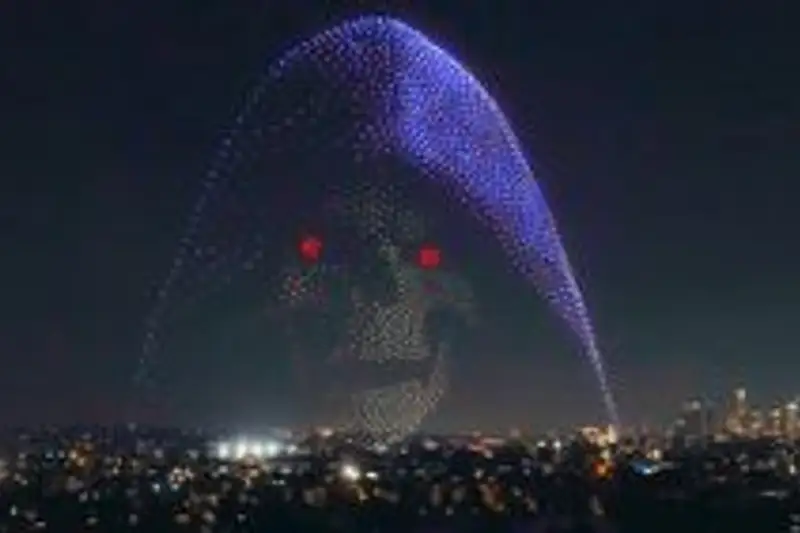
- Neura Robotics' 4NE1 humanoid collapsed on stage at Computex right after delivering a Qualcomm processor on a tray.
- Engineers have developed an amphibious drone that can seamlessly transition between flying in the air and swimming underwater.
- Unitree Robotics showcased an autonomous mech operating without a human pilot, while concept designs like 'Threehalves' feature chainsaw-wielding, centaur-like structures.
- A pilot program to introduce an AI teacherbot in Salamanca, New York was paused due to public concerns over developer Realbotix's corporate links to sex doll manufacturing.
While tech firms continue to promote autonomous systems as the future of labor, recent public demonstrations reveal that walking, talking, and working machines are still remarkably prone to awkward breakdowns and uncanny design choices. From high-stakes keynotes where state-of-the-art humanoids crumple without warning to school board controversies over AI instructors, the reality of physical robotics remains far more chaotic than polished promotional videos suggest.
Quick summary
- Neura Robotics' 4NE1 humanoid collapsed unexpectedly on stage during a Computex presentation after handing off a Qualcomm processor.
- New amphibious drone designs demonstrate the ability to fly through the air, submerge into water to swim, and relaunch back into flight.
- Unitree Robotics introduced a pilotless autonomous mech, alongside terrifying concepts such as the 'Threehalves' chainsaw-wielding centaur robot.
- A public high school in Salamanca, New York, paused an AI teacherbot pilot program due to community concerns regarding developer Realbotix's corporate connections to adult doll manufacturing.
Why it matters
The contrast between hype and performance in modern robotics underscores critical challenges in hardware reliability, human-robot interaction, and public perception. For businesses and institutions considering autonomous deployments, these incidents demonstrate that physical systems require extensive human supervision and clear brand trust before they can safely replace or assist human labor.
Background
Over the past few years, investments in bipedal humanoids, specialized drones, and autonomous machinery have accelerated rapidly. Major tech conferences frequently feature live walk-ons by robotic prototypes meant to highlight balance algorithms, spatial awareness, and AI processing power. However, high-profile stumbles on stage reflect a recurring theme in robotics history: controlled lab environments rarely capture the unpredictability of live public events.
Qnews24h insight
Our analysis indicates that robotics adoption faces hurdles that extend far beyond mechanical stability. While hardware failures like the Computex drop are humorous, non-technical barriers—such as brand perception and aesthetic design—pose equal risk to commercial adoption. Realbotix's struggle in New York proves that corporate overlap and public sensitivity can derail an advanced robotics program faster than software bugs or mechanical failure.
The Computex Collapse: Neura Robotics' 4NE1 Takes a Sudden Dive
One of the most memorable recent mechanical mishaps occurred during a high-profile presentation at Computex. Neura Robotics showcased its 4NE1 humanoid robot on stage alongside Qualcomm executives. The robot was tasked with delivering a newly introduced IQ10 processor on a service tray to present on camera.
Initial steps went smoothly as the 4NE1 navigated across the stage and presented the tray. However, as it turned toward the audience, the machine suffered a catastrophic shutdown, collapsing abruptly to its knees and face-planting onto the service tray with a loud clatter. In a bizarrely polite gesture immediately following the impact, the robot raised its hand to signal for assistance while stage crew rushed out with a tablecloth to shield the disabled unit from view.
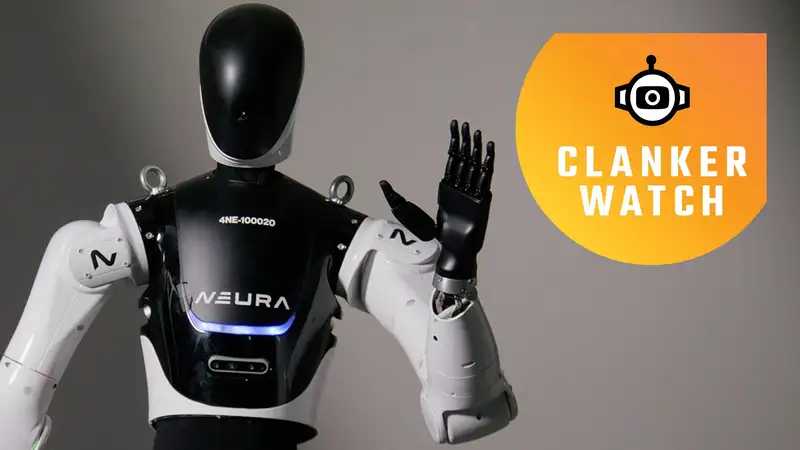
The incident highlights the ongoing difficulty of keeping bipedal balance systems stable under changing stage lighting and thermal stress. Despite advances in dynamic balancing, sudden sensor failures or power cuts still leave humanoids vulnerable to immediate hard drops.
Amphibious Drones and Pilotless Mechs: Expanding Physical Capabilities
Outside of humanoid walking forms, engineers are pushing boundaries in multi-medium locomotion. Recent developments include an amphibious drone engineered to monitor wildlife, capable of plunging from mid-air into bodies of water, swimming sub-surface, and leaping out of the water to resume atmospheric flight.
Simultaneously, industrial robotics maker Unitree Robotics unveiled a functional mech platform capable of walking autonomously without requiring an onboard human pilot. While mechs have traditionally been portrayed in pop culture as human-piloted combat vehicles, modern software allows these large structures to navigate complex terrain unassisted.

Industrial Concepts: The 'Threehalves' Chainsaw Centaur
Pushing aesthetic boundaries even further is 'Threehalves', a general-purpose industrial concept robot designed for extreme environments. The design resembles a horned, four-legged obsidian centaur equipped with a operational chainsaw attachment.
While intended for hazardous manual tasks that human workers cannot perform safely, the aggressive design has drawn widespread attention for its menacing appearance. It serves as a stark example of how utilitarian engineering choices can result in uncanny, intimidating designs that challenge public comfort with automated machinery.
Classroom Pushback: Realbotix AI Teacher Program Paused in New York
Not all obstacles in robotics relate to hardware stability. In Salamanca, New York, a high school pilot program intended to introduce an AI-powered assistant teacher robot was suspended following public outcry over the manufacturer's corporate background.
The robot was developed by Realbotix LLC, an AI and robotics firm. However, community members raised concerns after discovering corporate ties to Intima LLC, an affiliated entity known for manufacturing adult sex dolls. Realbotix issued statements clarifying that Realbotix LLC and Intima LLC operate as distinct business entities with non-overlapping product lines.
Despite the official clarification, public nervousness forced school administrators to pause the educational pilot program, proving that institutional adoption depends heavily on optics, trust, and community acceptance.
Evaluating the Gap Between Hype and Practical Deployment
These recent developments show that the robotics industry remains in a transitional phase. While physical capabilities like amphibious transition and autonomous heavy walking are technically impressive, everyday deployment requires absolute reliability and social integration.
Until humanoids can operate without constant standby support teams ready with emergency covers, and until robotics developers align their corporate branding with public expectations, widespread deployment in public spaces will continue to face friction.
Sources
Information sourced from PC Gamer hardware reporting and publicly documented press events.
Frequently Asked Questions
What happened to the 4NE1 robot at Computex?
Neura Robotics' 4NE1 humanoid collapsed on stage after handing off a Qualcomm processor tray during a live keynote, requiring stage crew intervention.
Why was the AI teacher bot program paused in Salamanca, New York?
The pilot program was put on hold due to community concerns regarding developer Realbotix's corporate affiliation with an adult doll manufacturing company, Intima LLC.
What is the 'Threehalves' robot concept?
Threehalves is a dark, centaur-like robot concept featuring four legs, horns, and a chainsaw, designed for heavy labor in dangerous work environments.
Why it matters
These incidents illustrate the gap between marketing demonstrations and real-world robot reliability. While hardware capabilities like amphibious flight and autonomous mechs advance rapidly, public tolerance for malfunction, uncanny aesthetic choices, and controversial corporate backgrounds remains low.
Background
Humanoid robotics and autonomous machinery have seen heavy investment recently, with companies demonstrating bipedal walking, task automation, and AI integration. However, high-profile failures on stage and public pushback against AI in sensitive environments like classrooms mirror earlier tech hype cycles where reliability lags behind public demonstrations.
The juxtaposition of sophisticated engineering with sudden hardware failure highlights the fragility of current humanoid systems. Moreover, robotics adoption faces non-technical hurdles: public trust relies heavily on brand reputation, aesthetic presentation, and corporate optics, as demonstrated by the school board's reaction to Realbotix.
References
Editorial information
The editorial team reviews sources, adds context, and structures stories so readers can understand the news more clearly.
Article from QNEWS24H
Comments
(0)No comments yet. Be the first to share your thoughts.