The Rings of Power Season 3 Will Reveal Dark Wizard's Identity Early, Showrunners Confirm

- The Dark Wizard's true identity will be revealed early in The Rings of Power Season 3.
- Showrunners explicitly confirmed the character is 100% not Saruman the White.
- Season 3 marks the start of Act 2 in a 5-season plan, moving from mystery to open conflict.
- The upcoming season features a fully realized, openly evil Sauron and a Third-Age-style Gandalf.
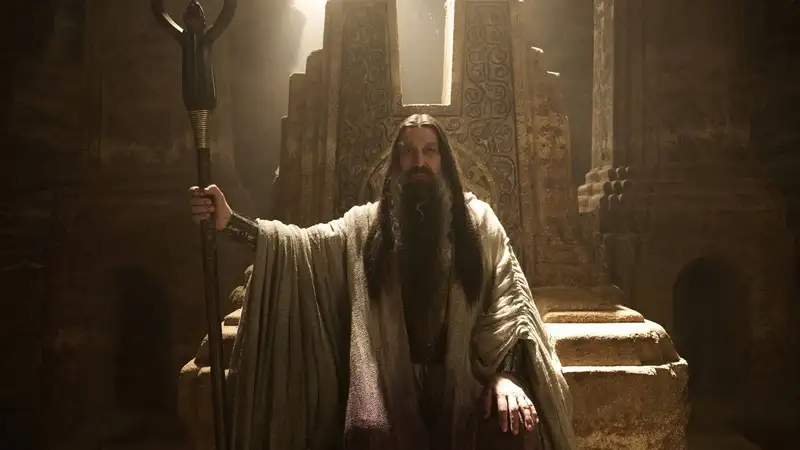
Middle-earth’s Second Age narrative on Prime Video is pivoting from mystery-heavy setups to open confrontation as The Lord of the Rings: The Rings of Power prepares for its third season. After seasons spent dropping cryptographic clues and character teases, showrunners J.D. Payne and Patrick McKay have confirmed that one of the series' most debated enigmas—the true identity of the Dark Wizard played by Ciarán Hinds—will be answered significantly earlier than fans might anticipate.
Quick summary
- The identity of the Dark Wizard, portrayed by veteran actor Ciarán Hinds, will be explicitly revealed early in The Rings of Power Season 3.
- Showrunners J.D. Payne and Patrick McKay definitively ruled out Saruman, confirming the character is 100 percent a different figure from Tolkien's lore or original creation.
- Season 3 marks the structural transition into "Act 2" of a planned five-season narrative arc, shifting away from secret identities toward direct conflict.
- The upcoming season will feature a fully realized Dark Lord Sauron and a Gandalf who closely aligns with his iconic Third Age novelistic portrayal.
Why it matters
For television viewers and Middle-earth enthusiasts, the decision to unmask key characters early in Season 3 signifies a major structural shift for The Rings of Power. During its first two seasons, the series relied heavily on "mystery box" storytelling—keeping audiences guessing about the identities of Sauron (initially hidden as Halbrand), the Stranger, and the enigmatic Dark Wizard operating in Rhûn. By resolving these questions early in the upcoming season, the showrunners are signaling a commitment to faster narrative momentum, deeper character dynamics, and higher dramatic stakes.
This approach addresses a key critique from early viewers who felt the secret-identity tropes distracted from the core political and magical drama of the Second Age. Transitioning to open conflict allows the story to focus on the tangible fallout of Sauron's rise and the ideological battle between the Istari operating across Middle-earth.
Background
When The Rings of Power debuted on Prime Video, its primary narrative engine was built around concealed identities and origin stories. Season 1 focused on the mystery surrounding the man called Halbrand, ultimately revealing him to be Sauron, while also introducing a mysterious fallen star containing an unnamed wizard known simply as "The Stranger."
Season 2 expanded the magical landscape by introducing Rhûn and a menacing, unnamed dark sorcerer played by Ciarán Hinds. Fans immediately began theorizing about whether Hinds was portraying a younger Saruman the White—a narrative choice that would have significantly altered established Tolkien lore regarding the arrival order of the Istari in Middle-earth.
Following the conclusion of Season 2, showrunner Patrick McKay explicitly put those rumors to rest, confirming that Hinds' character is "definitively, 100% not Saruman." With the Stranger officially taking up the name and mantle of Gandalf by the end of the second season, the lingering question of the Dark Wizard's true title became one of the dominant cliffhangers leading into the third chapter.
Act 2 Transition: Moving Beyond Mystery Boxes
Speaking at San Diego Comic-Con, showrunners J.D. Payne and Patrick McKay explained that the structural framework of the series was always designed around a three-act structure spread across five complete seasons. Seasons 1 and 2 effectively functioned as Act 1, establishing the board, concealing key players, and building the foundation of Middle-earth's tragic downfall.
"We always thought of this as one, five-season story that aspires to the epic, or even the mega-epic," McKay explained during an SDCC roundtable. "And when you watch any story or read any book at first you're not sure who's who. Is that a bad guy, is that a good guy, what's their agenda, what's that person's real identity sometimes? That's always how things unfold."
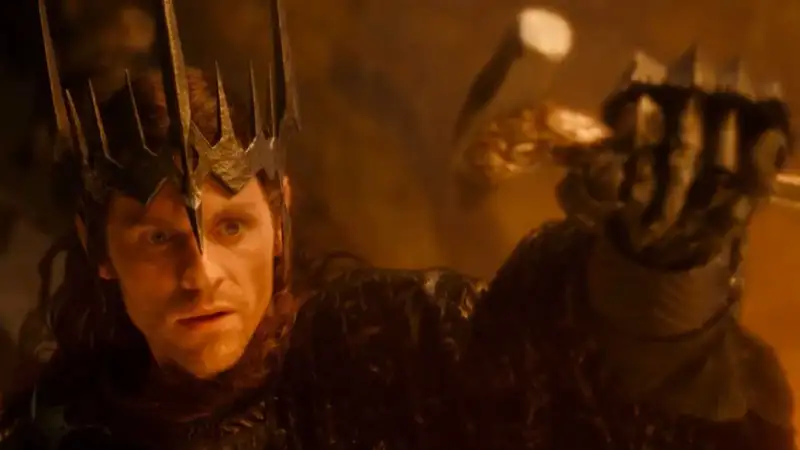
With Act 1 officially concluded, Season 3 shifts into Act 2, where secret identities give way to transparent motives and large-scale warfare. "As we thought about the first two seasons, we thought about them as the first act of a huge three-act story," McKay noted. "But now the joy of a third season is actually, everybody's out in the open. The masks are off. We have full metal, evil dark lord Sauron. We have Gandalf appearing much more similar to his iconic, third age, novelistic appearance."
Unmasking the Dark Wizard Early in Season 3
When pressed on when viewers would finally learn the identity of Ciarán Hinds' Dark Wizard, Payne confirmed unequivocally: "We are! That's all we can say." McKay added further fuel to expectations, stating: "You'll find out, and you might find out sooner than you think."
With the first four episodes scheduled to release simultaneously on November 11, the showrunners' statements suggest that the reveal will occur within the initial multi-episode premiere wave. This rapid pace avoids dragging out the mystery across the entire season, allowing the narrative to focus instead on the direct confrontation between Gandalf and this dark power in the East.
Who Could the Dark Wizard Be?
With Saruman officially eliminated from the equation, speculative focus has shifted toward other canonical possibilities within J.R.R. Tolkien's legendarium. The most prominent theory among lore scholars points to one of the Blue Wizards (Ithryn Luin)—Alatar or Pallando—who Tolkien noted traveled into the east of Middle-earth during the Second and Third Ages.
In various writings, Tolkien hinted that the Blue Wizards may have succumbed to dark influences or founded secret magical cults in Rhûn, making them a natural fit for the antagonist played by Hinds. Alternatively, the character could represent a fallen Istari variant original to the adaptation, designed to reflect the corruptive pressure Sauron's rise exerts on powerful beings across Middle-earth.
Qnews24h insight
The commitment to reveal the Dark Wizard early in Season 3 represents a necessary evolution in modern television storytelling. While mystery boxes can drive initial interest and viral social media engagement, prolonged ambiguity risks frustrating audiences and stalling character development. By taking "the masks off" in Season 3, Payne and McKay are positioning The Rings of Power to deliver higher dramatic tension derived from character choices rather than missing information.
Allowing Sauron to operate in open villainy and Gandalf to assume a familiar wizarding presence shifts the show's core appeal toward epic fantasy conflict and thematic depth. The success of Season 3 will largely depend on whether the ultimate reveal of the Dark Wizard carries genuine story weight rather than serving merely as an answer to a trivia question.
Sources
- GamesRadar+ / Total Film interview with J.D. Payne and Patrick McKay at San Diego Comic-Con 2026.
- Official production statements from Amazon MGM Studios regarding The Lord of the Rings: The Rings of Power Season 3 release schedule.
Why it matters
Dropping secret-identity tropes early in Season 3 allows the show to accelerate narrative pacing and focus on character-driven conflict and canonical events rather than prolonged mystery setups.
Background
Seasons 1 and 2 relied heavily on hidden identities, including Halbrand (Sauron), the Stranger (Gandalf), and the Dark Wizard introduced in Rhûn. After Season 2, showrunners ruled out Saruman, leaving the Dark Wizard's identity as a major unresolved plot point.
Transitioning from 'masks on' to 'masks off' marks a mature shift for the production team. By addressing mysteries upfront in Season 3, the series can build dramatic momentum based on clear motivations and ideological clashes rather than artificial secrecy.
References
Editorial information
The editorial team reviews sources, adds context, and structures stories so readers can understand the news more clearly.
Article from QNEWS24H
Comments
(0)No comments yet. Be the first to share your thoughts.