PSG's Dynasty Ascent: How Youth, Tactical Brilliance Forged a European Powerhouse
- Paris Saint-Germain clinched their second consecutive Champions League title by defeating Arsenal in a penalty shootout.
- The club's recent success is attributed to a strategic shift towards youth integration and effective squad rotation under manager Luis Enrique.
- PSG has moved away from its previous 'star-chasing' transfer policy, fostering a humble and cohesive team identity.
- With key European rivals undergoing managerial or squad transitions, PSG is uniquely positioned to extend its reign as a dominant force.
Paris Saint-Germain has not just won another trophy; it has announced its arrival as a potential new hegemon in European football. Securing their second consecutive Champions League title after a tense penalty shootout victory over Arsenal, the Parisian giants are now shedding their reputation as perennial underachievers on the continental stage. This back-to-back success, a feat manager Luis Enrique boldly predicted would be easier than their historic first, signifies a profound transformation within the club, charting a course towards a sustained period of dominance that could redefine the European football landscape.
Quick summary
- Paris Saint-Germain clinched their second consecutive Champions League title by defeating Arsenal in a penalty shootout.
- The club's recent success is attributed to a strategic shift towards youth integration and effective squad rotation under manager Luis Enrique.
- PSG has moved away from its previous 'star-chasing' transfer policy, fostering a humble and cohesive team identity.
- With key European rivals undergoing managerial or squad transitions, PSG is uniquely positioned to extend its reign as a dominant force.
Why it matters
PSG's current trajectory holds significant implications for the broader football ecosystem. Firstly, it offers a compelling alternative model to the traditional 'Galácticos' approach, demonstrating that cohesive team play, tactical flexibility, and investment in youth can yield elite results even without relying on a single marquee superstar. This could influence transfer market dynamics, potentially reducing the hyper-inflation of aging star players and encouraging clubs to look inward or towards developing talent. For other aspiring European clubs, PSG's success provides a blueprint for leveraging domestic league dominance to foster squad depth and experimentation, ultimately aiming for continental glory.
Moreover, the establishment of a new dynasty could shift the balance of power in European club football. While traditional giants like Real Madrid, Barcelona, and Bayern Munich remain formidable, PSG's sustained success, particularly amidst a period of transition for many rivals, suggests a potential reordering of the continent's elite. This fosters greater competition, excites fans with fresh rivalries, and ensures that the narrative of European football remains dynamic and unpredictable. The club's ability to maintain a strong core of French players also resonates culturally, connecting deeply with its local fanbase and creating a powerful sense of identity.
Background
For over a decade following its acquisition by Qatar Sports Investments (QSI) in 2011, Paris Saint-Germain was synonymous with an ambitious, high-spending strategy focused on acquiring global superstars. The club brought in an array of world-class talent, from Zlatan Ibrahimović to Neymar, Lionel Messi, and Kylian Mbappé. Domestically, this approach yielded consistent Ligue 1 titles, establishing PSG as the undisputed leader in France. However, on the UEFA Champions League stage, despite massive investments, the ultimate prize remained elusive, often ending in frustrating quarter-final or semi-final exits, and a single final appearance in 2020.
The narrative began to shift noticeably in recent seasons. The departure of high-profile players like Messi and Neymar, followed by Kylian Mbappé's widely anticipated move to Real Madrid, could have been perceived as a weakening of the squad. Instead, it seems to have catalysed a fundamental change in philosophy. The appointment of manager Luis Enrique marked a decisive turning point, ushering in an era focused on tactical discipline, collective effort, and a concerted effort to integrate and nurture young talent. This strategic pivot, away from individual brilliance as the primary driver, was a deliberate move to build a more resilient, adaptable, and system-driven team capable of sustained success at the highest level, a stark contrast to the 'star-chasing' days that once defined the club's European aspirations.
Qnews24h insight
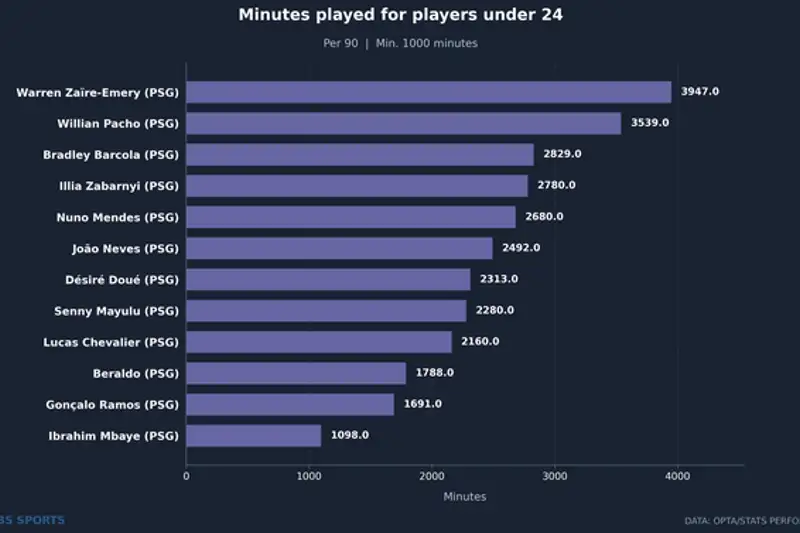
PSG's current ascendancy isn't just about winning titles; it's about validating a distinct model for modern football success. The narrative that Mbappé's departure would cripple the club has been definitively debunked, with PSG achieving European glory *after* his move. This highlights a crucial insight: sustainable success, particularly in the Champions League, increasingly hinges on a cohesive tactical system and robust squad depth rather than sole reliance on individual 'main characters.' Luis Enrique's genius lies not just in his tactical acumen but in his unparalleled ability to manage a diverse, ego-laden dressing room, instilling a humility and collective purpose that eluded previous PSG iterations. The club's commitment to youth, exemplified by 12 players under 24 logging over 1,000 minutes, provides a clear pathway for future evolution and mitigates the financial pressures of constantly chasing established stars. While rival clubs grapple with managerial changes and squad overhauls, PSG possesses a rare stability and clarity of identity, positioning them to capitalize on this transient period in European football. The primary challenge will be avoiding tactical staleness and ensuring this unique blend of talent and temperament remains motivated and hungry for further honours, especially as rivals inevitably adapt to their new blueprint.
The Youth Revolution: Building for Tomorrow, Winning Today
Central to PSG's transformation is a radical commitment to youth development. The days of solely importing established, expensive talent appear to be giving way to a more organic, sustainable approach. Against Arsenal, for instance, only Marquinhos, at 32, and Fabian Ruiz, aged 30, represented the older guard in the starting lineup. This deliberate shift is evidenced by the fact that twelve players under the age of 24 have accumulated over 1,000 minutes across all competitions for PSG, a testament to Enrique's trust in young blood.
Names like Warren Zaire-Emery, Willian Pacho, Bradley Barcola, Nuno Mendes, Joao Neves, and Desire Doue are no longer just prospects; they are integral first-team regulars who have significantly contributed to the club's recent triumphs. This deep well of youthful talent, many of whom are not yet in their prime, suggests that PSG's current success might only be the beginning. The ability to rotate heavily in Ligue 1, previously seen by some as a weakness, has been expertly weaponized by Enrique, allowing for tactical experimentation and invaluable game time for emerging stars, ensuring they gain confidence and adaptability in varied high-pressure situations.
Enrique's Masterclass: Ego Management and Tactical Fluidity
Vitinha, a key player, aptly described Luis Enrique as the 'main character' of the team, a telling indicator of the manager's profound influence. This statement goes beyond mere praise, highlighting Enrique's remarkable ability to unify a squad traditionally perceived as a collection of individual stars. In an era where player egos can often derail even the most talented teams, Enrique has cultivated an environment of humility and collective purpose, a stark contrast to the star-centric approach of previous eras involving players like Kylian Mbappé, Lionel Messi, and Neymar.
His tactical philosophy, characterized by flexibility, intense pressing, and a system-first mentality, is establishing him as one of the elite managers in world football. By fostering a team where players are eager to adapt to his vision and wear the PSG badge with pride, Enrique has unlocked a level of cohesion and performance that the club previously struggled to achieve. The fact that the club has found Champions League success immediately after Mbappé's departure, a move many speculated would weaken PSG, only further underscores Enrique's transformative impact.
Navigating a Disjointed European Landscape
PSG's ascent comes at a unique juncture in European football, characterized by significant upheaval among its traditional elite. Of the teams that have lifted the Champions League trophy since 2020 – Chelsea, Manchester City, Real Madrid, and PSG – only the Parisians will enter the next season with the same head coach. Liverpool is undergoing a significant transition, and other major clubs like Bayern Munich, Barcelona, and Inter are also navigating periods of squad or managerial evolution.
This 'carnage' among Europe's top clubs presents PSG with a golden opportunity. While Arsenal, Bayern, Barcelona, and Inter will undoubtedly regroup and remain competitive, fortune often favours the incumbent, especially one as strong and strategically sound as PSG has become. Their deep squad, youthful core, and established identity mean they are better equipped to withstand potential departures and maintain consistency, unlike many rivals who face more fundamental rebuilds. As long as Luis Enrique can keep his approach fresh and avoid stagnation, PSG are well-positioned to remain strong favourites in the Champions League, with their reign potentially extending for years to come.
Sources
FAQ
What is the key factor behind PSG's recent Champions League success?
The key factor is a strategic shift under manager Luis Enrique, emphasizing youth integration, effective squad rotation, and a collective, system-driven approach over individual 'star power.' This has fostered greater team cohesion and tactical flexibility.
How has Luis Enrique changed PSG's team culture?
Luis Enrique has instilled a culture of humility and collective purpose, effectively managing player egos and moving away from a 'star-chasing' mentality. Players are now more focused on fitting into the team's tactical system and proudly representing the club.
What impact has Kylian Mbappé's departure had on PSG's performance?
Contrary to popular belief, PSG has achieved its Champions League success *after* Mbappé's departure. This suggests that the club's new strategy, focusing on team unity and system over individual brilliance, has been validated, proving that they can succeed at the highest level without a sole superstar.
Is PSG's current success sustainable in the long term?
PSG's success appears highly sustainable due to its young, talented core, deep squad, and established tactical identity under Luis Enrique. While challenges like injuries or rivals adapting will emerge, their current foundation positions them strongly for continued dominance amidst a period of transition for many other European giants.


Why it matters
PSG's current trajectory holds significant implications for the broader football ecosystem. Firstly, it offers a compelling alternative model to the traditional 'Galácticos' approach, demonstrating that cohesive team play, tactical flexibility, and investment in youth can yield elite results even without relying on a single marquee superstar. This could influence transfer market dynamics, potentially reducing the hyper-inflation of aging star players and encouraging clubs to look inward or towards developing talent. For other aspiring European clubs, PSG's success provides a blueprint for leveraging domestic league dominance to foster squad depth and experimentation, ultimately aiming for...
Background
For over a decade following its acquisition by Qatar Sports Investments (QSI) in 2011, Paris Saint-Germain was synonymous with an ambitious, high-spending strategy focused on acquiring global superstars. The club brought in an array of world-class talent, from Zlatan Ibrahimović to Neymar, Lionel Messi, and Kylian Mbappé. Domestically, this approach yielded consistent Ligue 1 titles, establishing PSG as the undisputed leader in France. However, on the UEFA Champions League stage, despite massive investments, the ultimate prize remained elusive, often ending in frustrating quarter-final or semi-final exits, and a single final appearance in 2020. The narrative began to shift noticeably in...
PSG's current ascendancy isn't just about winning titles; it's about validating a distinct model for modern football success. The narrative that Mbappé's departure would cripple the club has been definitively debunked, with PSG achieving European glory *after* his move. This highlights a crucial insight: sustainable success, particularly in the Champions League, increasingly hinges on a cohesive tactical system and robust squad depth rather than sole reliance on individual 'main characters.' Luis Enrique's genius lies not just in his tactical acumen but in his unparalleled ability to manage a diverse, ego-laden dressing room, instilling a humility and collective purpose that eluded previous...
References
Editorial information
The editorial team reviews sources, adds context, and structures stories so readers can understand the news more clearly.
Article from QNEWS24H
Comments
(0)No comments yet. Be the first to share your thoughts.