Paris Confronts Extreme Heat: Why Air Conditioning is a Complex Urban Dilemma
- Paris imposes strict regulations on air conditioning installation, especially in historic and protected areas, to preserve urban aesthetics.
- Environmental concerns, including the urban heat island effect and refrigerant leakage, are key factors in limiting widespread individual AC adoption.
- Instead of promoting individual units, the city is investing in large-scale, sustainable cooling infrastructure, such as district cooling networks powered by the Seine River.
- Paris is also actively expanding green spaces, establishing public 'cooling islands,' and utilizing heat-reflective materials to reduce ambient temperatures city-wide.
As relentless heatwaves increasingly bake Europe, with temperatures soaring past 40°C in many French regions, a profound urban challenge is emerging in Paris. While air conditioning has become a common refuge globally, the City of Light finds itself in a unique predicament: its deeply ingrained commitment to architectural preservation and environmental sustainability clashes head-on with the urgent need for cooling. For many Parisians, installing a simple AC unit is far from a straightforward task, revealing a complex interplay of heritage, public policy, and climate adaptation.
Quick summary
- Paris imposes strict regulations on air conditioning installation, especially in historic and protected areas, to preserve urban aesthetics.
- Environmental concerns, including the urban heat island effect and refrigerant leakage, are key factors in limiting widespread individual AC adoption.
- Instead of promoting individual units, the city is investing in large-scale, sustainable cooling infrastructure, such as district cooling networks powered by the Seine River.
- Paris is also actively expanding green spaces, establishing public 'cooling islands,' and utilizing heat-reflective materials to reduce ambient temperatures city-wide.

Why it matters
The Parisian struggle with air conditioning is more than just a local policy debate; it represents a microcosm of the broader global challenge for historic cities navigating climate change. For residents, it means finding alternative ways to cope with increasingly frequent and intense heatwaves, impacting daily comfort, productivity, and public health. For urban planners and policymakers worldwide, Paris's approach offers a compelling, albeit controversial, case study in sustainable urban adaptation. It highlights the trade-offs between preserving cultural heritage, ensuring citizen well-being, and committing to long-term environmental goals. The city's bold move away from individual AC units towards integrated, city-wide cooling solutions could set a precedent for how metropolitan areas confront the escalating demands for thermal comfort in a warming world, forcing a re-evaluation of energy consumption patterns and urban development strategies.
Background
Paris has long been celebrated for its distinctive Haussmannian architecture, grand boulevards, and meticulously preserved urban landscape. This commitment to aesthetic and historical integrity is deeply embedded in its planning regulations, often requiring permits for even minor exterior modifications, especially in protected zones. Historically, the relatively mild European summers meant that widespread air conditioning was not deemed a necessity, and thus, urban infrastructure did not evolve to accommodate it. Traditional Parisian buildings, with their thick stone walls and high ceilings, were designed for passive cooling, but these features are proving insufficient against the backdrop of extreme modern heatwaves.
The past two decades have witnessed a significant shift in Europe's climate, characterized by more frequent and intense heatwaves. Events like the devastating 2003 heatwave, which led to thousands of fatalities across France, served as a stark wake-up call. This increasing climatic pressure has amplified the demand for artificial cooling. Simultaneously, global awareness of the environmental impact of conventional air conditioning, particularly its energy consumption and the contribution of refrigerants to greenhouse gas emissions, has grown. The International Energy Agency (IEA) has repeatedly warned that cooling demand is one of the fastest-growing energy consumers globally. These converging factors — a strong architectural heritage, increasing climate vulnerability, and a burgeoning environmental consciousness — have propelled Paris to seek innovative, large-scale solutions rather than defaulting to individual AC installations, creating a unique policy landscape where personal comfort is balanced against collective urban and ecological ideals.
The Architectural Imperative: Preserving Paris's Charm
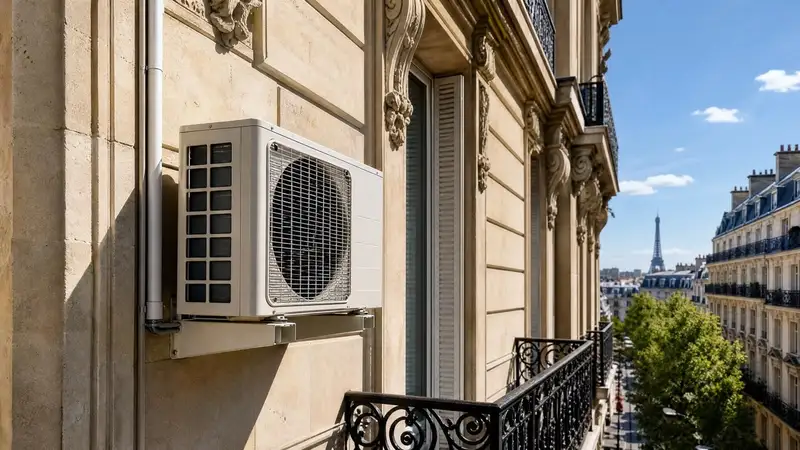
At the heart of Paris's air conditioning dilemma lies its steadfast dedication to preserving its unique urban fabric. For buildings located within conservation areas or those deemed architecturally significant, the installation of outdoor AC condenser units on facades is stringently controlled and frequently denied. The rationale is clear: these modern additions are considered visual intrusions that detract from the historical integrity and aesthetic harmony of the cityscape. The process for even considering an installation is often labyrinthine, requiring approval from building management, local authorities, and adherence to a multitude of architectural and environmental criteria.
Even when a rare approval is granted, the work must be executed by certified technicians. This requirement isn't merely bureaucratic; it ensures safety standards are met and minimizes the potential for refrigerant leaks, which are harmful to the environment. This meticulous approach underscores Paris's determination to maintain its iconic appearance, even as the climate crisis intensifies the need for modern comforts.

Beyond Aesthetics: Environmental Stewardship
While architectural preservation is a primary driver, it is not the sole reason for Paris's restrictive stance on air conditioning. Environmental considerations play an equally critical role. The widespread use of individual AC units contributes significantly to the 'urban heat island effect,' where metropolitan areas become substantially warmer than surrounding rural areas due to human activities and heat-absorbing materials. Air conditioning units expel hot air into the immediate surroundings, exacerbating this phenomenon and creating a feedback loop that increases the need for more cooling.
Furthermore, the cumulative energy demand from millions of individual AC units would place immense strain on the city's power grid, leading to higher carbon emissions if not powered by renewable sources. Concerns about the environmental impact of refrigerants, many of which are potent greenhouse gases, also inform the city's policy. Paris aims to lead by example in sustainable urban development, and a proliferation of traditional AC units would contradict these overarching environmental goals.
Paris's Holistic Cooling Strategy: City-Scale Solutions

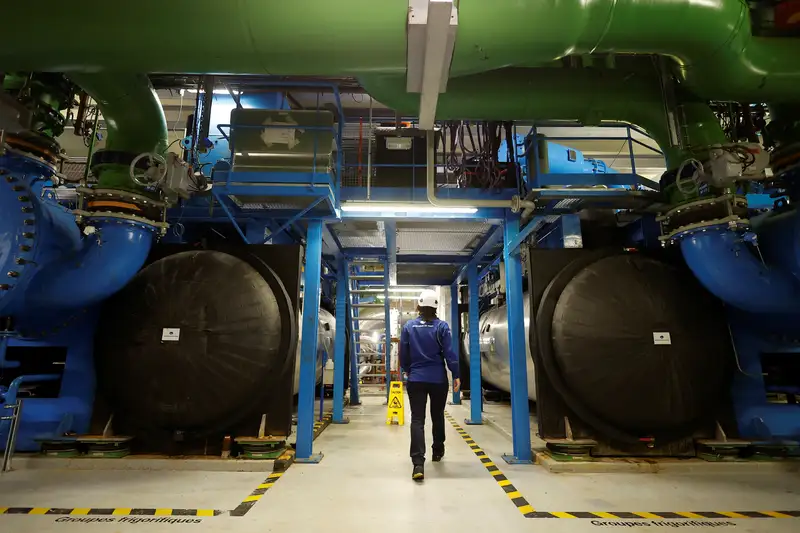
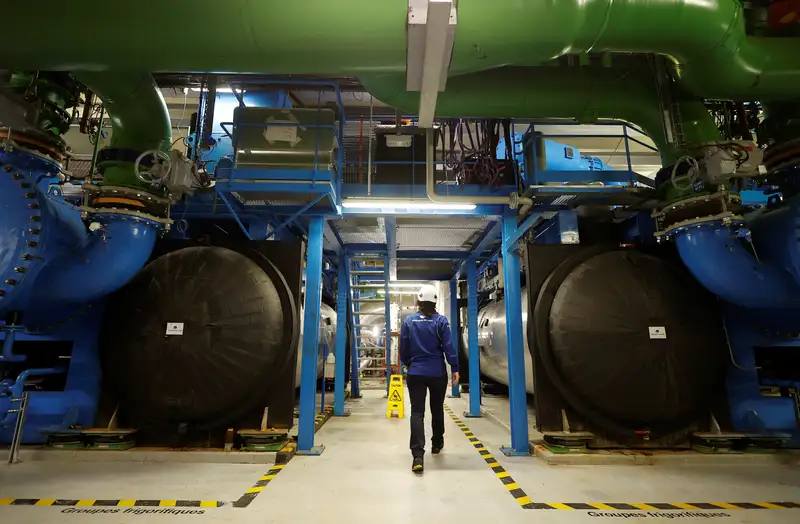
Rather than promoting individual air conditioning, Paris is pioneering a comprehensive, city-wide approach to thermal management. A cornerstone of this strategy is the expansion of its 'district cooling' network. This innovative system leverages the cool waters of the Seine River to produce chilled water, which is then distributed through an underground pipe network to provide cooling for numerous buildings. This centralized system is significantly more energy-efficient and generates fewer emissions than individual AC units, representing a sustainable alternative for large-scale cooling.
Beyond technical infrastructure, the city is also investing heavily in natural and passive cooling methods. This includes a vigorous campaign to expand green spaces, planting thousands of trees and creating urban parks that offer shade and evaporative cooling. Paris has also developed thousands of 'cooling islands' – designated public spaces such as parks, libraries, and public swimming pools – where residents can find respite from the heat. Furthermore, the city is exploring the use of reflective materials on rooftops and road surfaces to reduce heat absorption and lower ambient temperatures. These multifaceted solutions underscore a philosophy that views heat mitigation as a challenge for urban infrastructure and technology, rather than solely a matter for individual households.
Navigating Modern Comfort and Enduring Heritage
Despite its ambitious city-scale cooling initiatives, Paris acknowledges that the blanket prohibition of air conditioning is not always feasible or desirable. New constructions, modern office buildings, and hotels often incorporate advanced cooling systems designed to blend seamlessly with the building's architecture and meet contemporary environmental standards. However, for the vast majority of Paris's historic residential buildings, the question of adding an air conditioner remains a delicate balancing act. It necessitates weighing the immediate needs for residential comfort against the long-term imperative of heritage preservation and the broader goals of sustainable urban development.

This ongoing dialogue reflects a fundamental tension in many global cities: how to adapt to the realities of a changing climate while safeguarding unique cultural and architectural identities. Paris's journey in addressing extreme heat without compromising its character offers valuable lessons, highlighting the complexities and trade-offs inherent in building resilient, livable, and sustainable urban environments for the future.
Qnews24h insight
Paris's stringent stance on air conditioning, while challenging for individual residents, offers a compelling, albeit controversial, blueprint for sustainable urban adaptation in the face of climate change. Unlike many global cities that have defaulted to widespread individual AC adoption, Paris's approach prioritizes collective infrastructure and passive cooling methods, reflecting a deep-seated commitment to its architectural heritage and environmental goals. This strategy forces a crucial conversation: can historical urban centers truly adapt to escalating heat without fundamentally altering their visual identity, or will climate realities eventually necessitate a compromise? The city's investment in district cooling and green infrastructure demonstrates a forward-thinking vision, positioning Paris as a test case for how to achieve thermal comfort through integrated, energy-efficient systems rather than decentralized, high-energy consumption appliances. The effectiveness and scalability of this model will be keenly watched, potentially influencing urban planning decisions in other world heritage sites and dense metropolises grappling with similar pressures.
Sources

FAQ
Q: Why is it so difficult to install air conditioning in Paris?
A: Installation is strictly regulated primarily to preserve the architectural integrity of historic buildings and the overall urban landscape. Many buildings are in conservation areas, requiring permits that are often denied to prevent visible external units. Additionally, environmental concerns like the urban heat island effect and refrigerant emissions play a significant role in discouraging widespread individual AC use.
Q: What alternatives does Paris offer for cooling its citizens?
A: Paris is investing in city-wide cooling solutions. This includes expanding its 'district cooling' network, which uses cold water from the Seine River to cool buildings centrally. The city also focuses on increasing green spaces, creating public 'cooling islands' (parks, libraries, pools), and using reflective materials on surfaces to naturally lower ambient temperatures.
Q: How does air conditioning contribute to the urban heat island effect?
A: Air conditioning units expel hot air into the surrounding environment as they cool indoor spaces. When many units operate simultaneously in a dense urban area, this released heat significantly raises outdoor temperatures, exacerbating the 'urban heat island effect,' where cities become notably hotter than surrounding rural areas.
Why it matters
The Parisian struggle with air conditioning is more than just a local policy debate; it represents a microcosm of the broader global challenge for historic cities navigating climate change. For residents, it means finding alternative ways to cope with increasingly frequent and intense heatwaves, impacting daily comfort, productivity, and public health. For urban planners and policymakers worldwide, Paris's approach offers a compelling, albeit controversial, case study in sustainable urban adaptation. It highlights the trade-offs between preserving cultural heritage, ensuring citizen well-being, and committing to long-term environmental goals. The city's bold move away from individual AC...
Background
Paris has long been celebrated for its distinctive Haussmannian architecture, grand boulevards, and meticulously preserved urban landscape. This commitment to aesthetic and historical integrity is deeply embedded in its planning regulations, often requiring permits for even minor exterior modifications, especially in protected zones. Historically, the relatively mild European summers meant that widespread air conditioning was not deemed a necessity, and thus, urban infrastructure did not evolve to accommodate it. Traditional Parisian buildings, with their thick stone walls and high ceilings, were designed for passive cooling, but these features are proving insufficient against the backdrop...
Paris's stringent stance on air conditioning, while challenging for individual residents, offers a compelling, albeit controversial, blueprint for sustainable urban adaptation in the face of climate change. Unlike many global cities that have defaulted to widespread individual AC adoption, Paris's approach prioritizes collective infrastructure and passive cooling methods, reflecting a deep-seated commitment to its architectural heritage and environmental goals. This strategy forces a crucial conversation: can historical urban centers truly adapt to escalating heat without fundamentally altering their visual identity, or will climate realities eventually necessitate a compromise? The city's...
References
Editorial information
The editorial team reviews sources, adds context, and structures stories so readers can understand the news more clearly.
Article from QNEWS24H
Comments
(0)No comments yet. Be the first to share your thoughts.