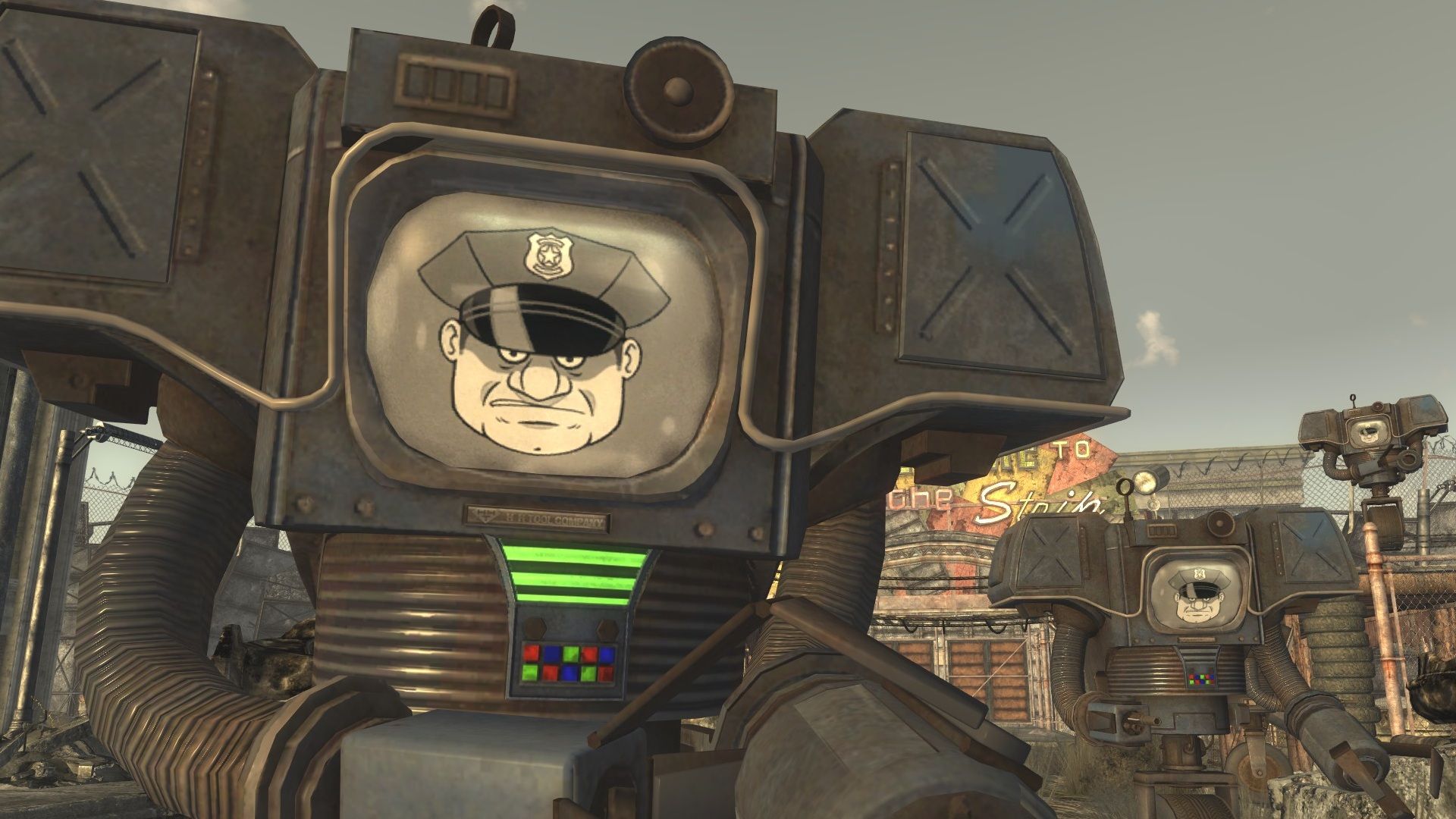
Obsidian's 'Karma Police': How Fallout: New Vegas Perfected RPG Build Diversity

- Obsidian Entertainment utilizes an informal design role nicknamed the 'Karma Police' to audit game scripts, dialogues, and world encounters during development to ensure all player...
- Design director Josh Sawyer emphasizes that the goal is not sterile mathematical balance, but rather preventing players from building a 'fundamentally bad character' that lacks...
- This philosophy directly shaped Fallout: New Vegas, shifting design away from isolated skills like Fallout 1's 'Big Guns' and instead integrating specialized checks directly into...
Few moments in role-playing games are as fraught with quiet anxiety as the character creation screen. Standing before a grid of attributes, skills, and perks, a player is forced to make a series of blind promises to a game they have not yet played. Will investing heavily in 'Barter' actually open doors, or will it leave the player combat-deficient and frustrated? Will a focus on 'Explosives' yield unique solutions, or will it prove to be a redundant novelty? For decades, game developers have struggled to balance these systems, but Obsidian Entertainment solved this existential design crisis through an unconventional, internal auditing process.
Quick summary
- Obsidian Entertainment utilizes an informal design role nicknamed the 'Karma Police' to audit game scripts, dialogues, and world encounters during development to ensure all player skills receive adequate viability.
- Design director Josh Sawyer emphasizes that the goal is not sterile mathematical balance, but rather preventing players from building a 'fundamentally bad character' that lacks unique, exciting opportunities.
- This philosophy directly shaped Fallout: New Vegas, shifting design away from isolated skills like Fallout 1's 'Big Guns' and instead integrating specialized checks directly into early-game quests like the battle for Goodsprings.
Why it matters
In modern game design, player trust is an incredibly valuable but highly fragile currency. When an RPG offers specialized skills but fails to support them with meaningful content, it actively punishes creative player expression. By revealing the 'Karma Police' framework, Josh Sawyer highlights a crucial design philosophy that distinguishes deep, reactive role-playing games from streamlined action titles. This approach proves that keeping players engaged requires active, tedious backend auditing. In an era where AAA titles often homogenize mechanics to avoid balancing headaches, Obsidian's system shows how embracing friction and variety actually enhances the longevity and replayability of a game.
Background
The historical trajectory of computer role-playing games (CRPGs) is marked by a constant negotiation between tabletop freedom and digital constraints. In classic titles from the 1990s, such as Interplay's original *Fallout*, developers frequently designed themselves into corners. As Sawyer pointed out in his recent appearance on the *Human Can Opener* podcast, selecting the 'Big Guns' skill as a starting tag in the original *Fallout* was essentially a trap; players would not encounter a viable weapon for that build until reaching the mid-game hub, resulting in hours of frustrating combat imbalance.
As the industry transitioned into the 3D era, major studios took vastly different paths to address this issue. BioWare, for instance, largely streamlined conversational choices by funneling them into universal, high-leverage attributes like Charm, Coerce, or Persuasion. While this guaranteed that diplomatic players could progress, it also stripped away the flavor of specialization. When Obsidian took the reins of the Fallout franchise for *Fallout: New Vegas*, the team chose a highly complex, granular path. They chose to preserve a wide array of specialized skills but committed to weaving them directly into the narrative and mechanical framework of the Mojave Wasteland.
The Mechanics of the 'Karma Police' Audit
How does a studio practically ensure that dozens of distinct skills all feel valuable? According to Sawyer, the answer is manual, meticulous QA oversight. Obsidian designates specific designers to serve as the 'Karma Police' during critical phases of development. This role involves scouring game scripts, dialogue branches, and quest logs to tally precisely how often individual skills are tested.
"It's not about 'perfect' balance," Sawyer clarified. If the final tally reveals that Medicine has 40 distinct checks across the game while Science has 28, the team considers it a success because both sit comfortably within the same ballpark. The critical error the 'Karma Police' seek to prevent is finding a skill that has zero or single-digit checks over tens of hours of gameplay. By actively identifying these 'barren stretches,' designers can retroactively insert specialized skill checks, transforming what would have been a standard combat encounter into an opportunity for a clever build to shine.

Establishing Player Trust in Goodsprings
A crucial element of Obsidian's design philosophy is establishing this safety net immediately. Sawyer credited former Obsidian designer Eric Fenstermaker, who designed the tutorial town of Goodsprings, with setting the perfect tone for *Fallout: New Vegas*.
In the introductory quest, 'Ghost Town Gunfight,' the player must defend the town from a gang of Powder Gangers. Rather than relying solely on shooting skills, the quest acts as an active showcase for non-combat builds. A high Medicine skill allows you to patch up a wounded townsperson; Barter helps you secure extra armor from the local merchant; Explosives lets you convince the cantankerous Easy Pete to hand over his stash of dynamite; and Sneak or Speech lets you recruit other locals to fight by your side. This immediately establishes a contract with the player: whatever choices you made on the character creation screen, the game will recognize and reward them.
Qnews24h insight
The enduring legacy of *Fallout: New Vegas*—which is still widely regarded as one of the greatest RPGs ever made over a decade after its release—stems directly from this respect for the player's time and creativity. In modern development, the sheer cost of voice acting, motion capture, and complex branching narratives has led many studios to abandon granular skill checks entirely. The prevailing wisdom is often that if a player won't see a branch on their first playthrough, it isn't worth spending resources to build it.
However, Obsidian's 'Karma Police' concept proves that the true magic of an RPG lies in the road not taken. Even if a player never uses a specific Survival check, simply seeing that the option exists creates the illusion of an organic, responsive world. It builds a sense of identity that simple stat-boosts can never replicate. The resurgence of deep CRPGs like *Baldur's Gate 3* and *Disco Elysium* shows that modern audiences are hungry for this exact style of reactive, choice-driven design. The lesson for the broader games industry is clear: balance isn't about making every character play the same way—it is about ensuring that every unique way of playing feels like it was designed on purpose.
Sources
- Originally reported by PC Gamer and sourced from Josh Sawyer's appearance on the Human Can Opener podcast.
Why it matters
In modern game design, player trust is an incredibly valuable but highly fragile currency. When an RPG offers specialized skills but fails to support them with meaningful content, it actively punishes creative player expression. By revealing the 'Karma Police' framework, Josh Sawyer highlights a crucial design philosophy that distinguishes deep, reactive role-playing games from streamlined action titles. This approach proves that keeping players engaged requires active, tedious backend auditing. In an era where AAA titles often homogenize mechanics to avoid balancing headaches, Obsidian's system shows how embracing friction and variety actually enhances the longevity and replayability of a...
Background
The historical trajectory of computer role-playing games (CRPGs) is marked by a constant negotiation between tabletop freedom and digital constraints. In classic titles from the 1990s, such as Interplay's original Fallout, developers frequently designed themselves into corners. As Sawyer pointed out in his recent appearance on the Human Can Opener podcast, selecting the 'Big Guns' skill as a starting tag in the original Fallout was essentially a trap; players would not encounter a viable weapon for that build until reaching the mid-game hub, resulting in hours of frustrating combat imbalance. As the industry transitioned into the 3D era, major studios took vastly different paths to address...
The enduring legacy of Fallout: New Vegas—which is still widely regarded as one of the greatest RPGs ever made over a decade after its release—stems directly from this respect for the player's time and creativity. In modern development, the sheer cost of voice acting, motion capture, and complex branching narratives has led many studios to abandon granular skill checks entirely. The prevailing wisdom is often that if a player won't see a branch on their first playthrough, it isn't worth spending resources to build it. However, Obsidian's 'Karma Police' concept proves that the true magic of an RPG lies in the road not taken. Even if a player never uses a specific Survival check, simply...
References
Editorial information
The editorial team reviews sources, adds context, and structures stories so readers can understand the news more clearly.
Article from QNEWS24H
Comments
(0)No comments yet. Be the first to share your thoughts.