Nvidia Pledges $150 Billion Annual Investment in Taiwan, Cements 'AI Epicentre' Status

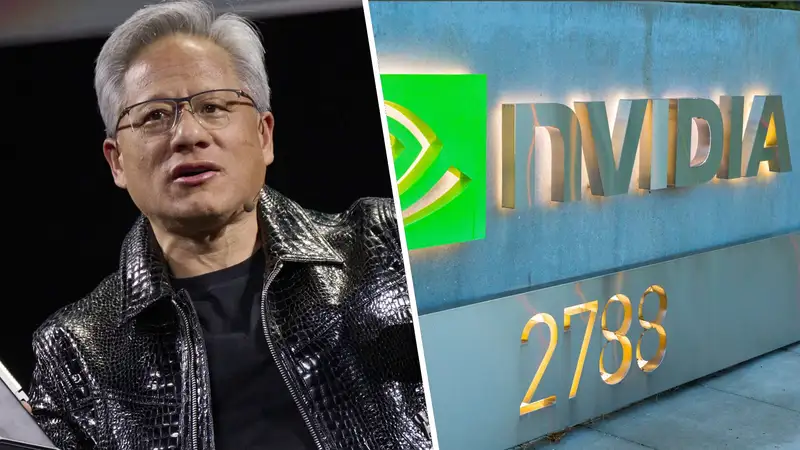
- Nvidia CEO Jensen Huang revealed plans for a colossal $150 billion annual investment in Taiwan.
- A new Nvidia headquarters is slated for Taiwan, an ambitious project estimated to cost $5 trillion and create 4,000 jobs.
- Huang declared Taiwan the 'epicentre of the AI revolution' due to its advanced chip manufacturing and system integration capabilities.
- This follows a $10 billion investment pledge from rival AMD, highlighting Taiwan's increasing strategic importance for AI hardware.
In a bold declaration that reverberates across the global technology landscape, Nvidia CEO Jensen Huang has asserted Taiwan's pivotal role in the burgeoning artificial intelligence era, announcing plans for an extraordinary annual investment into the island nation. Huang's pronouncements underscore Taiwan's strategic importance, positioning it as the indispensable hub for the AI revolution, a move that will likely reshape the future of semiconductor manufacturing and AI development.
Quick summary
- Nvidia CEO Jensen Huang announced plans to invest approximately $150 billion in Taiwan each year, significantly increasing the company's existing financial commitment to the island.
- The company intends to construct a new headquarters in Taiwan, a project reportedly estimated to cost an astounding $5 trillion and create 4,000 jobs.
- Huang hailed Taiwan as the 'epicentre of the AI revolution,' emphasizing its critical role in chip manufacturing, packaging, and the creation of AI supercomputers.
- This announcement follows a separate pledge by rival AMD to invest at least $10 billion into Taiwan's tech sector for next-gen AI infrastructure.
Why it matters
Nvidia's monumental investment signals a deepening reliance on Taiwan for the foundational components of the global AI industry, cementing the island's status as an unparalleled manufacturing powerhouse. For Taiwan, this influx of capital and strategic commitment bolsters its economic resilience and global influence, especially amid ongoing geopolitical complexities. For the tech world, it means a continued concentration of critical AI supply chain elements in one geographical region, intensifying both innovation and potential vulnerabilities. Users and industries reliant on advanced AI hardware can anticipate accelerated development and a reinforced supply pipeline from the region, but also increased awareness of the geopolitical stability surrounding this vital tech hub. This strategic move could further solidify Nvidia's market dominance in AI hardware by ensuring direct control and collaboration with its primary manufacturing partners.
Background
Taiwan has long been the undisputed heartland of the semiconductor industry, largely due to the presence of Taiwan Semiconductor Manufacturing Company (TSMC), the world's largest dedicated independent semiconductor foundry. Nvidia, a leader in AI chips and GPUs, has historically maintained a deep and symbiotic relationship with TSMC, with CEO Jensen Huang previously stating, 'Without TSMC, there is no Nvidia today.' This long-standing partnership forms the bedrock of Nvidia's current success and the broader AI ecosystem.
Historically, Nvidia's annual investments in Taiwan hovered between $10 billion and $15 billion. The recent announcement marks a tenfold increase, reflecting the surging demand for AI hardware and the strategic imperative for Nvidia to strengthen its supply chain ties. This heightened commitment also follows a similar, albeit smaller, move by competitor AMD, which last week disclosed plans for at least a $10 billion investment in Taiwan's tech sector to advance next-generation AI infrastructure, indicating a broader industry trend towards solidifying positions within Taiwan's high-tech ecosystem.
The landscape of global chip manufacturing is also heavily influenced by geopolitical tensions, particularly between the United States and China. The US has imposed stringent export controls on advanced AI chips to China, impacting Nvidia's market share in the region. Huang has previously acknowledged a significant drop in Nvidia's presence in China's AI hardware market, reportedly 'to zero.' Efforts to navigate these complex trade relations have seen high-profile engagements, including Huang's participation with other tech leaders alongside then-US President Donald Trump on Air Force One in a bid to repair trade relations, leading to conditional approvals for certain chip sales to Chinese firms, though not all deals have materialized.
Nvidia's Strategic Bet on Taiwan
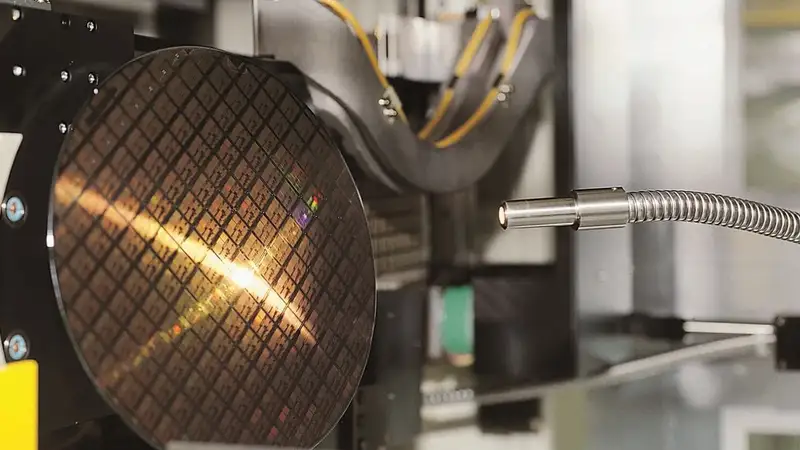
Nvidia's commitment to injecting $150 billion into Taiwan annually represents a staggering escalation of its existing operations. This figure dwarfs previous annual spending and solidifies the island's irreplaceable role in the company's future. Beyond mere manufacturing, Huang's vision positions Taiwan as the ultimate incubator for AI innovation, where chips are designed, packaged, and integrated into complex AI supercomputing systems.
A key component of this expanded presence is the planned construction of a new Nvidia headquarters in Taiwan. This ambitious undertaking is projected to cost an extraordinary $5 trillion and create 4,000 new jobs. While the reported cost figure is exceptionally high, it underscores the scale of Nvidia's long-term vision and its profound commitment to establishing a lasting physical and operational footprint on the island. Groundbreaking for the new facility is anticipated later this year, with an estimated completion target of 2030.
Huang's effusive praise for Taiwan as the 'epicentre of the AI revolution' is not merely rhetoric. It acknowledges the island's unique ecosystem, which combines world-class semiconductor fabrication like TSMC with an extensive network of hardware partners capable of assembling, integrating, and testing the most sophisticated AI systems. This tightly integrated supply chain and talent pool provide Nvidia with an unparalleled advantage in rapidly innovating and deploying cutting-edge AI technologies.
Geopolitical Undercurrents and Global Supply Chains
The magnitude of Nvidia's investment in Taiwan cannot be fully understood without considering the broader geopolitical context. Taiwan's strategic importance in the global technology supply chain has made it a focal point of international relations, particularly between the United States and China. As the world's leading producer of advanced semiconductors, the stability of Taiwan's manufacturing capabilities is paramount for industries worldwide, from consumer electronics to advanced defense systems.
Nvidia's decision to deepen its ties with Taiwan contrasts sharply with the challenges it faces in the Chinese market. US export controls on high-end AI chips have significantly curtailed Nvidia's ability to sell its most advanced products to Chinese customers, leading to a dramatic reduction in its market share there. This dynamic forces Nvidia to diversify its strategic investments and reinforce its most reliable and capable supply chain partners outside of politically sensitive zones.
While the US has, at times, sought to mend trade relations and facilitate sales of less advanced AI chips to certain Chinese entities, the fundamental tension remains. Nvidia's expanded investment in Taiwan can be seen as a strategic reinforcement of its primary production hub, ensuring the uninterrupted flow of critical components for its global AI ambitions, even as it navigates complex international trade policies.
Future Implications for AI Infrastructure
This substantial investment by Nvidia will undoubtedly accelerate the development of future AI infrastructure. By co-locating significant research, development, and manufacturing capabilities in Taiwan, Nvidia can foster closer collaboration with its partners, streamline production processes, and potentially bring new AI hardware to market more rapidly. This could translate into more powerful, efficient, and accessible AI solutions for businesses and researchers globally.

The commitment also ensures that Taiwan remains at the vanguard of technological innovation. The creation of 4,000 new jobs and the significant financial outlay will attract and retain top talent, further cementing the island's reputation as a global leader in high-tech industries. As AI continues to permeate every sector, from healthcare to automotive, the hardware foundational to these advancements will increasingly originate from this strategic 'epicentre.'
This move is a strong indicator that despite calls for supply chain diversification to other regions, the unique concentration of expertise and infrastructure in Taiwan remains irreplaceable for the foreseeable future, especially for the most cutting-edge technologies like advanced AI chips. It underscores a strategic decision by Nvidia to double down on an existing strength rather than significantly shift its core manufacturing base.
Qnews24h insight
Nvidia's declaration of a $150 billion annual investment in Taiwan, accompanied by plans for an ambitious new headquarters, is more than just a financial commitment; it's a strategic fortification in the face of intensifying global tech competition and geopolitical pressures. By unequivocally labeling Taiwan the 'epicentre of the AI revolution,' Jensen Huang is not merely acknowledging an existing reality but actively reinforcing it, signaling to the world that the island's unique ecosystem of manufacturing prowess and innovation is irreplaceable for Nvidia's future AI dominance. This move solidifies Nvidia's supply chain amid US-China tech friction, underscoring a calculated, long-term bet on Taiwan's continued stability and unmatched capabilities in advanced semiconductor production, rather than diffusing its core operations to less established regions. It highlights a critical trade-off: embracing a geographically concentrated yet highly efficient and trusted supply chain, even with its inherent geopolitical risks, over a dispersed, potentially less efficient, alternative.
Sources

FAQ
What is the total annual investment Nvidia plans for Taiwan?
Nvidia CEO Jensen Huang announced plans to invest approximately $150 billion in Taiwan each year. This is a significant increase from the company's previous annual spending in the region.
What is the planned new Nvidia headquarters in Taiwan?
Nvidia plans to build a new headquarters in Taiwan, a project reportedly estimated to cost an astounding $5 trillion and create 4,000 jobs. Groundbreaking is expected later this year, with completion targeted by 2030.
Why does Nvidia CEO Jensen Huang call Taiwan the 'epicentre of the AI revolution'?
Huang refers to Taiwan as the 'epicentre' due to its comprehensive and advanced ecosystem for semiconductor manufacturing, chip packaging, and the creation of AI supercomputers. The island hosts key partners like TSMC and possesses the expertise necessary for developing cutting-edge AI hardware.
How does this investment compare to other tech companies in Taiwan?
Nvidia's $150 billion annual investment far surpasses recent pledges from competitors. For example, AMD recently announced plans to invest at least $10 billion into Taiwan's tech sector for next-gen AI infrastructure, highlighting a broader trend but with Nvidia making a substantially larger commitment.
What are the implications of this investment for US-China tech relations?
This significant investment in Taiwan by a major US tech company like Nvidia underscores the ongoing strategic importance of securing supply chains outside of China amidst US export controls on advanced AI chips. It reinforces Taiwan's role as a critical hub in the global tech landscape, further entrenching the island's position amidst geopolitical tensions.
Why it matters
Nvidia's massive commitment solidifies Taiwan's indispensable role in the global AI supply chain, enhancing its economic power and technological leadership amid geopolitical challenges. For consumers and industries, it ensures a robust pipeline for advanced AI hardware while spotlighting the concentrated nature of critical tech infrastructure. This move strategically reinforces Nvidia's market position and deeply integrates its future with Taiwan's unique manufacturing ecosystem.
Background
Taiwan has long been the global leader in semiconductor manufacturing, epitomized by TSMC, a crucial partner for Nvidia. Historically, Nvidia invested $10-15 billion annually, a figure now dramatically increased to $150 billion, reflecting heightened AI demand and supply chain strategy. This intensified commitment follows rival AMD's recent $10 billion investment announcement. Geopolitically, US export controls have severely impacted Nvidia's market share in China, prompting a strategic focus on strengthening ties with reliable partners like Taiwan, despite previous efforts to mend US-China trade relations under President Donald Trump.
Nvidia's declaration of a $150 billion annual investment in Taiwan, accompanied by plans for an ambitious new headquarters, is more than just a financial commitment; it's a strategic fortification in the face of intensifying global tech competition and geopolitical pressures. By unequivocally labeling Taiwan the 'epicentre of the AI revolution,' Jensen Huang is not merely acknowledging an existing reality but actively reinforcing it, signaling to the world that the island's unique ecosystem of manufacturing prowess and innovation is irreplaceable for Nvidia's future AI dominance. This move solidifies Nvidia's supply chain amid US-China tech friction, underscoring a calculated, long-term bet...
References
Editorial information
The editorial team reviews sources, adds context, and structures stories so readers can understand the news more clearly.
Article from QNEWS24H
Comments
(0)No comments yet. Be the first to share your thoughts.