NFC Relay Attacks: How Malicious Apps Exploit Contactless Payments to Steal Data
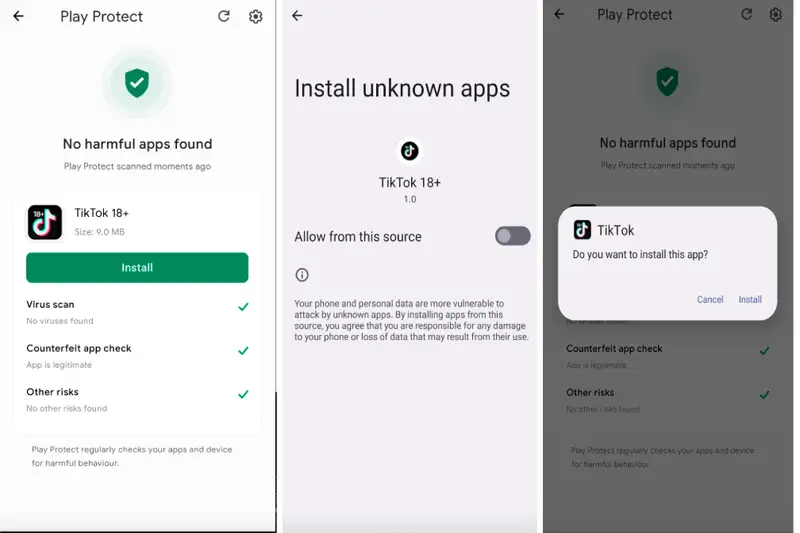
- Malicious mobile apps are being used by cybercriminals to execute sophisticated NFC relay attacks, circumventing contactless payment security.
- The attacks leverage social engineering, typically starting with fake calls, to persuade victims to install the malware and grant extensive device permissions.
- Once installed, the malware captures and transmits contactless payment data from a victim's card or device to a remote attacker's device, enabling fraudulent transactions over...
- Cybersecurity firm Group-IB has identified over 54 unique .APK files linked to these NFC malware campaigns, indicating a growing and organized threat.
In an era increasingly defined by the convenience of digital transactions, where a simple tap of a smartphone or card completes a purchase, a sophisticated new cyber threat is emerging, weaponizing this very convenience against consumers. Cybercriminals are now leveraging malicious mobile applications to execute 'NFC relay attacks,' a method that allows them to surreptitiously intercept and transmit contactless payment data, enabling fraudulent transactions without ever physically possessing the victim's card or device. This insidious scheme combines social engineering with advanced malware, posing a significant risk to the integrity of digital payments and the financial security of individuals.
Quick summary
- Malicious mobile apps are being used by cybercriminals to execute sophisticated NFC relay attacks, circumventing contactless payment security.
- The attacks leverage social engineering, typically starting with fake calls, to persuade victims to install the malware and grant extensive device permissions.
- Once installed, the malware captures and transmits contactless payment data from a victim's card or device to a remote attacker's device, enabling fraudulent transactions over distance.
- Cybersecurity firm Group-IB has identified over 54 unique .APK files linked to these NFC malware campaigns, indicating a growing and organized threat.
Why it matters
The rise of NFC relay attacks represents a critical escalation in financial cybercrime, directly impacting the trust and security fundamental to modern commerce. For individual consumers, the immediate threat is direct financial loss through unauthorized transactions, including potential access to bank accounts for loans or other illicit activities. The insidious nature of these attacks – where victims unwittingly participate in their own compromise – erodes confidence in the digital payment ecosystem, a cornerstone of economic activity. Banks and payment processors face increased fraud detection challenges and reputational damage, while developers of mobile operating systems must constantly evolve their security measures against these sophisticated threats. Furthermore, the reliance on social engineering tactics highlights a persistent vulnerability: the human element, making widespread public awareness and education crucial. This threat not only targets individual wallets but also undermines the collective digital infrastructure we increasingly depend on.
Background
Near Field Communication (NFC) technology has revolutionized how we interact with devices and make payments. Since its inception, NFC has promised convenience and a level of security for close-proximity interactions. Designed for short-range wireless data exchange, NFC allows devices like smartphones, smartwatches, and payment cards to communicate when brought within a few centimeters of each other. This technology underpins the ubiquitous 'tap-to-pay' systems, public transport cards, and even digital keys, offering a swift and secure alternative to traditional card swipes or chip insertions.
The inherent security of NFC transactions typically relies on their short range, often requiring physical proximity between the payment device and the terminal. Furthermore, many systems employ tokenization and encryption, generating unique, single-use transaction codes to prevent data interception and reuse. However, the conceptual vulnerability of 'relay attacks' – where a legitimate signal is intercepted and retransmitted over a longer distance – has been a theoretical concern in the cybersecurity community for years, particularly as NFC adoption soared.
Historically, mobile malware has evolved from simple spyware to sophisticated remote access Trojans (RATs) capable of siphoning credentials, intercepting OTPs, and even controlling devices. The financial sector has long been a prime target, with banking Trojans constantly adapting to bypass new security measures. What distinguishes the current wave of NFC relay attacks, as highlighted by Group-IB, is the operationalization of this relay concept with purpose-built malware. While proof-of-concept NFC relay tools have existed, the identification of over 54 distinct .APK files specifically designed for this purpose indicates a significant shift from theoretical vulnerability to active, professionalized exploitation within the cybercrime underground. This development signals a new frontier in payment fraud, marrying social engineering with advanced technical capabilities to circumvent established security protocols.
The Mechanics of Deception: From Call to Compromise
The initial phase of these NFC relay attacks is rooted in classic social engineering, a psychological manipulation designed to trick individuals into divulging confidential information or performing actions that compromise their security. Typically, this begins with a 'fake call' or other phishing attempts, where attackers impersonate trusted entities—banks, government agencies, or even tech support—to gain the victim's confidence. During these fraudulent interactions, the victim is often persuaded to download and install a seemingly innocuous application from a third-party source, circumventing the security checks of official app stores.
Once the malicious application is installed, often under the guise of a 'security update' or a 'necessary banking tool,' the next step involves coercing the user into granting extensive permissions. These permissions might include access to contacts, SMS messages, camera, microphone, and crucially, accessibility services, which allow the malware to observe and interact with other applications on the device. Tools like SpyNote, mentioned in cybersecurity reports, are examples of remote access Trojans (RATs) that can be deployed this way, providing attackers with full control over the compromised smartphone. With such elevated access, the attackers can not only monitor activities but also initiate actions on behalf of the user, essentially turning the victim's device into a remote control for their illicit schemes.
It is at this critical juncture that the attack transitions to its most dangerous phase: the exploitation of NFC capabilities. Specialized malware, designed specifically for this purpose, leverages the compromised device's control over NFC. When a victim attempts to make a contactless payment or uses an NFC-enabled card near their now-infected phone, the malware steps in. Instead of allowing the legitimate transaction to proceed, it intercepts the communication between the card and the phone, extracting the sensitive NFC payment data before it can be tokenized or fully processed by secure elements. This stolen data is then prepared for relay, setting the stage for the remote execution of fraud.
Relay Race to Fraud: How Data is Transferred
The real ingenuity and danger of NFC relay attacks lie in their ability to overcome the physical proximity requirement that is fundamental to NFC security. This is achieved through a two-device setup, operating potentially across vast geographical distances. One device, controlled by the attacker, acts as a 'reader.' This device is positioned close to the victim's contactless card or NFC-enabled phone, effectively 'skimming' the NFC data as it is broadcast.
Simultaneously, a second device, also controlled by the same attacker, functions as a 'performer' or 'emulator.' This device is situated at a point of sale terminal where a fraudulent transaction is intended. The crucial link between these two devices is a sophisticated data transfer infrastructure, often utilizing the attacker's command-and-control (C2) servers or other secure channels. The NFC data captured by the 'reader' device is immediately transmitted over this infrastructure to the 'performer' device.
Upon receiving the relayed data, the 'performer' device emulates the victim's card or phone, presenting the stolen NFC payment credentials to the legitimate point-of-sale terminal. Because the data is relayed in real-time, the transaction appears legitimate to the terminal, fulfilling the short-range communication protocols of NFC. This seamless, near-instantaneous relay allows the fraudulent transaction to complete successfully, even though the victim's actual card or phone is miles away. This innovative circumvention of physical presence makes the attacks particularly difficult to detect in progress and challenges traditional fraud prevention mechanisms that often rely on geo-location and device proximity.
A Growing Threat Landscape: The Professionalization of Mobile Malware

The cybersecurity landscape is constantly evolving, and the emergence of these NFC relay tools signifies a worrying trend towards increased professionalization within cybercriminal networks. Group-IB's discovery of more than 54 distinct .APK files associated with NFC malware campaigns is a stark indicator. This high number suggests not isolated incidents, but rather a concerted effort in the development and distribution of specialized tools. Such volume points to organized groups, potentially operating under a 'malware-as-a-service' model, where these sophisticated tools are sold or leased to other cybercriminals, lowering the barrier to entry for executing complex financial fraud.
The sophistication observed in these campaigns extends beyond just the technical prowess of the malware. It encompasses the intricate social engineering necessary to trick users, the development of robust remote control capabilities, and the infrastructure to support real-time data relay. This multi-layered approach reflects a strategic investment by threat actors, driven by the lucrative potential of digital payment fraud. As more economies shift towards cashless and contactless transactions, the attack surface expands, making such specialized malware highly valuable in the cyber underworld.
This trend underscores a broader challenge for global cybersecurity: the continuous arms race between defenders and attackers. As mobile operating systems and banking applications enhance their security features, cybercriminals respond with more ingenious methods, often targeting the weakest link – the human user – or exploiting the very convenience features that define modern technology. The proliferation of these tools necessitates a proactive defense strategy that combines robust technical safeguards with ongoing user education to mitigate the risks posed by these increasingly professionalized threats.
Safeguarding Your Digital Wallet: Prevention and Awareness
Protecting yourself against sophisticated NFC relay attacks requires a multi-faceted approach, combining vigilance with sound digital hygiene. The first and most crucial line of defense is extreme caution regarding unsolicited communication. Never install applications or grant permissions based on instructions received via suspicious phone calls, text messages, or emails, regardless of who the caller claims to be. Always verify the legitimacy of requests by contacting the institution directly through official, published channels, not numbers provided by the caller.
When downloading applications, always use official app stores (Google Play Store, Apple App Store) and scrutinize app reviews, developer information, and requested permissions. Be wary of apps that demand excessive permissions, especially those related to accessibility services or extensive access to financial apps, if their core functionality doesn't clearly justify it. Regularly review the permissions granted to your installed applications and revoke any that seem unnecessary or suspicious.
Keeping your smartphone's operating system and all applications updated is another vital step. Updates often include critical security patches that address newly discovered vulnerabilities. Consider using reputable mobile security software that can scan for malware and offer real-time protection. Furthermore, be conscious of your surroundings when making contactless payments. While NFC's short range is a security feature, awareness of potential 'readers' in close proximity, though rare, adds an extra layer of caution. Finally, monitor your bank and credit card statements regularly for any unauthorized transactions and report suspicious activity immediately to your financial institution. Prompt action can limit potential damage and aid in fraud recovery efforts.
Qnews24h insight
The emergence of professionalized NFC relay malware campaigns signals a concerning evolution in cybercrime, underscoring a critical vulnerability at the intersection of human trust and technological convenience. While NFC technology offers undeniable benefits, its security mechanisms are demonstrably fragile when confronted with a coordinated attack that cleverly exploits both social engineering and advanced technical capabilities. The distinct insight here is that the 'human firewall' remains the weakest link; no amount of encryption or tokenization can fully protect a user who is manipulated into granting attackers direct access to their device. This trend highlights the urgent need for a paradigm shift in digital security education, moving beyond generic warnings to concrete explanations of how specific attack vectors, like NFC relay, are operationalized. It also necessitates a more proactive stance from financial institutions and tech companies, not just in technical defenses but in developing intuitive, robust warnings and user interfaces that make it inherently difficult for users to compromise themselves under duress. The future of secure digital payments will increasingly hinge on closing this human-technology gap, rather than solely relying on cryptographic strength.
Sources
- Soha.vn: Ứng dụng người dùng nên xóa ngay để không bị theo dõi
- Group-IB (referenced in the source for malware identification)
FAQ
What is an NFC relay attack?
An NFC relay attack is a type of cybercrime where malicious software on a compromised smartphone intercepts Near Field Communication (NFC) payment data from a victim's card or device. This data is then immediately relayed over a distance to another attacker-controlled device, which emulates the victim's card to complete a fraudulent transaction at a point-of-sale terminal.
How do cybercriminals trick users into installing malicious apps?
Attackers primarily use social engineering tactics, such as fake phone calls, phishing emails, or SMS messages, where they impersonate banks, government officials, or technical support. They trick victims into believing they need to install a specific app for security reasons or to resolve an urgent issue, thereby gaining unauthorized access to their devices and financial information.
What are the risks if my phone is compromised by NFC malware?
If your phone is compromised, attackers can gain extensive control, potentially leading to unauthorized contactless payments, direct access to banking applications, identity theft, and even the ability to take out loans in your name. The malware can also steal other sensitive personal data and monitor your device activities, posing a comprehensive threat to your financial and personal security.
What can I do to protect myself from these attacks?
To protect yourself, avoid installing apps from unofficial sources or based on unsolicited requests. Always download apps from official app stores and carefully review requested permissions. Keep your device's operating system and apps updated, use reputable mobile security software, and regularly monitor your bank statements for suspicious activity. If you suspect compromise, contact your bank immediately and consider a factory reset of your device after backing up essential data.
Why it matters
The rise of NFC relay attacks represents a critical escalation in financial cybercrime, directly impacting the trust and security fundamental to modern commerce. For individual consumers, the immediate threat is direct financial loss through unauthorized transactions, including potential access to bank accounts for loans or other illicit activities. The insidious nature of these attacks – where victims unwittingly participate in their own compromise – erodes confidence in the digital payment ecosystem, a cornerstone of economic activity. Banks and payment processors face increased fraud detection challenges and reputational damage, while developers of mobile operating systems must...
Background
Near Field Communication (NFC) technology has revolutionized how we interact with devices and make payments. Since its inception, NFC has promised convenience and a level of security for close-proximity interactions. Designed for short-range wireless data exchange, NFC allows devices like smartphones, smartwatches, and payment cards to communicate when brought within a few centimeters of each other. This technology underpins the ubiquitous 'tap-to-pay' systems, public transport cards, and even digital keys, offering a swift and secure alternative to traditional card swipes or chip insertions. The inherent security of NFC transactions typically relies on their short range, often requiring...
The emergence of professionalized NFC relay malware campaigns signals a concerning evolution in cybercrime, underscoring a critical vulnerability at the intersection of human trust and technological convenience. While NFC technology offers undeniable benefits, its security mechanisms are demonstrably fragile when confronted with a coordinated attack that cleverly exploits both social engineering and advanced technical capabilities. The distinct insight here is that the 'human firewall' remains the weakest link; no amount of encryption or tokenization can fully protect a user who is manipulated into granting attackers direct access to their device. This trend highlights the urgent need for a...
References
Editorial information
The editorial team reviews sources, adds context, and structures stories so readers can understand the news more clearly.
Article from QNEWS24H
Comments
(0)No comments yet. Be the first to share your thoughts.