NASA's 2032 Moon Base Roadmap: Inside the Three-Phase Plan for Permanent Lunar Habitation
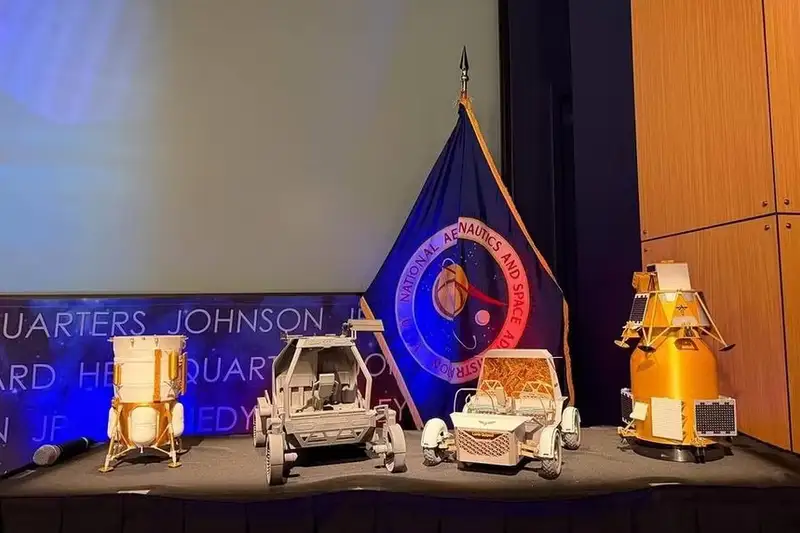
- NASA has outlined a three-phase roadmap targeting a fully functional, permanently staffed human outpost on the Moon by 2032.
- Phase 1 will utilize uncrewed commercial landers from Blue Origin, Astrobotic, and Intuitive Machines to solve fundamental engineering and geological puzzles.
- The initiative heavily emphasizes global and private cooperation, featuring technical payloads from the European Space Agency (ESA) and South Korea.
More than half a century after the last Apollo astronaut stepped off the lunar surface, humanity is preparing to return to the Moon—not for a brief visit, but to stay. In a comprehensive briefing outlining the future of deep-space exploration, details have emerged of a highly structured, three-phase roadmap designed to establish a permanent, crewed lunar outpost by 2032. This ambitious endeavor represents a fundamental shift in how nations and private enterprises approach space exploration, turning our closest celestial neighbor into a bustling hub of scientific discovery and a testing ground for eventual human missions to Mars.
Quick summary
- Three-Phase Roadmap: The comprehensive strategy spans from the present day to 2032, starting with uncrewed precursor missions and graduating to temporary habitats, before achieving a fully permanent, crewed lunar outpost with rotating personnel.
- Commercial and International Alliances: Initial stages will rely heavily on private sector landers from Blue Origin, Astrobotic, and Intuitive Machines, alongside critical scientific payloads contributed by the European Space Agency (ESA) and South Korea.
- Advanced Lunar Science: Early uncrewed missions will focus on solving crucial engineering challenges, including rocket engine plume-surface interactions and the mysterious magnetic phenomena known as lunar swirls.
Why it matters
The transition from short-term lunar expeditions to sustainable, long-term habitation is a watershed moment for modern science, technology, and geopolitics. Developing a permanent base on the Moon is not merely an achievement for national pride; it is a practical necessity for the future of deep-space exploration. The Moon serves as an invaluable, low-gravity testbed for life-support systems, power generation, and resource extraction technologies that will be required for the eventual human colonization of Mars.
Furthermore, this plan accelerates the growth of the "cislunar economy." By outsourcing cargo delivery to commercial partners, NASA is actively fostering a competitive aerospace market. This model lowers the cost of space access and drives rapid innovation in robotics, autonomous navigation, and materials science—advancements that will ultimately yield spin-off technologies benefiting industries here on Earth, from terrestrial mining to automated construction.
Background
During the Apollo era of the late 1960s and early 1970s, lunar missions were characterized by the "flags and footprints" approach—highly complex, government-funded demonstrations of geopolitical and technological prowess. Once those goals were met, deep-space human exploration stalled, and focus shifted to low-Earth orbit operations like the Space Shuttle program and the International Space Station (ISS).
In recent years, the paradigm has shifted. Under the umbrella of modern lunar initiatives, NASA has embraced a collaborative model that blends public funding with private sector agility. The Commercial Lunar Payload Services (CLPS) initiative has allowed private companies to bid on delivering scientific instruments to the Moon. This decentralized strategy distributes financial risk and encourages technical diversity, setting the stage for the newly structured, multi-phase plan targeting a permanent base by 2032.
Phase 1: Laying the Groundwork (Present to 2029)
The first phase of the roadmap focuses on ensuring reliable, repeatable access to the lunar surface. To achieve this, NASA is scheduling a series of both crewed and uncrewed precursor missions designed to test landing technologies and study the harsh lunar environment. Key to this phase are three distinct uncrewed "Moon Base" missions utilizing commercially developed lunar landers.
Moon Base I: Analyzing Plume-Surface Interactions
Scheduled to launch no earlier than the fall of 2026, the Moon Base I mission will utilize Blue Origin’s Blue Moon Mark 1 lander. The primary goal of this mission is to deliver critical scientific equipment designed to study how powerful rocket engine exhaust plumes interact with the fine, abrasive lunar soil (regolith). Understanding this phenomenon is vital for designing future landing pads and preventing high-velocity debris from damaging nearby habitats and hardware.
Moon Base II: Deploying Mobile Surface Explorers
Slated for launch later this year, the Moon Base II mission will deliver approximately 500 kilograms of cargo to the lunar surface aboard Astrobotic’s Griffin lander. The highlight of this payload is Astrolab's highly versatile FLIP (Flexible Logistics and Exploration) rover, which will perform mobility tests and demonstrate the feasibility of transporting heavy equipment across the rugged, cratered lunar terrain.
Moon Base III: Investigating Lunar Swirls
Also planned for a launch within the year, Moon Base III will employ Intuitive Machines' Nova-C Trinity lander. This mission is highly focused on localized lunar phenomena, specifically investigating the enigmatic "lunar swirls"—bright, sweeping patterns on the Moon's surface associated with localized magnetic fields. By studying these regions, scientists hope to unlock secrets of surface weathering and how materials behave under intense cosmic radiation. This mission highlights deep international cooperation, carrying specialized sensors developed by the European Space Agency (ESA) and the Korea Astronomy and Space Science Institute (KASI).
Phase 2: Transitioning to Temporary Infrastructure (2029–2032)

Once safe landing capabilities are repeatedly demonstrated, the program will transition into Phase 2, spanning from 2029 to 2032. This phase marks the beginning of physical infrastructure development on the lunar surface. Over these three years, missions will focus on constructing temporary living quarters, power distribution grids, and communications systems.
Astronauts will begin visiting the lunar surface for extended stays, conducting field research and testing the limits of human physiology in a low-gravity environment. The infrastructure built during this period will serve as the physical and operational foundation for the subsequent permanent outpost, ensuring that life-support systems are robust enough to handle continuous human habitation.
Phase 3: Achieving Permanent Human Presence (2032 and Beyond)
The culmination of this ambitious roadmap begins in 2032 with Phase 3: the establishment of a permanently occupied Moon base. Rather than relying on sporadic, short-term visits, the facility will maintain a continuous human presence powered by rotating crews of astronauts, scientists, and engineers.
At this stage, the lunar base will operate much like the International Space Station does today, but on a solid celestial surface. Crew members will manage advanced scientific laboratories, oversee automated regolith-mining operations to extract water-ice and oxygen, and maintain deep-space astronomical observatories that benefit from the lack of atmospheric interference. This milestone will officially cement humanity's status as a multi-planetary species.
Xu Huong 24 insight
While the three-phase roadmap presents a highly logical and inspiring path forward, a cautious analysis reveals that success hinges on resolving substantial technical and logistical bottlenecks. Chief among these is the reliance on private commercial landers, which have experienced a mixture of historic milestones and high-profile anomalies in recent test flights. The aggressive timeline—slated to begin critical phases late this year—leaves very little margin for engineering errors or budget shortfalls.
Furthermore, the transition from uncrewed science payloads to a fully staffed habitat by 2032 requires unprecedented breakthroughs in closed-loop life support and radiation shielding. Space agencies must remain highly adaptable, acknowledging that the schedules for Moon Base I, II, and III serve as target benchmarks rather than guaranteed deadlines. If the public-private partnership model can successfully navigate these early technical hurdles, the geopolitical and economic landscape of the next decade will be permanently redefined by the presence of a thriving human colony on the Moon.
Sources
Frequently Asked Questions
What is the timeline for NASA's Moon base plan?
The plan is divided into three phases: Phase 1 (up to 2029) involves uncrewed precursor missions to test landing capabilities; Phase 2 (2029–2032) focuses on building temporary infrastructure; and Phase 3 (starting in 2032) aims to establish a permanently staffed base with rotating human crews.
Which commercial companies are participating in the first phase?
Key commercial partners include Blue Origin (providing the Blue Moon Mark 1 lander), Astrobotic (providing the Griffin lander and hosting Astrolab's FLIP rover), and Intuitive Machines (providing the Nova-C Trinity lander).
What scientific investigations are planned for the early uncrewed missions?
The early uncrewed missions will study how rocket exhaust interacts with lunar soil, test heavy cargo and rover transport capabilities, and research the mysterious magnetic phenomena known as lunar swirls under extreme cosmic conditions.
Are other countries involved in this lunar initiative?
Yes, the initiative incorporates significant international collaboration. For instance, the Moon Base III mission will carry advanced scientific instruments provided by the European Space Agency (ESA) and the Korea Astronomy and Space Science Institute (KASI).
Why it matters
Establishing a permanent presence on the Moon shifts space exploration from temporary expeditions to sustainable habitation. It provides a vital testing ground for life-support, power, and fuel technologies necessary for human missions to Mars, while rapidly accelerating the growth of the commercial spaceflight economy and inspiring advancements in terrestrial technology.
Background
Historically, lunar exploration was defined by short, government-funded visits during the Cold War-era Apollo program. Decades later, the paradigm has shifted toward long-term sustainability. Through programs like Artemis and the Commercial Lunar Payload Services (CLPS) initiative, NASA now partners with private commercial entities and international allies, utilizing shared resources and modular planning to make deep-space habitation financially viable.
While the 2032 target represents a bold vision, the highly compressed timeline demands absolute precision. Relying on commercial landers introduces technical and financial variables, as demonstrated by the mixed success of recent private lunar attempts. The next three years of robotic precursor flights will be the true litmus test for whether public-private aerospace partnerships can reliably deliver heavy infrastructure to the lunar surface.
References
Editorial information
The editorial team reviews sources, adds context, and structures stories so readers can understand the news more clearly.
Article from QNEWS24H
Comments
(0)No comments yet. Be the first to share your thoughts.