Bilingual Rocker NANO on Breaking J-Pop’s Global Barriers and Embracing the 'Chameleon' Label

- NANO reflects on her 13-year history with the German convention DoKomi, highlighting how these international events serve as essential gateways for J-pop and J-rock artists.
- The bicultural artist discusses the structural differences between J-pop and K-pop, noting that J-pop's global rise was driven organically by foreign demand for anime rather than...
- NANO advocates for a fluid approach to the 'anisong' label, identifying as a rock-focused 'chameleon singer' who proudly represents the anime community while maintaining creative...
For decades, the Japanese music industry operated under what economists and cultural critics call the "Galápagos syndrome"—a highly lucrative, self-sustaining domestic market that felt little pressure to court international audiences. While neighboring South Korea systematically engineered K-pop into a global juggernaut, Japanese artists largely remained within their borders, protected by strong physical CD sales and a massive domestic fanbase. Yet, a select group of trailblazing musicians chose a different path, utilizing their unique bicultural identities to bridge the immense gap between Tokyo's conservative music labels and a growing global community of anime enthusiasts. Among these pioneers is NANO, a bilingual Japanese-American rock singer whose career stands as a testament to the organic, fan-driven globalization of modern Japanese music.
Quick summary
- A Pioneer of Global J-Rock: NANO reflects on her 13-year relationship with the German anime convention DoKomi, identifying her early international tours as a crucial proof of concept that demonstrated the viability of Japanese live music to skeptical domestic record labels.
- The Strategy Gap Between J-Pop and K-Pop: The bilingual artist highlights that while K-pop was designed for global consumption from its inception, Japanese culture's overseas popularity was largely accidental, driven by an organic international demand for anime rather than deliberate state or corporate campaigns.
- Rejecting Rigid Industry Labels: Addressing the complex "anisong" (anime song) label, NANO describes herself as a "chameleon singer" who proudly embraces the anime community at conventions while maintaining her fundamental identity as an independent rock and roll artist.
Why it matters
The transition of Japanese artists from domestic mainstays to global touring acts represents a major structural shift in the music industry. Understanding NANO’s trajectory helps explain why Japanese music has historically struggled with international outreach and how the global anime boom has forced a conservative industry to adapt.
For international fans, this evolution translates directly into increased access. Over the last decade, major Japanese talent agencies and record labels have slowly dismantled geo-blocks, embraced global streaming platforms, and authorized international tours. This transformation has been heavily accelerated by anime conventions, which have evolved from simple fan gatherings into critical international booking nodes. These events allow Japanese labels to mitigate the financial risks of overseas touring by securing guaranteed crowds and built-in promotional platforms, establishing a sustainable blueprint for cultural export.

Background
To understand NANO’s unique position in the industry, one must look at her bilingual and bicultural roots. Born in the United States and later based in Japan, NANO first gained prominence on the video-sharing platform Niconico before making her major-label debut. Her ability to write and perform lyrics seamlessly in both English and Japanese allowed her to bypass many of the linguistic barriers that typically isolate Japanese vocalists from Western listeners.
Thirteen years ago, when NANO first performed at Germany’s premier anime convention, DoKomi, the infrastructure for exporting Japanese music was virtually nonexistent. At the time, her management and record label had never navigated international travel, visas, or foreign concert logistics. NANO refers to herself during this era as "one of the first penguins"—the brave individuals who jump into freezing, unknown waters to test for predators, paving the way for the rest of the colony.
Her early, risk-laden international ventures demonstrated to Japanese music executives that a highly passionate, physically distant fanbase was willing to buy merchandise and fill venues. In the years that followed, this path became a model for other J-pop and J-rock acts. Newer generations of performers, such as the rising group MADKID, have explicitly credited NANO’s advisory role and joint touring support as the catalyst for their own international confidence.
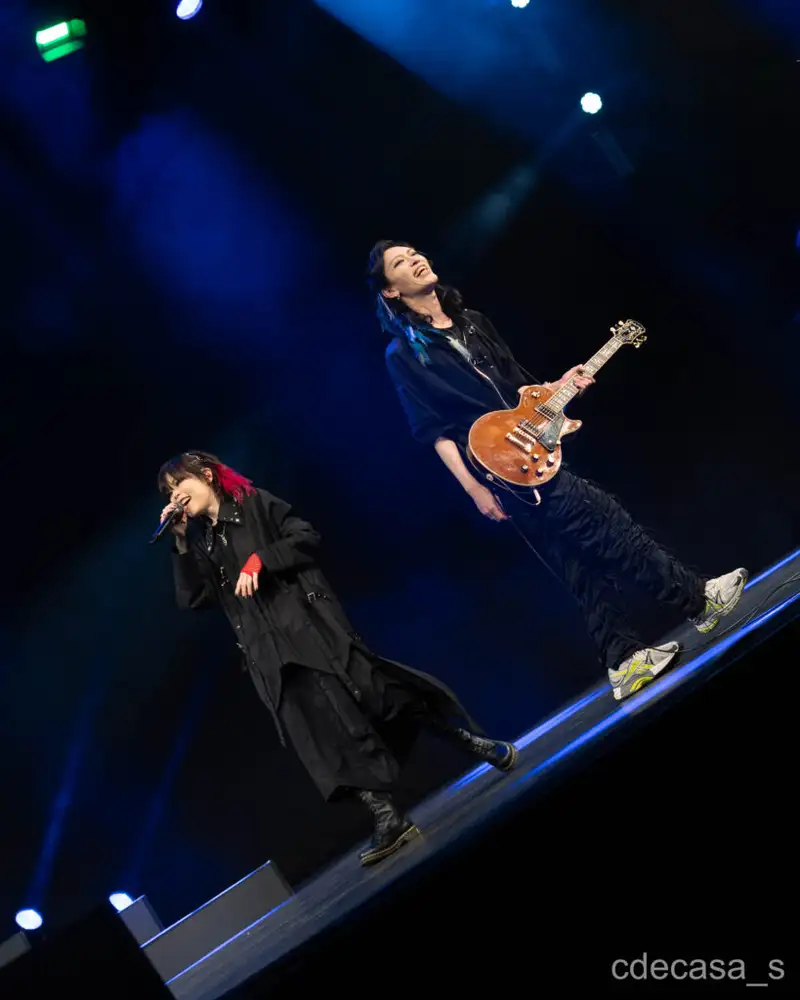
Qnews24h insight
A closer look at NANO’s perspective reveals a crucial structural distinction in how global music markets develop. The popular consensus often criticizes the Japanese music industry for being "slow" or "late" to go global compared to South Korea. However, this comparison overlooks the fundamental economic realities of both nations. Japan possesses the second-largest music market in the world, historically dominated by physical sales (CDs and vinyl) and a highly profitable domestic touring circuit. Because Japanese labels could easily achieve profitability within their own borders, the immense financial and logistical risks of overseas expansion simply made little business sense.
Consequently, the globalization of Japanese music occurred as an organic pull from foreign consumers rather than a push from domestic corporations. Anime served as the trojan horse. Soundtracks for series like Detective Conan (featuring legendary J-rock band B'z) and the original 2003 Fullmetal Alchemist (featuring Asian Kung-Fu Generation's iconic rock anthem "Rewrite") introduced millions of international viewers to Japanese rock music.
This organic pipeline created a unique paradox for artists. In Japan, being labeled strictly as an "anisong" singer can sometimes pigeonhole an artist within a specific subculture, leading some musicians to distance themselves from the term. NANO's approach to this label is remarkably pragmatic and healthy. Rather than fighting the designation or letting it limit her, she adopts a fluid, dual-identity strategy: performing as a proud anime representative in front of convention audiences while asserting her broader identity as a "rock and roller" in other musical spaces. This adaptive, "chameleon" approach is likely the most sustainable attitude for contemporary Japanese musicians seeking to balance global fan service with creative freedom.
Sources
This article is developed from an original interview conducted with NANO during her appearance at the DoKomi convention in Düsseldorf, Germany, as reported by Anime Corner.
Frequently Asked Questions
Who is NANO?
NANO is a prominent bilingual Japanese-American singer and songwriter known for her powerful rock vocals. She frequently performs theme songs for various anime series and is celebrated for her ability to sing fluently in both English and Japanese.
Why did J-pop take longer to achieve global popularity compared to K-pop?
Unlike South Korea, which has a relatively small domestic music market and had to actively target global audiences from the beginning, Japan boasts the second-largest music market in the world. Because Japanese artists and record labels could remain highly profitable solely within Japan, there was historically little incentive to take on the financial risks of international expansion.
What are NANO's biggest musical and anime inspirations?
NANO has cited the rock-heavy soundtracks of Detective Conan (specifically artists like B'z) as her initial spark for singing. She was also deeply inspired by the music of the 2003 anime series Fullmetal Alchemist, particularly the opening theme "Rewrite" by Asian Kung-Fu Generation, which she has covered during her career.
How can fans listen to NANO's latest music?
NANO's latest EP, titled aИomaly, is currently available across all major digital streaming and music platforms.
Why it matters
The structural shift of Japanese music from domestic insularity to global accessibility directly affects how international fans consume media. By understanding the logistical and cultural hurdles Japanese artists face, international organizers and audiences can better support the expanding network of global J-rock touring.
Background
NANO's career began as a bilingual creator on Niconico before her major-label debut in Japan. When she first performed at Germany's DoKomi 13 years ago, Japanese music agencies had almost no infrastructure for international touring. As an early pioneer, NANO proved the viability of overseas fanbases, helping establish a touring blueprint for younger groups like MADKID and paving the way for the current wave of international J-pop concerts.
The rise of J-pop and J-rock abroad is a fascinating study in market pull versus corporate push. While K-pop succeeded through top-down government and corporate branding, Japan's cultural footprint expanded organically through the global popularity of anime. For artists like NANO, success lies in balancing the lucrative, fan-driven 'anisong' brand with their own independent musical identities.
References
Editorial information
The editorial team reviews sources, adds context, and structures stories so readers can understand the news more clearly.
Article from QNEWS24H
Comments
(0)No comments yet. Be the first to share your thoughts.