Why Microsoft's 8GB RAM Windows 11 Surface Laptop Struggles With Basic Multitasking
- Global memory chip shortages and price spikes driven by the AI boom have forced major PC brands to re-introduce 8GB RAM base configurations to control retail costs.
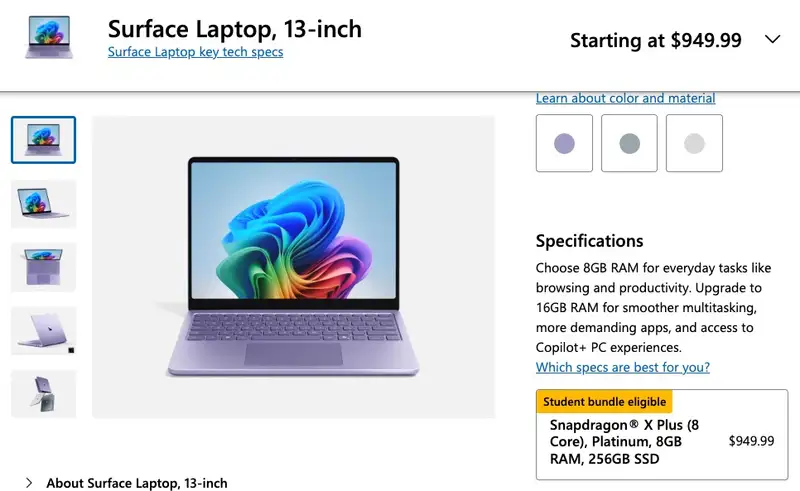
- Real-world tests of Microsoft's $950 Surface Laptop (2026) with 8GB RAM show frequent lagging, micro-stutters, and poor multitasking capability under standard office workloads.
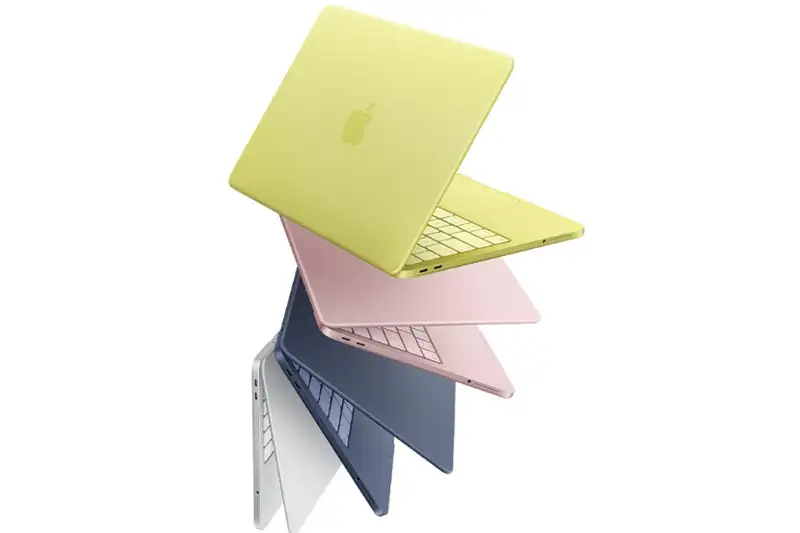
- Comparative analysis shows Apple's MacBook Neo with 8GB RAM handles resource limitations much more efficiently than Windows 11 on similar hardware specifications.
The dream of a seamless, modern computing experience is clashing with harsh economic realities as the industry witnesses the return of the 8GB RAM bottleneck. For several years, tech analysts and consumers alike agreed that 16GB of system memory was the absolute baseline for a future-proof, fluid multitasking workflow. Yet, as global semiconductor supply chains shift under the immense pressure of the artificial intelligence boom, PC manufacturers are quietly taking a step backward. The most glaring casualty of this trend is Microsoft's newest Surface Laptop 13-inch, which despite a premium price tag, struggles to maintain basic performance standards due to a downgraded base memory configuration.
Quick summary
- AI-Driven Market Shift: Skyrocketing DRAM and NAND prices have forced PC manufacturers to lower base configurations to 8GB RAM to maintain profit margins, even on premium devices.
- Performance Bottlenecks: Real-world testing reveals that Windows 11 struggles on 8GB RAM, causing noticeable lagging, app freezes, and slow response times during standard office multitasking.
- The macOS Contrast: Comparative tests show that Apple's macOS and unified memory architecture on the MacBook Neo handle resource constraints much more efficiently than Microsoft's operating system.
Why it matters
For everyday users, professionals, and enterprise buyers, this development changes the calculation for hardware purchases. Modern workflows are increasingly reliant on heavy, web-based SaaS platforms like Microsoft Teams, Slack, and Google Workspace, all of which are notorious memory hogs. Buying a premium device that struggles to handle these daily tasks out of the box creates friction, forcing users to actively manage their system resources by closing browser tabs and shutting down background apps. Furthermore, this trend exposes a significant gap between Microsoft's ambitious marketing of AI-powered PCs and the constrained hardware realities being delivered to mainstream consumers.
Background
To understand how the PC market arrived at this point, we must look at the global memory chip landscape. Over the past year, major semiconductor manufacturers like Samsung, SK Hynix, and Micron have faced soaring production costs and supply constraints, driven largely by the massive demand for high-bandwidth memory (HBM) used in enterprise AI servers. Consequently, the retail prices of consumer-grade DRAM and NAND flash memory have steadily climbed.
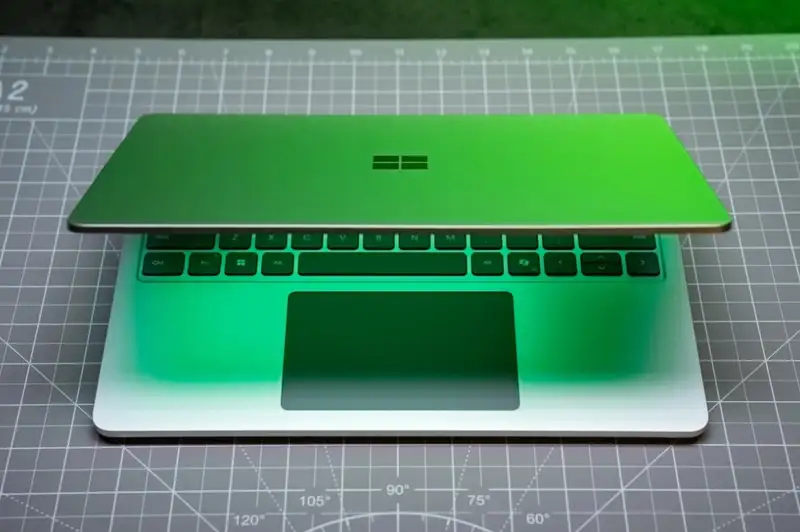
This economic pressure led to an ironic reversal. Last year's iteration of the Surface Laptop 13-inch was widely praised as an excellent Windows ultraportable, offering a highly capable 16GB RAM configuration for approximately $900. Fast forward to the 2026 model: while Microsoft retained the stellar build quality, excellent keyboard, trackpad, and long battery life of its predecessor, the baseline configuration was slashed to just 8GB of RAM, while the entry price actually climbed to $950.
This dynamic is not unique to Microsoft. At Computex 2026, other PC hardware heavyweights, including Dell, Acer, and ASUS, also unveiled their newest lineups with baseline options starting at 8GB of RAM. Microsoft officially states that 4GB of RAM is the minimum requirement to run Windows 11, but practical testing shows that this threshold is purely theoretical, failing to represent the actual demands of modern software environments.
Qnews24h insight
The core issue highlighted by recent testing on the Surface Laptop is not simply a hardware shortage; it is a fundamental architectural optimization gap. When Apple's VP of Worldwide Product Marketing, Bob Borchers, controversially claimed in late 2023 that 8GB of unified memory on Apple Silicon is equivalent to 16GB on a Windows PC, many dismissed it as marketing hyperbole. However, real-world side-by-side evaluations between the 8GB MacBook Neo and the 8GB Surface Laptop tell a different story.
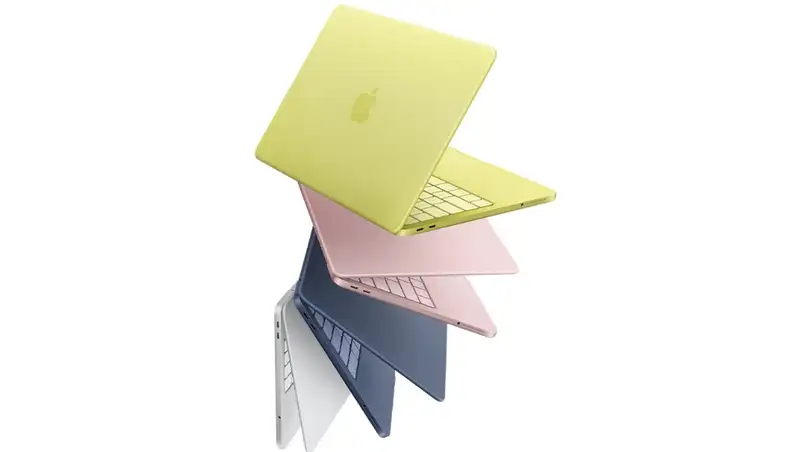
Under a moderate workload—such as active participation in a video call on Microsoft Teams while maintaining roughly ten open browser tabs, alongside Slack and Signal—the Windows 11 system experiences frequent micro-stutters and performance drops. The MacBook Neo, running macOS under the same conditions, manages system memory swap files far more gracefully, resulting in a noticeably smoother experience.
This brings to light a troubling paradox for Microsoft. The tech giant is currently spending billions of dollars to position itself at the absolute forefront of local AI computing, yet its flagship operating system is currently struggling to optimize basic, lightweight office applications on a nearly $1,000 piece of company-branded hardware. Until Microsoft addresses the underlying memory management efficiency within Windows 11, or memory prices stabilize enough to make 16GB the standard once again, consumers should approach base-model 8GB Windows devices with caution.
Sources
This article is developed based on comprehensive performance evaluations and market reporting originally published by soha.vn and The Verge.
Frequently Asked Questions
Is 8GB of RAM enough for Windows 11 in 2026?
While Microsoft lists 4GB as the absolute minimum requirement, real-world tests indicate that 8GB of RAM is barely sufficient for basic single-tasking. If you engage in typical office multitasking (such as video calls, opening more than 10 browser tabs, and keeping chat apps open), Windows 11 on 8GB of RAM will likely experience noticeable stuttering and delays.
Why are laptop manufacturers reverting to 8GB of RAM?
Due to the massive growth of artificial intelligence technology, semiconductor manufacturers are dedicating more resources to high-end enterprise AI chips. This has caused a shortage and price hike for consumer-grade memory (DRAM/NAND). To avoid selling laptops at a loss or raising prices too high, manufacturers are cutting the base RAM configuration back to 8GB.
Does Apple's macOS handle 8GB of RAM better than Windows 11?
Yes. Comparative testing shows that macOS, paired with the unified memory architecture of Apple Silicon, manages system resources and memory swapping much more efficiently. In situations where a Windows 11 laptop with 8GB RAM starts to stutter and lag, a similarly equipped MacBook Neo continues to offer a relatively smooth, responsive user experience.
Why it matters
The re-emergence of 8GB RAM as a standard baseline on premium laptops represents a consumer step backward. In an era where web apps and remote work suites are highly demanding, users are forced to pay more for hardware that requires active resource rationing, widening the gap between modern software needs and affordable, consumer-grade PC hardware.
Background
Historically, 16GB RAM was becoming the accepted standard for mid-to-high-end laptops. However, explosive growth in AI infrastructure has strained global DRAM and NAND supply, driving up raw hardware costs. Consequently, at Computex 2026, manufacturers like Dell, Acer, Asus, and Microsoft adjusted by shipping baseline systems with 8GB of RAM, despite Microsoft's own push for memory-heavy next-gen AI operating system features.
Microsoft's inability to optimize Windows 11 for 8GB RAM on its own flagship hardware highlights a deeper systemic issue. The company is heavily marketing AI and futuristic features, yet failing to deliver a smooth baseline experience for standard, everyday tasks. This mismatch risks driving frustrated productivity-focused buyers toward Apple's more memory-efficient ecosystem.
References
Editorial information
The editorial team reviews sources, adds context, and structures stories so readers can understand the news more clearly.
Article from QNEWS24H
Comments
(0)No comments yet. Be the first to share your thoughts.