Microsoft's Multi-Billion Dollar AI Bet Strains Core Businesses and Workforce

- Microsoft's multi-billion dollar investment in AI, estimated at $190 billion this year for infrastructure, is intensifying pressure on its core businesses.
- Traditional productivity tools like Microsoft 365 and developer platform GitHub face disruption as users increasingly turn to dedicated AI chatbots for tasks, necessitating...
- Azure, Microsoft's cloud computing arm, is experiencing severe capacity shortages due to surging AI infrastructure demand, leading to internal resource allocation debates and...
- The company is undergoing significant internal restructuring, including leadership changes and a more demanding performance review system, reminiscent of past controversial...
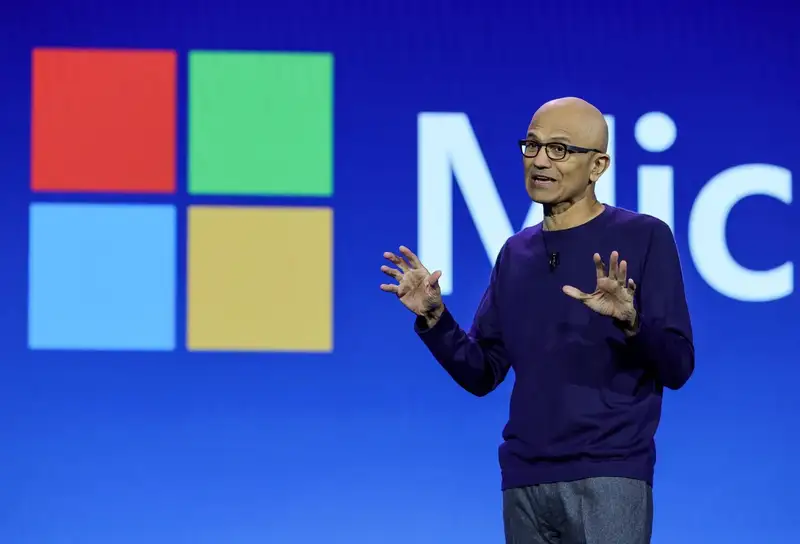
Microsoft, once lauded for its pioneering leap into the artificial intelligence frontier, finds itself navigating increasingly turbulent waters. While CEO Satya Nadella's early and aggressive investment in generative AI, particularly through OpenAI, positioned the company as a leader, this strategic pivot is now revealing significant pressure points across its most vital business segments. The vast financial outlay and relentless focus on AI are forcing Microsoft to confront operational challenges, evolving user habits, and a shifting internal culture, prompting investor skepticism and deep introspection within the Redmond giant.
Quick summary

- Microsoft's multi-billion dollar investment in AI, estimated at $190 billion this year for infrastructure, is intensifying pressure on its core businesses.
- Traditional productivity tools like Microsoft 365 and developer platform GitHub face disruption as users increasingly turn to dedicated AI chatbots for tasks, necessitating internal overhauls.
- Azure, Microsoft's cloud computing arm, is experiencing severe capacity shortages due to surging AI infrastructure demand, leading to internal resource allocation debates and reliance on rivals for support.
- The company is undergoing significant internal restructuring, including leadership changes and a more demanding performance review system, reminiscent of past controversial practices.

Why it matters
The challenges facing Microsoft’s AI strategy extend far beyond its internal operations, signaling crucial shifts for the entire tech ecosystem and the broader economy. For businesses and individual users, the potential erosion of traditional software strongholds like Microsoft 365 could redefine workplace productivity, pushing for greater integration of AI directly into workflows and forcing competitors to innovate or risk obsolescence. For developers, the evolving landscape around GitHub highlights the rapid commoditization of code generation and the urgency for platforms to offer more than just repositories.
More broadly, Microsoft's struggle with Azure capacity underscores the immense, often unseen, infrastructure demands of the AI revolution. This not only impacts Microsoft’s ability to serve its own products and partners but also raises questions about the scalability and sustainability of AI development across the industry. Should a tech titan like Microsoft struggle to meet demand, it portends potential bottlenecks for countless companies building on cloud AI. The internal cultural changes, including a return to a more performance-driven, potentially fear-based management style, could also set a precedent for how large tech companies manage talent amidst intense competitive pressures and rapid technological shifts, affecting job markets and corporate culture globally.
Background
Satya Nadella ascended to the helm of Microsoft in 2014, steering the company through a significant transformation focused on cloud computing and, more recently, artificial intelligence. His visionary leadership saw Microsoft making substantial early investments in OpenAI, culminating in a highly publicized partnership that integrated generative AI into products like Bing in February 2023. At the time, Nadella boldly declared a new era of competition, positioning Microsoft as a formidable challenger to Google's search dominance, a move widely applauded for its foresight.
The company further solidified its AI leadership by navigating the complex internal strife at OpenAI in late 2023, which saw Nadella emerge with enhanced credibility. This early mover advantage and strategic alliance were expected to yield significant returns, propelling Microsoft to the forefront of the AI race. However, as the initial euphoria subsides, the scale and speed of this AI transformation are beginning to exert considerable strain on Microsoft’s established business pillars. This includes the acquisition of GitHub in 2018, which was seen as a strategic move to integrate developers into Microsoft’s ecosystem, now facing its own AI-driven pressures.

Historically, Microsoft 365, comprising Word, Excel, and PowerPoint, has been the linchpin of corporate productivity, a ubiquitous presence in offices worldwide. Azure, its cloud computing service, has consistently been a high-growth engine, providing the foundational infrastructure for countless businesses. The current challenges represent a significant departure from an era where these core products enjoyed relatively unchallenged market dominance, highlighting a seismic shift in user expectations and technological capabilities driven by the very AI innovations Microsoft championed.
Qnews24h insight
Microsoft's current predicament offers a crucial insight into the double-edged sword of rapid technological disruption, even for the most established giants. While Satya Nadella's early AI bet was undeniably strategic, the sheer scale of the investment and the pace of integration appear to be outrunning the company's internal capacity and established operational models. The internal dissent and leadership reshuffling signal not just growing pains, but a fundamental tension between maintaining existing revenue streams from mature products and aggressively pursuing a transformative, capital-intensive future.
The reliance on rivals like Amazon for Azure capacity, and the internal debate over prioritizing external clients versus Microsoft's own products, exposes the very real trade-offs involved in leading an AI revolution. It suggests that even companies with seemingly limitless resources must make difficult choices about allocation and growth. Furthermore, the reported return to a more 'fear-based' or 'stack ranking' performance culture indicates a potentially uncomfortable but perhaps necessary response to intense market pressures. This approach, while controversial, highlights a move towards a more demanding, results-oriented environment, reflecting the high stakes involved in securing dominance in the generative AI era. It's a calculated risk: drive innovation faster, but at what cost to employee morale and long-term stability?

The AI Investment Crunch and Internal Questions
The estimated $190 billion Microsoft plans to pour into AI infrastructure this year is a staggering figure, unprecedented even for a company of its immense scale. This massive outlay is not without internal skepticism. Employees are reportedly questioning the prudence of such expenditures, especially as the flagship AI product, Copilot, is perceived by some as lagging behind competitors like ChatGPT and Claude in certain functionalities. This internal scrutiny underscores a broader tension between the strategic imperative to lead in AI and the practical realities of execution and immediate return on investment.
Such substantial capital deployment also raises questions about resource allocation across the company's vast portfolio. Every dollar invested in AI infrastructure is a dollar potentially diverted from other areas, impacting development cycles or operational improvements in non-AI segments. This situation creates a challenging environment for leadership, who must justify these investments while simultaneously managing the operational fallout on established, revenue-generating product lines.
Microsoft 365 Under Threat: Shifting User Habits

For decades, Microsoft 365 (formerly Office) has been synonymous with workplace productivity. Word for documents, Excel for spreadsheets, and PowerPoint for presentations have formed the bedrock of daily office routines for millions. However, the advent of sophisticated AI chatbots and specialized AI tools is fundamentally altering how users approach these tasks. Instead of opening Word, users might now draft initial content in a chatbot; complex data analysis might begin with an AI assistant before touching Excel.
This shift poses an existential threat to the traditional productivity suite market, valued at $58 billion according to Gartner. While Microsoft asserts that its customers continue to use Microsoft 365, often in conjunction with Copilot, the competitive battleground has undeniably moved. The challenge for Microsoft is to ensure that its integrated AI solutions within 365 remain compelling enough to prevent users from migrating to standalone AI tools that could eventually offer a more seamless, end-to-end experience outside the Microsoft ecosystem. This necessitates a radical reimagining of what a 'productivity suite' truly means in an AI-first world.
GitHub's Growing Pains and Fierce Competition
Microsoft's acquisition of GitHub in 2018 was a strategic masterstroke, granting it a significant foothold in the developer community. The subsequent launch of GitHub Copilot further cemented its early advantage in AI-powered code generation. Yet, this lead is now being vigorously challenged. Emerging platforms like Cursor and Claude Code are rapidly gaining traction among engineers, offering alternative or, in some cases, more specialized AI coding assistance. This intensifies the pressure on GitHub to continuously innovate and evolve.

Beyond competitive threats, GitHub is also grappling with operational strains directly attributable to the surge in AI demand. The source material highlights multiple significant outages experienced by the platform this year. These incidents not only erode user trust but also underscore the immense computational and infrastructure demands placed on development platforms when integrating sophisticated AI functionalities. Internal discussions at Microsoft reportedly revolve around the need for a comprehensive overhaul of GitHub to ensure it remains competitive and robust in this rapidly changing environment.
Azure's Capacity Dilemma: A Strategic Bottleneck
Perhaps the most critical challenge confronting Microsoft's AI ambitions lies within Azure, its cloud computing backbone. Azure has been a consistent growth driver, but the insatiable demand for AI infrastructure has pushed its capacity to the brink. Microsoft faces a profound dilemma: how to allocate finite computing resources among its own internal products, its research divisions, and its vast array of external cloud customers. This internal debate is reportedly intense, with one executive questioning the priority given to external clients like Adobe over Microsoft’s own revenue-generating Microsoft 365 division.
The severity of the capacity shortage is starkly illustrated by Microsoft's need to seek assistance from competitors. Following GitHub's outages, Amazon reportedly provided support to alleviate pressure, and Microsoft even considered leasing infrastructure from Oracle before security and compliance concerns scuttled the deal. This situation highlights the unprecedented strain on global cloud infrastructure and the strategic imperative for companies to secure sufficient compute power to fuel their AI initiatives. Azure's ability to scale quickly and efficiently will be a defining factor in Microsoft's long-term AI success.
Leadership Reshuffle and a Shifting Corporate Culture
The intense pressure from the AI pivot is also precipitating significant organizational and cultural shifts within Microsoft. Satya Nadella has restructured leadership, appointing Judson Althoff as CEO of the commercial business, a move designed to free up Nadella and key engineering leaders to focus almost exclusively on AI strategy. In an internal memo, Nadella characterized this period as a 'foundational AI shift,' underscoring the magnitude of the transformation.
Beyond leadership changes, Microsoft is reportedly streamlining senior management teams, reassigning long-serving executives, and elevating new talent. Crucially, the company is also overhauling its performance review system, a development that has drawn comparisons to the controversial 'stack ranking' system from the Steve Ballmer era. Some former leaders suggest this new process, coupled with directives to reduce staff in certain high-level positions, reflects a harsher, more demanding work culture mirroring broader trends in large tech corporations. This cultural pivot, described by one former executive as 'the old Microsoft returning,' suggests a heightened sense of urgency and a potentially more cutthroat internal environment driven by the high stakes of the AI race.
Sources
FAQ
Q: Why is Microsoft's AI strategy causing internal pressure?
A: Microsoft's aggressive multi-billion dollar investment in AI infrastructure (estimated at $190 billion this year) is stretching its resources and creating operational strains. Core businesses like Microsoft 365, GitHub, and Azure are struggling to adapt to shifting user behaviors towards AI tools and meet the surging demand for AI computing power, leading to internal questions and resource allocation debates.
Q: How is AI impacting Microsoft's traditional products like Microsoft 365?
A: AI is changing how users perform daily tasks. Instead of directly using Word or Excel, many are starting their work in AI chatbots or specialized tools. This shift threatens the long-held dominance of traditional productivity suites, forcing Microsoft to rapidly integrate AI like Copilot into 365 to remain competitive against standalone AI solutions.
Q: What challenges is Azure facing due to AI demand?
A: Azure, Microsoft's cloud platform, is experiencing severe capacity shortages as the demand for AI infrastructure, particularly for advanced computations, has outstripped its ability to scale. This has led to internal debates about how to prioritize resource allocation between Microsoft's own products and its external cloud customers, and in some cases, has forced Microsoft to seek compute support from rival cloud providers.
Why it matters
The challenges facing Microsoft’s AI strategy extend far beyond its internal operations, signaling crucial shifts for the entire tech ecosystem and the broader economy. For businesses and individual users, the potential erosion of traditional software strongholds like Microsoft 365 could redefine workplace productivity, pushing for greater integration of AI directly into workflows and forcing competitors to innovate or risk obsolescence. For developers, the evolving landscape around GitHub highlights the rapid commoditization of code generation and the urgency for platforms to offer more than just repositories. More broadly, Microsoft's struggle with Azure capacity underscores the immense,...
Background
Satya Nadella ascended to the helm of Microsoft in 2014, steering the company through a significant transformation focused on cloud computing and, more recently, artificial intelligence. His visionary leadership saw Microsoft making substantial early investments in OpenAI, culminating in a highly publicized partnership that integrated generative AI into products like Bing in February 2023. At the time, Nadella boldly declared a new era of competition, positioning Microsoft as a formidable challenger to Google's search dominance, a move widely applauded for its foresight. The company further solidified its AI leadership by navigating the complex internal strife at OpenAI in late 2023, which...
Microsoft's current predicament offers a crucial insight into the double-edged sword of rapid technological disruption, even for the most established giants. While Satya Nadella's early AI bet was undeniably strategic, the sheer scale of the investment and the pace of integration appear to be outrunning the company's internal capacity and established operational models. The internal dissent and leadership reshuffling signal not just growing pains, but a fundamental tension between maintaining existing revenue streams from mature products and aggressively pursuing a transformative, capital-intensive future. The reliance on rivals like Amazon for Azure capacity, and the internal debate over...
References
- 1.znews.vn
Editorial information
The editorial team reviews sources, adds context, and structures stories so readers can understand the news more clearly.
Article from QNEWS24H
Comments
(0)No comments yet. Be the first to share your thoughts.