Archaeologists Identify Likely First Known Direct Victim of a Medieval Trebuchet Strike

- Forensic examination of 14th-century remains known as Skeleton 150 from Stirling Castle revealed over 160 bone fractures, pointing to a massive blunt-force impact.
- The unprecedented level of physical destruction—including 61 skull fractures—represents the first confirmed direct human casualty of a medieval trebuchet.
- The traumatic injuries are strongly linked to the 1304 Siege of Stirling Castle and the deployment of King Edward I's legendary siege engine, 'Warwolf'.
When archaeologists excavated beneath the royal chapel of Scotland's historic Stirling Castle, they expected to uncover the grim realities of medieval warfare, but one particular set of human remains presented an unprecedented forensic puzzle. Cataloged as Skeleton 150, the 14th-century warrior exhibited skeletal destruction so extreme that modern paleopathologists could initially only compare the injuries to victims struck by high-speed trains or catastrophic motor vehicle collisions. Further historical and biomechanical analysis has now pointed researchers toward an extraordinary conclusion: the individual represents what is believed to be the first confirmed direct casualty of a counterweight trebuchet in the archaeological record.
Quick summary
- Bioarchaeologists examining 14th-century remains known as Skeleton 150 from Stirling Castle documented over 160 distinct bone fractures, indicating a massive, high-velocity blunt-force impact.
- The extreme pattern of skeletal trauma—including 61 skull fractures and extensive chest devastation—matches kinetic damage that could only be generated in the medieval era by heavy siege artillery.
- Historical evidence strongly links the fatal injury to the pivotal 1304 Siege of Stirling Castle, during which England's King Edward I deployed "Warwolf" (Loup-de-Guerre), widely considered the largest counterweight trebuchet ever constructed.




Why it matters

For centuries, the devastating physical power of medieval siege engines has been documented primarily through royal chronicles, military treatises, and artistic depictions. While historians have long understood the mechanical efficiency of counterweight trebuchets—which revolutionized siege warfare across Europe and the Mediterranean beginning in the late 12th century—direct physical evidence of their kinetic toll on human anatomy has remained virtually absent from the bioarchaeological record.

Confirming a direct strike on human remains bridges the gap between historical military manuscripts and modern physical anthropology. It provides empirical verification of how high-velocity siege projectiles interacted with defensive fortifications and the soldiers defending them. Furthermore, the findings demonstrate how modern forensic pathology techniques can resolve long-standing historical questions about specific military engagements.

Background

The remains were originally excavated in 1997 alongside several other individuals buried beneath the floor of the chapel at Stirling Castle. The location of the burials was immediately notable to researchers; standard practice of the era typically relegated battlefield casualties to external mass graves or churchyards outside the fortifications. Burial inside the chapel grounds suggested that these individuals held notable status or fell during an active siege when leaving the castle walls was impossible.

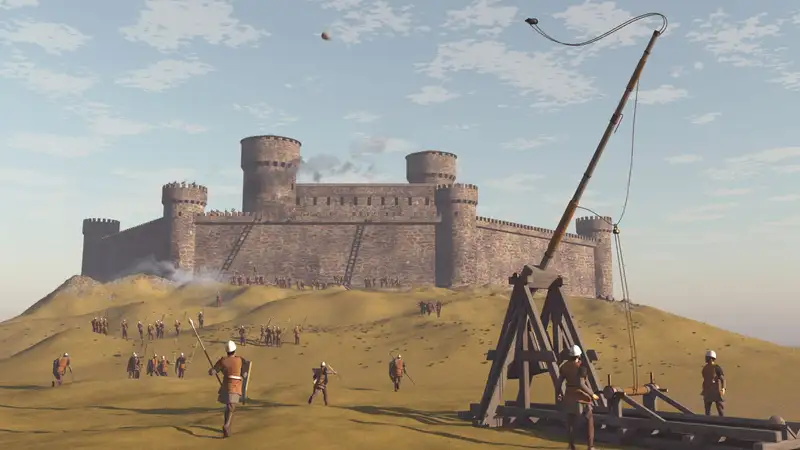
Stirling Castle stood as one of the most crucial strategic strongholds during the Wars of Scottish Independence, changing hands repeatedly between Scottish and English forces. In the spring and summer of 1304, King Edward I of England besieged the fortress with an extensive array of siege machinery. Edward famously commissioned the construction of "Warwolf," an enormous counterweight trebuchet requiring dozens of carpenters and months to assemble. Historical accounts from the period, including the Flores Historiarum, recorded that the massive machine hurled boulders capable of piercing outer curtain walls with catastrophic force.

Forensic Anatomy of a Catastrophic Impact

The extent of trauma sustained by Skeleton 150 was detailed by bioarchaeologist Dr. Jo Buckberry of the University of Bradford, in collaboration with Historic Environment Scotland, and presented at the European Paleopathology Association meeting. Unlike soldiers bearing isolated sword cuts, spear punctures, or low-velocity arrow wounds, Skeleton 150 had suffered widespread structural obliteration.

Over 160 Documented Fractures

Forensic examination revealed more than 160 separate fractures across the skeleton. The catastrophic damage included:

- Extensive Cranial Devastation: 61 distinct fractures across the skull, indicating violent perimortem impact rather than gradual post-burial crushing.
- Torso and Rib Cage Destruction: Roughly five dozen irregular, high-energy fractures distributed throughout the rib cage.
- Severe Appendicular Damage: A completely ruined lower limb and a jagged, traumatic break through the shoulder girdle.


According to researchers, the directionality and severity of the fractures suggest the warrior was struck from behind by an object possessing immense mass and velocity. In modern clinical settings, comparable whole-body trauma profiles are almost exclusively associated with high-speed vehicular crashes or falls from extreme heights onto unyielding surfaces. In the context of early 14th-century Scotland, the only physical mechanism capable of generating such kinetic energy was a boulder or fragment launched by a massive counterweight siege engine.

The Role of Warwolf and Siege Artillery
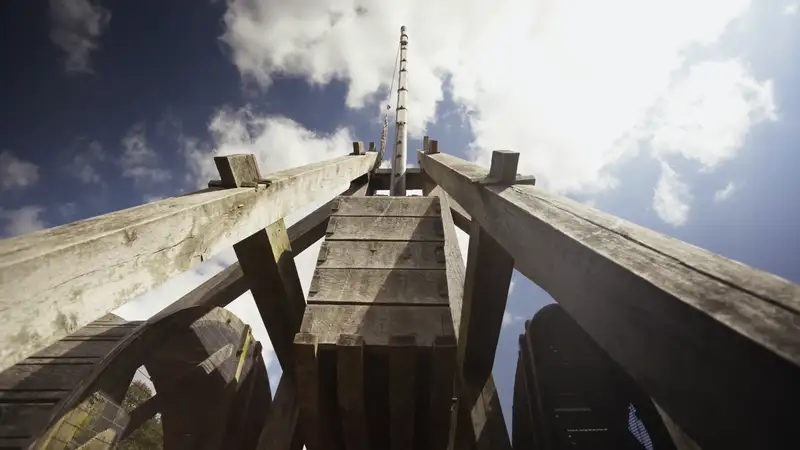
Counterweight trebuchets represented the pinnacle of pre-gunpowder artillery engineering. Unlike earlier traction trebuchets powered by teams of men pulling ropes, counterweight engines utilized massive boxes filled with tons of earth and stone to whip a long throwing arm forward, releasing projectiles weighing hundreds of pounds at high speeds.
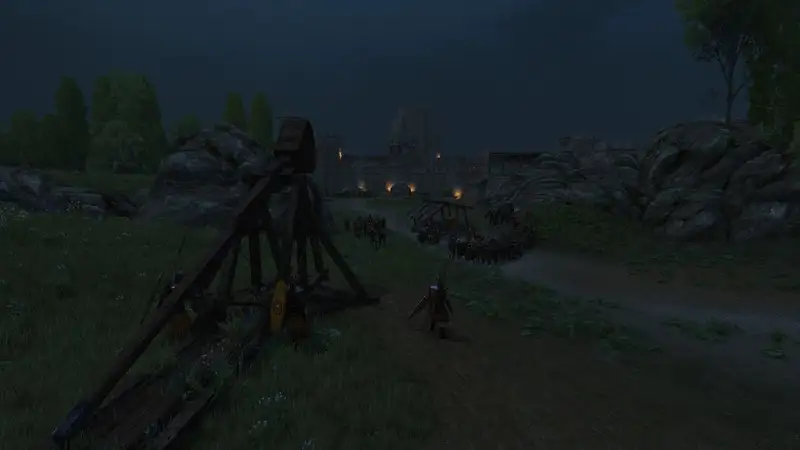
During the 1304 siege, Edward I's artillery barrage focused heavily on breaching Stirling Castle's defensive perimeter. When massive stone projectiles struck stone battlements, the resulting impact not only pulverized masonry but also created high-velocity secondary fragmentation. Whether Skeleton 150 was hit directly by an incoming boulder or struck by massive displaced wall masonry propelled inward by the blast, the outcome was immediate and fatal.

Qnews24h insight

The identification of Skeleton 150 underscores the value of multidisciplinary historical research, where osteoarchaeology, structural engineering, and primary medieval documentation intersect. Historical chronicles are notoriously prone to exaggeration, particularly when detailing the fearsome capabilities of royal siege engines and military triumphs. However, forensic osteology provides an objective, unvarnished counterweight to political narrative.
While the physical evidence strongly correlates with the well-documented bombardment of Stirling Castle in 1304, researchers remain methodologically cautious. The analysis establishes beyond reasonable doubt that the casualty died from an extreme-velocity blunt trauma event unique to siege weaponry of the era. This discovery not only humanizes the terrifying reality of medieval artillery warfare but also establishes a scientific baseline for identifying siege artillery trauma in future archaeological digs.
Sources
- PC Gamer: Reporting on paleopathological analysis of Stirling Castle remains and siege warfare history.
- Science Magazine / American Association for the Advancement of Science (AAAS): Academic coverage of Dr. Jo Buckberry's research presentation at the European Paleopathology Association meeting.
- Historic Environment Scotland & University of Bradford: Archaeological and osteological records from Stirling Castle chapel excavations.
Frequently Asked Questions
Who was Skeleton 150?
Skeleton 150 is the archaeological designation for a 14th-century male warrior unearthed in 1997 beneath the chapel of Stirling Castle in Scotland, notable for exhibiting catastrophic, high-energy skeletal trauma.
What makes researchers believe he was killed by a trebuchet?
The skeleton suffered over 160 perimortem fractures, including 61 skull fractures and extensive thoracic destruction. Modern bioarchaeologists noted that such trauma patterns in 1304 could only be produced by high-velocity, high-mass impacts characteristic of heavy siege artillery projectiles.
What was 'Warwolf'?
Warwolf (Loup-de-Guerre) was an exceptionally large counterweight trebuchet constructed by order of England's King Edward I during the 1304 Siege of Stirling Castle. It is widely considered the largest medieval siege engine ever built.
Why it matters
The discovery provides the first empirical, bioarchaeological proof of the catastrophic physical effects inflicted on the human body by medieval counterweight siege artillery, bridging the gap between written chronicle accounts and physical forensic evidence.
Background
Excavated in 1997 beneath Stirling Castle's royal chapel, Skeleton 150 was among five battle-damaged bodies buried within the stronghold. Historical records confirm Stirling endured several intense sieges during the Scottish Wars of Independence, most notably the 1304 siege by England's Edward I.
The forensic confirmation of siege artillery trauma provides an objective, scientific counterpart to medieval military chronicles, demonstrating how bioarchaeology can validate historical accounts of technological warfare without relying solely on royal propaganda.
References
Editorial information
The editorial team reviews sources, adds context, and structures stories so readers can understand the news more clearly.
Article from QNEWS24H
Comments
(0)No comments yet. Be the first to share your thoughts.