The $1,000 Beach Game: How Quiet Luxury Colonized the World's Most Humble Seaside Sport
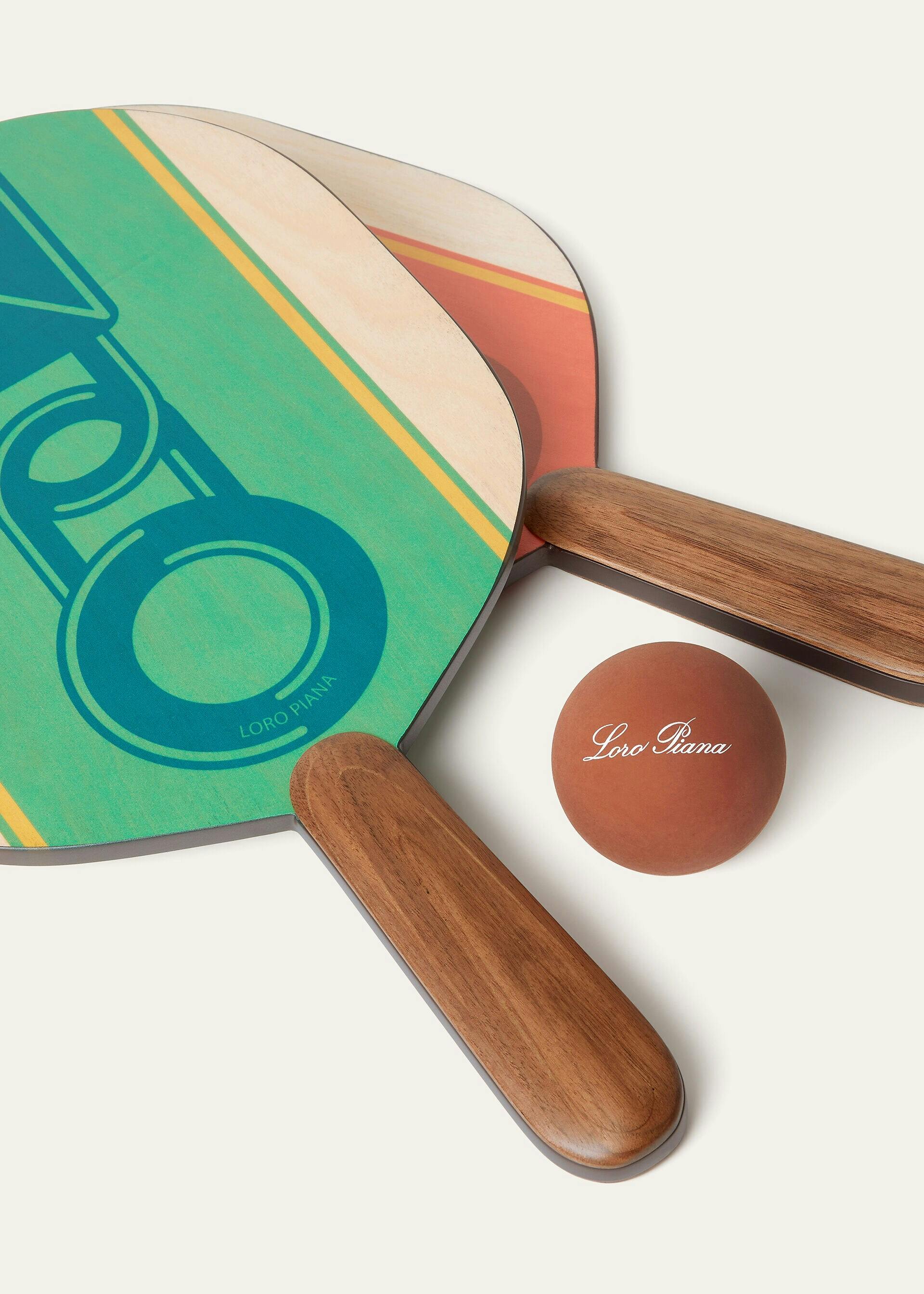
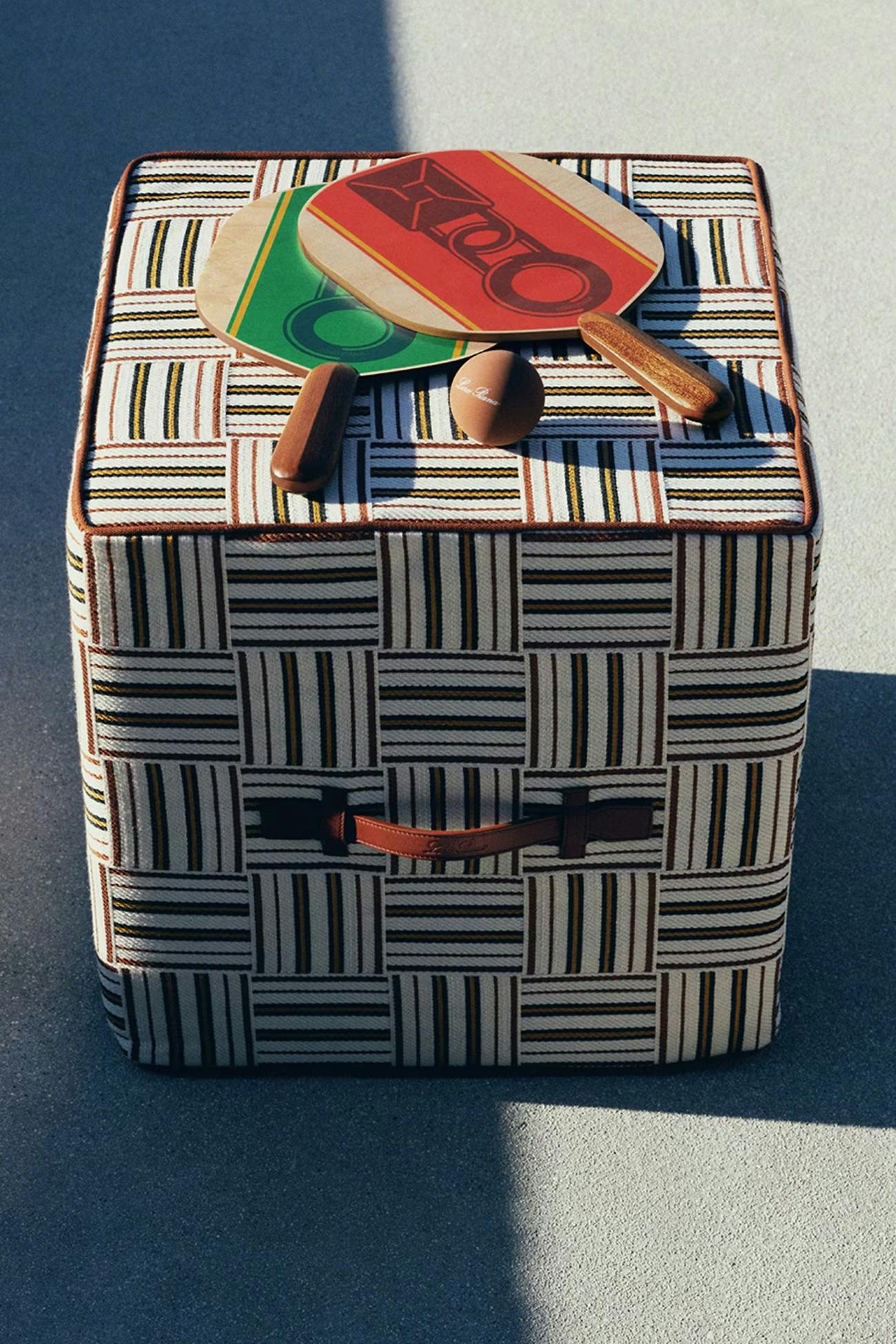
- Loro Piana has launched a beach racket set priced at $1,060, featuring beachwood bats and a carrying bag protected by its signature weatherproof Storm System fabric.
- Competitors Hermès and Bottega Veneta are pushing price points even higher, offering premium sets retailing between $1,275 and $1,300 that incorporate cork, screenprinted...
- The trend marks an evolution in the luxury sector, where brands are moving beyond apparel to offer hyper-expensive versions of everyday board games and outdoor activities to...
Summer has long possessed its own signature soundtrack: the crash of rolling waves, the cries of gulls, and the rhythmic, hollow pop-pop of a wooden beach bat meeting a small rubber ball. For generations, this democratic pastime required nothing more than a cheap plastic or plywood set purchased from a seaside kiosk for a handful of pocket change. It was a game designed for sandy hands, wet towels, and zero pretension. However, as the boundaries of traditional luxury continue to dissolve, fashion’s elite houses are rewriting the rules of leisure. The humble beach racket has officially undergone a high-end metamorphosis, turning a casual seaside scramble into a four-figure display of brand allegiance.
Quick summary
- Italian fabric giant Loro Piana has launched a beach racket set priced at $1,060, featuring beachwood bats and a carrying bag protected by its signature weatherproof Storm System fabric.
- Competitors Hermès and Bottega Veneta are pushing price points even higher, offering premium sets retailing between $1,275 and $1,300 that incorporate cork, screenprinted beechwood, and hand-wrapped calfskin leather.
- The trend marks an evolution in the luxury sector, where brands are moving beyond apparel to offer hyper-expensive versions of everyday board games and outdoor activities to capture a complete lifestyle share of the wealthy consumer.
Why it matters
This shift from high-end apparel to branded leisure products highlights a profound evolution in consumer behavior and luxury marketing. Today, the ultra-wealthy are increasingly valuing experiential luxury and daily lifestyle markers over traditional closet items. Owning a designer handbag is no longer the ultimate signifier of status when anyone can buy one online; instead, the new frontier of wealth display lies in the mundane objects of recreation.
By producing items like $1,000 beach bats, luxury houses are attempting to colonize every hour of their customers' lives. It is no longer enough to wear Loro Piana on the yacht; one must play with Loro Piana on the sand. These products act as highly visible social cues in exclusive enclaves like Saint-Tropez, Monaco, or the Hamptons—signaling membership in an elite club where even the most casual, grit-pelted activities are curated with meticulous elegance.
Background
The concept of beach tennis, paddleball, or frescobol (as it is known in Brazil) has historically been an egalitarian pursuit. Invented on the sands of Copacabana in the late 1940s, the game was designed to be low-cost and accessible, requiring minimal gear and no court boundaries. For decades, the global market for this equipment was dominated by nameless plastic manufacturers and local beachside vendors.
The luxury crossover began as a slow burn. In 2018, Chanel released a set of rare, double-C branded wooden beach rackets. At the time, these items were treated as novelty collectibles or quirky runway props rather than core retail offerings. However, the post-pandemic boom in outdoor activities and the rapid rise of the "quiet luxury" aesthetic completely transformed the market landscape. What was once a rare novelty has now matured into an expected, highly structured product category for top-tier design houses.
The Anatomy of a Four-Figure Beach Racket
To justify prices that hover around the average monthly rent in many major cities, luxury brands are leaning heavily on heritage materials and high-tech craftsmanship. The entry of Loro Piana into this arena is a prime example. Known primarily for its ultra-soft cashmere and vicuña wool, the Italian brand has constructed its $1,060 beach racket set from colorful, high-quality beachwood slabs. But the true luxury flex is the storage bag. It is crafted utilizing Loro Piana's proprietary Storm System technology—an advanced, weatherproofing treatment usually reserved for their $5,000 raincoats—ensuring that salt water and damp sea air do not damage the precious wood inside.
Other fashion houses have taken different, equally opulent design paths:
- Hermès: The Parisian house offers the "Succulent Sultan beach rackets" for $1,275. Eschewing their famous leather for this specific outdoor item, Hermès uses printed beechwood layered over a lightweight cork base, completed with a beautifully screenprinted rubber ball.
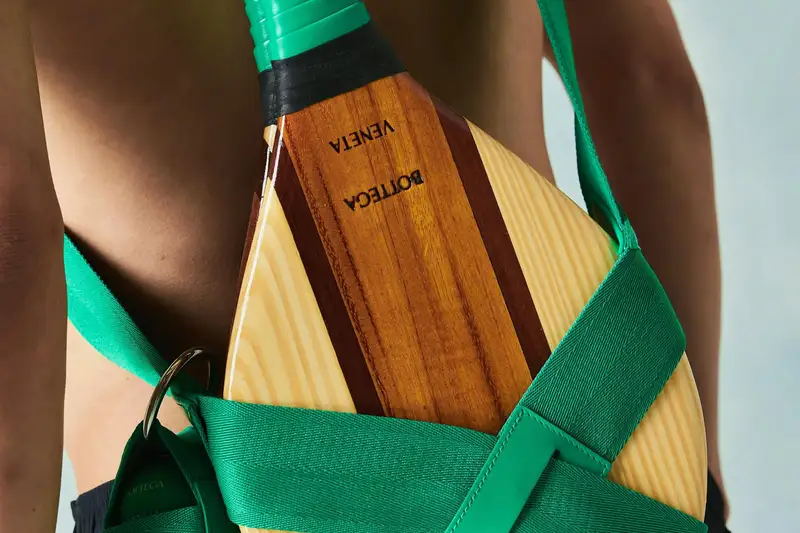
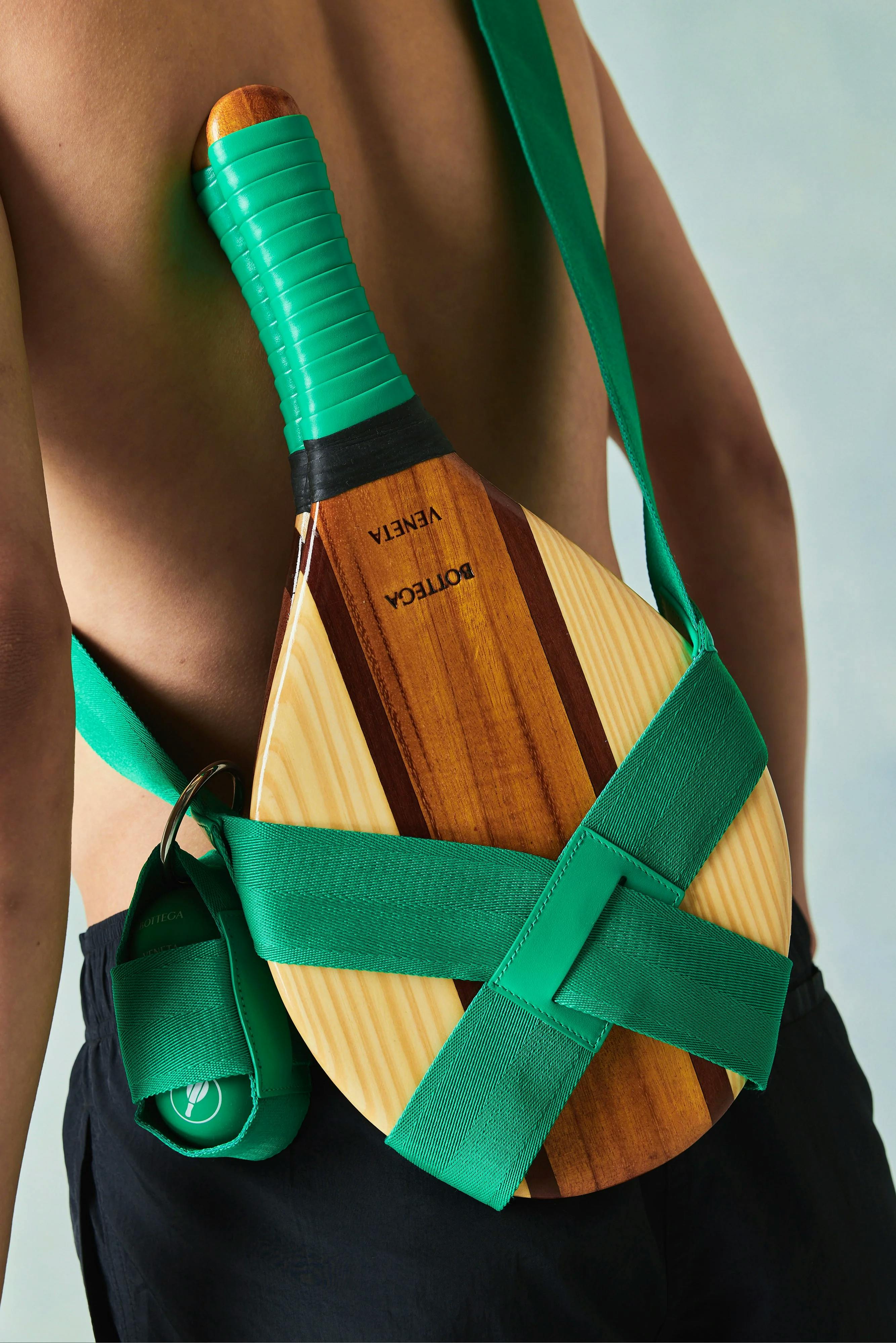
- Bottega Veneta: Priced at $1,300, Bottega Veneta's set leans directly into its artisan leather identity. Made in Brazil using recycled wood off-cuts to nod to the game's historic roots, the handles of these bats are hand-wrapped in the brand's signature, ultra-supple calfskin leather.
The Playful Pivot: Owning the Leisure Economy
Beach rackets are merely the tip of a very lucrative iceberg. Walk into any major luxury boutique today, and you will find an array of common games transformed into collector's items. Bottega Veneta maintains a dedicated section of its catalog for high-end tabletop entertainment, including a leather-encased Jenga set. Elsewhere, consumers can purchase a Miu Miu UNO card set, a Balenciaga-themed Monopoly board, or leather-bound Prada chess sets.
This pivot reflects a strategic realization: during economic uncertainty, ultra-high-net-worth individuals (UHNWIs) continue to spend, but they seek comfort, home-centered entertainment, and multi-functional lifestyle pieces. A luxury chess set or a pair of leather-wrapped beach bats functions simultaneously as a playable game, a piece of high-end home decor, and an instant conversation starter.
Qnews24h insight
The commercialization of the humble beach racket is a fascinating study in the psychology of modern luxury, yet it also exposes an inherent, almost comical tension. Beach games are fundamentally messy. They are played in environments defined by abrasive sand, corrosive salt water, and intense heat—the absolute natural enemies of fine wood, delicate screenprints, and premium calfskin leather. A game of beach tennis played with a $1,300 Bottega Veneta leather-wrapped racket is, by definition, an exercise in anxiety.
This suggests that these items are not meant to be heavily used, but rather to be seen. They represent "performative play"—objects purchased to be photographed for social media or neatly arranged on a teak sunbed. As fashion brands struggle with slowing apparel sales in a normalizing global market, these high-margin lifestyle accessories provide a crucial stream of steady, hype-resistant revenue. They turn the everyday moments of life into brand billboards, proving that in the modern luxury landscape, even a casual day at the beach must be perfectly branded.
Sources
This article was built using factual reporting and product details from Highsnobiety.
Why it matters
The rise of four-figure beach games signals a major shift toward experiential and lifestyle-centric luxury. Wealthy consumers are increasingly using everyday leisure items, rather than just apparel, as ultimate status symbols in exclusive social spaces.
Background
Historically, beach racket games (like frescobol) were highly democratic and inexpensive activities. Chanel experimented with limited-edition rackets in 2018, which paved the way for luxury brands to aggressively expand into dedicated, high-margin 'home and games' categories post-pandemic.
While these thousand-dollar beach rackets showcase incredible materials, they expose a hilarious contradiction: they are designed for sand, salt, and water—the exact elements that destroy fine leather and premium woods. Ultimately, these are high-margin, performative objects designed to be seen rather than rigorously played with.
References
Editorial information
The editorial team reviews sources, adds context, and structures stories so readers can understand the news more clearly.
Article from QNEWS24H
Comments
(0)No comments yet. Be the first to share your thoughts.