Lenovo Yoga Mini Gen 11 Review: A Round Mini PC With Bold Design

- Bold Circular Form Factor: Lenovo's Yoga Mini Gen 11 features a round aluminum exterior weighing just 1.32 pounds, offering efficient thermal dissipation in a footprint no larger...
- Interactive Control & Sensor Array: Packed with novel hardware features including an Adaptive Lighting LED ring base, top-surface touchpad controls, and Intel Wi-Fi Sensing...
- Balanced Everyday Productivity: Powered by an Intel Core Ultra 5 325 processor with Wi-Fi 7, Thunderbolt 4, and broad I/O, delivering smooth multitasking and a Geekbench 7...
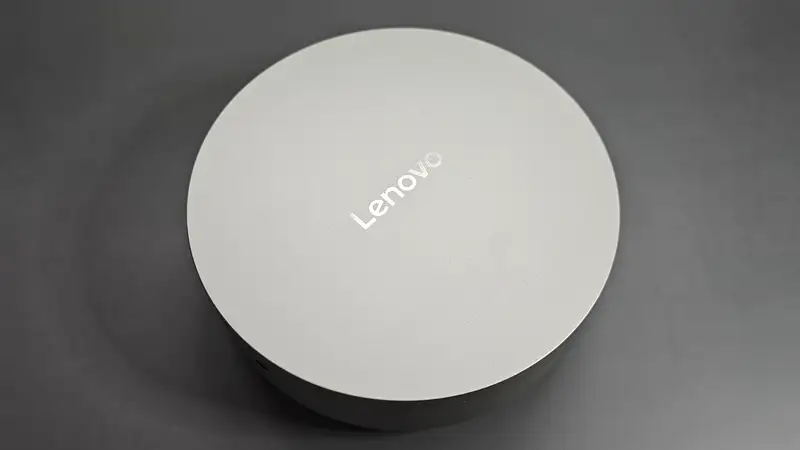
When desktop personal computers shrink down in size, manufacturers almost universally adopt square or rectangular metallic shells. Lenovo is challenging that design convention with the Yoga Mini Gen 11, a circular Windows desktop PC that looks more like a high-end audio device or a sleek smart home hub than a traditional workstation.
Quick summary
- Bold Circular Form Factor: Lenovo's Yoga Mini Gen 11 features a round aluminum exterior weighing just 1.32 pounds, offering efficient thermal dissipation in a footprint no larger than folded over-ear headphones.
- Interactive Control & Sensor Array: Packed with novel hardware features including an Adaptive Lighting LED ring base, top-surface touchpad controls, and Intel Wi-Fi Sensing presence detection.
- Balanced Everyday Productivity: Powered by an Intel Core Ultra 5 325 processor with Wi-Fi 7, Thunderbolt 4, and broad I/O, delivering smooth multitasking and a Geekbench 7 multi-core score of 11,371.
Why it matters
In a market dominated by identical square boxes, Lenovo's Yoga Mini Gen 11 proves that desktop computers can be expressive design statements without completely sacrificing modern productivity standards. It challenges the industry trend of sterile, utilitarian mini PCs by integrating tactile top controls, dynamic peripheral lighting, and compact aluminum construction.
Furthermore, it highlights the technical trade-offs inherent in unconventional hardware design—showing how circular aesthetics create distinct spatial and cable management challenges that users must navigate on their desks.
Background
Miniature desktop PCs have evolved rapidly over the past decade, moving from sluggish office thin clients to potent daily workstations. Driven by modern chiplet architectures and improved integrated graphics from Intel and AMD, manufacturers have squeezed impressive multi-threaded processing into sub-liter chassis.
However, most brands have stuck strictly to square layouts modeled after Apple's Mac Mini or standard NUC platforms. Lenovo's introduction of the Yoga Mini Gen 11 marks an adventurous shift into round consumer electronics ergonomics, adapting design lessons from smart home hubs and audio gear into personal computing.
A Radical Departure in Mini PC Aesthetics
Measuring just 1.91 by 5.12 by 5.12 inches and weighing only 1.32 pounds, the Yoga Mini Gen 11 is remarkably portable. To put its footprint into perspective, the desktop occupies roughly the same surface area as a pair of folded Soundcore Space One Pro headphones. This ultra-compact build allows users to easily stash the machine in a backpack and commute between a home office and a corporate desk.

The outer shell is constructed from aluminum, which serves a dual purpose: it gives the device a premium tactile finish while actively aiding in passive heat dissipation. This thermal design allows the internal cooling solution to maintain continuous workloads without aggressive thermal throttling.
Interactive Hardware Features and AI Turbo Engine
What sets the Yoga Mini Gen 11 apart from conventional mini PCs is its array of interactive hardware additions. Encircling the base of the unit is an Adaptive Lighting LED ring that responds dynamically to system events. The light gently pulses when incoming system notifications arrive and flickers rhythmically in sync with audio playbacks.
On top of the machine sits a dedicated capacitive touchpad. A single tap toggles the bottom LED illumination ring, while a double tap immediately switches the system into Voice Chat mode. These physical interactions are managed through Lenovo's built-in AI Turbo Engine software, which provides a clean and accessible interface for assigning custom app triggers.
The desktop also integrates Intel Wi-Fi Sensing technology. Utilizing internal sensors, the system monitors localized perturbations in nearby Wi-Fi signals caused by physical human movement. In theory, as you approach your desk, the PC senses your arrival, illuminates its LED ring, and wakes automatically from sleep mode. In practice, however, real-world testing shows that Wi-Fi Sensing can be fickle—occasionally triggering unexpected midnight wake-ups or failing to wake up until the physical power button is pressed, particularly on crowded desks filled with interfering electronics.
Real-World Performance and Benchmarks
Under the hood, the baseline Yoga Mini Gen 11 is equipped with an Intel Core Ultra 5 325 processor paired with 16GB of system RAM and a 512GB solid-state drive. Connectivity is top-tier, sporting cutting-edge Wi-Fi 7 and Bluetooth 6 wireless protocols alongside a comprehensive selection of physical ports.
In synthetic performance testing, the machine earned solid marks in Geekbench 7, posting a single-core score of 2,363 and a multi-core score of 11,371. In practical everyday tasks, these numbers translate into fast boot times, rapid application installs, and effortless multitasking across dozens of browser tabs, high-definition video streams, productivity tools, and light gaming like Genshin Impact via Google Play Games.
For power users who require greater headroom, Lenovo also offers a higher-end configuration featuring an Intel Core Ultra X7 processor, 32GB of RAM, and a 1TB SSD, priced at $1,490 compared to the base model's standard $1,000 MSRP (frequently discounted to around $750).
Spatial Trade-offs and Radial Cable Management
Despite its visual appeal, the circular form factor presents a noticeable physical drawback: cable routing. Because ports are arranged around a curved circumference—including rear HDMI 2.1, RJ45 Ethernet, Thunderbolt 4, and side USB-C and 3.5mm audio jacks—connected cables branch out radially in multiple directions.
Instead of a tidy bundle of wires exiting neatly out the back of a square chassis, the Yoga Mini Gen 11 directs power cables to one side and headphone or USB cables to another. Users seeking a clean, cable-free desk setup will need to invest extra effort into cable routing clips or custom desk pass-throughs.
Qnews24h insight
The Yoga Mini Gen 11 represents a calculated gamble by Lenovo to prioritize aesthetic personality and desk presence over pure utilitarian port layout. While features like the top touchpad and Adaptive Lighting succeed in making the machine feel modern and interactive, cutting-edge additions like Intel Wi-Fi Sensing highlight the current volatility of ambient presence technology in crowded workspace environments.
For buyers seeking a stylish, space-saving workstation for mainstream tasks, the Yoga Mini Gen 11 offers genuine value—especially at promotional pricing—provided they are willing to accept the inevitable radial cable tangle.
Sources
This deep dive is based on hardware testing, technical specifications, and hands-on analysis published by ZDNET.
Frequently Asked Questions
Why it matters
In a market dominated by identical square boxes, Lenovo's Yoga Mini Gen 11 proves that desktop computers can be expressive design statements without completely sacrificing modern productivity standards. It challenges the industry trend of sterile, utilitarian mini PCs by integrating tactile top controls, dynamic peripheral lighting, and compact aluminum construction. Furthermore, it highlights the technical trade-offs inherent in unconventional hardware design—showing how circular aesthetics create distinct spatial and cable management challenges that users must navigate on their desks.
Background
Miniature desktop PCs have evolved rapidly over the past decade, moving from sluggish office thin clients to potent daily workstations. Driven by modern chiplet architectures and improved integrated graphics from Intel and AMD, manufacturers have squeezed impressive multi-threaded processing into sub-liter chassis. However, most brands have stuck strictly to square layouts modeled after Apple's Mac Mini or standard NUC platforms. Lenovo's introduction of the Yoga Mini Gen 11 marks an adventurous shift into round consumer electronics ergonomics, adapting design lessons from smart home hubs and audio gear into personal computing.
The Yoga Mini Gen 11 represents a calculated gamble by Lenovo to prioritize aesthetic personality and desk presence over pure utilitarian port layout. While features like the top touchpad and Adaptive Lighting succeed in making the machine feel modern and interactive, cutting-edge additions like Intel Wi-Fi Sensing highlight the current volatility of ambient presence technology in crowded workspace environments. For buyers seeking a stylish, space-saving workstation for mainstream tasks, the Yoga Mini Gen 11 offers genuine value—especially at promotional pricing—provided they are willing to accept the inevitable radial cable tangle.
References
Editorial information
The editorial team reviews sources, adds context, and structures stories so readers can understand the news more clearly.
Article from QNEWS24H
Comments
(0)No comments yet. Be the first to share your thoughts.