Doom Co-Creator John Romero Challenges 'Piracy Killed Companies' Narrative, Citing Shareware's Role

- id Software veteran Sandy Petersen suggested 70-90% of Doom players pirated the game, blaming piracy for killing companies and hindering id's projects.
- John Romero clarified that Doom's initial episode was freely distributed as shareware, meaning 20 million installs were legal, not pirated.
- Romero argues against collapsing legal shareware, unpaid reach, and actual piracy into one number, asserting that piracy did not 'gut' id Software.
- He highlights that free distribution, though sometimes seen as lost sales, was crucial in making Doom an inescapable cultural phenomenon.
A recent social media exchange between two titans of early PC gaming has reignited a decades-old debate about digital distribution, user access, and the true economic impact of 'piracy.' John Romero, a principal architect of the groundbreaking first-person shooter Doom, has publicly pushed back against a narrative that attributes the downfall of various game companies—and even potential hindrances to id Software's own projects—primarily to widespread game piracy. His counter-argument centers on the often-misunderstood shareware model, a distribution method that defined PC gaming in the 1990s.
Quick summary
- id Software veteran Sandy Petersen suggested 70-90% of Doom players pirated the game, blaming piracy for killing companies and hindering id's projects.
- John Romero clarified that Doom's initial episode was freely distributed as shareware, meaning 20 million installs were legal, not pirated.
- Romero argues against collapsing legal shareware, unpaid reach, and actual piracy into one number, asserting that piracy did not 'gut' id Software.
- He highlights that free distribution, though sometimes seen as lost sales, was crucial in making Doom an inescapable cultural phenomenon.
Why it matters
This discussion transcends mere historical recounting; it offers vital insights into the economics of digital content, intellectual property, and audience engagement, lessons that remain relevant in today's streaming and subscription-based landscape. For developers and publishers, understanding the nuances of early distribution models like shareware provides a critical counterpoint to the simplistic 'one pirated copy equals one lost sale' argument. It emphasizes that reach and awareness, even through free access, can be a powerful driver of commercial success and cultural impact. Moreover, for gamers and enthusiasts, this debate re-contextualizes the origins of beloved franchises and reshapes the understanding of how the industry evolved, challenging prevailing myths about the causes of company failures and successes.
Background
In the nascent days of PC gaming, before widespread internet access and digital storefronts like Steam, software distribution faced significant challenges. Companies sought innovative ways to reach potential customers without the extensive retail networks available today. This environment gave rise to the shareware model, a prevalent method for distributing software in the late 1980s and 1990s. Under this model, developers would release a functional, often substantial, portion of their software—such as the first episode of a game—for free. Users could copy and share this initial version without legal repercussion. If they enjoyed it and wished to access the full product, they would then 'register' their copy by paying a fee to the developer, typically receiving additional content or features.
id Software, co-founded by John Romero, pioneered and popularized this model with games like Commander Keen and, most famously, Doom. The first episode of Doom, titled 'Knee-Deep in the Dead,' was freely available, spreading rapidly through bulletin board systems (BBS), floppy disk exchanges, and early internet channels. This strategy allowed the game to achieve unparalleled reach and viral marketing long before the concept of virality became commonplace. The success of this approach cemented id Software's reputation and financial stability, leading to further innovative titles.
However, this success has often been viewed through different lenses. Recently, Sandy Petersen, another veteran from id Software who contributed to the original Doom, voiced a strong opinion on social media. Petersen asserted that between 70-90% of Doom players had pirated the game, suggesting that these 'lost sales' deprived id Software of crucial resources, potentially affecting subsequent projects like Quake. He generalized this sentiment, claiming that 'damn pirates are the guys who killed game companies' such as Atari, Amiga, Cinemaware, and 3D Realms, presenting a stark, causal link between piracy and corporate failure.
Romero's intervention directly challenges this interpretation. His response, delivered with characteristic politeness but firm disagreement, aims to clarify the specific mechanisms of Doom's distribution. He emphasized that the 20 million estimated shareware installs were a testament to the model's intended reach, not a measure of piracy. The distinction he draws between legitimate shareware usage, the broad unpaid reach it generated, and actual illegal copying of the full registered game is central to his argument.
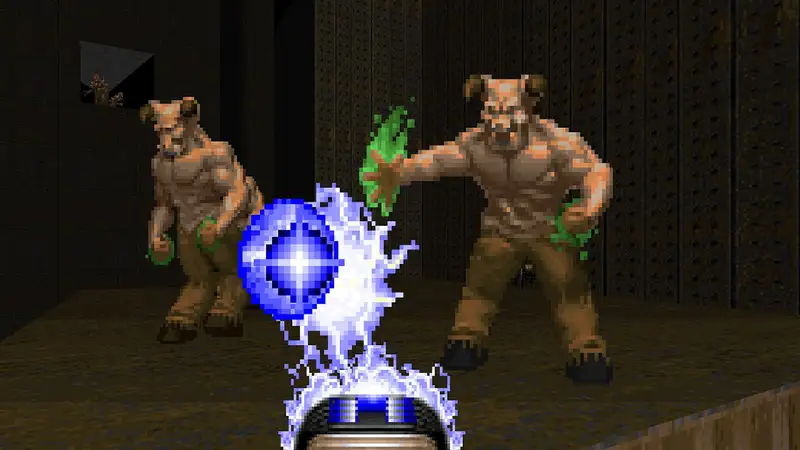
Doom's shareware model helped it reach millions, shaping gaming history. Image Source: gamesradar.com
Qnews24h insight
John Romero's reframing of Doom's shareware distribution offers a critical lesson in disentangling historical narratives from contemporary anxieties about intellectual property. The common refrain that 'piracy kills companies' often oversimplifies complex economic realities. Romero's point is that for games like Doom, the initial free access was not a bug, but a feature—an ingenious marketing strategy that maximized exposure in an era devoid of modern digital marketing tools. The massive user base generated by shareware's free distribution mechanism likely cultivated a fervent community, some percentage of whom would convert to paid customers, and all of whom contributed to an immense cultural footprint that sustained id Software's growth and influence for decades.
This perspective underscores the 'messier' truth of commercial success, where the lines between 'lost sale' and 'valuable exposure' are blurred. Many users who played the free shareware episode might never have purchased the full game regardless, or would not have discovered it without the free version. In these cases, the shareware distribution served as a funnel, not a leakage point. Furthermore, id Software's enduring legacy and continued existence, producing critically and commercially successful titles, directly contradicts the notion that piracy 'gutted' the company. While no developer advocates for piracy of their full, paid products, Romero's argument suggests that innovative, user-centric distribution models, even those involving significant free access, can be a potent force for market penetration and sustained success, rather than an inherent threat.
The Evolving Landscape of Digital Distribution
The shareware model, while largely obsolete in its original form, laid groundwork for future digital distribution strategies. Modern 'free-to-play' games, demos, early access programs, and even the extensive trial periods offered by many software companies echo the spirit of shareware. These models aim to lower the barrier to entry, allow users to experience a product's value firsthand, and convert them into paying customers based on perceived quality and engagement.
Gabe Newell, co-founder of Valve and the force behind Steam, articulated a similar philosophy in 2009, observing that consumers are willing to pay for 'a great product delivered on their terms.' This insight resonates with Romero's view; if a product offers compelling value, convenience, and a superior experience, a segment of the audience will always choose to pay, even if free or illicit alternatives exist. The continued strong sales of Doom titles on digital platforms like Steam, despite the ease with which older versions might be pirated, further validates this contemporary understanding. It suggests that a focus on product quality and accessible, legitimate delivery mechanisms can effectively mitigate the perceived threat of unauthorized copying.
Reconsidering Industry History
The debate prompted by Romero also encourages a re-evaluation of the factors contributing to the decline of other gaming companies in the 80s and 90s. While piracy undoubtedly played a role in some financial struggles, attributing company failures solely to it often overlooks myriad other challenges: intense market competition, poor business decisions, failed projects, rapid technological shifts, and evolving consumer preferences. History is rarely monochromatic, and pinning complex corporate fates on a single factor risks obscuring crucial lessons about adaptability, innovation, and effective market strategies. Romero's insistence on a 'messier' history is a call for a more holistic, fact-based analysis of the industry's past.
Sources
FAQ
What was the shareware model for video games?
The shareware model allowed developers to distribute a portion of their software, typically the first chapter or a limited version of a game, for free. Users could legally copy and share this free version. If they wanted the full product, they would then pay a registration fee to the developer to unlock the remaining content.
How did John Romero distinguish Doom's shareware from piracy?
Romero argued that the 20 million shareware installations of Doom were not 'pirated' copies. These were legitimate, free distributions of the first episode, exactly as intended by id Software. He differentiated this from actual piracy, which would involve illegally obtaining the full, registered version of the game without payment.
Did piracy 'kill' id Software, according to John Romero?
No, John Romero explicitly states that piracy did not 'gut' id Software, noting that the company is still active and making games. While acknowledging that piracy might have cost money, he asserts it wasn't the primary reason for any internal challenges or team departures, suggesting a more complex interplay of factors in id Software's history and success.
Why it matters
This discussion transcends mere historical recounting; it offers vital insights into the economics of digital content, intellectual property, and audience engagement, lessons that remain relevant in today's streaming and subscription-based landscape. For developers and publishers, understanding the nuances of early distribution models like shareware provides a critical counterpoint to the simplistic 'one pirated copy equals one lost sale' argument. It emphasizes that reach and awareness, even through free access, can be a powerful driver of commercial success and cultural impact. Moreover, for gamers and enthusiasts, this debate re-contextualizes the origins of beloved franchises and...
Background
In the nascent days of PC gaming, before widespread internet access and digital storefronts like Steam, software distribution faced significant challenges. Companies sought innovative ways to reach potential customers without the extensive retail networks available today. This environment gave rise to the shareware model, a prevalent method for distributing software in the late 1980s and 1990s. Under this model, developers would release a functional, often substantial, portion of their software—such as the first episode of a game—for free. Users could copy and share this initial version without legal repercussion. If they enjoyed it and wished to access the full product, they would then...
John Romero's reframing of Doom's shareware distribution offers a critical lesson in disentangling historical narratives from contemporary anxieties about intellectual property. The common refrain that 'piracy kills companies' often oversimplifies complex economic realities. Romero's point is that for games like Doom, the initial free access was not a bug, but a feature—an ingenious marketing strategy that maximized exposure in an era devoid of modern digital marketing tools. The massive user base generated by shareware's free distribution mechanism likely cultivated a fervent community, some percentage of whom would convert to paid customers, and all of whom contributed to an immense...
References
Editorial information
The editorial team reviews sources, adds context, and structures stories so readers can understand the news more clearly.
Article from QNEWS24H
Comments
(0)No comments yet. Be the first to share your thoughts.