Is Dark Mode Better for Your Eyes? The Surprising Science Behind Digital Eye Strain

- Scientific studies reveal that people read black text on a light background faster and with greater accuracy than white-on-black text.
- Dark mode causes pupils to dilate, which reduces the eye's depth of field and can make text appear slightly fuzzy or out of focus.
- For users with astigmatism, dark mode often causes a visual distortion called 'halation' where text appears to bleed into the dark background.
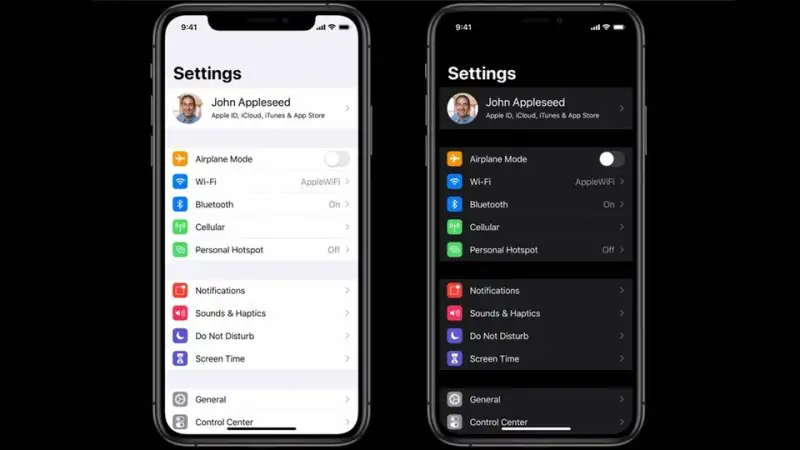
For millions of smartphone and computer users, activating "dark mode" has become an automatic reflex. Whether scrolling through social media at midnight or typing up reports in a dim office, the sleek, dark aesthetic is widely embraced as a modern shield against eye strain and fatigue. Major tech ecosystems—from iOS and Android to apps like YouTube and Spotify—have heavily promoted dark themes as a wellness feature. However, clinical studies and ophthalmological research suggest that this dark-themed savior might actually be making your eyes work much harder than you realize.
Quick summary
- Readability and accuracy: Scientific studies show that human eyes read black text on a light background significantly faster and with fewer errors compared to white text on a dark screen.
- The mechanics of eye strain: Digital eye strain is primarily caused by a reduced blink rate and prolonged close-up focus, not the background color of your device.
- Physical limitations: Dark mode can trigger a phenomenon known as "halation" for users with astigmatism, causing text to appear blurry, bleeding, or doubled.
Why it matters
As average daily screen time reaches unprecedented levels worldwide, understanding how display settings affect human biology is no longer just a matter of cosmetic preference. Millions of professionals, students, and casual users suffer from dry eyes, headaches, and blurred vision—collectively known as Computer Vision Syndrome (CVS). Relying on dark mode as a cure-all can lead to a false sense of security, causing users to ignore critical habits like taking breaks, adjusting room illumination, and maintaining a proper distance from their devices. Furthermore, understanding the trade-offs of display settings helps users optimize their productivity and long-term ocular health.
Background
In the early days of personal computing, dark screens were the default. Cathode-ray tube (CRT) monitors rendered green or white phosphorus text on a black background because of hardware limitations. As display technology advanced, operating systems shifted toward the "desktop metaphor," introducing light backgrounds to mimic ink on physical paper. This transition made computer interfaces feel familiar and greatly improved legibility for the general public.
The modern resurgence of dark mode began as an aesthetic trend among programmers and developers, who spent long hours looking at code in dark environments. Over time, tech companies integrated dark themes to accomplish two main goals: saving battery life on organic light-emitting diode (OLED) screens—where black pixels are completely powered down—and offering a visually appealing alternative for low-light environments. What began as a hardware optimization and styling choice was quickly marketed to consumers as a health-enhancing feature designed to reduce eye strain.
The Science of Pupil Dilation and Contrast
To understand why dark mode isn't always superior, it is necessary to look at how the human eye functions. When you view a dark screen, your pupils must dilate (open wider) to let in more light. While this helps you perceive the screen in low-light environments, it also reduces your eye's depth of field. Much like a camera lens with a wide aperture, a dilated pupil makes it harder to maintain a sharp focus on detailed elements like text.
Conversely, when you look at a bright screen, your pupils constrict. This constriction increases depth of field, making text look sharper and reducing the amount of effort required by your eye's focusing muscles (the ciliary muscles). This physiological reaction explains why reading in well-lit conditions on a light background feels crisper and more immediate.
The Düsseldorf Study: Proof in Reading Speeds
The performance gap between dark and light modes is well-documented. Researchers Cosima Piepenbrock, Susanne Mayr, and Axel Buchner at the Heinrich Heine University Düsseldorf in Germany conducted a series of studies analyzing how display polarity affects human cognitive performance.
The researchers tested participants on reading speed, proofreading accuracy, and visual fatigue. The results were clear: participants reading black text on a white background consistently performed better. They read faster, caught more spelling errors, and exhibited higher visual accuracy than those reading white text on a black background. The study concluded that "positive polarity" (light mode) provides a superior contrast that aligns better with human visual processing.
The Problem of "Halation" and Astigmatism
For individuals with refractive errors, particularly astigmatism, dark mode can actually degrade the viewing experience. Astigmatism is a common condition where the cornea or lens of the eye has an irregular curvature, preventing light from focusing properly on the retina.
When someone with astigmatism looks at white text on a black screen, the dilated pupil allows the light from the letters to bleed into the dark background. This visual distortion is known as "halation" or the "halo effect." The letters appear to bleed, fuzzy, or cast a ghost-like shadow. For these users, reading in dark mode requires constant squinting and mental compensation, leading directly to the very tension headaches and eye strain they were trying to avoid.
Qnews24h insight
The commercial narrative surrounding dark mode is a classic case of tech-driven marketing outpacing scientific evidence. Hardware manufacturers have a powerful incentive to promote dark mode because it directly extends battery life on modern OLED and AMOLED displays. Because black pixels on an OLED panel are completely turned off, dark themes can reduce energy consumption by up to 30% depending on screen brightness. However, instead of framing dark mode strictly as a battery-saving and aesthetic feature, companies rebranded it as an eye-care necessity.
The healthiest approach is situational adaptation. Dark mode is highly beneficial in extreme low-light environments, such as reading in bed or in a darkened theater, where a bright white screen would cause intense, painful glare. However, for daytime office work, long-form reading, and detailed writing, light mode remains biologically superior. True ocular health is not found in a single toggle switch, but in dynamic adjustment—matching screen brightness to your physical surroundings and maintaining proper screen-use hygiene.
Sources
- Znews Vietnam: Trời tối, có nên bật chế độ đen trên màn hình để đỡ mỏi mắt?
- Heinrich Heine University Düsseldorf research on visual display polarity (Piepenbrock, Mayr, & Buchner).
- The American Academy of Ophthalmology reports on digital eye strain and the 20-20-20 rule.
Why it matters
With global screen time at an all-time high, relying on dark mode as a magic shield for eye health can prevent users from addressing the true causes of digital eye strain. Knowing the physiological trade-offs of dark mode helps users make informed choices about display settings to optimize focus, reduce headaches, and avoid long-term eye fatigue.
Background
Dark mode was originally a technical default in early computing due to CRT monitor limitations. It became a modern aesthetic trend and a battery-saving feature for OLED displays. Over time, tech companies began marketing it as a wellness feature, despite historical studies showing that positive display polarity (light mode) is naturally easier for the human visual system to process.
Tech companies have capitalized on 'dark mode' as a wellness feature primarily to mask battery-saving hardware benefits on OLED screens. While dark mode is excellent for preventing blinding glare in pitch-black rooms, it should not be treated as a default setting for productivity, as it physically strains the eye's focusing muscles under normal ambient light.
References
Editorial information
The editorial team reviews sources, adds context, and structures stories so readers can understand the news more clearly.
Article from QNEWS24H
Comments
(0)No comments yet. Be the first to share your thoughts.