iPhone 18 Pro Shrinks the Dynamic Island While Expanding Live Multitasking

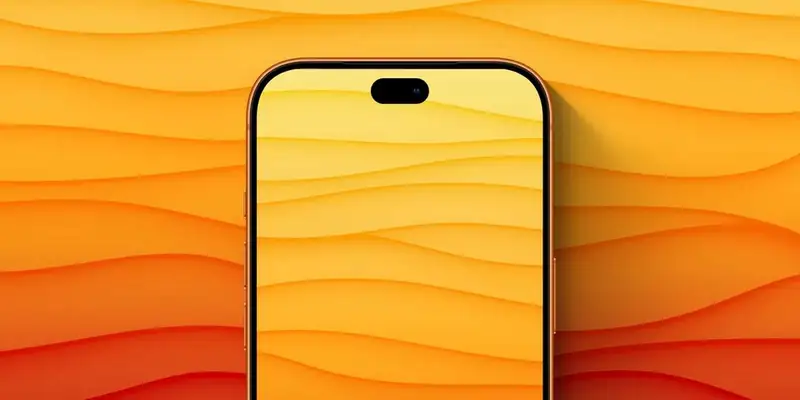
- The iPhone 18 Pro redesigns the Dynamic Island by reducing its physical cutout dimensions on the front OLED display.
- iOS software now supports up to three concurrent Live Activity streams simultaneously, expanding upon the previous two-task ceiling.
- Apple continues to rely on a physical cutout for Face ID, confirming that under-display sensor arrays still fail to meet the company's quality benchmarks.
When Apple unveiled the pill-shaped cutout on the iPhone 14 Pro in 2022, it was celebrated as a masterstroke of design sleight-of-hand: turning an unavoidable hardware compromise into an interactive notification dashboard. Four years into that architectural cycle, the newly unveiled iPhone 18 Pro and iPhone 18 Pro Max show an engineering team shifting priorities. Rather than treating the Dynamic Island as a bold, branded visual anchor, Cupertino has noticeably shrunken its physical footprint on the display while simultaneously expanding its software utility to support three concurrent live data streams.
Quick summary
- The iPhone 18 Pro and Pro Max introduce a noticeably smaller Dynamic Island cutout, marking one of the few physical alterations to the phone's front profile compared to previous generations.
- Despite its reduced footprint on the display, iOS now enables the island to manage and show up to three live interactive activity streams simultaneously, up from two in previous versions.
- The persistence of the island confirms that under-display Face ID and camera sensors remain technically unfeasible at Apple's strict optical and biometric standards, cementing the cutout's status as a semi-permanent UI layer.
Why it matters
The transition of the Dynamic Island on the iPhone 18 Pro highlights a broader shift in Apple's industrial design philosophy: transitioning temporary design patches into permanent interaction paradigms. In 2022, users debated whether the Dynamic Island was an interim bridge destined to disappear as soon as engineers perfected under-screen camera arrays. By trimming the physical pill and enhancing its multi-tasking density, Apple signals that the feature has earned permanent status inside iOS regardless of front-facing sensor tech.
For daily users, the reduced footprint provides a tangible return of usable screen real estate. The cutout intrusive area is minimized during full-screen video playback, photo framing, and gaming. Meanwhile, power users gain functional bandwidth: juggling delivery updates, flight tracking, audio controls, or ride-share tracking no longer forces the system to truncate the third background task into obscurity. It transforms the cutout from a passive notification badge into a dense, mini-multitasking hub that keeps users from constantly switching back and forth between native apps.
Background
Apple introduced the notch on the iPhone X in 2017 to house the complex TrueDepth camera system powering Face ID. For five generations, that black notch remained a defining, if polarizing, silhouette across the entire iPhone lineup. When competitors in the Android ecosystem transitioned rapidly to minimal hole-punch cutouts and experimental under-panel cameras, Apple was constrained by the physical size requirements of the infrared illuminator, dot projector, and front camera module.
In 2022, the iPhone 14 Pro debuted the Dynamic Island, detaching the sensors from the top bezel and enclosing them inside a free-floating pill cutout. Instead of apologizing for the hole, Apple animated the surrounding pixels to create dynamic contextual widgets for incoming calls, timers, media playback, and turn-by-turn directions. While universally praised for animation fluidity, early iterations occupied noticeable screen territory and could only present two concurrent Live Activities—one in the primary oval and one in a detached circular bubble.
Over successive revisions up to the iPhone 17 Pro, the physical dimensions remained largely unchanged. Meanwhile, the broader industrial chassis settled into a refined rhythm of titanium frames and slimmed display borders, making the original cutout dimensions look increasingly prominent relative to the shrinking bezels around it.
Hardware Shrink Meets Triple-Stream Software
The core breakthrough on the iPhone 18 Pro is optical sensor miniaturization. As reported by tech industry observers including The Verge, the physical aperture cut into the OLED panel is visibly narrower and shallower, freeing pixels above and adjacent to the module. Apple managed to condense the Face ID sensor package without degrading recognition angles or biometric accuracy under difficult lighting conditions.
Concurrently, the iOS interface has been re-engineered to distribute status data across three distinct micro-clusters. When multiple real-time apps run in the background, the Dynamic Island splits responsibilities gracefully:
- Primary Activity: Retains full track scrubbing, navigation arrows, or sports scoreboard metrics in an expandable capsule.
- Secondary Indicator: Anchors active timers or recording status in a circular trailing pill.
- Tertiary Anchor: Houses lightweight glanceable indicators, such as active transit countdowns or background network uploads, without crowding the signal or battery icons in the system status bar.
This approach addresses a persistent critique of previous generations, where initiating a timer while playing music and waiting for a ride frequently resulted in one task getting knocked off the interface entirely.
Qnews24h insight
The trajectory of the Dynamic Island reveals a quiet paradox in Apple's product evolution. In its debut year, the island was designed to be deliberately flashy. Apple needed users to watch it expand, bounce, and morph so they would view the cutout as a deliberate feature rather than an unavoidable hardware penalty. It was an unmistakable branding signature: anyone looking at the screen immediately knew you held a premium iPhone Pro.
On the iPhone 18 Pro, Apple is pursuing the exact opposite aesthetic goal: visual discretion. By shrinking the pill, Cupertino admits that unobtrusive content consumption is what users ultimately value on an ultra-premium flagship display. The Dynamic Island is no longer required to prove its own novelty. It has transitioned into an established UI layer of iOS—a permanent HUD (heads-up display) that works best when it gets out of the way until summoned.
Crucially, this design also clarifies Apple’s timeline regarding under-screen camera technology. Speculation has long suggested that Apple would abandon cutouts entirely as soon as under-panel Face ID matured. However, refining the island's code to juggle three live streams proves Apple has no plans to retire the software interaction model even if sensors eventually move beneath the glass. The Dynamic Island UI has outgrown its origin as a hardware cover-up; it is now an integral component of the iPhone workflow.
Sources
- Znews (tech.zingnews.vn) reporting on iPhone 18 Pro front-panel architecture and hardware modifications.
- The Verge design analysis and hands-on observations regarding front display cutouts and Face ID integration.
Why it matters
The reduction of the Dynamic Island frees valuable screen space for multimedia and gaming while elevating multitasking capabilities. It marks the feature's transition from a novelty hardware camouflage into a permanent, highly functional mini-dashboard within the iOS ecosystem.
Background
Debuting on the iPhone 14 Pro in 2022, the Dynamic Island replaced the traditional notch by wrapping interactive software widgets around the TrueDepth camera module. While functionally innovative, its physical footprint remained unchanged through the iPhone 17 generation, sparking debate over when Apple would move toward fully under-screen sensors.
Apple's decision to shrink the Dynamic Island while making it work harder points to a clear design shift: the company no longer needs the cutout to be a flashy visual identifier. Instead, Cupertino is turning it into a quieter, more permanent interface element that will likely outlive the physical cutout itself.
References
Editorial information
The editorial team reviews sources, adds context, and structures stories so readers can understand the news more clearly.
Article from QNEWS24H
Comments
(0)No comments yet. Be the first to share your thoughts.