iPhone 17 Pro Max Sealed in Time Capsule for 250 Years: A Bold Message to the Year 2276
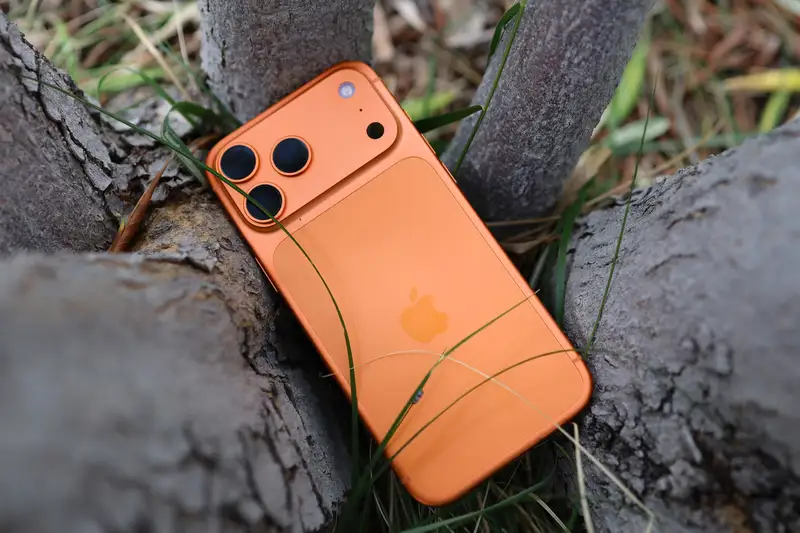
- A brand-new iPhone 17 Pro Max in Cosmic Orange has been sealed in a time capsule, programmed to remain closed for 250 years until the year 2276.
- The device contains digital messages and notes detailing modern human life, saved directly on its local storage for future generations to discover.
- Preservational challenges such as lithium-ion battery degradation, silicon bit rot, and charging standard obsolescence threaten the phone's long-term survival.
Imagine locking away the absolute pinnacle of modern handheld engineering, only for it to remain untouched, dark, and silent for the next two and a half centuries. In a bold experiment bridging contemporary consumer culture with deep-future archaeology, a pristine iPhone 17 Pro Max in its striking Cosmic Orange finish has been officially sealed inside a time capsule. This device, representing the zenith of today's digital lifestyle, is tasked with an extraordinary mission: to survive across multiple human generations and emerge intact in the year 2276. It stands not merely as a piece of discarded hardware, but as a deliberate digital archive of our present civilization, complete with curated messages saved directly onto its local storage.
Quick summary
- A brand-new iPhone 17 Pro Max, specifically in the Cosmic Orange colorway, has been locked in a secure time capsule designated to be unsealed in the year 2276.
- The device contains curated digital messages and observations of contemporary human life saved directly within its native Notes application, intended as a direct communication channel to our descendants.
- Technical experts highlight massive long-term preservation challenges, including hardware decay, battery degradation, and the complete obsolescence of modern charging standards and data systems over the next 250 years.
Why it matters
This project raises profound questions about how humanity preserves its history in the digital age. Unlike paper, clay, or stone, which can survive thousands of years under the right conditions, digital media is incredibly fragile. The transition from physical record-keeping to cloud-based and silicon-based storage has created a potential "Digital Dark Age" where future historians might find themselves unable to read the records of the late 20th and early 21st centuries. By sealing an iPhone, coordinators are testing the limits of modern consumer electronics preservation, forcing us to reckon with the transient nature of our daily tools.
Moreover, the choice of the iPhone highlights the cultural dominance of smartphone technology. For billions of people worldwide, this single pocket-sized slab of glass, metal, and silicon defines how they work, communicate, capture memories, and interact with the world. Sealing it in a capsule is an acknowledgment that the smartphone is the definitive artifact of our current epoch.
Background
The history of mobile technology is incredibly brief but exceptionally explosive. When Apple introduced the original iPhone in 2007, it fundamentally shifted the landscape of consumer electronics, rendering physical keyboards and basic feature phones obsolete almost overnight. In less than two decades, the device evolved from a luxury novelty into an indispensable utility, driving the global app economy and shaping modern social behaviors.
Historically, time capsules have favored physical media—letters, books, photographs, and analog film. However, as our lives have migrated online, physical artifacts no longer tell the full story of human existence. The selection of an iPhone 17 Pro Max in its distinctive Cosmic Orange color represents the cutting edge of contemporary industrial design. Inside its memory, organizers have left specific entries in the default Notes app. If the device successfully powers up in 2276, these digital messages will serve as a virtual time machine, offering future humans an unedited glimpse into the daily lives, hopes, and anxieties of people living in our era.

The Multi-Century Technical Hurdles
While the emotional and symbolic value of the project is clear, the physical reality of keeping a smartphone functional for 250 years presents a nightmare for materials scientists and engineers. Modern consumer electronics are designed for a lifecycle of three to five years, not centuries.
The Threat of Chemical Degradation
The most immediate threat to the sealed iPhone is its lithium-ion battery. Over decades, the chemical compounds inside batteries naturally break down. Even when completely powered off, lithium-ion cells suffer from self-discharge and internal degradation. Over a span of 250 years, there is a severe risk of the battery swelling, leaking corrosive chemicals, or even rupturing, which could destroy the phone's internal logic board and glass casing from the inside out.
The Silent Menace of Bit Rot
Even if the physical chassis remains pristine, the data inside faces a silent enemy known as "bit rot." Solid-state drives (SSDs) and NAND flash memory chips store data by trapping electrical charges inside microscopic floating-gate transistors. Over time, these trapped electrons inevitably leak out. Without regular power cycles to refresh the charge, the data stored on the flash memory will eventually degrade, rendering the operating system and the saved notes unreadable within a matter of decades, long before the 2276 target date.
Infrastructural Obsolescence
Assuming the phone survives physically and retains its data, the humans of 2276 will face an immense compatibility barrier. USB-C charging ports, wireless MagSafe chargers, and current power grid standards will likely have vanished into history. Future archaeologists will have to custom-build charging interfaces and potentially reverse-engineer the proprietary iOS software environment just to read a simple text file.
Qnews24h insight
From an editorial standpoint, this project is less about the practical retrieval of data and more about creating a powerful symbolic monument. Scientifically, the odds of a consumer-grade iPhone booting up natively after 250 years without meticulous, specialized preservation environments (such as extreme temperature control and inert gas sealing) are exceptionally low. The physical adhesives holding the screen together will likely liquefy or crystallize, the copper contacts will oxidize if any moisture is present, and the silicon gates will lose their charge.
However, the value of this time capsule lies in the mirror it holds up to our society today. It exposes our deep reliance on highly proprietary, closed-source ecosystems that are poorly suited for long-term historical preservation. If our descendants in 2276 do manage to extract the data, they will not just read the notes left behind; they will marvel at the primitive, centralized, and highly fragile nature of the early digital era's most prized possession.
Sources
This report is based on information originally published by the Vietnamese news agency Soha.vn, which detailed the physical and technical implications of the 250-year iPhone time capsule project.
Why it matters
The project highlights the extreme vulnerability of digital history. As society abandons physical paper and analog media, preserving digital artifacts like smartphones becomes a highly complex archaeological challenge due to physical degradation, proprietary software, and rapid hardware obsolescence.
Background
Since the launch of the first-generation iPhone in 2007, smartphones have revolutionized global communication, economics, and culture. While traditional time capsules relied on physical paper and analog objects, this project shifts the focus to high-tech, proprietary hardware to capture the essence of the early 21st century, choosing Apple's iPhone 17 Pro Max as the ultimate cultural artifact.
While highly symbolic, the project faces almost insurmountable physical hurdles. Without active power cycles, flash memory naturally loses its charge within a couple of decades, meaning 'bit rot' will likely wipe the saved notes long before 2276. However, even as a dead piece of hardware, the phone will serve as a fascinating physical fossil of the mobile era.
References
Editorial information
The editorial team reviews sources, adds context, and structures stories so readers can understand the news more clearly.
Article from QNEWS24H
Comments
(0)No comments yet. Be the first to share your thoughts.