iPhone 17 Dominates China's Premium Smartphone Market, Outselling Xiaomi 17 Sixfold

- Apple's iPhone 17 series leads the premium smartphone market in China with over 32 million units sold, significantly outperforming competitors.
- Xiaomi 17 series has achieved over 5 million sales in China but trails behind both iPhone 17 and Huawei Mate 80 series.
- Huawei Mate 80, launched in November, has surpassed Xiaomi 17 in sales, demonstrating strong recovery and market penetration with approximately 6 million units sold.
- Both Apple and Huawei leverage strong supply chain management and government support to mitigate rising memory costs and maintain robust market shares in China's premium segment.
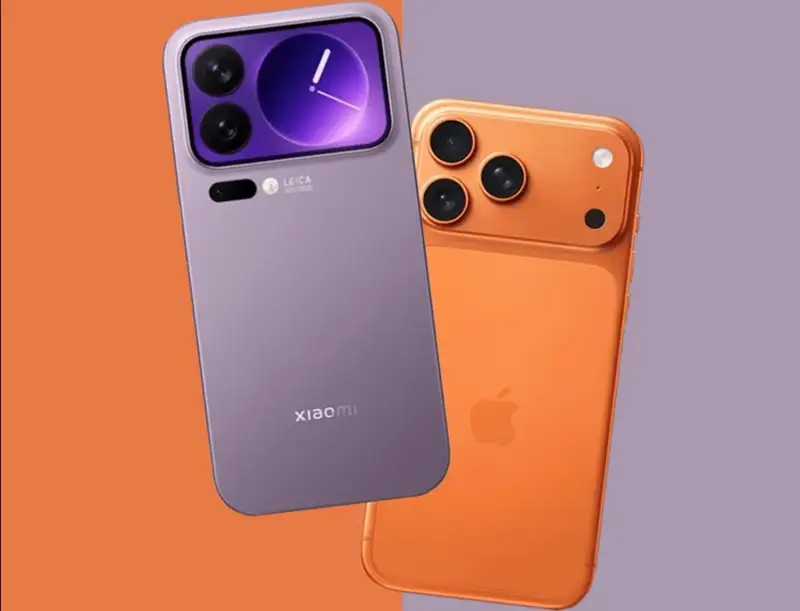
In China's fiercely competitive high-end smartphone market, recent data paints a clear picture of shifting dominance, with Apple's iPhone 17 series asserting a commanding lead. While Chinese manufacturers continue to vie for a larger slice of the premium pie, the latest sales figures reveal a significant disparity: the iPhone 17 has reportedly sold more than six times the units of the Xiaomi 17, underscoring the enduring appeal and strategic prowess of global tech giants even in their rival's home turf.
Quick summary
- Apple's iPhone 17 series leads the premium smartphone market in China with over 32 million units sold, significantly outperforming competitors.
- Xiaomi 17 series has achieved over 5 million sales in China but trails behind both iPhone 17 and Huawei Mate 80 series.
- Huawei Mate 80, launched in November, has surpassed Xiaomi 17 in sales, demonstrating strong recovery and market penetration with approximately 6 million units sold.
- Both Apple and Huawei leverage strong supply chain management and government support to mitigate rising memory costs and maintain robust market shares in China's premium segment.
Why it matters
The latest sales data from China's premium smartphone segment offers crucial insights into the evolving landscape for consumers, manufacturers, and the broader tech industry. For consumers, these trends indicate where innovation, brand value, and strategic pricing converge, influencing future product offerings and market stability. A strong performance by Apple and Huawei suggests continued investment in high-end features and ecosystem integration, potentially driving up the baseline for what constitutes a 'premium' experience.
For manufacturers, these figures are a stark reminder of the complexities of global supply chains and the impact of component costs, particularly memory, on profitability and pricing strategies. Xiaomi's struggle highlights the challenges even established brands face when balancing cost pressures with competitive pricing. The strategic shift towards international markets for certain models, like the Xiaomi 17T, signals a diversification imperative for brands seeking to mitigate domestic pressures and unlock new growth avenues.
Furthermore, the roles of government subsidies and local supply chain development, evident in Huawei's resilience, underscore geopolitical influences on tech markets. This creates a challenging environment for international brands while potentially fortifying domestic players. The dynamic interplay between brand perception, technological innovation, and strategic market maneuvers ultimately shapes the competitive battleground, dictating which players thrive and which face uphill battles in one of the world's most lucrative tech markets.
Background
The Chinese smartphone market has long been a battleground for global and domestic tech giants, characterized by fierce competition, rapid innovation, and evolving consumer preferences. In recent years, the premium segment, typically defined by devices priced at a higher tier, has become particularly significant, offering higher profit margins and serving as a showcase for cutting-edge technology. Historically, Apple has maintained a strong presence in this segment, leveraging its brand loyalty and ecosystem.
However, the landscape has seen considerable shifts. Domestic brands like Huawei, Xiaomi, Vivo, and OPPO have aggressively expanded their premium offerings, aiming to challenge Apple's dominance. Huawei, in particular, despite facing significant geopolitical challenges and supply chain restrictions in the past, has shown remarkable resilience by pivoting to domestic supply chains and receiving government backing. This has allowed it to regain considerable market share and introduce highly competitive devices.
A key factor impacting all manufacturers recently has been the rising cost of memory components. This increase in input costs presents a dilemma: absorb the costs and erode margins, or pass them on to consumers, potentially impacting sales volume. This economic pressure has forced companies to reassess their pricing and product strategies, leading to variations in market performance. The iPhone 17, launched in September of the previous year, and the Huawei Mate 80, released in November, entered this complex market environment, while the Xiaomi 17 series has been navigating it with its own set of challenges and adaptations.
Qnews24h insight
The recent sales data from China's premium smartphone market isn't merely a snapshot of who's winning; it's a profound commentary on strategic resilience, supply chain mastery, and nuanced market positioning. Apple's sustained dominance with the iPhone 17, even against formidable local competition, illustrates the enduring power of brand equity and a robust global supply chain that can absorb or redistribute cost pressures like rising memory prices. Its ability to maintain premium pricing while offering attractive promotions, likely buoyed by government support, reflects a well-honed strategy that connects deeply with Chinese consumers' desire for aspirational value.
Huawei's resurgence with the Mate 80 series is equally insightful, showcasing a powerful response to adversity. By building an efficient domestic supply chain and benefiting from significant government subsidies and local promotions, Huawei has transformed external challenges into a competitive advantage. This strategy not only mitigates global supply vulnerabilities but also resonates with national pride, proving that localized ecosystems can create formidable market strongholds. This dual success—Apple leveraging global strength and Huawei harnessing local resilience—underscores the divergent yet effective paths to leadership in a complex market.
In contrast, Xiaomi's position with the 17 series highlights the difficult tightrope walked by aspiring premium players. While the brand has made strides, its cautious pricing strategy, likely a direct response to escalating memory costs and an attempt to balance volume with profitability, appears to have blunted its domestic premium sales. Xiaomi's decision to launch the 17T series internationally to fill price gaps and boost sales is a pragmatic, yet telling, indicator of the intense domestic pressure. It suggests that while global expansion remains a key growth vector, cracking the pinnacle of China's premium market requires either Apple's entrenched luxury appeal or Huawei's unique blend of national support and supply chain sovereignty, rather than just competitive specifications.
Apple's Enduring Lead in a Dynamic Market

The iPhone 17 series, since its September launch last year, has consistently demonstrated exceptional market traction in mainland China. With an impressive cumulative sale of over 32 million units, and a steady growth rate of approximately 1 million units per week, Apple's flagship continues to resonate deeply with local consumers. This sustained performance is attributed not only to the intrinsic value and core features that buyers appreciate but also to Apple's strategic market maneuvers. The company has actively engaged in various promotional programs and benefited from government subsidies, contributing to its second-place position in the Chinese market during the first quarter, capturing a 19% share. Its 20% year-over-year increase in shipments was the highest among the top six brands, showcasing its robust growth trajectory.
Industry analysts, including Counterpoint, suggest that Apple is well-positioned to further expand its market share in the short to medium term. This projection is underpinned by its unwavering commitment to a premium product positioning and its highly effective supply chain management. This allows Apple to absorb or effectively manage cost pressures arising from increased memory prices, a challenge that many competitors find more difficult to navigate without impacting sales or profitability.
Huawei's Resurgent Domestic Powerhouse
Challenging both Apple and other domestic rivals, the Huawei Mate 80 series, which debuted in November of the previous year, has showcased a remarkable recovery. Surpassing the Xiaomi 17 series in sales, Huawei has reportedly moved around 6 million units in the past three weeks alone, maintaining an impressive growth rate of 200,000 units weekly. This comeback is particularly significant given the previous external pressures on the company.
Counterpoint highlights that Huawei has ingeniously mitigated the impact of escalating memory costs by developing a highly efficient localized supply chain. This strategic independence, coupled with substantial government subsidies and aggressive promotions during festive periods like the Lunar New Year, propelled Huawei to become the best-performing mobile phone brand in the first quarter, securing a dominant 20% market share. Its success is a testament to national strategic investments and the brand's persistent pursuit of technological self-reliance.
Xiaomi's Strategic Rebalancing Act
Despite securing the second position among Chinese brands in the premium phone segment for its individual product lines, the Xiaomi 17 series has faced considerable headwinds. While it has surpassed 5 million units in China, its weekly sales have stabilized at around 70,000 units, indicating slower momentum compared to its top-tier competitors. The brand is actively working to alleviate cost pressures stemming from rising memory prices by strategically shifting its product structure towards higher-priced models such as the Pro, Pro Max, Ultra, and Max variants. This move aims to improve profit margins and redefine its premium identity.
However, the high cost of memory has also compelled Xiaomi to adopt a more conservative pricing strategy for the core 17 series, which analysts suggest has inadvertently hindered sales volume. In a significant move to counter these domestic challenges and capture broader market segments, Xiaomi launched the Xiaomi 17T series on June 8. This new lineup is specifically targeted at international markets, designed to fill price gaps within the existing Xiaomi 17 portfolio and stimulate global sales, illustrating a dual-pronged strategy to enhance overall market performance.
Broader Market Context: Other Domestic Players
While Apple, Huawei, and Xiaomi capture significant attention, other domestic players continue to contribute to China's vibrant premium smartphone market. Data up to week 22 indicates that the vivo X300 series has accumulated sales of approximately 2.7 million units, demonstrating its solid presence. Similarly, the OPPO Find X9 series has achieved around 2.2 million units in sales, further highlighting the intense competition and diverse choices available to consumers in the high-end segment of the world's largest smartphone market.
Sources
FAQ
Q1: How much more did the iPhone 17 sell compared to the Xiaomi 17 in China?
The iPhone 17 series sold over 32 million units in China, which is more than six times the sales of the Xiaomi 17 series, which reached over 5 million units.
Q2: What factors contributed to Huawei Mate 80's strong performance?
Huawei's strong performance with the Mate 80 series is attributed to its efficient domestic supply chain, which helps mitigate rising memory costs, coupled with significant government subsidies and promotions during key periods like the Lunar New Year. This strategy helped them secure a 20% market share in Q1.
Q3: Why is Xiaomi adopting a different strategy for its 17T series?
Xiaomi launched the 17T series specifically for international markets to address domestic sales challenges. Its core 17 series has faced pressure from rising memory costs, leading to cautious pricing that has impacted sales. The 17T aims to fill price gaps and boost overall sales by targeting different global segments.
Q4: How are rising memory costs impacting smartphone manufacturers in China?
Rising memory costs are forcing manufacturers to adjust their strategies. Xiaomi, for instance, is shifting towards higher-priced Pro/Ultra models to maintain margins and adopting cautious pricing for its standard models, which can suppress sales. Apple and Huawei have managed to mitigate these pressures through robust supply chain management, economies of scale, and government support.
Why it matters
The latest sales data from China's premium smartphone segment offers crucial insights into the evolving landscape for consumers, manufacturers, and the broader tech industry. For consumers, these trends indicate where innovation, brand value, and strategic pricing converge, influencing future product offerings and market stability. A strong performance by Apple and Huawei suggests continued investment in high-end features and ecosystem integration, potentially driving up the baseline for what constitutes a 'premium' experience. For manufacturers, these figures are a stark reminder of the complexities of global supply chains and the impact of component costs, particularly memory, on...
Background
The Chinese smartphone market has long been a battleground for global and domestic tech giants, characterized by fierce competition, rapid innovation, and evolving consumer preferences. In recent years, the premium segment, typically defined by devices priced at a higher tier, has become particularly significant, offering higher profit margins and serving as a showcase for cutting-edge technology. Historically, Apple has maintained a strong presence in this segment, leveraging its brand loyalty and ecosystem. However, the landscape has seen considerable shifts. Domestic brands like Huawei, Xiaomi, Vivo, and OPPO have aggressively expanded their premium offerings, aiming to challenge Apple's...
The recent sales data from China's premium smartphone market isn't merely a snapshot of who's winning; it's a profound commentary on strategic resilience, supply chain mastery, and nuanced market positioning. Apple's sustained dominance with the iPhone 17, even against formidable local competition, illustrates the enduring power of brand equity and a robust global supply chain that can absorb or redistribute cost pressures like rising memory prices. Its ability to maintain premium pricing while offering attractive promotions, likely buoyed by government support, reflects a well-honed strategy that connects deeply with Chinese consumers' desire for aspirational value. Huawei's resurgence...
References
Editorial information
The editorial team reviews sources, adds context, and structures stories so readers can understand the news more clearly.
Article from QNEWS24H
Comments
(0)No comments yet. Be the first to share your thoughts.