Intel's Unexpected Resurgence: AI Boom Fuels Tripled Market Cap & Strategic Alliances
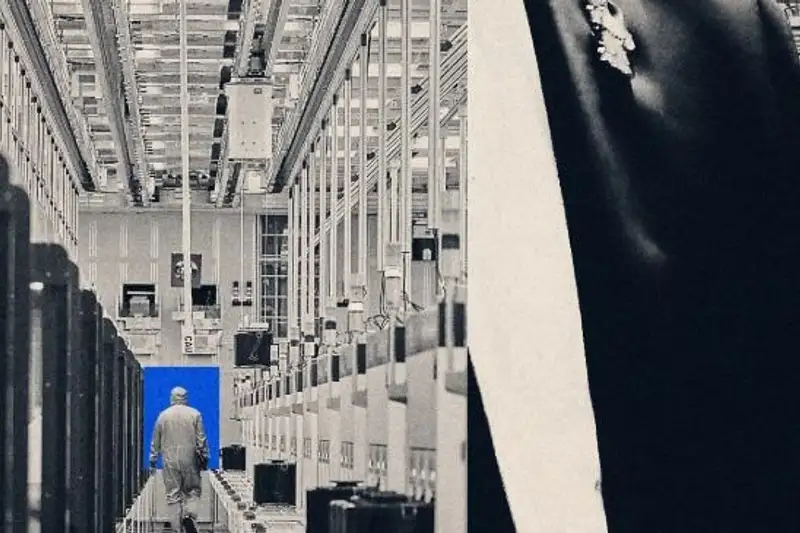
- Intel's market capitalization has surged over threefold to $650 billion, signaling a dramatic turnaround from its recent struggles.
- The company's resurgence is primarily driven by the exponential growth in artificial intelligence, boosting demand for its core CPU products and data center offerings.
- Intel has secured significant strategic partnerships, including a $5 billion investment from Nvidia, technology agreements with Elon Musk's Terafab, and a deal to produce chips...
- The U.S. government's $8.9 billion investment and 10% stake underline Intel's critical role in America's strategy to re-shore advanced semiconductor manufacturing and reduce...
A palpable buzz enveloped a recent technology conference in San Francisco, where attendees clamored for a moment with Lip-Bu Tan, Intel's Chief Executive. The scene, reminiscent of the rockstar status usually reserved for figures like Nvidia's Jensen Huang, struck Matthew Sysak, a senior executive at Lumentum, as utterly astonishing. It signaled a profound shift for a company widely perceived as a fallen giant just a short time ago, underscoring a dramatic reversal of fortune.
Quick summary
- Intel's market capitalization has surged over threefold to $650 billion, signaling a dramatic turnaround from its recent struggles.
- The company's resurgence is primarily driven by the exponential growth in artificial intelligence, boosting demand for its core CPU products and data center offerings.
- Intel has secured significant strategic partnerships, including a $5 billion investment from Nvidia, technology agreements with Elon Musk's Terafab, and a deal to produce chips for Apple's laptops and potentially smartphones.
- The U.S. government's $8.9 billion investment and 10% stake underline Intel's critical role in America's strategy to re-shore advanced semiconductor manufacturing and reduce reliance on overseas production.

Why it matters
Intel's trajectory is not merely a corporate success story; it represents a pivotal moment for global technology infrastructure, national security, and the future of the semiconductor industry. For the United States, a revitalized Intel is central to its ambition of re-establishing domestic leadership in advanced chip manufacturing, lessening its strategic vulnerability to geopolitical tensions surrounding key production hubs like Taiwan. This pivot could profoundly impact supply chain resilience, national economic competitiveness, and the pace of innovation in critical fields like artificial intelligence.
For the tech industry, Intel's renewed focus on advanced process technology and strategic partnerships could shake up the competitive landscape. Its ability to onboard major clients like Nvidia and Apple for manufacturing services signals a potential shift in how even the most prominent chip designers approach production, offering an alternative to Taiwan Semiconductor Manufacturing Company (TSMC)'s near-monopoly on cutting-edge fabrication. This creates new opportunities for diversification and could accelerate the development of next-generation AI-optimized hardware. For consumers, a competitive Intel could translate to more robust, efficient, and diverse computing solutions, powering the next wave of AI applications from cloud data centers to personal devices.
Background
Just a year ago, Intel, once the undisputed titan of Silicon Valley, faced a bleak outlook. The company was grappling with declining revenues, escalating costs, and mounting debt, leading many to label it a symbol of the industry's changing tides. Its once dominant position in processor technology had eroded, with competitors like TSMC advancing rapidly in manufacturing sophistication, and newer players like Nvidia commanding the burgeoning AI chip market. The situation was so dire that the U.S. government intervened decisively in mid-2025, acquiring a 10% stake in the company through an $8.9 billion investment. This funding, a crucial portion of the bipartisan CHIPS and Science Act, underscored Washington's deep concern over the nation's increasing reliance on foreign semiconductor fabrication, particularly from Taiwan.
This government intervention, initially fraught with political tension — including former President Trump's concerns about Intel's prior leadership – ultimately provided a much-needed lifeline. It not only injected capital but also signaled a clear mandate: Intel's success was inextricably linked to America's national interest. With Lip-Bu Tan stepping into the CEO role in March 2025, the company embarked on a high-stakes turnaround strategy. The timing coincided with a massive inflection point in technology: the explosive growth of artificial intelligence. This AI surge created an unprecedented demand for high-performance chips, including the central processing units (CPUs) that have traditionally been Intel's forte, creating a crucial window for the struggling giant to reassert its relevance.
The AI Catalyst and Strategic Alliances
The burgeoning AI industry has proven to be the primary accelerant for Intel's dramatic comeback. As tech giants pour hundreds of billions into data center chips, the demand for both AI accelerators and traditional CPUs, which power AI agents, has skyrocketed. This surge, coupled with TSMC's overwhelming order book, created a unique opening for Intel. The company, which recently operationalized a state-of-the-art manufacturing facility near Phoenix employing advanced technologies for denser, more energy-efficient chips, quickly capitalized on this shift.

A pivotal moment arrived in September, when Nvidia, the current leader in AI processors, announced a significant investment of $5 billion in Intel. Furthermore, Nvidia committed to utilizing Intel-designed CPUs for its personal computers and data centers, sending Intel's stock soaring by 23% on the news. This collaboration is particularly significant as it sees two long-standing rivals partnering, underscoring the immense pressure and opportunity presented by the AI boom.
Beyond Nvidia, Intel has forged other high-profile alliances. In May, CEO Lip-Bu Tan finalized an agreement with Elon Musk, positioning Intel to supply technology for Musk's ambitious Terafab super chip factory initiative. Most recently, Apple, one of the world's largest chip consumers, agreed to begin manufacturing a portion of its laptop chips at Intel's foundries starting in 2027, with the potential for smartphone chip production to follow. These deals, following five years of Intel's unsuccessful attempts to secure major foundry customers for its new technologies, represent a watershed moment, affirming the viability and competitiveness of its manufacturing capabilities.
Challenges and the Road Ahead
Despite the remarkable resurgence, Intel's journey is far from complete, and the path ahead is lined with significant challenges and conditional factors. Each of the high-profile partnerships comes with intricate terms. The Nvidia deal, for instance, involves co-selling arrangements, meaning Intel's revenue per chip will fluctuate based on the distributor. More critically, the agreements with both Elon Musk and Apple are contingent on the successful validation and readiness of Intel's advanced 14A manufacturing process. The company has committed to providing partners with testing kits for this technology later this year, with final commitments pending the outcome of these evaluations.
Internally, Lip-Bu Tan has overseen aggressive cost-cutting measures. Intel's workforce has been streamlined through layoffs and natural attrition, reducing the headcount from 108,900 employees at the start of his tenure to approximately 78,500, with a target of 75,000. This efficiency drive has also impacted research and development, with Intel Labs, a critical division for future chip innovation, reportedly experiencing a nearly 90% budget reduction last year. While these measures aim to restore profitability, they also pose a risk to long-term innovation capabilities.
Intel continues to face financial headwinds, reporting a $3.7 billion loss in the first quarter, including a $2.5 billion operational loss in its manufacturing division, despite a 7% year-over-year revenue increase to $13.6 billion. The company acknowledges that catching up with rivals like TSMC is a protracted effort, requiring sustained investment. While the losses are projected to narrow next year as multi-year investments in Arizona and New Mexico factories conclude, Bernstein Research anticipates Intel will return to profitability, forecasting $4.7 billion in profit, only by 2027. Lip-Bu Tan himself has cautioned that a full turnaround could take at least five years, emphasizing the need for the current AI boom to maintain its intensity for Intel's recovery to solidify.
Qnews24h insight
Intel's current trajectory marks a critical inflection point, moving from a symbol of Silicon Valley's past to a potential cornerstone of America's future technology independence. This isn't merely a cyclical rebound; it's a meticulously orchestrated turnaround, heavily subsidized by the U.S. government, and strategically timed to leverage the unprecedented demand ignited by artificial intelligence. The high-profile partnerships with Nvidia, Apple, and Elon Musk are not just revenue drivers; they are powerful endorsements of Intel's renewed technological capabilities, particularly its foundry services.

However, the journey remains fraught with peril. The conditional nature of these landmark deals — reliant on the successful maturation of Intel's next-generation 14A process – introduces an element of uncertainty. The drastic cuts to R&D, while necessary for short-term financial stability, could impact long-term innovation, a domain where Intel historically excelled. Furthermore, sustaining this momentum hinges entirely on the continued fervor of the AI revolution and Intel's ability to consistently deliver on its aggressive technological roadmap. This turnaround is less a guaranteed renaissance and more a high-stakes gamble, where national strategic interests are as intertwined with corporate success as market dynamics. For Intel to truly reclaim its former glory, it must not only execute flawlessly on its manufacturing promises but also re-establish itself as an innovation leader, navigating the complex interplay of technology, geopolitics, and market volatility.
Sources
- soha.vn
- The NY Times
- CNBC
FAQ

What factors are driving Intel's recent comeback?
Intel's remarkable resurgence is primarily fueled by the explosive growth in the artificial intelligence sector, which has created immense demand for high-performance chips. This demand, coupled with strategic partnerships with industry leaders like Nvidia and Apple, and significant financial backing from the U.S. government, has propelled Intel back into a strong competitive position.
How is the U.S. government involved in Intel's turnaround?
The U.S. government intervened with an $8.9 billion investment, acquiring a 10% stake in Intel in mid-2025. This funding, part of the CHIPS and Science Act, aims to bolster domestic semiconductor manufacturing capabilities and reduce the nation's reliance on foreign supply chains, making Intel's success a key national strategic imperative.
What are the key partnerships Intel has secured recently?
Intel has forged several critical alliances, including a $5 billion investment from Nvidia, which will also utilize Intel CPUs for its systems. The company has also partnered with Elon Musk's Terafab project to supply chip technology and secured an agreement with Apple to manufacture a portion of its laptop chips starting in 2027, with potential future smartphone chip production.
What challenges does Intel still face?
Despite its progress, Intel faces challenges such as the conditional nature of its major partnership deals, which are contingent on the success of its new 14A manufacturing process. The company is also still operating at a loss in its manufacturing division and has implemented significant cost-cutting measures, including workforce reductions and R&D budget cuts. A full return to sustained profitability is not expected until 2027, and the long-term success depends on maintaining the momentum of the AI boom and consistent execution.
Why it matters
Intel's trajectory is not merely a corporate success story; it represents a pivotal moment for global technology infrastructure, national security, and the future of the semiconductor industry. For the United States, a revitalized Intel is central to its ambition of re-establishing domestic leadership in advanced chip manufacturing, lessening its strategic vulnerability to geopolitical tensions surrounding key production hubs like Taiwan. This pivot could profoundly impact supply chain resilience, national economic competitiveness, and the pace of innovation in critical fields like artificial intelligence. For the tech industry, Intel's renewed focus on advanced process technology and...
Background
Just a year ago, Intel, once the undisputed titan of Silicon Valley, faced a bleak outlook. The company was grappling with declining revenues, escalating costs, and mounting debt, leading many to label it a symbol of the industry's changing tides. Its once dominant position in processor technology had eroded, with competitors like TSMC advancing rapidly in manufacturing sophistication, and newer players like Nvidia commanding the burgeoning AI chip market. The situation was so dire that the U.S. government intervened decisively in mid-2025, acquiring a 10% stake in the company through an $8.9 billion investment. This funding, a crucial portion of the bipartisan CHIPS and Science Act,...
Intel's current trajectory marks a critical inflection point, moving from a symbol of Silicon Valley's past to a potential cornerstone of America's future technology independence. This isn't merely a cyclical rebound; it's a meticulously orchestrated turnaround, heavily subsidized by the U.S. government, and strategically timed to leverage the unprecedented demand ignited by artificial intelligence. The high-profile partnerships with Nvidia, Apple, and Elon Musk are not just revenue drivers; they are powerful endorsements of Intel's renewed technological capabilities, particularly its foundry services. However, the journey remains fraught with peril. The conditional nature of these landmark...
References
- 1.soha.vn
- 2.The NY Times
- 3.CNBC
Editorial information
The editorial team reviews sources, adds context, and structures stories so readers can understand the news more clearly.
Article from QNEWS24H
Comments
(0)No comments yet. Be the first to share your thoughts.