India Eyes S-500 Missile Defense: A Strategic Leap Amid Regional Tensions
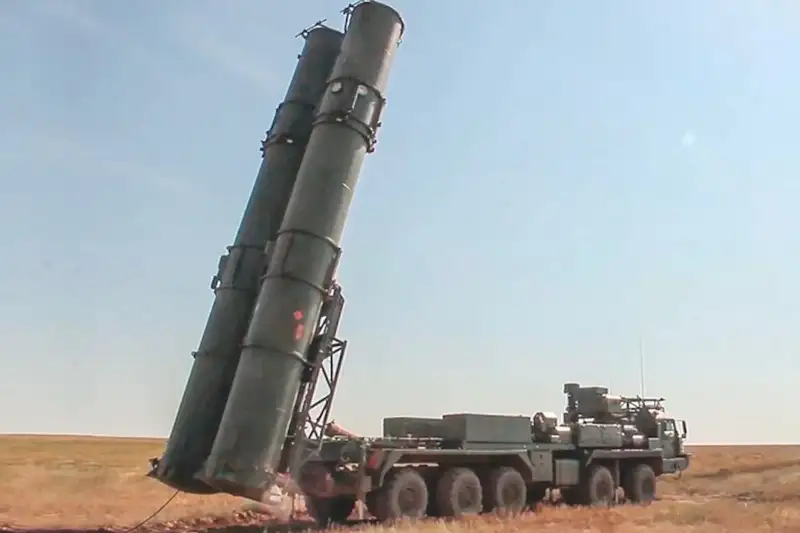
- India is actively considering purchasing the S-500 Prometheus, Russia's next-generation strategic missile and air defense system.
- The S-500 is designed to intercept highly challenging targets, including intercontinental ballistic missiles (ICBMs), satellites, and hypersonic vehicles.
- This potential acquisition is driven by concerns over China's advanced hypersonic missile technology and its potential proliferation to Pakistan.
- India has also reportedly moved to double its existing S-400 Triumf order, aiming for 20 battalions to bolster its layered air defense network.
New Delhi is reportedly poised to take a monumental leap in its strategic defense capabilities, with ongoing considerations to procure Russia's highly advanced S-500 Prometheus missile defense system. This move signals a profound recalibration of India's defense posture, reflecting a growing urgency to counter sophisticated aerial and space-based threats that define modern warfare.
Quick summary
- India is actively considering purchasing the S-500 Prometheus, Russia's next-generation strategic missile and air defense system.
- The S-500 is designed to intercept highly challenging targets, including intercontinental ballistic missiles (ICBMs), satellites, and hypersonic vehicles, marking a significant upgrade from the S-400.
- This potential acquisition is driven by concerns over China's advanced hypersonic missile technology and the risk of its proliferation to Pakistan.
- India has also reportedly moved to double its existing S-400 Triumf order, aiming for 20 battalions to bolster its layered air defense network.
Why it matters
The potential integration of the S-500 into India's defense arsenal represents a pivotal shift in the country's security architecture and the regional balance of power. For India, it offers an unprecedented defensive shield against threats previously deemed near-impossible to intercept, extending its deterrence capabilities into the realms of strategic missile defense and anti-satellite warfare. This acquisition would not only enhance India's ability to protect its critical infrastructure and population centers but also project a formidable counter-response to its adversaries' technological advancements.
Regionally, the S-500's deployment would significantly alter the strategic calculus, particularly with neighbors like China and Pakistan. By possessing the capability to intercept hypersonic glide vehicles and even satellites, India would gain a crucial advantage, potentially mitigating the first-strike threat posed by advanced missile systems. This move could spark a new dimension in the ongoing arms race, compelling regional powers to reassess their own defensive and offensive strategies, thereby influencing stability and escalating the cost of conflict in South Asia.
Background
India and Russia share a long-standing and robust defense cooperation history, with Moscow remaining a primary supplier of advanced military hardware to New Delhi. This partnership has evolved over decades, encompassing everything from fighter jets and submarines to sophisticated missile systems. The decision to pursue the S-500 comes in the wake of India's significant commitment to acquiring the S-400 Triumf air defense system, a deal formalized years prior. The S-400, designed primarily for intercepting aircraft, cruise missiles, and some ballistic missile threats, has been a cornerstone of India's efforts to modernize its air defense network.

The geopolitical landscape has seen rapid advancements in military technology, particularly in missile capabilities. China's aggressive development and deployment of hypersonic missiles, which can travel at speeds exceeding Mach 5 and maneuver unpredictably, have created new vulnerabilities for traditional air defense systems. The source reports that the emergence of China's HQ-29 counter-system, reportedly in August 2025, is cited as a catalyst for India's urgent pursuit of a comparable capability. Furthermore, concerns about the potential transfer of such advanced technologies to Pakistan have amplified India's need for a robust, multi-layered defense system capable of addressing these cutting-edge threats. Reports also indicate successful combat tests against Pakistani forces in March 2025 involving the S-400's 40N6 missiles, underscoring the dynamic and challenging regional security environment.
S-500: A New Frontier in Air and Space Defense
The S-500 Prometheus represents a qualitative leap from its predecessor, the S-400. While the S-400 excels at neutralizing conventional aerial threats and some ballistic missiles, the S-500 is engineered for a far more demanding class of targets. It is specifically designed to intercept intercontinental ballistic missiles (ICBMs) in their terminal phase, as well as beyond the atmosphere, alongside satellites in low Earth orbit and even advanced hypersonic glide vehicles.
Unmatched Range and Interception Capabilities
With an impressive operational range of up to 600 kilometers, the S-500 significantly outstrips the 400-kilometer reach of the S-400's most potent 40N6 missiles. This extended range allows India to engage high-value aerial targets deep within adversarial airspace from well-protected positions within its own borders. Its ability to track and engage multiple targets simultaneously, combined with its advanced radar systems, makes it a formidable strategic asset.
Anti-Satellite and Anti-ICBM Prowess
What truly sets the S-500 apart is its revolutionary capability as the world's first road-mobile defense system to integrate anti-satellite (ASAT) and ICBM interception functions. This dual-use capacity provides India with an unprecedented strategic shield, offering protection against potential space-based threats that could cripple communications and intelligence infrastructure, alongside defense against long-range nuclear-tipped missiles. The system's deployment by the Russian military has already marked a significant milestone in national strategic defense.
The China-Pakistan Nexus and India's Strategic Imperative
The rapid advancements in China's hypersonic missile technology are a primary driver behind India's interest in the S-500. China's lead in this domain, coupled with the real possibility of such technologies making their way to Pakistan, creates a complex and challenging security environment for India. Hypersonic weapons present a unique challenge due to their speed, maneuverability, and low-altitude flight profiles, making them exceedingly difficult for conventional air defense systems to detect and intercept.
By acquiring the S-500, India seeks to establish a credible deterrent against these evolving threats. It's not merely about defending against incoming missiles but also about maintaining strategic parity and ensuring a robust response capability that can neutralize threats across multiple domains – air, space, and ballistic.
Expanding the S-400 Fleet: A Layered Defense Strategy
Complementing its interest in the S-500, India has also reportedly moved to significantly expand its existing S-400 procurement. After fulfilling initial contractual obligations, the Indian Ministry of Defence is reportedly planning to double its S-400 acquisition, aiming to equip 20 battalions. This expansion signifies a strategic intent to create a dense, multi-layered air defense network capable of providing comprehensive coverage across critical sectors. The S-400s will continue to form the backbone of India's medium-to-long-range air defense, while the S-500 would provide the crucial top layer against the most advanced and strategic threats.
Qnews24h insight

India's reported pursuit of the S-500 Prometheus system underscores a critical inflection point in the global arms race, particularly in the Indo-Pacific region. This move reflects a calculated decision by New Delhi to not merely modernize but to leapfrog into a higher echelon of strategic defense capabilities. The emphasis on anti-ICBM, anti-satellite, and anti-hypersonic defense capabilities highlights a recognition that traditional air defense alone is insufficient against 21st-century threats. While economically demanding, this investment suggests India prioritizes strategic deterrence and the preservation of its national security against increasingly sophisticated and multi-domain challenges posed by its regional rivals. The successful integration of such complex systems will require significant training, infrastructure development, and strategic planning, testing the depth of India-Russia defense collaboration in an evolving geopolitical landscape.
Sources
FAQ
What is the S-500 Prometheus missile defense system?
The S-500 Prometheus is Russia's advanced strategic surface-to-air missile and anti-ballistic missile system. It is designed to intercept and destroy advanced targets such as intercontinental ballistic missiles (ICBMs), hypersonic cruise missiles, and even low-orbiting satellites, offering a multi-layered defense capability far exceeding previous systems.
How does the S-500 differ from the S-400 Triumf?
While the S-400 is primarily focused on engaging aircraft, cruise missiles, and certain ballistic missile threats at ranges up to 400 km, the S-500 is a higher-tier system. It specializes in intercepting more challenging, higher-altitude, and faster targets like ICBMs (both within and beyond the atmosphere), hypersonic vehicles, and satellites, with an extended range of up to 600 km.
Why is India interested in acquiring the S-500?
India's interest in the S-500 is largely driven by the evolving threat landscape in its neighborhood. Specifically, the rapid development of hypersonic missile technology by China and the potential for such capabilities to reach Pakistan necessitate a robust counter-measure. The S-500 offers India a critical defensive shield against these advanced threats, enhancing its strategic deterrence and national security.
What impact could the S-500 have on regional stability?
The acquisition of the S-500 by India could significantly alter the regional balance of power. It would provide India with an unmatched defensive capability against strategic threats, potentially reducing the effectiveness of an adversary's first-strike options. This could lead to a reassessment of defense strategies by other regional powers, potentially intensifying the ongoing arms race, but also creating a stronger deterrent against aggression.
Why it matters
The potential integration of the S-500 into India's defense arsenal represents a pivotal shift in the country's security architecture and the regional balance of power. For India, it offers an unprecedented defensive shield against threats previously deemed near-impossible to intercept, extending its deterrence capabilities into the realms of strategic missile defense and anti-satellite warfare. This acquisition would not only enhance India's ability to protect its critical infrastructure and population centers but also project a formidable counter-response to its adversaries' technological advancements. Regionally, the S-500's deployment would significantly alter the strategic calculus,...
Background
India and Russia share a long-standing and robust defense cooperation history, with Moscow remaining a primary supplier of advanced military hardware to New Delhi. This partnership has evolved over decades, encompassing everything from fighter jets and submarines to sophisticated missile systems. The decision to pursue the S-500 comes in the wake of India's significant commitment to acquiring the S-400 Triumf air defense system, a deal formalized years prior. The S-400, designed primarily for intercepting aircraft, cruise missiles, and some ballistic missile threats, has been a cornerstone of India's efforts to modernize its air defense network. The geopolitical landscape has seen rapid...
India's reported pursuit of the S-500 Prometheus system underscores a critical inflection point in the global arms race, particularly in the Indo-Pacific region. This move reflects a calculated decision by New Delhi to not merely modernize but to leapfrog into a higher echelon of strategic defense capabilities. The emphasis on anti-ICBM, anti-satellite, and anti-hypersonic defense capabilities highlights a recognition that traditional air defense alone is insufficient against 21st-century threats. While economically demanding, this investment suggests India prioritizes strategic deterrence and the preservation of its national security against increasingly sophisticated and multi-domain...
References
Editorial information
The editorial team reviews sources, adds context, and structures stories so readers can understand the news more clearly.
Article from QNEWS24H
Comments
(0)No comments yet. Be the first to share your thoughts.