India Plans First Arctic Cargo Voyage via Northern Sea Route by 2027 to Bypass Suez
- India plans its first trial cargo vessel transit across Russia's Northern Sea Route by 2027 to shorten shipping times to Europe.
- The 5,600-km Arctic corridor cuts voyage distances by up to 40% and transit times by two weeks compared to the Suez Canal.
- Freight volumes on the complementary Chennai-Vladivostok Eastern Maritime Corridor have jumped 70% following bilateral agreements.
- The initiative supports India and Russia's bilateral goal of reaching $100 billion in bilateral trade by 2030.
In a decisive strategic pivot to secure alternative trade corridors and expand commercial ties with Moscow, India is preparing to dispatch its first commercial cargo vessel along the Russian Arctic coastline via the Northern Sea Route (NSR) by 2027. The initiative represents New Delhi's calculated effort to diversify shipping lanes away from increasingly volatile Middle Eastern chokepoints while accelerating maritime transit to European markets.
Quick summary
- India plans to launch its first trial cargo vessel along Russia's 5,600-kilometer Northern Sea Route in 2027.
- The Arctic maritime corridor can reduce voyage distance by up to 40 percent and cut travel times to major European ports by nearly two weeks compared to the Suez Canal.
- Bilateral freight traffic along the complementary Chennai-Vladivostok Eastern Maritime Corridor has already surged by 70 percent following key logistics agreements signed last year.
- The initiative aligns with India and Russia's broader objective to elevate annual bilateral trade to $100 billion by 2030, underpinned by massive crude oil flows and energy logistics.
New Delhi's Arctic Maritime Ambition
Speaking at the Arctic-Regions Forum in Arkhangelsk on August 13, S. Venkatesapathy, Director at India's Ministry of Ports, Shipping and Waterways, confirmed that New Delhi is actively working toward launching a pilot cargo transit across the Northern Sea Route within three years. Heading an official Indian delegation at the two-day forum, Venkatesapathy highlighted the immense logistical and economic potential offered by Arctic navigation.
The announcement followed remarks delivered just a day earlier by Russian President Vladimir Putin, who underscored the accelerating international interest in Arctic logistics, explicitly naming India and China as key partners in unlocking the polar passage. For Moscow, attracting Asian cargo volume is fundamental to fulfilling its long-term strategy of transforming the frozen northern coastline into a global commercial superhighway.
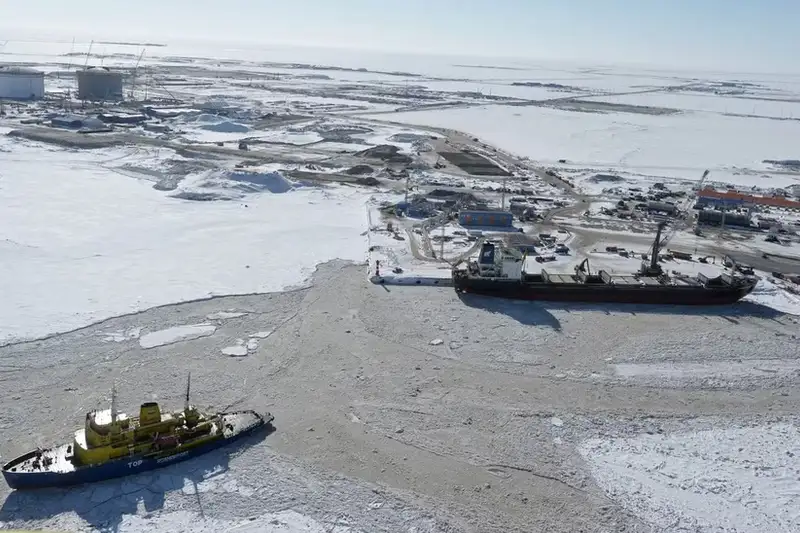
The Northern Sea Route stretches roughly 5,600 kilometers along Russia's northern littoral, connecting the Barents Sea near Norway's border with the Bering Strait near Alaska. As sea ice diminishes during seasonal windows, the corridor stands as the shortest viable maritime link between East Asia, South Asia, and the continent of Europe.
Bridging the Chennai-Vladivostok Corridor and the Polar Route
India's planned Arctic voyage builds directly upon momentum gained from the Eastern Maritime Corridor (EMC), which connects the port of Chennai on India's southeast coast with the Russian Pacific gateway of Vladivostok. According to Indian shipping authorities, cargo traffic along the EMC has surged by 70 percent as both nations operationalize bilateral logistics frameworks.
During the past year, New Delhi and Moscow formalized two key Memorandums of Understanding (MOUs) focused on the joint development of both the Eastern Maritime Corridor and the Northern Sea Route. Connecting Indian industrial hubs to Vladivostok provides a natural jumping-off point to feed containerized goods, energy products, and dry bulk into the Arctic shipping network during navigable seasons.
This dual-corridor strategy directly supports the economic blueprint set by both governments to achieve $100 billion in annual bilateral trade by 2030. Russian crude oil currently accounts for more than half of India's total petroleum imports, making secure, efficient, and cost-effective sea lanes an urgent priority for Indian energy planners.
Circumventing Suez Disruptions and Slashing Transit Costs
For Indian exporters and shipping lines, navigating the Northern Sea Route offers concrete operational efficiencies. Compared to the conventional route through the Indian Ocean, the Red Sea, the Suez Canal, and the Mediterranean, the Arctic route can shorten the sailing distance to northern European ports by up to 40 percent, saving approximately 14 days at sea.
Beyond pure distance metrics, the commercial appeal of the NSR has climbed dramatically due to acute instability across traditional routes. Escalating security crises and geopolitical conflict in the Middle East have exposed international shipping to severe vulnerabilities in the Red Sea and the Bab el-Mandeb Strait, forcing global carriers into expensive, long-distance detours around Africa's Cape of Good Hope.
By testing Arctic transit, New Delhi aims to insulate its commercial fleet from single-chokepoint vulnerabilities while capturing substantial savings on fuel, vessel operating days, and marine insurance premiums associated with high-risk transit zones.
Infrastructure, Nuclear Icebreakers, and Regional Competition
Russia has committed substantial capital toward constructing the deep-water ports, navigation aids, and search-and-rescue infrastructure required to commercialize the NSR. The overall administration and operational coordination of the route are managed by Rosatom, the state atomic energy corporation that maintains Russia's unique fleet of nuclear-powered icebreakers capable of carving channels through dense polar ice.
International logistics operators have steadily entered the Arctic ecosystem. In 2023, Russian authorities concluded a strategic partnership with Dubai-based global terminal operator DP World to jointly develop container transit systems across the polar route.
Commercial activity along the corridor is already ramping up among Asian powers:
- Cargo volumes transiting the Northern Sea Route have surpassed 37 million tons over the past two years, with official projections aiming for 20 million tons annually along specific segments by 2030.
- Sino-Russian freight moving through the NSR has exceeded 5 million tons this year alone, according to Azamat Khochuev, Director of the Northern Sea Route and Arctic Development Department at Rosatom.
- Chinese carriers are dramatically scaling their polar presence, with container transits growing from 23 voyages last year to roughly 30 scheduled in 2024.
- China's Sea Legend Shipping is inaugurating regular container operations to Europe via the NSR using seven specialized vessels operating between August and October, Rosatom officials confirmed.
- South Korea has likewise designated NSR cargo development as a top-tier national strategic priority to preserve its competitive edge in maritime supply chains.
Why it matters
India's entry into Arctic maritime trade represents a transformative shift in global supply chain architecture. As traditional shipping choke points face rising physical, political, and climatic vulnerabilities, establishing a functional Arctic alternative gives major Asian manufacturing and energy economies greater leverage and supply chain resilience.
For global shipping and logistics industries, India's pilot project validates the Northern Sea Route as an emerging commercial reality rather than a speculative concept. If successful, the 2027 trial could prompt international marine insurers, cargo owners, and shipbuilding yards to adapt vessel designs and operational protocols for high-latitude navigation, fundamentally redrawing commercial transit maps between Asia and Europe.
Background
For decades, commercial shipping between Asia and Europe has relied almost exclusively on the southern maritime highway passing through the Strait of Malacca, the northern Indian Ocean, and the Suez Canal. However, expanding Arctic navigation windows caused by shifting ice patterns, combined with Russia's construction of next-generation nuclear icebreakers, have turned the NSR into a viable seasonal alternative.
Bilateral economic relations between India and Russia expanded exponentially following Western sanctions on Moscow in 2022, which prompted Russia to redirect crude oil, coal, and fertilizer exports to Asian buyers at discounted rates. To sustain these unprecedented trade volumes, both nations signed bilateral memorandums in 2023 to link the Indian Ocean to Russia's Far East and polar waters, establishing formal logistical cooperation that laid the groundwork for the 2027 trial voyage.
Qnews24h insight
While the economic promise of cutting transit times by two weeks is compelling, India's Arctic ambitions will face formidable technical, environmental, and diplomatic hurdles before achieving commercial scale. Arctic navigation remains strictly seasonal, constrained by harsh polar weather, ice-class vessel requirements, and reliance on Russian icebreaker escorts operated by Rosatom.
Furthermore, New Delhi must balance its participation in Russian-led Arctic corridors against its strategic ties with Western partners who closely monitor infrastructure initiatives in the region. The 2027 test voyage will serve as a critical benchmark: it will test whether the Northern Sea Route can realistically transition from an energy-heavy bilateral corridor into a dependable, cost-effective multimodal container trade route for non-Russian global commerce.
Sources
- Arctic-Regions Forum, Arkhangelsk (Statements by S. Venkatesapathy, Director at the Indian Ministry of Ports, Shipping and Waterways)
- Rosatom State Atomic Energy Corporation (Statements by Sergey Likhachev and Azamat Khochuev)
- Soha.vn / International Maritime Industry Coverage
Why it matters
India's planned Arctic navigation trial marks a major strategic diversification from conventional, conflict-exposed choke points like the Suez Canal and Red Sea. It provides South Asian trade with a shorter, alternative gateway to European markets while deepening economic integration with Russia's energy and logistics sectors.
Background
Traditional Asia-Europe maritime commerce has long depended on the Suez Canal route. Following 2022 geopolitical shifts, India's imports of Russian crude surged to over 50% of its total oil intake, accelerating the need for direct sea lanes. In 2023, India and Russia signed MOUs to develop the Eastern Maritime Corridor and Arctic routes to accommodate expanding trade flows.
India's 2027 Arctic trial is a pragmatic logistical hedge, but commercial scaling will be constrained by seasonal ice windows, mandatory icebreaker support from Rosatom, and geopolitical scrutiny from Western partners. The project's success will determine whether the NSR can evolve into a multi-commodity transit artery beyond bilateral energy shipments.
References
Editorial information
The editorial team reviews sources, adds context, and structures stories so readers can understand the news more clearly.
Article from QNEWS24H
Comments
(0)No comments yet. Be the first to share your thoughts.