HMD Touch AI: Feature Phone's 'AI' Gamble Sparks Debate on True Innovation
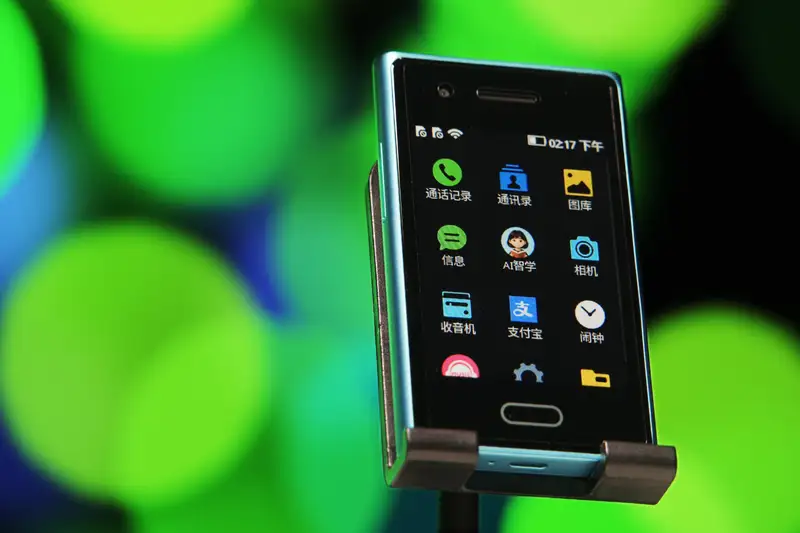
- HMD Global launched the 'Touch AI' feature phone in China for 469 yuan, blending budget hardware with premium-sounding technology.
- Despite 'AI' branding, the device's minimalist hardware (64 MB RAM, RTOS) necessitates all AI functions to be cloud-based, relying on remote API calls.
- The phone leverages Nokia's social media for its announcement and adopts a Lumia-inspired design, tapping into brand nostalgia.
- The product sparks debate on 'AI washing' and the true meaning of AI integration in low-cost devices within the rapidly evolving tech landscape.
In an unexpected twist in the mobile technology landscape, HMD Global has unveiled a new 'feature phone' in China, the HMD Touch AI, that paradoxically boasts artificial intelligence capabilities. Priced at 469 yuan (approximately 1.85 million VND), this device, reminiscent of the classic Nokia Lumia series, immediately ignited discussions about the true meaning of AI in budget-friendly hardware and the ethics of technology marketing.
Quick summary
- HMD Global has launched the HMD Touch AI in China, a feature phone priced at 469 yuan (about $65 USD).
- Despite being marketed with 'AI' capabilities, the device runs on minimalist hardware (64 MB RAM, RTOS) incapable of on-device AI processing.
- All stated AI functionalities operate via cloud-based API calls, requiring 4G or Wi-Fi connectivity, leading to slower response times.
- The phone leverages Nokia's social media channels for its announcement and adopts a design aesthetic reminiscent of the Windows Phone-era Lumia devices, despite not carrying the Nokia brand itself.

Why it matters
This development is significant for several reasons, impacting consumers, the mobile industry, and the broader understanding of technological innovation. For consumers, the HMD Touch AI brings to the fore the critical issue of 'AI washing,' where advanced labels are affixed to products that fundamentally rely on basic cloud connectivity for their 'smart' features. This can lead to misconceptions about a product's capabilities and value proposition, potentially eroding trust in marketing claims. Understanding whether a device processes AI on-board or merely acts as a conduit to cloud services is crucial for informed purchasing decisions, especially as AI becomes ubiquitous.
For the mobile industry, HMD Global's strategy represents an attempt to inject new life into the stagnating feature phone market by leveraging the pervasive excitement around AI. It challenges traditional distinctions between 'dumbphones' and smartphones, suggesting a future where even the most basic devices aim for a degree of intelligence, however outsourced. This move could inspire other manufacturers to explore similar hybrid models, or, conversely, prompt a more stringent industry-wide definition of what 'AI-enabled' truly entails for different hardware tiers. Furthermore, it highlights the ongoing debate about the viability and utility of cloud-based AI solutions for regions with varying internet infrastructure, and the potential for a two-tiered AI experience based on device cost.
Background

The journey of mobile phones has seen a dramatic shift from the widespread dominance of feature phones in the early 2000s to the smartphone era that began with the iPhone's introduction in 2007. Feature phones, characterized by their physical keypads, simpler operating systems (often proprietary or RTOS-based), and core functionalities like calls, texts, and basic media, steadily declined in global market share as smartphones became more affordable and powerful. However, a niche market persisted, particularly in developing countries or among users seeking digital detox, longer battery life, and durability.
HMD Global, the Finnish company that acquired the rights to the Nokia brand for mobile phones in 2016, has played a pivotal role in this landscape. HMD has successfully capitalized on Nokia's legacy, releasing modern interpretations of classic models alongside budget Android smartphones. Their strategy often involves a blend of nostalgia, robust build quality, and accessible pricing, particularly in the feature phone segment, exemplified by devices like the HMD 105 4G.
The current AI boom, largely driven by advancements in large language models and generative AI, has created immense pressure on tech companies to integrate AI into virtually every product category. From high-end smartphones with dedicated neural processing units (NPUs) to smart home devices, 'AI' has become a potent marketing buzzword. This backdrop sets the stage for the HMD Touch AI, positioning it at the intersection of feature phone revivalism and the pervasive AI trend, but with a critical question mark over its execution.
The Device in Detail: A Modern 'Dumbphone'
The HMD Touch AI embodies the essence of a traditional feature phone with a few modern touches. Its physical design, measuring 102.3 x 61.85 x 10.85 mm and weighing approximately 100 grams, evokes a sense of compactness and ergonomic simplicity. The rounded body and circular camera module on the rear are direct visual callbacks to the distinctive aesthetic of Nokia's Lumia line from the Windows Phone era, a clear attempt to tap into brand familiarity and nostalgia, even though the device doesn't bear the Nokia logo itself.
The phone features a modest 3.2-inch touchscreen display with a resolution of 240 x 320 pixels. For optics, it includes a 2-megapixel rear camera with an LED flash and a basic 0.3-megapixel front camera. A dedicated physical button on the top edge is a notable inclusion; by default, it activates the 'AI assistant' but can be reconfigured as an SOS emergency button, offering a practical utility often sought in simpler devices.

Hardware Limitations and the 'AI' Controversy
The heart of the HMD Touch AI's controversial 'AI' claim lies in its internal specifications. Powering the device is a Unisoc T127 chip, paired with a meager 64 MB of RAM and 128 MB of internal storage, expandable up to 32 GB via a microSD card. Crucially, the phone does not run on Android; instead, it utilizes a proprietary Real-Time Operating System (RTOS) developed by HMD. These specifications are standard for budget feature phones but are far from what's required for running complex AI models locally.
With only 64 MB of RAM and an RTOS, the HMD Touch AI is fundamentally incapable of executing any significant AI processing directly on the device. Its advertised AI features—whatever their nature—are implemented by sending data via 4G or Wi-Fi connectivity to cloud-based servers, which then process the requests and return a response. This means the 'AI' is essentially an API call to a remote service, similar to how a web browser accesses online information. Early reports suggest that the response time for these cloud-based AI functions is noticeably slower, lagging behind high-end smartphones by one to two seconds.
This approach has sparked a debate, particularly in Chinese tech communities like Zhihu, questioning whether this truly represents an AI revival for feature phones or if it's merely a marketing tactic—dubbed 'AI washing'—to imbue a standard budget phone with a trending, yet misleading, label. The distinction between on-device AI and cloud-based AI is crucial, as the latter is reliant on network availability and speed, and offers no privacy benefits associated with local processing.
Marketing Strategy and Market Position
HMD Global's decision to announce the Touch AI through official Nokia social media accounts, despite the product not carrying the Nokia brand, highlights a strategic leveraging of brand equity and established fan bases. By evoking the much-loved Lumia design language, HMD aims to tap into nostalgia and differentiate the Touch AI in a crowded, competitive budget phone segment. This tactic is especially pertinent in markets like China, where brand loyalty and design aesthetics can significantly influence consumer choice.

The product's launch in China at 469 yuan positions it firmly within the affordable feature phone category. While no information has been released regarding its availability or pricing in markets outside China, this domestic debut indicates HMD's focus on key regional markets for new product trials. The Touch AI joins other HMD feature phones, such as the HMD 105 4G, which is also a popular budget option, hinting at a multi-pronged strategy to capture various segments of the non-smartphone market.
The Broader 'Dumbphone' Trend and Digital Well-being
The re-emergence of feature phones, sometimes colloquially referred to as 'dumbphones,' has been a notable counter-cultural trend in recent years. Driven by a desire for digital detox, reduced screen time, and a simpler communication experience, many consumers are consciously opting for devices that strip away the complexities and addictive qualities of modern smartphones. These users prioritize extended battery life, robust build quality, and a focus on core functions like calls and text messages over app ecosystems and constant connectivity.
In this context, the HMD Touch AI presents an intriguing paradox. While its minimalist hardware and RTOS align with the 'dumbphone' ethos of simplicity and longevity (thanks to its 1,950 mAh battery and 4W USB-C charging), the prominent 'AI' branding seemingly contradicts the anti-smart, anti-distraction philosophy. It raises questions about whether this particular device is attempting to bridge two disparate trends – the demand for simplicity and the allure of advanced intelligence – and if so, how effectively it can cater to either user base without compromising its appeal.
Qnews24h insight
The HMD Touch AI serves as a potent case study for the current state of technology marketing and consumer expectations amidst the AI boom. It underscores a crucial challenge: distinguishing genuine, on-device artificial intelligence from cloud-powered services simply branded as 'AI' for promotional advantage. HMD Global's strategy is a calculated gamble, attempting to inject premium-sounding technology into a low-cost, low-spec device, leveraging both nostalgia for classic Nokia designs and the current fascination with AI. However, by relying entirely on cloud APIs, the 'AI' functionality risks being perceived as superficial, offering little more than a slightly slower, voice-activated interface to existing internet services. This product highlights that while the democratization of 'intelligence' across all device tiers is an inevitable trend, the industry must be transparent about the underlying technological capabilities to avoid 'AI washing' and uphold consumer trust. It tests the limits of how much 'AI' can be promised when hardware limits what can be delivered locally.

Sources
FAQ
What is the HMD Touch AI phone?

The HMD Touch AI is a new feature phone launched by HMD Global in China. It's a basic mobile device with a small touchscreen, a physical button for AI or SOS functions, and runs on a Real-Time Operating System (RTOS), not Android. It draws design inspiration from classic Nokia Lumia phones.
How do the 'AI' features work on this device?
The AI capabilities of the HMD Touch AI are not processed directly on the device due to its limited hardware (64 MB RAM, Unisoc T127 chip). Instead, all AI functionalities rely on connecting to cloud servers via 4G or Wi-Fi, essentially making API calls to remote services. This means the phone acts as a terminal for cloud AI rather than performing AI computations itself.
Is the HMD Touch AI available outside China?
As of the available information, the HMD Touch AI is currently sold on JD.com in China. There has been no official announcement regarding its availability or pricing for international markets.
Why is the HMD Touch AI controversial?
The phone has sparked controversy because of its 'AI' branding despite having hardware that cannot run AI models on-device. Critics argue that relying solely on cloud-based API calls for 'AI' features, combined with a slower response time compared to high-end phones, could be seen as a marketing tactic ('AI washing') that misleads consumers about the true technological capabilities of the device.
Why it matters
The HMD Touch AI is a critical point of discussion for consumers and the mobile industry alike. For consumers, it highlights the increasing prevalence of 'AI washing,' where advanced labels are used without clear distinction between on-device processing and outsourced cloud services, potentially leading to misleading expectations and eroding trust. For the industry, it's a test of whether AI buzzwords can revive declining segments like feature phones, and it contributes to the ongoing debate about the definition and implementation of AI across various hardware tiers and market segments. This move could influence how other manufacturers approach AI integration in budget devices and shape...
Background
The mobile phone market has evolved significantly from the dominance of basic feature phones to the pervasive smartphone era. HMD Global, managing the Nokia phone brand, has successfully carved a niche by blending retro appeal with budget-friendly devices, maintaining a presence in the feature phone segment. This launch occurs amidst a global AI boom, where companies are eager to incorporate 'AI' into their products to capitalize on consumer interest. Simultaneously, there's a growing 'dumbphone' trend, driven by users seeking simpler devices for digital detox. The HMD Touch AI, therefore, attempts to navigate these diverse market forces by presenting an 'AI-enabled' feature phone, pushing...
The HMD Touch AI signifies a pivotal moment in technology marketing, illustrating the commoditization of 'AI' as a buzzword rather than a guaranteed on-device capability. This product is a calculated strategic move by HMD Global to inject perceived innovation into a declining feature phone market, banking on the allure of AI and the nostalgia of Nokia's design heritage. However, by relying solely on cloud-based processing for its 'intelligence,' the device risks exposing a fundamental disconnect between marketing hype and actual technological delivery. It challenges both consumer understanding of AI and industry transparency, suggesting a future where 'AI-powered' might often just mean...
References
Editorial information
The editorial team reviews sources, adds context, and structures stories so readers can understand the news more clearly.
Article from QNEWS24H
Comments
(0)No comments yet. Be the first to share your thoughts.