High-Tech Japanese Folding Fans: Ancient Craft Meets Climate-Survival Fashion
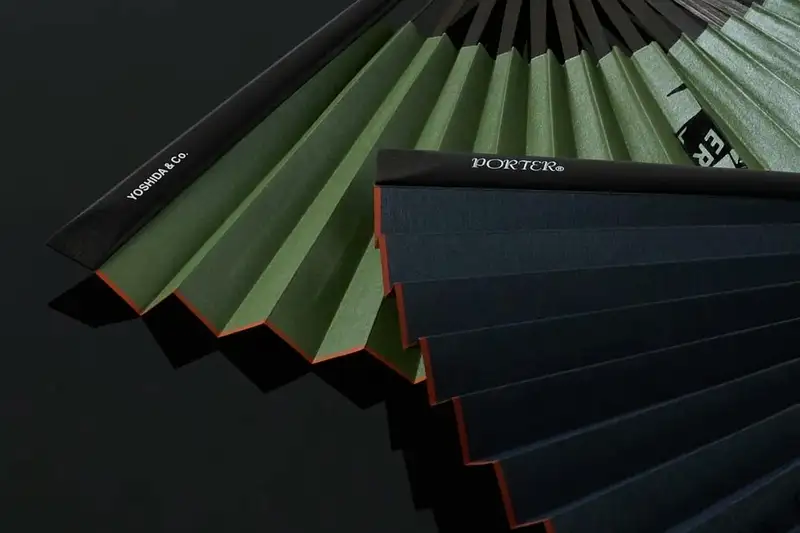
- Japanese brands like meanswhile and BYCRUISE are swapping fragile paper for ultra-durable materials like Dyneema and waterproof X-PAC to engineer folding fans built to withstand...
- Luggage giant PORTER (Yoshida & Co.) has teamed up with Kyoto’s historic, 200-year-old fan maker Miyawaki Baisenan to merge classical Japanese artistry with tactical nylon housing.
- Intense summer heatwaves have shifted hand fans from novelty runway accessories at Paris Fashion Week into essential, everyday climate-survival tools.
As mercury levels break historic records across the globe, the line between high fashion and survival gear is rapidly blurring. What was once a delicate, ornamental accessory reserved for courtly rituals or brief moments of personal cooling has undergone a radical transformation. Japanese outerwear designers and heritage craftsmen are currently leading a quiet revolution, turning the traditional folding fan into an almost indestructible piece of tactical gear. Far from the fragile paper-and-wood constructions of the past, these modern iterations utilize materials engineered for extreme environments—ranging from waterproof sailcloth to fibers found in bulletproof armor—proving that adaptation to climate change can be both highly functional and culturally profound.
Quick summary
- Material Revolution: Japanese vanguard brands like meanswhile and BYCRUISE are swapping fragile paper for ultra-durable materials like Dyneema and waterproof X-PAC to engineer folding fans built to withstand rugged outdoor use.
- Heritage Collaborations: Luggage giant PORTER (Yoshida & Co.) has teamed up with Kyoto’s historic, 200-year-old fan maker Miyawaki Baisenan to merge classical Japanese artistry with tactical nylon housing.
- Climate-Driven Utility: Intense summer heatwaves have shifted hand fans from novelty runway accessories at Paris Fashion Week into essential, everyday climate-survival tools.
Why it matters
The reinvention of the folding fan represents a broader socio-cultural shift: the normalization of climate-adaptive fashion. As global warming leads to increasingly prolonged and severe heatwaves, consumers—particularly in urban environments—are demanding products that offer immediate physical relief without sacrificing personal style. This trend highlights a critical transition where techwear aesthetics are no longer just about looking "prepared" for a dystopian future, but rather providing practical, high-performance tools for a changing climate. Furthermore, this movement offers a sustainable template for preserving ancient cultural crafts. By marrying centuries-old artisanal techniques with high-tech textiles, heritage manufacturers are finding new relevance and younger audiences in the modern market.
Background
To understand the significance of this transformation, one must look back to the origins of the object itself. The folding fan, or sensu, was invented in Japan during the Heian period (around the 8th century). Originally crafted from thin strips of Hinoki cypress wood and Japanese paper (washi), these fans were highly structured, deeply symbolic, and reserved for court aristocrats, samurai, and traditional performing arts. Over the centuries, the basic design of creased material attached to radiating ribs remained relatively static, prioritizing delicate aesthetics over extreme durability.
In recent years, the fashion industry has occasionally co-opted the fan as a luxury accessory. During sweltering summer showcases in Paris and Milan, luxury houses like Dior and Gucci have distributed branded paper fans to sweltering attendees. Some of these brands went on to release high-end retail versions, such as Dior’s pearwood-and-cotton fan retailing for $240, or Gucci’s silk-satin models priced upwards of $480. However, these delicate status symbols are notoriously fragile, offering little practical utility for rigorous daily use or outdoor survival. As global temperatures continued to climb, the gap between luxury ornamentation and rugged, everyday reliability became glaringly apparent.
This gap is where Japanese technical designers stepped in. Rather than viewing the fan merely as a canvas for a luxury logo, they recognized it as an engineering challenge. By looking at the fan as a mechanical tool for heat mitigation, they set out to replace traditional delicate components with advanced, modern textiles while respecting the ancestral physics of folding air.
The High-Tech Pioneers: From Dyneema to Okayama Denim
The vanguard of this tactical fan movement is defined by a diverse lineup of Japanese labels, each bringing distinct manufacturing philosophies to the table.
meanswhile: Indestructible Airflow
Leading the technical charge is the outdoorsy fashion label meanswhile. Known for its utilitarian design ethos, the brand recently released a handheld fan constructed from Dyneema. Often marketed as the world's strongest fiber, Dyneema is an ultra-high-molecular-weight polyethylene that boasts a tensile strength fifteen times greater than quality steel on a weight-for-weight basis. It is water-resistant, highly resistant to UV light, and chemically inert, making it a staple material in heavy marine ropes, commercial shipping, and military-grade body armor. By utilizing Dyneema instead of paper or silk, meanswhile has created a folding fan that is virtually tear-proof, completely waterproof, and capable of enduring the most punishing outdoor conditions without losing its structure.
PORTER x Miyawaki Baisenan: Heritage Meets Nylon Twill
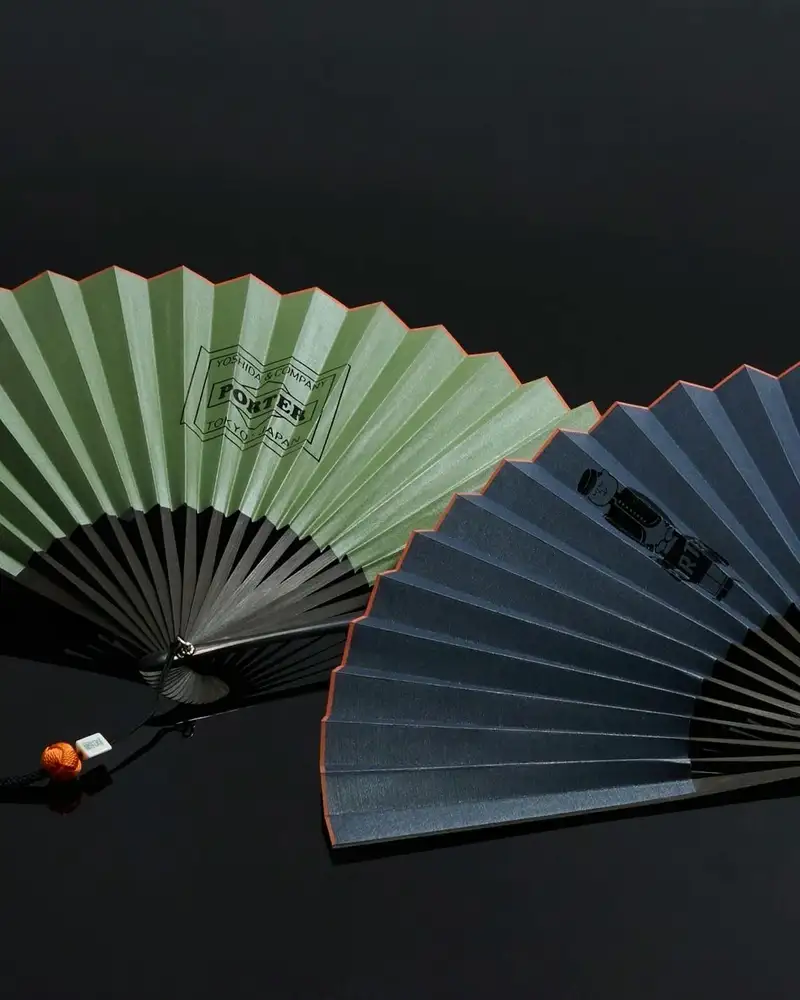
In a masterclass of cultural synthesis, Yoshida & Co.’s flagship luggage brand, PORTER, recently restocked its highly sought-after collaborative folding fan. Created alongside Miyawaki Baisenan—a Kyoto-based fan specialty store founded in 1823—this product strikes a delicate balance between tradition and modern utility. The fan itself preserves traditional materials, using fine Japanese paper and structured bamboo, and is lightly scented with musk in keeping with classical customs. It is emblazoned with PORTER's iconic logo and the whimsical Porter-kun mascot. However, the modern adaptation lies in its accessories: a heavy-duty braided-cord wrist strap and a custom-engineered carrying pouch crafted from PORTER’s legendary, ultra-durable nylon twill—the same fabric used in their military-inspired Tanker bag series. This setup ensures the delicate heirloom-quality fan remains protected during rugged urban commutes.
Nishikawa Shouroku Shouten and BYCRUISE: Rugged Utility
Other Japanese labels are exploring alternative material innovations to cater to different subcultures. BYCRUISE, a brand heavily embedded in tactical and outdoor lifestyle gear, has developed a fan using X-PAC. Originally designed by sailcloth specialists Dimension-Polyant, X-PAC is a multi-layer laminate fabric that features a distinctive diamond-shaped pattern of black polyester X-Ply threads. The result is a fan that is incredibly lightweight, stiff enough to move a massive volume of air with minimal effort, and entirely impervious to water or tearing.
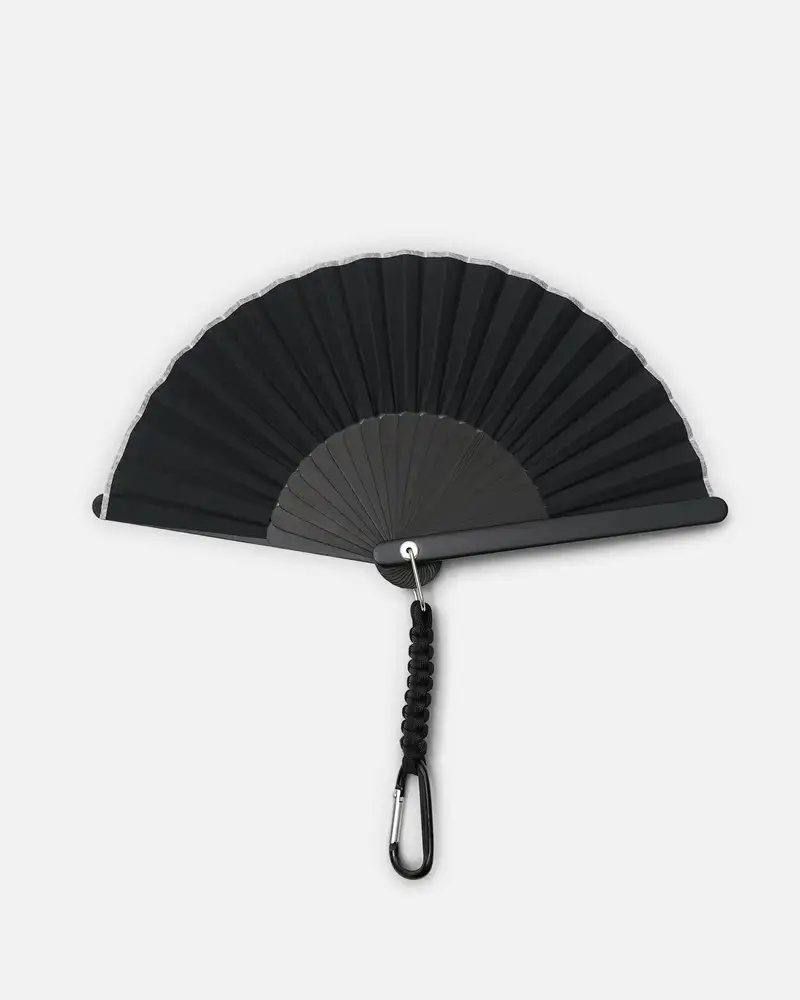
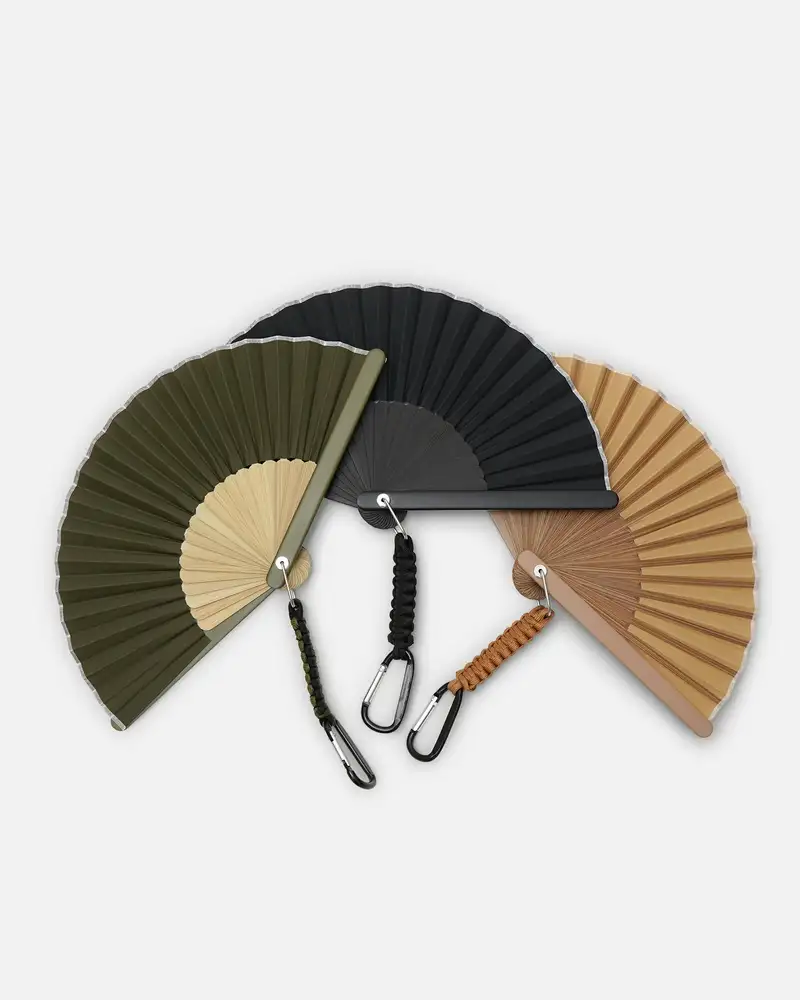
Meanwhile, the historic Shiga-based merchant house Nishikawa Shouroku Shouten (operating since 1585) has modernized its offerings to appeal to the outdoor community. They introduced a rugged, adventure-ready fan equipped with a heavy-duty carabiner attached to the pivot point, allowing hikers to easily clip the fan to backpacks or tactical vests. This carabiner fan has even seen special thematic releases, such as a licensed Mobile Suit Gundam Wing version. Additionally, they produce the Okayama Denim Fan, constructed from durable 8-ounce denim complete with red selvage edges, marrying Japan's legendary textile heritage with the physics of manual cooling.
Qnews24h insight
At first glance, spending premium prices on a manual folding fan made of ballistic nylon or bulletproof fiber might seem like an extreme novelty. However, a deeper analysis reveals this trend as a logical and highly intelligent evolution of "survivalist chic." For years, the fashion industry has obsessed over aesthetic prepper gear—such as tactical vests, multi-pocket cargo pants, and trail-running shoes worn exclusively on concrete. But as extreme weather shifts from a distant headline to an immediate summer reality, consumers are seeking micro-adaptations that actually work.
What makes the Japanese approach so successful is its refusal to abandon cultural heritage in favor of cheap, disposable plastic solutions. Rather than relying on battery-powered plastic mini-fans that eventually end up in landfills, these brands are elevating an 8th-century manual technology. By reinforcing the fan with indestructible materials, they ensure it remains a lifetime purchase. This is a rare, positive intersection of sustainability, climate adaptation, and heritage preservation. It proves that the best way to face a warmer future might not be through high-tech machinery, but through the thoughtful reinforcement of ancient, human-powered wisdom.
Sources
- Information regarding products, brand collaborations, and materials sourced from Highsnobiety.
Why it matters
The reinvention of the folding fan highlights a shift toward climate-adaptive fashion. As extreme weather events increase, consumers demand practical, durable heat-mitigation tools that do not rely on batteries, showing how heritage preservation can adapt to modern challenges.
Background
The folding fan (sensu) was invented in Japan in the 8th century. Though traditionally crafted from delicate wood and paper, recent severe global heatwaves have forced the fashion industry to transition the fan from a fragile, expensive runway novelty to a rugged, high-tech piece of utility gear.
This trend represents the logical evolution of 'survivalist chic' into genuine climate utility. Instead of relying on disposable plastic or battery-operated devices, reinforcing human-powered, historic tools with industrial-grade fabrics presents a sustainable, elegant path forward for modern techwear.
References
Editorial information
The editorial team reviews sources, adds context, and structures stories so readers can understand the news more clearly.
Article from QNEWS24H
Comments
(0)No comments yet. Be the first to share your thoughts.