Navigating Digital Maps: Google Maps vs. Waze for Senior Drivers

- Google Maps offers a comprehensive, intuitive design with rich geographical details and reliable routing, supporting various travel modes including walking and public transport.
- Waze focuses on real-time traffic avoidance through community-sourced incident reports, prioritizing efficient travel between two points.
- For the majority of older drivers, Google Maps is the more suitable choice due to its predictable, less cluttered interface and advanced AI-powered voice control.
- Tech-savvy seniors with extensive smartphone experience may find Waze beneficial for navigating routine commutes, leveraging its dynamic rerouting capabilities.
In an increasingly digital world, navigation applications have become indispensable tools for drivers of all ages, guiding millions through complex road networks daily. Yet, for older drivers, the seemingly simple choice between two leading apps—Google Maps and Waze—presents a unique dilemma. While both are under the Google umbrella, their distinct philosophies and user interfaces cater to different priorities, raising important questions about accessibility, cognitive load, and road safety for a demographic that values reliability and ease of use.
Quick summary
- Google Maps offers a comprehensive, intuitive design with rich geographical details and reliable routing, supporting various travel modes including walking and public transport.
- Waze focuses on real-time traffic avoidance through community-sourced incident reports, prioritizing efficient travel between two points.
- For the majority of older drivers, Google Maps is the more suitable choice due to its predictable, less cluttered interface and advanced AI-powered voice control.
- Tech-savvy seniors with extensive smartphone experience may find Waze beneficial for navigating routine commutes, leveraging its dynamic rerouting capabilities.
Why it matters
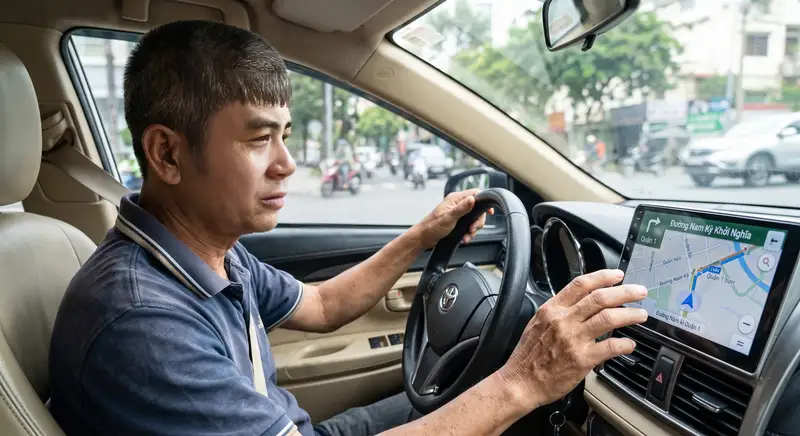
The choice of a navigation app for older drivers extends beyond mere convenience; it directly impacts their safety, independence, and confidence on the road. As populations age globally, ensuring access to technology that is both effective and user-friendly becomes paramount. An intuitive navigation system can reduce driver stress, minimize distraction, and help seniors maintain their mobility, allowing them to remain active and connected within their communities. Conversely, an overly complex or distracting interface could lead to confusion, increased anxiety, and potentially hazardous situations, undermining the very purpose of a navigational aid. This issue highlights the broader importance of inclusive design in technology, ensuring that digital tools serve the diverse needs of all users, including those who may face age-related sensory or cognitive changes.
Background
The evolution of navigation technology has progressed rapidly from paper maps and static GPS devices to the dynamic, real-time applications we use today. Google's foray into this space began with Google Maps, launched in 2005, which quickly became the dominant platform due to its extensive mapping data, satellite imagery, and comprehensive route planning. In 2013, Google acquired Waze, an Israeli startup renowned for its community-driven, real-time traffic and hazard reporting. This acquisition created an interesting dynamic, as Google chose to maintain Waze as a distinct product, allowing both apps to coexist and appeal to different user segments.
Over the years, Google Maps has evolved into a 'super-app,' integrating not just driving directions but also public transport schedules, walking paths, cycling routes, business information, and even indoor maps. Its design has consistently aimed for broad appeal and comprehensive utility. Waze, on the other hand, has steadfastly remained a niche product, laser-focused on its core strength: leveraging its user community to provide immediate updates on traffic jams, accidents, speed traps, and road closures, then dynamically rerouting drivers to save time. This divergence in design philosophy and feature set has always existed, but its implications for specific user groups, particularly older drivers who may have varying degrees of digital literacy and unique cognitive requirements, have become increasingly apparent.
Qnews24h insight
The ongoing distinction between Google Maps and Waze within Google's own ecosystem reveals a shrewd understanding of varied user needs, but also underscores a critical challenge in inclusive technology design. While Google Maps targets a universal audience with its robust feature set and predictable interface, Waze capitalizes on the power of crowdsourcing for real-time efficiency. For the growing demographic of older drivers, this differentiation isn't merely a matter of preference but of practical usability and safety.
The source material highlights how Waze's constant, unpredictable alerts about accidents or roadworks can overwhelm seniors, potentially causing distraction and confusion due to age-related impacts on vision, hearing, and cognitive processing. This points to a fundamental trade-off: the value of real-time, dynamic information versus the need for a stable, less cognitively demanding user experience. Google Maps, with its cleaner display and, crucially, its integration of AI-powered voice interaction via Gemini, offers a pathway to bridging this gap. Voice commands allow older drivers to interact with the system naturally, reducing the need for visual focus and manual screen interaction, thus enhancing safety. This isn't just a feature; it's a strategic move towards making advanced navigation technology genuinely accessible, emphasizing that for many users, particularly seniors, less clutter and more intuitive interaction, such as voice control, often translates directly into a superior, safer experience rather than simply 'more' features.
The Core Difference: Design Philosophy
At their heart, Google Maps and Waze represent two distinct approaches to digital navigation. Google Maps embodies a comprehensive, 'all-in-one' philosophy. Its interface is designed to be visually rich, presenting detailed geographical layouts, points of interest, street views, and multi-modal transport options. The visual cues are consistent and familiar, providing a sense of spatial awareness that many users, especially older ones, find reassuring.
Google Maps: The Comprehensive Companion
Google Maps prioritizes a predictable and robust routing experience. Its algorithms consider various factors beyond just current traffic, including road hierarchy, permanent closures, and typical traffic patterns. For older drivers, this predictability translates into a lower cognitive load. They can anticipate turns, understand the layout of complex intersections, and feel more in control of their journey. The application's broad utility, extending to walking, cycling, and public transport directions, also makes it a singular tool for all travel planning, reducing the need to switch between different apps.
Waze: The Real-Time Traffic Navigator
Waze's core strength lies in its community. Users actively report traffic jams, police presence, hazards, and construction zones in real-time, enabling the app to reroute drivers dynamically to avoid congestion. This crowdsourced data makes Waze incredibly effective at optimizing for speed, especially during peak hours or on highly trafficked routes. For an experienced, tech-savvy driver, Waze can be a powerful ally in beating the clock.
Navigational Needs of Older Drivers
Understanding the specific needs of older drivers is crucial when evaluating navigation apps. As individuals age, changes in vision, hearing, and cognitive processing can impact their ability to process information quickly and react to unexpected stimuli. A cluttered interface, frequent pop-up alerts, or complex visual information can become sources of distraction and anxiety rather than assistance.
Prioritizing Predictability and Clarity
The source material explicitly highlights that for most older drivers, Google Maps' 'easy to predict, familiar interface and reliable main road routing' makes it a superior choice. This emphasis on predictability and clarity is critical. Older drivers often prefer established routes and clear instructions over constant, dynamic changes. Waze's strength—its continuous alerts and rerouting—can, paradoxically, become its biggest drawback for this demographic. The sudden influx of information about accidents or road closures can be disorienting, causing them to doubt their route or become distracted from the primary task of driving.
The Role of Voice Control and AI
A significant advantage for Google Maps, as noted in the source, is its advanced voice interaction system, powered by AI Gemini. This feature allows older drivers to use natural language to control the app, search for destinations, or modify routes without needing to manipulate the screen. This hands-free operation is not just a convenience; it's a critical safety feature, ensuring that drivers can keep their eyes on the road and hands on the wheel, minimizing distraction. For those with diminishing fine motor skills or visual acuity, voice commands can be a game-changer, fostering greater independence and safer driving.
User Experience and Cognitive Load
The concept of 'cognitive load' is central to this discussion. Cognitive load refers to the amount of mental effort required to use a system. Waze, with its constant updates, gamified elements, and numerous icons, inherently imposes a higher cognitive load. While this might engage younger, more digitally native users, it can overwhelm older drivers who may have reduced capacity for processing multiple streams of information simultaneously. The anxiety of potentially missing a crucial alert or a sudden reroute can detract significantly from their driving experience.
Google Maps, by contrast, offers a more streamlined and less 'noisy' experience. Its alerts are generally less frequent and more integrated into the overall navigation flow. This reduced cognitive burden allows older drivers to focus more on the road ahead and less on interpreting the app's interface, leading to a more relaxed and safer journey. The visual simplicity and consistent layout contribute to a sense of mastery and confidence, which are invaluable for maintaining driving independence.
Beyond the Wheel: Multimodal Capabilities
Another crucial differentiator highlighted is Google Maps' extensive support for various modes of transport beyond just driving. While Waze is singularly focused on vehicle navigation, Google Maps provides comprehensive directions for walking, cycling, and public transit. For older individuals, who may eventually transition away from driving or simply prefer alternative modes for certain errands, this multimodal capability makes Google Maps a more versatile and future-proof tool. It supports a broader spectrum of mobility needs, reinforcing its role as a holistic travel companion rather than just a driving app.
Making the Informed Choice
Ultimately, the decision between Google Maps and Waze for older drivers comes down to individual preferences and technological comfort levels. For the vast majority, especially those who value predictability, clear instructions, and minimal distraction, Google Maps stands out as the superior choice. Its intuitive interface, comprehensive features, and advanced voice assistance are tailored to provide a safer and more confident driving experience.
However, for a subset of older drivers—those who are highly tech-literate, have years of smartphone experience, and are comfortable with dynamic, real-time information—Waze might still offer benefits, particularly for navigating familiar routes where traffic avoidance is a top priority. Even then, an awareness of Waze's potential for information overload is essential. In either case, the focus remains on empowering older drivers with technology that enhances their safety and preserves their independence on the road.
Sources
FAQ
- Why is Google Maps generally better for older drivers?
Google Maps is preferred for most older drivers due to its intuitive, predictable interface, less cluttered visual information, reliable routing on main roads, and advanced AI-powered voice control (Gemini), which minimizes distractions and cognitive load. - Can tech-savvy older drivers use Waze effectively?
Yes, older drivers with significant smartphone experience and a high comfort level with technology may find Waze effective, particularly for routine commutes where its real-time traffic avoidance can save time. However, they should be mindful of the potential for frequent alerts to be distracting. - What is the main advantage of Waze for any driver?
Waze's primary advantage is its ability to provide real-time traffic updates and dynamic rerouting based on community-sourced information about accidents, hazards, and congestion, allowing drivers to find the fastest possible route.







Why it matters
The choice of a navigation app for older drivers extends beyond mere convenience; it directly impacts their safety, independence, and confidence on the road. As populations age globally, ensuring access to technology that is both effective and user-friendly becomes paramount. An intuitive navigation system can reduce driver stress, minimize distraction, and help seniors maintain their mobility, allowing them to remain active and connected within their communities. Conversely, an overly complex or distracting interface could lead to confusion, increased anxiety, and potentially hazardous situations, undermining the very purpose of a navigational aid. This issue highlights the broader...
Background
The evolution of navigation technology has progressed rapidly from paper maps and static GPS devices to the dynamic, real-time applications we use today. Google's foray into this space began with Google Maps, launched in 2005, which quickly became the dominant platform due to its extensive mapping data, satellite imagery, and comprehensive route planning. In 2013, Google acquired Waze, an Israeli startup renowned for its community-driven, real-time traffic and hazard reporting. This acquisition created an interesting dynamic, as Google chose to maintain Waze as a distinct product, allowing both apps to coexist and appeal to different user segments. Over the years, Google Maps has evolved...
The ongoing distinction between Google Maps and Waze within Google's own ecosystem reveals a shrewd understanding of varied user needs, but also underscores a critical challenge in inclusive technology design. While Google Maps targets a universal audience with its robust feature set and predictable interface, Waze capitalizes on the power of crowdsourcing for real-time efficiency. For the growing demographic of older drivers, this differentiation isn't merely a matter of preference but of practical usability and safety. The source material highlights how Waze's constant, unpredictable alerts about accidents or roadworks can overwhelm seniors, potentially causing distraction and confusion...
References
Editorial information
The editorial team reviews sources, adds context, and structures stories so readers can understand the news more clearly.
Article from QNEWS24H
Comments
(0)No comments yet. Be the first to share your thoughts.