Google Maps Quietly Shifts to Fuel Efficiency, Sparking User Delays

- Google Maps has quietly changed its default routing to prioritize fuel efficiency.
- This algorithmic shift frequently leads to longer travel times and unexpected delays for users.
- The new system favors stable speeds and avoids sudden acceleration, often resulting in detours.
- Users can manually disable this feature to revert to the fastest route option.
Many individuals relying on Google Maps for their daily commutes and navigation have recently found themselves arriving at destinations later than anticipated, often without a clear understanding of the cause. This growing frustration stems from a fundamental, yet unannounced, alteration in Google's routing algorithm. The widely used navigation application has quietly recalibrated its default settings to prioritize fuel-efficient routes over those designed for maximum speed, effectively trading user travel time for reduced gasoline consumption.
Quick summary

- Google Maps has quietly changed its default routing to prioritize fuel efficiency.
- This algorithmic shift frequently leads to longer travel times and unexpected delays for users.
- The new system favors stable speeds and avoids sudden acceleration, often resulting in detours.
- Users can manually disable this feature to revert to the fastest route option.



Why it matters
This subtle but significant shift in Google Maps' core functionality carries broad implications for millions of users worldwide. For daily commuters, even an extra 10-15 minutes can disrupt schedules, impact work-life balance, and contribute to stress. For businesses reliant on timely deliveries, such as logistics companies, e-commerce platforms, and ride-sharing services, these cumulative delays can translate into increased operational costs, reduced efficiency, and potential customer dissatisfaction. Furthermore, the unannounced nature of the change raises questions about user transparency and control over their navigation experience, potentially eroding trust in a tool that has become indispensable for modern travel.

While the environmental benefit of reducing fuel consumption is a laudable goal, the imposition of this priority by default, without explicit user consent or clear notification, forces a trade-off between sustainability and personal efficiency. This affects individual planning, economic productivity, and the very perception of what 'optimal navigation' means in the digital age.
Background

For years, Google Maps has been the undisputed leader in digital navigation, renowned for its ability to provide the fastest routes by accounting for real-time traffic conditions. Users implicitly trusted the platform to deliver the most time-efficient path from point A to point B. This expectation was foundational to its widespread adoption and utility across personal and professional domains.
However, recent global discussions around climate change and corporate environmental responsibility have pushed tech giants like Google to integrate sustainability into their product offerings. This algorithmic change appears to be a direct manifestation of such initiatives. While the exact timeline of its full rollout isn't publicly detailed by Google, the emergence of user reports regarding unexpected delays suggests a more widespread implementation in recent times. Previously, options for 'eco-friendly' routes existed, but they were typically presented as alternatives, not the default. The crucial change here is the silent shift in the default setting, altering the very premise of what users expect when they open the app.

Qnews24h insight
Google's decision to default to fuel-efficient routes, while aligned with admirable environmental objectives, presents a complex ethical and practical dilemma. The silent implementation of such a significant change, impacting millions of daily commutes and logistical operations, risks alienating a user base accustomed to transparent functionality. While promoting sustainability is vital, dictating user priorities without clear communication can be perceived as an overreach, forcing individuals to choose between their personal time efficiency and Google's environmental agenda. This highlights a growing tension in product design: how to balance societal good with individual user experience, especially when the optimization choice is made on behalf of the user, rather than by them. Transparency and user choice, rather than a default imposition, might have fostered greater trust and adoption of eco-conscious routing.
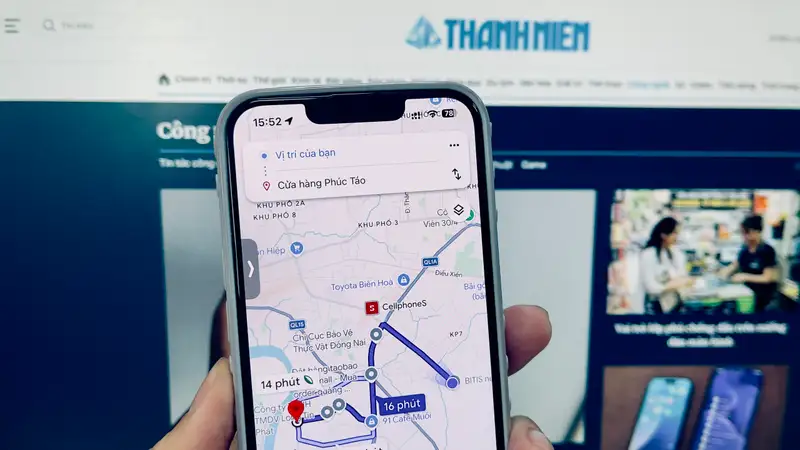
Understanding the Algorithm Shift
The new routing algorithm on Google Maps is designed with a keen focus on optimizing driving behavior for fuel economy. Instead of simply seeking the shortest distance or the path with the highest legal speed limits, the system now analyzes factors such as road gradients, likely traffic patterns, and the potential for sudden stops and starts. Its primary goal is to minimize actions that consume more fuel, such as rapid acceleration and hard braking.

This sophisticated analysis means the application might intentionally steer drivers away from routes that involve frequent stops at traffic lights, steep inclines, or congested areas known for stop-and-go traffic. It may even suggest detours around highways if the on-ramp acceleration or potential for high-speed braking is deemed less fuel-efficient than a slightly longer, but more consistent, urban route. While a short journey might only see an additional 3 to 5 minutes, longer trips – say, 90 minutes – could accumulate significantly more wasted time, potentially adding 15 minutes or more to the overall duration.
Reclaiming Control: How to Optimize Your Route
For users for whom time is a critical factor, such as daily commuters, service providers, or delivery drivers, the good news is that this default setting is not irreversible. Google Maps provides an option to disable the prioritization of fuel-efficient routes, allowing users to revert to the traditional 'fastest route' preference. This feature is typically found within the app's navigation settings.
Users are advised to proactively check their Google Maps settings, especially if they have experienced unexpected delays. By doing so, they can ensure their journey planning aligns with their personal priorities, whether that's minimizing travel time for an important appointment or consciously choosing the eco-friendlier, albeit slower, option.
The Broader Implications for Commuters and Businesses
The subtle shift in Google Maps' routing philosophy underscores a broader tension between technological optimization for collective benefit and the immediate needs of the individual. For everyday commuters, this could mean adjusting their morning routines, departing earlier, or constantly monitoring their navigation settings. The cumulative impact of these minor delays can be substantial, affecting punctuality, work schedules, and personal commitments.
For businesses, particularly in logistics and transportation, the implications are more profound. Companies that rely on precise delivery windows and optimized routes for efficiency may find their operational models impacted. Increased travel times can lead to fewer deliveries per day, higher labor costs due to extended shifts, and potentially increased fuel consumption if drivers are forced to take longer paths, ironically undermining the very goal of fuel efficiency. This could necessitate a re-evaluation of routing strategies and potentially a transition to other navigation tools that prioritize speed.
A Global Trend Towards Sustainability?
Google's move is not an isolated incident but rather indicative of a broader industry trend towards integrating environmental considerations into technology. Many tech companies are facing increasing pressure to demonstrate corporate social responsibility and contribute to global sustainability goals. Features like eco-friendly routes, energy-saving modes on devices, and carbon footprint calculators are becoming more common across various platforms.
While the intention behind such innovations is commendable, the manner of implementation remains crucial. The challenge lies in empowering users to make informed choices that align with their personal values and immediate needs, rather than silently imposing a default that may not suit everyone. As technology continues to intertwine with daily life, the balance between societal welfare and individual autonomy will be a constant point of discussion and refinement.
Sources
FAQ
Why did Google Maps change its default routing?
Google Maps made a silent change to prioritize fuel-efficient routes by default. This is likely part of broader corporate initiatives to promote environmental sustainability and reduce carbon emissions by encouraging driving habits that minimize fuel consumption.
How much extra time can fuel-efficient routes add to a journey?
The additional travel time can vary, but reports suggest that for short distances, it might add 3 to 5 minutes. For longer journeys, especially those around 90 minutes, users could experience delays of 10 to 15 minutes or even more, as the algorithm prioritizes steady speeds over directness.
Can I revert to the fastest route on Google Maps?
Yes, users can change this default setting. Google Maps allows you to disable the feature that prioritizes fuel-efficient routes. This option is typically found within the navigation settings of the application, allowing you to choose the fastest route as your preferred default again.
Who is most affected by this change in Google Maps?
This change significantly impacts daily commuters, who rely on precise travel times for work or appointments. It also heavily affects professionals like delivery drivers, logistics companies, and ride-sharing operators whose livelihoods depend on efficient routing and timely service. Anyone for whom time is a critical factor in their travel is likely to be affected.
Why it matters
This subtle but significant shift in Google Maps' core functionality carries broad implications for millions of users worldwide. For daily commuters, even an extra 10-15 minutes can disrupt schedules, impact work-life balance, and contribute to stress. For businesses reliant on timely deliveries, such as logistics companies, e-commerce platforms, and ride-sharing services, these cumulative delays can translate into increased operational costs, reduced efficiency, and potential customer dissatisfaction. Furthermore, the unannounced nature of the change raises questions about user transparency and control over their navigation experience, potentially eroding trust in a tool that has become...
Background
For years, Google Maps has been the undisputed leader in digital navigation, renowned for its ability to provide the fastest routes by accounting for real-time traffic conditions. Users implicitly trusted the platform to deliver the most time-efficient path from point A to point B. This expectation was foundational to its widespread adoption and utility across personal and professional domains. However, recent global discussions around climate change and corporate environmental responsibility have pushed tech giants like Google to integrate sustainability into their product offerings. This algorithmic change appears to be a direct manifestation of such initiatives. While the exact timeline...
Google's decision to default to fuel-efficient routes, while aligned with admirable environmental objectives, presents a complex ethical and practical dilemma. The silent implementation of such a significant change, impacting millions of daily commutes and logistical operations, risks alienating a user base accustomed to transparent functionality. While promoting sustainability is vital, dictating user priorities without clear communication can be perceived as an overreach, forcing individuals to choose between their personal time efficiency and Google's environmental agenda. This highlights a growing tension in product design: how to balance societal good with individual user experience,...
References
Editorial information
The editorial team reviews sources, adds context, and structures stories so readers can understand the news more clearly.
Article from QNEWS24H
Comments
(0)No comments yet. Be the first to share your thoughts.