Fields Medalist Jacob Tsimerman Joins OpenAI to Tackle AI Safety and Formal Logic
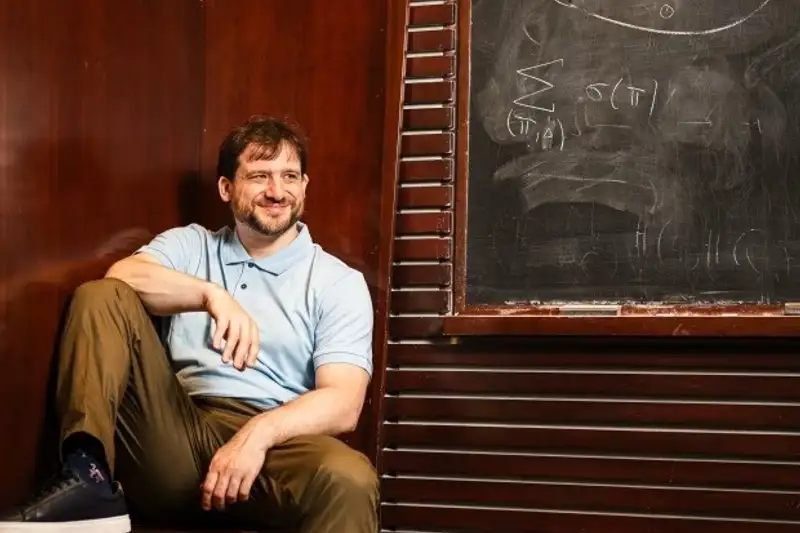
- 2026 Fields Medalist Jacob Tsimerman has taken a leave of absence from the University of Toronto to join OpenAI as a full-time researcher.
- Having previously published a theoretical paper categorizing apocalyptic AI scenarios, Tsimerman is shifting his focus toward formal mathematical verification and AI safety.
- The move follows major breakthroughs where AI models solved long-standing mathematical problems that had resisted human solution for nearly eight decades.
When the world's elite mathematicians gathered at the International Congress of Mathematicians in Philadelphia for the 2026 Fields Medal announcements, the traditional post-award chatter naturally turned to future academic pursuits. Winners spoke of differential equations and unresolved theoretical domains. But when 38-year-old Jacob Tsimerman stepped up, his answer sent shockwaves through the global scientific community. The freshly minted Fields Medalist announced he was stepping away from his faculty position at the University of Toronto to take on a research role at OpenAI, the creator of ChatGPT. The move marks one of the most prominent academic defections to the private AI sector, signaling a profound shift in how pure mathematics and frontier artificial intelligence intersect.
Quick summary
- 2026 Fields Medalist Jacob Tsimerman has taken a leave of absence from the University of Toronto to join OpenAI as a full-time researcher.
- Having previously published a theoretical paper categorizing apocalyptic AI scenarios, Tsimerman is shifting his focus toward formal mathematical verification and AI safety.
- The move follows major breakthroughs where AI models solved long-standing mathematical problems that had resisted human solution for nearly eight decades.
Why it matters
The transition of a top-tier theoretical mathematician into an artificial intelligence laboratory highlights an urgent turn in the industry: moving from heuristic engineering toward formal, verifiable safety frameworks. As frontier AI models rapidly gain advanced problem-solving capabilities, traditional empirical testing is no longer sufficient to guarantee that powerful systems will act safely and predictably. Tsimerman's work seeks to bring mathematical rigor, formal language, and rigorous verification techniques to AI architecture. If successful, this approach could help establish verifiable guardrails that prevent rogue capabilities, hallucinated logical steps, and existential threats as AI capabilities approach or surpass human-level intellect.
Background
Jacob Tsimerman's path to the pinnacle of mathematics was extraordinarily rapid. Born in Russia, raised in Israel and Canada, he dominated competitive mathematics early in life, securing two gold medals at the International Mathematical Olympiad (IMO). He completed his undergraduate degree at the University of Toronto in just two years before pursuing his doctorate at Princeton University. After a teaching stint at Harvard University, he returned to Toronto, becoming the youngest full professor of mathematics in the university's history.
At the 2026 International Congress of Mathematicians in Philadelphia, Tsimerman was awarded the Fields Medal—often described as the Nobel Prize of mathematics—for his groundbreaking contributions to o-minimality theory, arithmetic geometry, and complex algebraic geometry, alongside co-recipients Yu Deng, John Pardon, and Hong Wang. His work helped establish foundational methods for arithmetic geometry and contributed to proving major central conjectures, including the Griffiths conjecture on the algebraicity of period mapping images and the André-Oort conjecture for Siegel modular varieties.
Despite his theoretical accomplishments, Tsimerman long harbored deep skepticism regarding artificial intelligence. That perspective shifted radically in 2022 after experimenting with ChatGPT. Recognizing that a system capable of complex linguistic nuance could eventually apply similar pattern processing to formal mathematics, he began studying the long-term implications of superintelligent systems. By the summer of 2025, Tsimerman published an academic paper titled Classification of Apocalyptic Futures Involving Artificial Intelligence, using mathematical order and structural taxonomy to analyze potential existential risk scenarios where advanced machines triumph over humanity.
The Convergence of Advanced Pure Mathematics and AI
The relationship between pure mathematics and frontier AI models has evolved from mere curiosity to an essential operational domain. In May 2026, OpenAI announced that an AI system had successfully solved a famous, nearly 80-year-old problem in discrete geometry regarding point configuration distances on a plane—a question that had eluded generation after generation of world-class mathematicians. The AI not only disproved an established conjecture but proposed an entirely novel spatial arrangement that human mathematicians had failed to conceptualize.
Tsimerman himself admitted that he had previously attempted to solve that specific geometry problem without success, describing the solution's structure as extraordinarily difficult to visualize. The significance of the breakthrough was further emphasized when an Anthropic researcher with a PhD in mathematics—who happened to be Tsimerman's former doctoral student—analyzed and highlighted the result. Such achievements demonstrated that AI is moving beyond simple code synthesis and natural language processing into abstract mathematical reasoning.
From Chalkboard to Formal Machine Logic
For Tsimerman, integrating AI tools into his own workflow demonstrated the concrete power of these systems. Rather than spending months parsing centuries of academic literature for specific equations, he began using advanced models to generalize mathematical arguments. In one striking instance, an AI model identified a subtle logical flaw in one of his arguments—a feat he noted would have impressed him if accomplished by a brilliant graduate student or senior collaborator.
However, this rapid increase in capability brings equal parts promise and danger. As models become more capable of generating complex multi-step proofs, human researchers face the challenge of verifying whether the reasoning is genuinely sound or subtly flawed. Tsimerman's decision to join OpenAI centers on using formal methods, proof assistants, and structural verification to ensure that as AI systems expand their reasoning faculties, their operations remain completely transparent, mathematically sound, and aligned with human intent.
Qnews24h insight
Tsimerman's arrival at OpenAI represents a crucial strategic shift in how AI safety is conceptualized by leading research organizations. For years, AI safety was primarily treated as an empirical alignment problem—focused on fine-tuning responses via reinforcement learning from human feedback (RLHF) or applying post-hoc content filters. However, as models transition from statistical next-token predictors to complex reasoning engines capable of solving decades-old open mathematical problems, empirical guardrails are proving insufficient.
By recruiting a Fields Medalist specializing in algebraic geometry and formal structures, OpenAI is signaling an embrace of formal verification—a discipline that seeks to mathematically prove that a system will perform strictly according to specified constraints without producing unintended or catastrophic failure modes. Nevertheless, a major editorial question remains: can an academic whose primary motivation stems from preventing existential threat maintain independence and rigor within a commercially driven tech giant? While Tsimerman's presence elevates the intellectual bar for safety research, the ultimate test will be whether formal mathematical safety frameworks are given precedence over commercial pressure to deploy increasingly powerful models.
Frequently Asked Questions
Who is Jacob Tsimerman?
Jacob Tsimerman is a 38-year-old mathematician, 2026 Fields Medalist, and professor on leave from the University of Toronto who has recently joined OpenAI as a researcher focused on AI safety and formal logic.
Why did a Fields Medalist join an AI company like OpenAI?
Tsimerman joined OpenAI to apply formal mathematical verification and logic to AI safety, addressing existential risks and ensuring advanced reasoning models operate safely and transparently.
What mathematical problem did OpenAI solve that surprised experts?
In May 2026, OpenAI revealed that its AI model solved an 80-year-old open problem in geometry regarding point configurations and distances on a plane, disproving an old conjecture and discovering a novel solution structure.
Sources



Why it matters
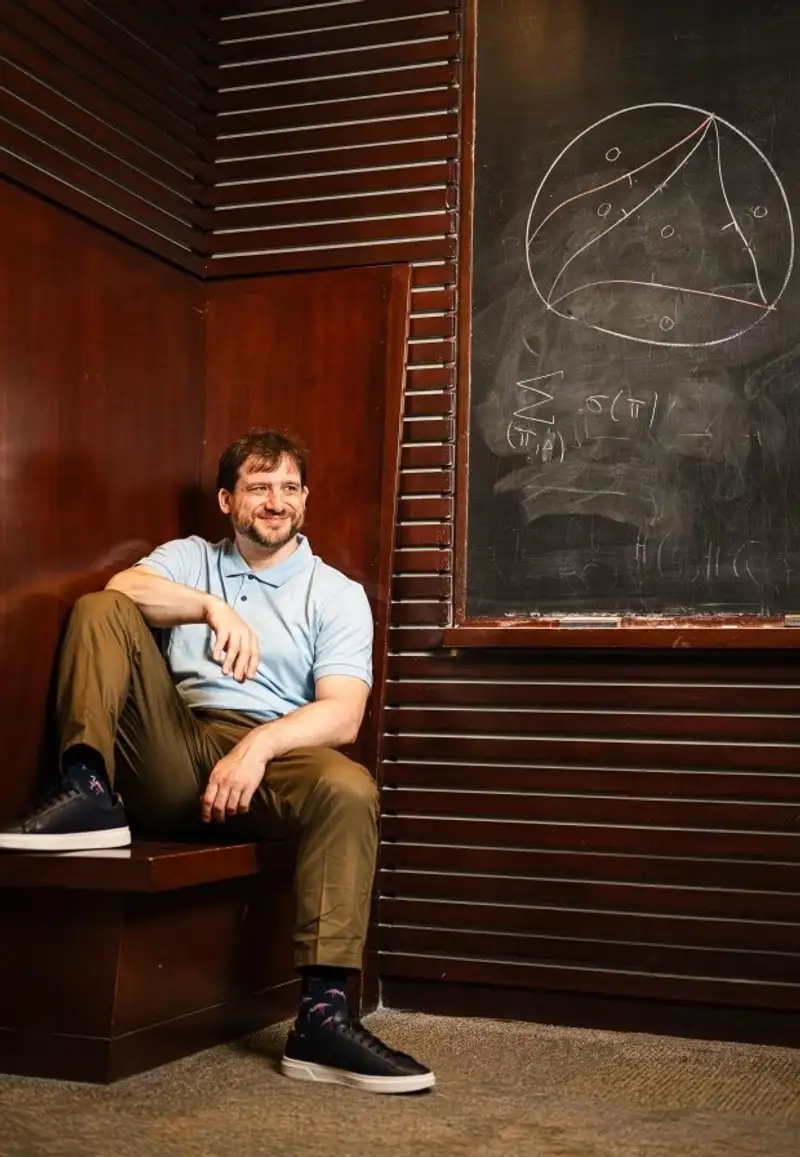
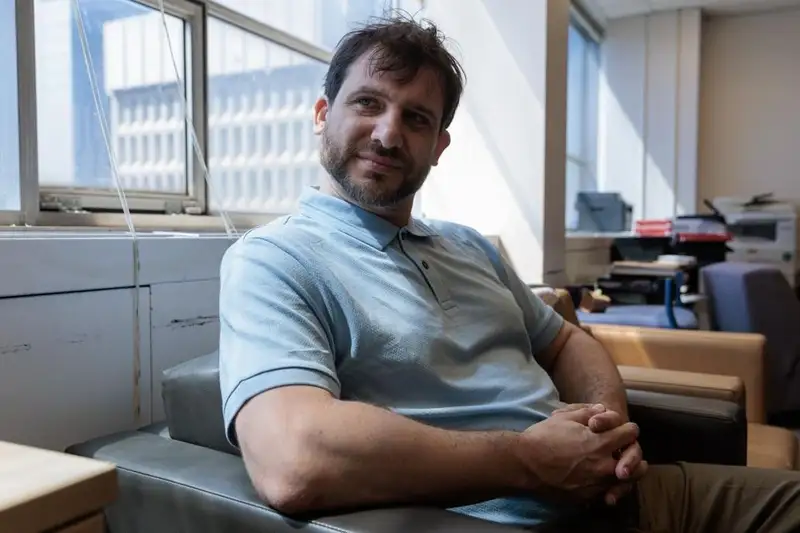
The transition of a top-tier theoretical mathematician into an artificial intelligence laboratory highlights an urgent turn in the industry: moving from heuristic engineering toward formal, verifiable safety frameworks. As frontier AI models rapidly gain advanced problem-solving capabilities, traditional empirical testing is no longer sufficient to guarantee that powerful systems will act safely and predictably. Tsimerman's work seeks to bring mathematical rigor, formal language, and rigorous verification techniques to AI architecture.
Background
Jacob Tsimerman, 38, is a former two-time International Mathematical Olympiad gold medalist who earned his doctorate from Princeton and became the youngest mathematics professor in University of Toronto history. He was awarded the 2026 Fields Medal at the International Congress of Mathematicians in Philadelphia for groundbreaking contributions to o-minimality theory and arithmetic geometry. Initially skeptical of generative AI, Tsimerman reevaluated its trajectory after testing ChatGPT in 2022, leading him to publish an academic paper in 2025 detailing existential risk scenarios posed by superintelligent machines.
Tsimerman's arrival at OpenAI represents a crucial strategic shift in how AI safety is conceptualized by leading research organizations. Moving beyond empirical fine-tuning, OpenAI is seeking to build mathematical proof frameworks to verify model logic. While Tsimerman's presence elevates the intellectual rigor of safety research, the key editorial challenge lies in whether formal mathematical guardrails can survive commercial pressures inside a leading AI corporation.
References
Editorial information
The editorial team reviews sources, adds context, and structures stories so readers can understand the news more clearly.
Article from QNEWS24H
Comments
(0)No comments yet. Be the first to share your thoughts.