Electric Vehicle Batteries May Outlast Gasoline Engines, New Research Suggests

- A 2024 Stanford University study reveals that real-world resting periods (parking) allow battery cells to recover, increasing overall lifespan by up to 40% compared to continuous...
- Data from Geotab shows that the average annual battery degradation rate is just 2.3%, meaning most EV batteries will easily outlast the average ownership span of a vehicle.
- Using DC fast chargers increases the annual wear rate to 3.0%, while slower home charging keeps degradation at a remarkably low 1.5% per year.
For years, potential electric vehicle (EV) buyers have been haunted by a persistent anxiety: the fear that their expensive car battery will degrade as quickly as a smartphone battery, leaving them with an undrivable vehicle and a massive replacement bill. This psychological barrier has slowed adoption and depressed resale values. However, groundbreaking scientific research and comprehensive fleet data are now shattering these assumptions, revealing that EV batteries are far more resilient than the automotive industry ever anticipated, potentially matching or even exceeding the total lifespan of traditional internal combustion engine (ICE) vehicles.
Quick summary

- Resting periods heal battery cells: A 2024 Stanford University study demonstrates that real-world driving conditions—where vehicles spend hours parked and resting—allow lithium-ion battery cells to recover, extending their practical lifespan by up to 40% compared to continuous laboratory stress testing.
- Slow and steady degradation: Long-term vehicle tracking by Geotab reveals an average annual battery degradation rate of just 2.3%, meaning a typical EV battery will retain the vast majority of its capacity even after a decade of regular use.
- Fast charging and climate impacts are manageable: While high-power DC fast charging and extremely hot climates accelerate wear, the increase in degradation is minor, raising annual capacity loss to approximately 3.0% and adding a 0.4% penalty respectively.


Why it matters

This paradigm shift in battery durability has massive implications for consumers, fleet operators, and the global transition to sustainable transportation. Understanding that an EV battery can reliably last 15 to 20 years directly undermines the primary argument against electric transition: the risk of catastrophic depreciation.
For the average consumer, this means the used EV market—previously treated with extreme skepticism—becomes a highly viable, lower-risk option. For automakers, these findings suggest they can offer longer warranties or design vehicles with slightly smaller, more resource-efficient battery packs without sacrificing long-term reliability. Financially, it stabilizes the Total Cost of Ownership (TCO) models, proving that EVs are not disposable high-tech gadgets but durable capital assets.

Background
Historically, early electric vehicles like the first-generation Nissan Leaf suffered from rapid battery degradation, largely due to primitive passive cooling systems and a lack of sophisticated thermal management. This initial hurdle created a narrative of fragility that was reinforced by standard laboratory battery testing. In these labs, batteries are subjected to continuous, rapid charging and discharging cycles under constant load to simulate wear quickly.

While this methodology is efficient for researchers, it failed to replicate how humans actually use cars. It ignored the vital chemical recovery phases that occur when a vehicle is stationary. By treating automotive batteries like consumer electronics batteries, early industry models drastically underestimated the longevity of modern automotive-grade battery chemistries, which are coupled with advanced active liquid cooling and highly sophisticated battery management systems (BMS).
The Stanford Breakthrough: Why Resting Matters

The 2024 Stanford University study illuminated a critical flaw in traditional laboratory simulations. In real life, cars are parked about 90% of the time. When an EV is parked, the electrochemical stress inside the battery cells relaxes. Lithium ions that have piled up unevenly during acceleration or charging have time to diffuse and redistribute more uniformly across the electrodes.
This microscopic "resting phase" prevents localized degradation, dendrite formation, and the structural micro-cracking of active materials. The research proved that these periods of rest allow the battery chemistry to effectively self-heal, pushing the actual operational life up to 40% past laboratory-derived expectations.
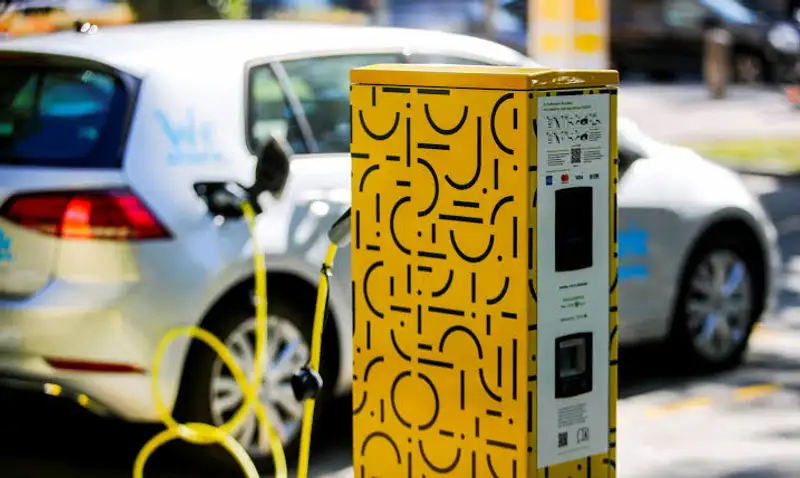
Breaking Down the Numbers: Geotab\'s Real-World Fleet Analysis
While Stanford provided the chemical explanation, telematics firm Geotab provided the empirical proof by analyzing data from millions of real-world trips. Their findings put concrete numbers on how different usage patterns affect long-term battery health:
- Standard Baseline Degradation: The average EV battery loses only 2.3% of its total capacity per year. At this rate, a car with a 300-mile range would still retain roughly 231 miles of range after ten years of service.
- Home Charging vs. DC Fast Charging: Vehicles charged primarily at home via Level 1 or Level 2 AC chargers (slower rates) degrade at an exceptionally low rate of 1.5% annually. Conversely, vehicles that rely heavily on high-power DC fast-charging stations see that rate rise to about 3.0% per year. While higher, it is still far from the rapid failure consumers fear.
- The Thermal Equation: Ambient temperature remains a critical factor. Vehicles operated consistently in exceptionally hot climates experience an additional 0.4% degradation per year compared to those in temperate regions, emphasizing the importance of parking in shaded areas or garages during hot summer months.
Qnews24h insight
The realization that EV batteries are highly durable assets changes the entire economics of the green transition. For years, critics have argued that EVs merely shift environmental damage from tailpipe emissions to battery manufacturing. However, if a battery\'s active life spans two decades, the environmental amortization of its production phase becomes significantly more favorable.
Furthermore, this longevity paves the way for a highly profitable "second-life" battery industry. Once an EV battery finally drops to 70% capacity—making it less ideal for high-performance driving—it is still perfectly suited for grid-scale energy storage, stationary home backup systems, or powering agricultural equipment. We are moving away from a linear model of rapid obsolescence toward a circular, decades-long lifecycle for battery materials. The fear of the dead battery is officially obsolete; the real challenge now is building the infrastructure to support their incredibly long operational lives.
Sources
This article is compiled and analyzed using data and reports from:
- Thanh Nien Newspaper: Official reporting on electric vehicle battery lifespans and industry research.
- Stanford University (2024): Academic study on real-world battery cell recovery during resting phases.
- Geotab: Long-term telemetry and degradation analysis of electric vehicle fleet operations.
Why it matters
Understanding that modern EV batteries are highly durable removes the largest barrier to mainstream adoption: fear of expensive battery replacements. This discovery boosts the resale value of used EVs, establishes reliable long-term vehicle ownership models, and supports a more circular economy where batteries can be repurposed for grid storage after their automotive life ends.
Background
Early electric vehicles suffered from rapid degradation due to inadequate cooling and primitive battery management systems, creating a persistent public myth of battery fragility. Traditional laboratory testing worsened this perception by cycling batteries continuously without rest, failing to replicate real-world driving habits where cars spend most of their time parked, allowing chemical recovery to occur.
The prolonged lifespan of EV batteries fundamentally shifts the economics of clean transportation, transforming the battery from a highly depreciating liability into a long-term asset. This shift will likely stabilize the used car market, encourage automakers to offer extended warranties, and spark a major secondary industry focused on recycling and repurposing older batteries for stationary power storage.
References
Editorial information
The editorial team reviews sources, adds context, and structures stories so readers can understand the news more clearly.
Article from QNEWS24H
Comments
(0)No comments yet. Be the first to share your thoughts.